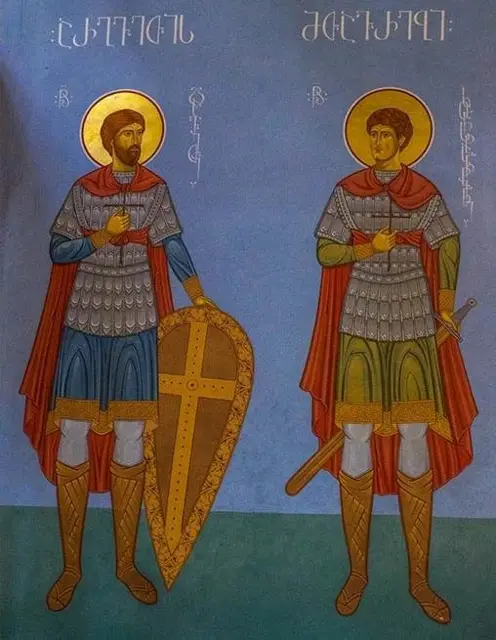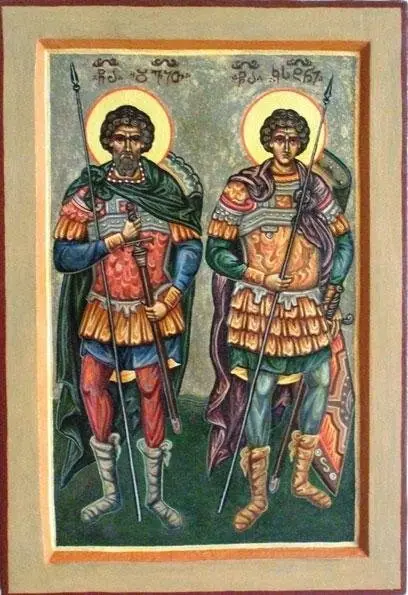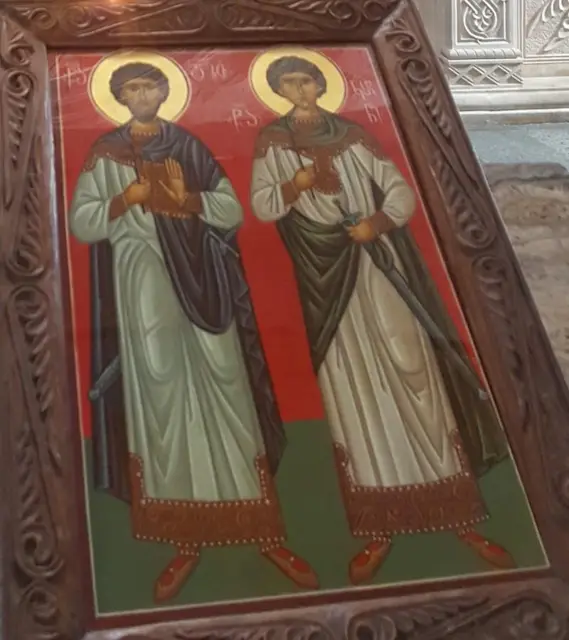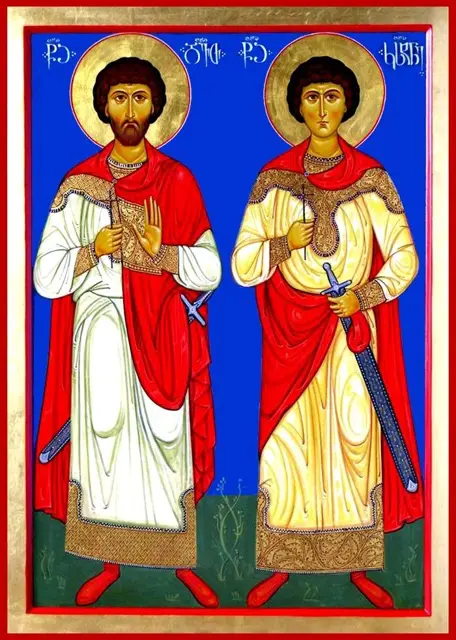
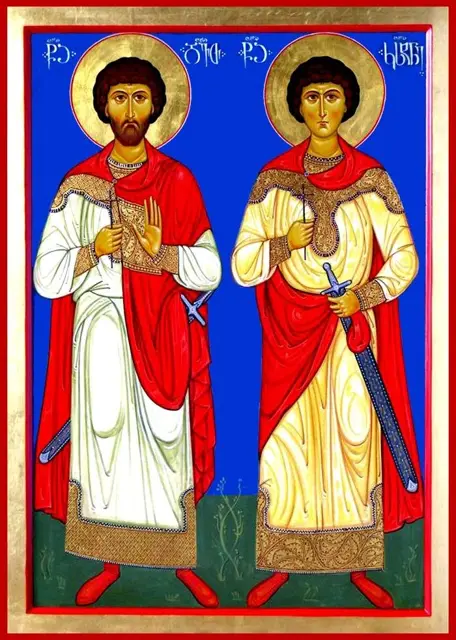
Saints David and Constantine
They beat them, burned them, tortured them, and asked once more: “Do you deny Christ?” Both had known the answer since the battlefield. They gave the bodies to the river and tied stones to them, thinking the water would hide what they could not break. But at night the sky spoke, light overthrew the design of darkness, and today, centuries later, the blood of the two brothers still cries out on the bank of the Tskaltsitela: faith does not decay.
- Feast
- 2 (15) October
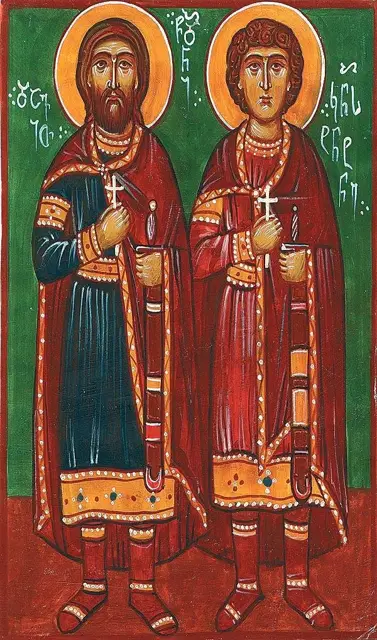
The holy great martyrs David and Constantine Mkheidze, princes of Argveti and outstanding martyrs of the Church of Georgia, lived in the 8th century, in a hard age when Arab invasions and political instability threatened western Georgia. The brothers were not only rulers and warriors of their land, but also faithful defenders of the Christian faith. According to Church tradition, they were offered freedom and life at the price of denying Christ, but both chose martyrdom. Their names are today inseparably linked with the monastery of Motsameta, where their holy relics have been kept with special veneration for centuries.
David and Constantine Mkheidze were princes of Argveti. The ancient Georgian hagiographic source describes them as educated, devout rulers experienced in battle. They knew the Christian teaching, cared for their people and, when necessary, defended the country by force of arms as well.
According to tradition, the elder brother, David, was thirty-eight years old. He was known as a man of strong build, of striking appearance and an experienced warrior. Constantine was younger, and the source also presents him as a man distinguished by courage and piety. The brotherly bond that united them in life finally became, through their shared martyrdom, part of the memory of the Church of Georgia.
In the first half of the 8th century Arab power in the Caucasus grew considerably. In Georgian Church tradition, the martyrdom of David and Constantine is linked with the campaign of the Arab commander Murvan the Deaf. His name has remained in Georgian historical memory as a reminder of especially harsh invasions, destruction and persecution of the people.
When the enemy army approached the borders of Argveti, David and Constantine decided to resist. They gathered fighters and went out to defend their land. Tradition presents the brothers not as men who fled from danger, but as princes who bore their responsibility towards their people to the end.
The battle proved hard and unequal. The Georgians resisted a numerous enemy, but the difference in strength finally had its effect. David and Constantine were taken prisoner and brought before Murvan.
It is here that the part of their life begins which made them saints of the Church of Georgia.
According to hagiographic tradition, Murvan knew well that the men before him were not ordinary prisoners. They were the princes of Argveti and leaders of a Christian people. Subduing them meant more than a military victory. Therefore the brothers were urged to abandon the Christian faith and accept Islam.
In exchange for changing their faith they were promised life, honour and the preservation of their position. David and Constantine rejected this offer.
The meaning of their answer was simple: they could not deny Christ to save earthly power and life.
After this their torture began. The Church narrative describes cruel sufferings whose aim was to break the brothers' will. They were beaten and subjected to various torments, but neither physical pain nor the threat of death changed their decision.
David and Constantine stayed side by side. This is precisely one of the strongest aspects of their martyrdom: they were not only brothers by blood, but they also faced the final trial together. The steadfastness of one encouraged the other, and the choice of both rested on the same faith.
When the enemy saw that he could not force them to deny Christ, the brothers were condemned to death. According to Church tradition, after the torture they were killed, heavy stones were tied to their bodies and they were thrown into the river Tskaltsitela.
But their story did not end there.
Hagiographic tradition tells that at night a miraculous light appeared above the river. The water did not carry away the bodies of the saints, and the Christians were able to find them. Tradition describes this as a sign from God: those whose name and body the enemy wished to make vanish were given a special place in the memory of the Church.
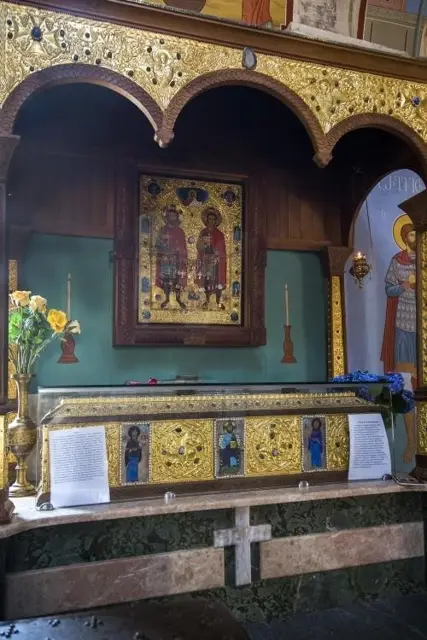
The faithful translated the holy relics of David and Constantine with honour and buried them at the place that was later called Motsameta. The name itself is connected with the martyrs, and over the centuries this place became the main centre of their veneration.
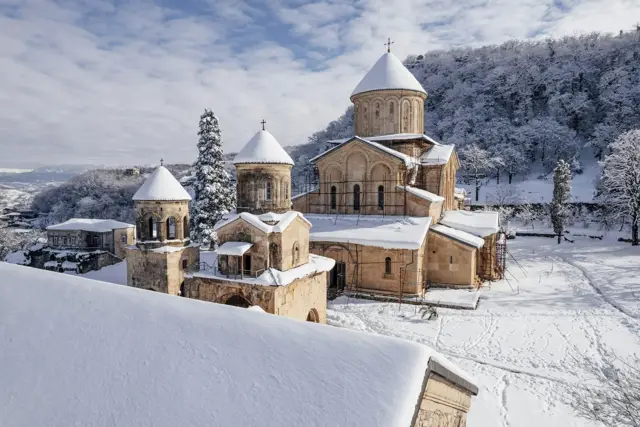
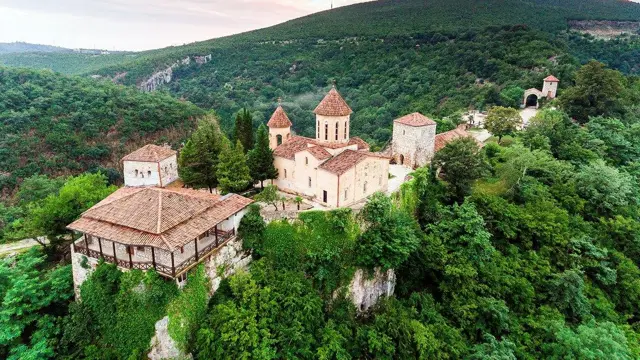
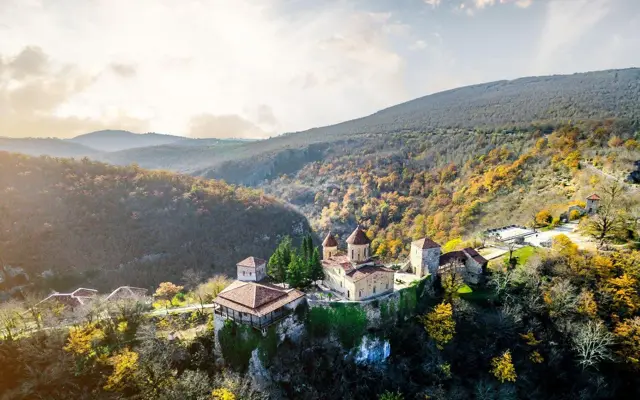
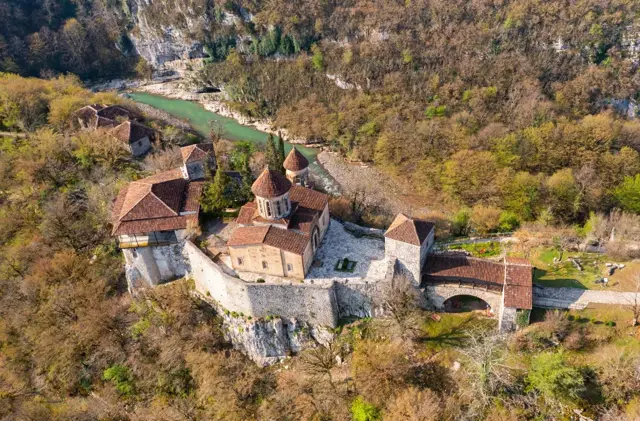
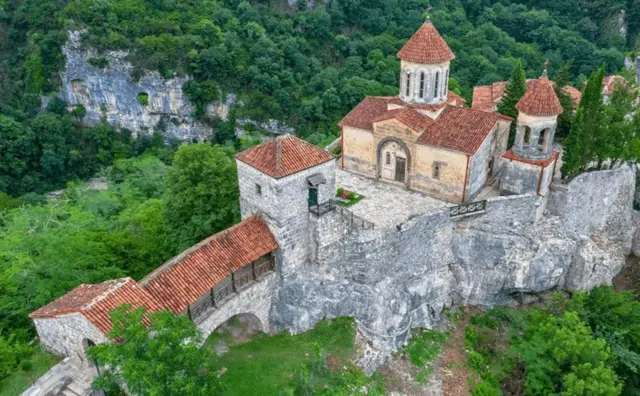
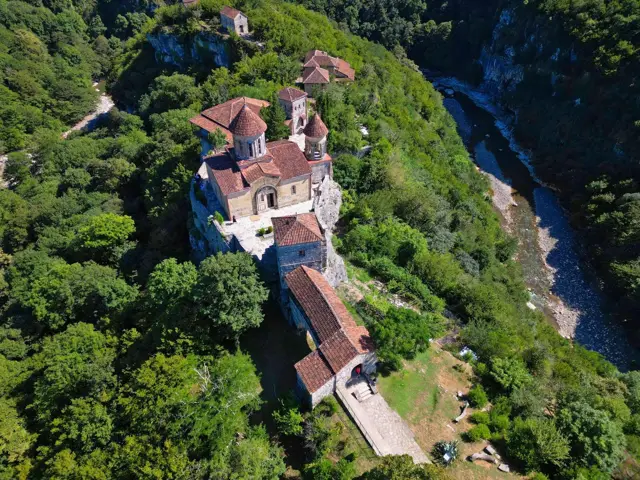
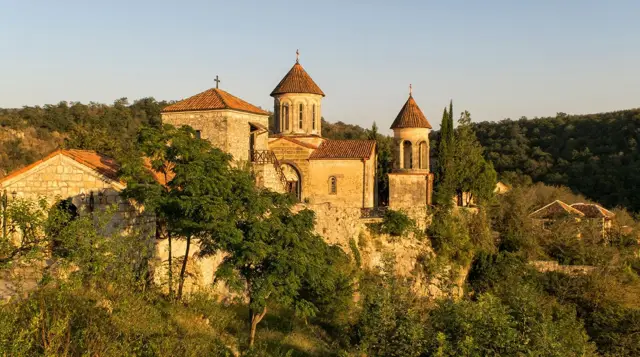
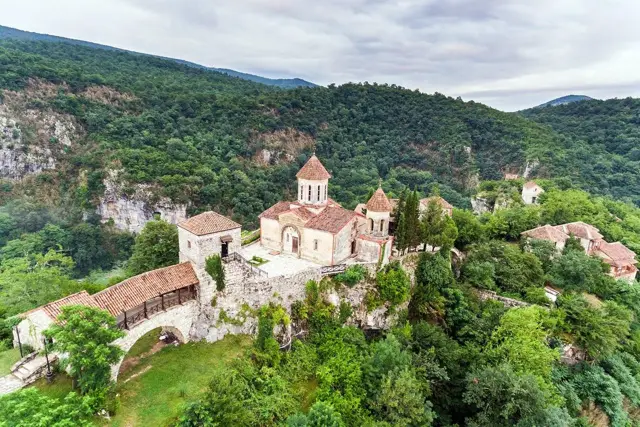
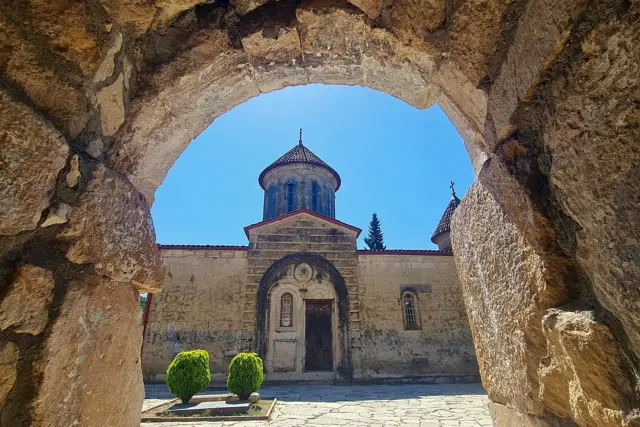
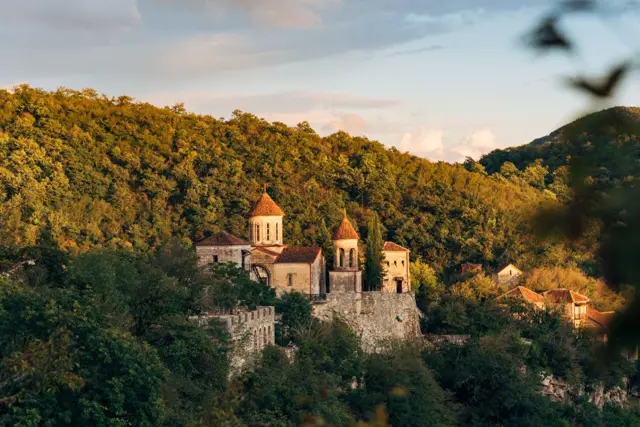
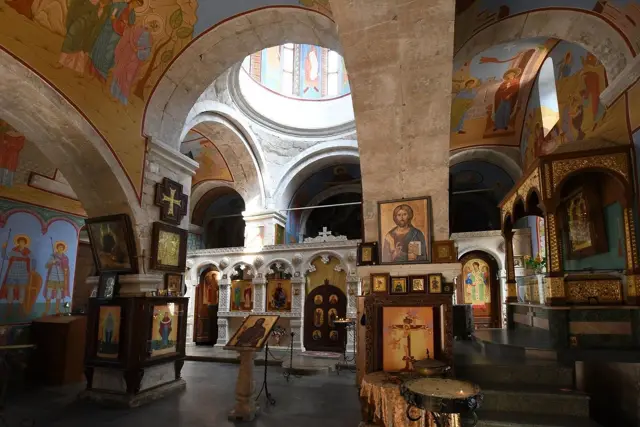
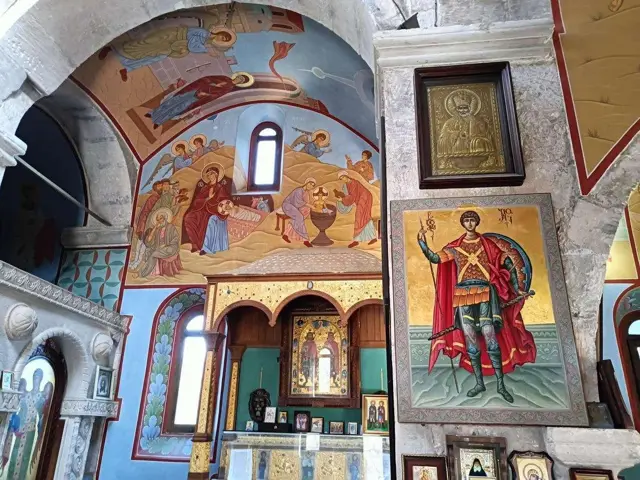
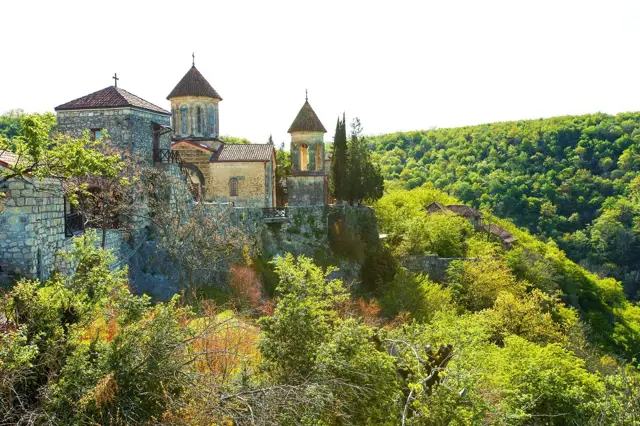
The monastery of Motsameta stands in the valley of the river Tskaltsitela, near Kutaisi and the monastery of Gelati. Raised in a rocky, wooded setting, the monastery remains inseparably linked with the names of David and Constantine. Their holy relics rest in the monastery church, and for centuries the faithful have come here to pray.
The history of the monastery also reflects Georgia's own hard past. In different periods it was damaged and restored. In the 19th century the bishop of Imereti, Saint Gabriel Kikodze, played an important role in restoring the church and in the worthy enshrinement of the saints' relics. In his time the church and bell tower of Motsameta were renewed, and a new reliquary was prepared for the holy relics of David and Constantine.
An especially hard period for the monastery came in the years of Soviet rule. Under the anti-religious policy the life of the monastery was restricted, and the persecution of that age also touched the relics of the saints. Nevertheless, the people's veneration for David and Constantine did not disappear. After church life was restored, Motsameta again became one of the important shrines of western Georgia.
The Orthodox Church of Georgia commemorates David and Constantine as holy great martyrs. Their memory is celebrated on 2 October by the old calendar and on 15 October by the new. On that day a special service is held at the monastery of Motsameta, where the faithful pray before the relics of the holy brothers.
The significance of the story of David and Constantine does not lie only in their fight against a foreign conqueror. The main victory of their life began after their capture. When they no longer had an army, political power or freedom, they still had the right to choose.
They could have kept their lives, but to do so they would have had to give up what was more precious to them than life.
Saint David and Saint Constantine chose faithfulness to Christ.
That is why in the memory of the Church of Georgia their martyrdom became at once a symbol of brotherhood, courage, love of the homeland and faithfulness to the Christian faith. They fought together, were captured together, endured torture together and together received a martyr's end.
Centuries have passed and the army of Murvan the Deaf has long belonged to history, but in the valley of the Tskaltsitela Motsameta still stands, and in its church the brothers still rest whom the enemy wished to defeat through their death.
That is why Saints David and Constantine Mkheidze are not for Georgia today merely heroes of a distant past. Their life reminds us that defeating a person does not always mean taking his life. They lost the battle, their freedom and their earthly life, but by the faith of the Church they gained what neither violence nor time could take from them: the incorruptible crown of martyrdom.
Hymns of Saints David and Constantine
🎵 Troparion (Tone IV)
მოწამეთა შენთა, უფალო, დავით კონსტანტინეს თანა ღუაწლთა შინა თჳსსა გჳრგჳნი მოიგეს უხრწნელებისა, შენ მიერ ღმრთისა ჩუენისა, რამეთუ აქუნდათ მათ შენმიერი ძალი და მძლავრი დაამჴუეს და შემუსრეს კერპთა იგი უძლური ძალი, მათითა მეოხებითა, ქრისტე ღმერთო, აცხოვნენ სულნი ჩუენნი.
🎵 Kontakion (Tone II)
ვარდნო შუენიერნო ზეცისა მტილისანო, რომელნი ფშჳთ სულნნელებასა ყოველთა კიდეთა, და კურნებასა აღმოუდინებთ სურვილით მედღესასწაულეთა თქუენთა, დავით უძლეველობითა გჳრგჳნოსანო, და კონსტანტინე ჭურო სიმჴნისაო, მაქებელთა თქუენთა სამმღელვარენი განსაცდელნი გარე-წარხადენით, და ოხითა თქუენითა მომადლეთ მშჳდობაჲ სულთა ჩუენთა.