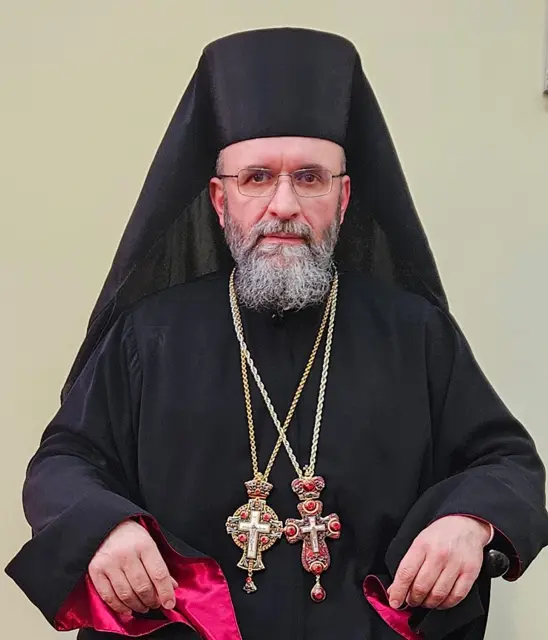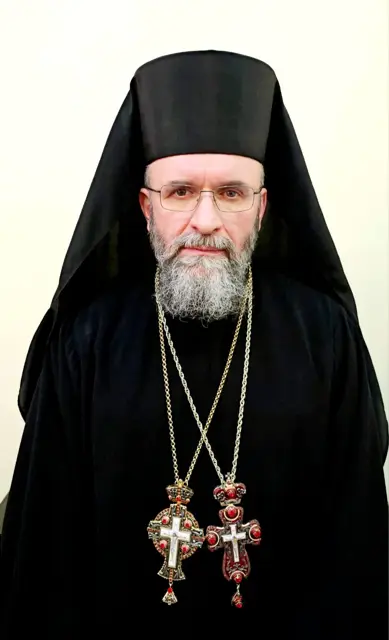
Archimandrite Luka (Palavandishvili): from Jruchi to Barcelona, a path of faith and service
Far from Georgia there are places where the homeland does not remain only a memory. Places where the Georgian word is still heard, children learn their mother tongue, Georgian chant resounds and people gather around the Church. The "Parish of Saint Nino" in Barcelona has become just such a place.
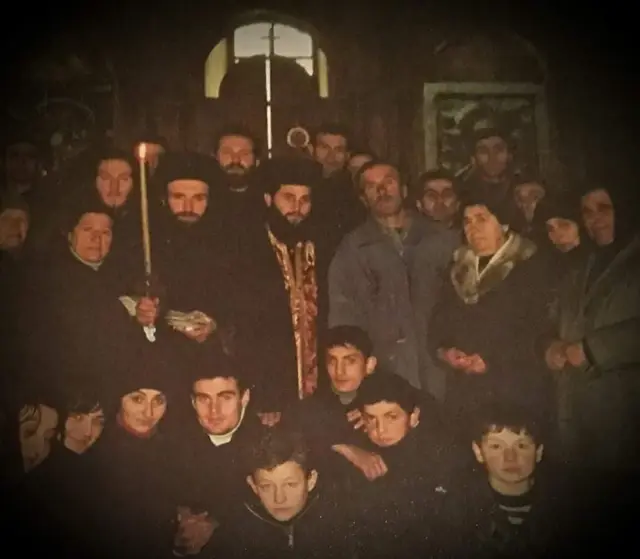
At the origins of this story stands Archimandrite Luka (Palavandishvili), a clergyman whose life's path led from the mountains of Imereti and Jruchi monastery to Barcelona and for years has been bound up with building Georgian spiritual, educational and cultural life in emigration.
His story is not only the biography of one clergyman. It is a path of ministry that began in a Georgian monastery and continued thousands of kilometres away, where Georgians especially needed the Church, their mother tongue, mutual support and a living bond with the homeland.
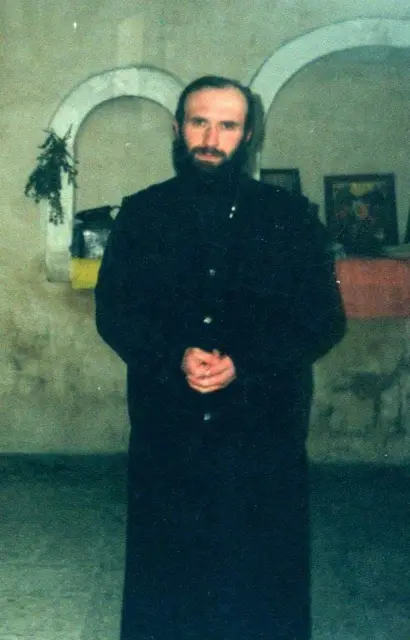
The road to the monastery
Archimandrite Luka, in the world Zviad Gaiozis dze Palavandishvili, was born on 9 December 1973 in the village of Merjevi in the Sachkhere district.
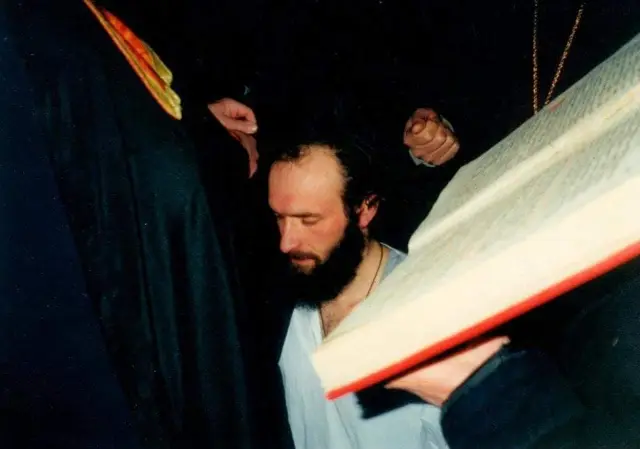
A special turning point in his life came in 2002. On 3 February, in the village of Chorvila, in the Church of the Resurrection of the Saviour, his spiritual father, Hegumen Bartlome, tonsured him a monk and gave him the name Luka. After that his path was linked with the Monastery of Saint George at Jruchi.
Jruchi is one of the oldest monastic centres of Georgia. Its history spans centuries, and monastic life here is linked with prayer, work and solitude. It was here that the monk Luka spent an important early period of his monastic life.
The years spent at Jruchi became one of the foundations of his later ministry. It was an entirely different world from what he would find in Barcelona a few years later. In Georgia there were mountains, the silence of the monastery, prayer and a small brotherhood. In Barcelona a large European city and a Georgian emigrant community living far from home awaited him.
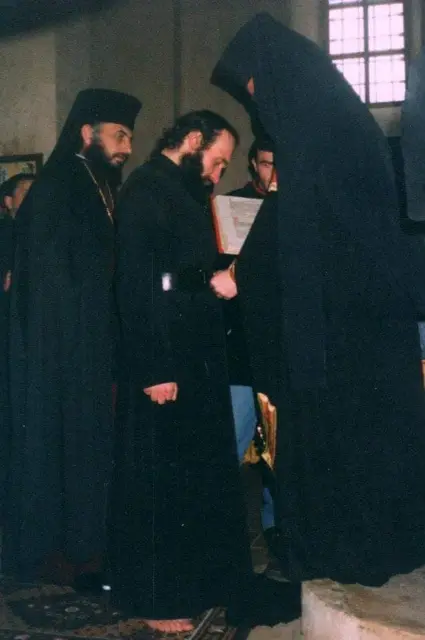
On 27 November 2005 the Catholicos-Patriarch of All Georgia, His Holiness and Beatitude Ilia II, ordained the monk Luka hierodeacon in the Holy Trinity Cathedral of Tbilisi.
On 19 March 2006 he was ordained hieromonk. On 17 September of the same year, for his faithful service to the Church, His Holiness Ilia II raised him to the rank of hegumen and awarded him the right to wear a gold cross.
The next important stage of his ministry was to begin outside Georgia's borders.
Barcelona: the beginning of a new mission
On 3 January 2007, with the blessing of the Catholicos-Patriarch of All Georgia Ilia II and the blessing of His Eminence Abraham (Garmelia), Metropolitan of the Eparchy of Western Europe, Hegumen Luka was transferred to the Eparchy of Western Europe and appointed rector of the "Parish of Saint Nino" in Barcelona.
This was not merely a geographical move but the beginning of an entirely different mission.
By then Georgians were already living in Barcelona and other Spanish cities who had left their homeland for work, a better future or the necessities of life. Among them were families, children, young people and people for whom the existence of a Georgian church in a foreign country meant more than just the Sunday liturgy.
A place was needed where one could hear the Georgian word, where baptisms, weddings and church feasts were celebrated in Georgian, where children could get to know their own language and culture and where a Georgian living abroad would not feel alone.
In 2007 the creation of just such a space began in Barcelona.
Father Luka was appointed rector of the "Parish of Saint Nino", founded on 3 January. On 22 March a new building was found for the church and its fitting out began. On 1 June, in connection with the feast of Saint Nino, the first Georgian liturgy was celebrated in the new church. By the end of the year educational and cultural life was also gathering strength around the Georgian parish.
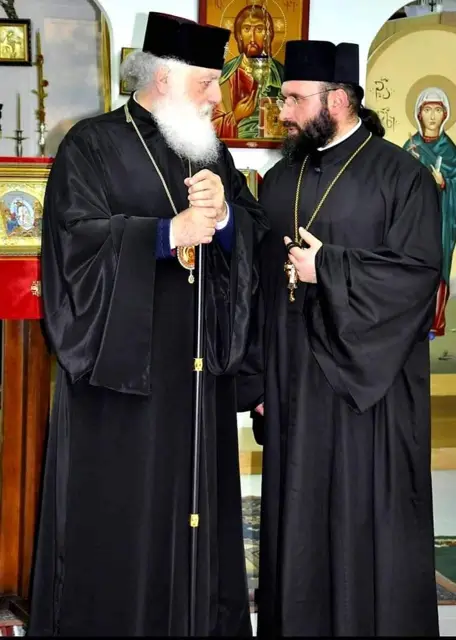
Metropolitan Abraham's spiritual guidance and blessing were important for the formation and further development of Georgian church life in Barcelona. Within the Eparchy of Western Europe, it was in precisely these conditions of relationship and church unity that Father Luka's many years of ministry developed.
The Church, the school and the next generation
One of the most important directions of Archimandrite Luka's ministry from the outset was the Georgian education of children and young people.
On 25 December 2007 the Saint Anthim the Iberian Georgian Sunday School and the Saint Grigol Peradze parish school were founded in Barcelona.
In the first years it was still a small step, but in time it was precisely on this foundation that one of the most outstanding Georgian educational centres in emigration took shape.
For the children learning Georgian did not mean only mastering reading and writing. The curriculum gradually expanded to include Georgian literature, the history of Georgia, religion, speech culture, traditions and national upbringing.
Around the parish groups for Georgian song, church chant, dance, folk instruments and other creative activities were formed.
The path begun in 2007 grew over the years. In the 2017 and 2018 school years 105 pupils were already studying at the school.
In 2023 the number of pupils reached 181. And in 2024, 17 years after the school was founded, the historical chronicle already recorded the path from the first 12 pupils to 178.
These figures are not just statistics. Behind each of them stands a child raised in emigration who was given the chance, far from Georgia, to read in Georgian, to sing, to learn Georgian history and to come to know their own roots better.
From one parish to a wider ministry
The work begun in Barcelona gradually went beyond the bounds of a single city.
Over the years Archimandrite Luka's ministry became linked with Georgian communities and parish life in Spain, Portugal and southern France.
In this process too the blessing and spiritual guidance of Metropolitan Abraham (Garmelia) of the Eparchy of Western Europe held an important place. With his blessing and the eparchy's support Georgian parish life developed in various cities, new community centres were created and the ministry of the Georgian Orthodox Church in Western Europe expanded.
In 2010 and 2011 the Saint George Georgian Orthodox Association was created in Barcelona and the Saint Nicholas Georgian Association in southern France. Through them spiritual, educational and cultural work was carried out over the years.
On 14 May 2009, during the first liturgy in the Church of Saint Queen Tamar in Paris, the Catholicos-Patriarch of All Georgia Ilia II awarded the title of archimandrite to the then rector of the "Parish of Saint Nino" in Barcelona, Hegumen Luka.
In the same years his ministry was linked with various Georgian communities in Western Europe, with pilgrimage, with contact with the faithful and with the development of new Georgian church life.
Difficulties that did not stop the parish
The history of the "Parish of Saint Nino" in Barcelona is not made up only of successful projects and celebrations.
Over the years there were also hard periods. The economic crisis left many Georgians unemployed. The parish had to change premises several times. There was uncertainty and there were difficult periods, but church and community life did not stop.
On 27 September 2010, on the feast of the Exaltation of the Cross, the parish had to leave the church building it was then using.
Despite this, the ministry continued.
A few years later a new important stage came in the history of the parish.
On the basis of an agreement signed on 30 January 2017, a new church, a large building and a garden were made over to the "Parish of Saint Nino" in Barcelona for a term of 15 years.
On 14 May the first service was celebrated there. On the same day the "Centre for Spirituality, Education and Culture" was founded, bringing together many spiritual, educational and cultural activities in one space.
It was a new stage in the work that had begun ten years earlier in far more modest conditions.
The Church beside the people
In Archimandrite Luka's many years of ministry an important place was held not only by liturgical and educational work but also by supporting people.
One of the clearest examples was the year 2020.
After the COVID-19 pandemic began, a crisis group was set up at the parish from 16 March. According to the existing chronicle, more than 400 families across Spain received help. They were provided with food, medicines, hygiene products and other necessary resources.
At the same time the school moved to distance learning and educational life did not stop.
This period clearly showed the significance the Georgian parish had acquired over the years. The Church had become a place where a person went not only to pray but where, in hard times, they could also hope for support and solidarity.
Preserving Georgian culture abroad
Over the years many Georgian creative groups, a music studio and folk and choreographic ensembles formed around the parish.
Children and young people took part in local and international festivals, exhibitions, calligraphy competitions, educational projects and Georgian culture days.
Georgian song, chant and dance were heard in Barcelona, in various cities of Catalonia, in France, Italy, Belgium, the Netherlands and other European countries.
Over the years members of the parish, together with Archimandrite Luka, made pilgrimages to Rome, Bari, Mount Athos, Jerusalem, Mount Sinai and other important holy places of the Christian world.
Many important stages of this pilgrimage and church life were also carried out with the blessing of Metropolitan Abraham. The spiritual support of the Metropolitan of the Eparchy of Western Europe accompanied for years both the development of the Barcelona parish and Archimandrite Luka's ministry in various Georgian communities of Western Europe.
One common idea could be read in this work: emigration must not mean losing one's own spiritual, cultural and national identity.
In 2022, on the 15th anniversary of the founding of the "Parish of Saint Nino" in Barcelona, the Consul General of Georgia presented Archimandrite Luka with a letter of thanks from the Ministry of Foreign Affairs of Georgia for his special contribution to preserving national and cultural identity.
Almost two decades continuing one path
The years went by.
Generations, buildings, circumstances and challenges changed. The children who years ago first learned the Georgian alphabet at Sunday school have grown up. A new generation has come in their place.
But the main idea with which the Georgian parish began in Barcelona in 2007 has remained unchanged.
The Church was to be a place where a Georgian living abroad would keep, together with God, a spiritual bond with their own homeland.
On this path a church, a school, a parish centre, associations, creative groups and many educational and cultural projects were created.
Standing beside this work over the years were clergy, teachers, parents, parishioners, volunteers and people who by their own labour created today's Georgian community life.
At the origins of this great shared history and in its spiritual guidance over many years stands Archimandrite Luka (Palavandishvili).
The path of his European ministry developed over the years within the Eparchy of Western Europe, in church unity with Metropolitan Abraham (Garmelia) and under his spiritual guidance. This relationship held an important place in Father Luka's long church life and in the development of Georgian parish work in Western Europe.
From Jruchi to Barcelona
The path travelled from the silence of Jruchi monastery to the many-voiced Georgian community of Barcelona unites two entirely different worlds.
On one side is the beginning of monastic life in Georgia, prayer, obedience and preparation for ministry.
On the other is the daily life of Georgians living abroad over almost two decades: children, families, school, church, culture, difficulties, feasts and the constant effort to let Georgia go on existing far from Georgia.
Archimandrite Luka's path has unfolded precisely between these two spaces.
One of the most visible results of his long ministry can be seen today in Barcelona itself.
Here is a place where a Georgian child learns the Georgian alphabet.
Here Georgian chant is heard.
Here people pray in their own language.
Here the new generation comes to know its own history, culture and faith.
Here, thousands of kilometres from Georgia, the bond with the homeland is still alive.
This is the path from Jruchi to Barcelona, a path of faith, ministry and bringing people together.