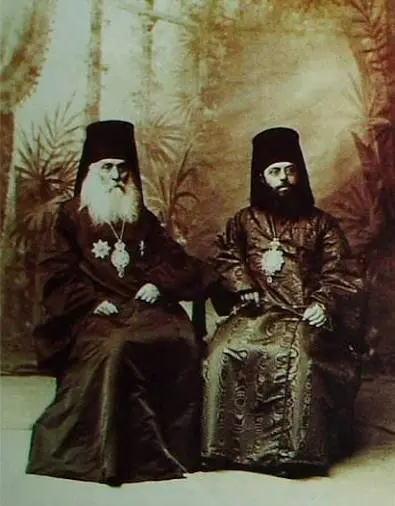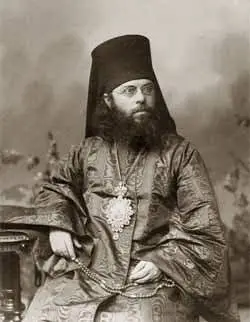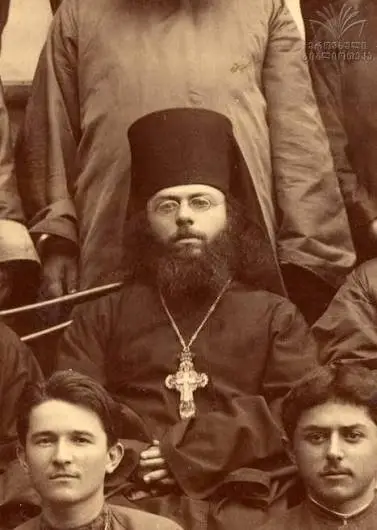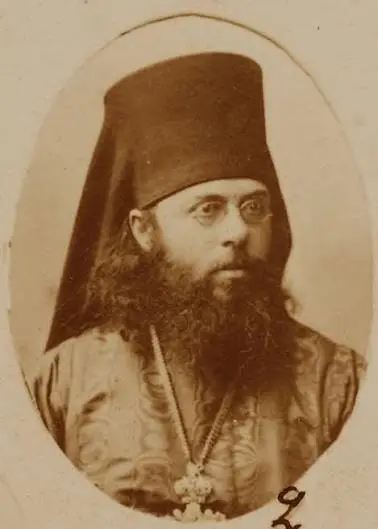
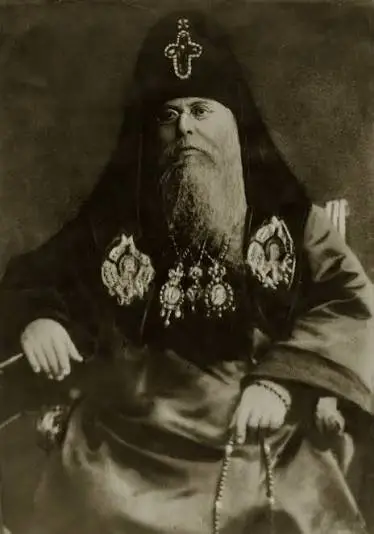
Patriarch Leonide, a prayer offered at the dawn of freedom
After more than a century of silence, he announced to the nation in Svetitskhoveli the freedom of the Church. That voice rang out when the homeland too was touching the first light of freedom, but the dawn was not followed by a long day. Leonide knew that freedom is not only an achievement but also a daily responsibility, and so with prayer, word and patience he guarded what had only just been returned to the country. Today, in the silence of Sioni, his memory asks us how to keep faith and dignity when time tests our steadfastness.
In Georgia's history there are years when joy and trial stand side by side. In such a time Patriarch Leonide's path was linked with the restoration of the Georgian Church's freedom, the defence of education and the hard test of the homeland's independence. His life reminds us that spiritual ministry does not fit only within church walls: it begins in the human heart and continues wherever a nation needs to keep its own voice.
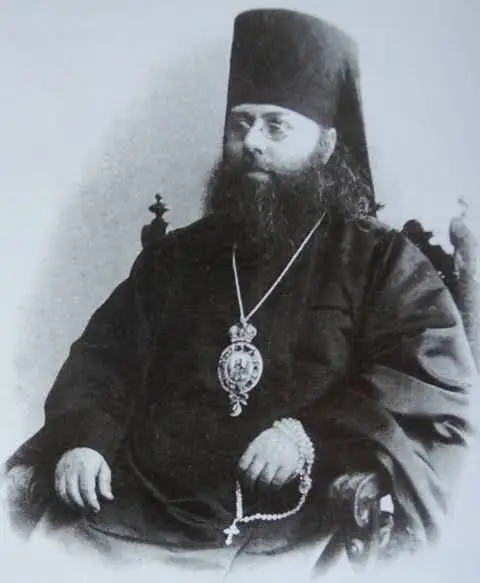
Leonide, in the world Longinoz Solomonis dze Okropiridze, was born on 15 February 1861 in the village of Disevi in the Gori district. His uncle, Bishop Alexandre Okropiridze, was important for his upbringing. At his side Longinoz came to know church life, study and the responsibility a clergyman bears before society. His uncle's care influenced his choice.
He began his theological education in Georgia and then continued it at the Stavropol seminary. In 1884 he entered the Kiev Theological Academy and in 1888 graduated with the degree of candidate of theology. His studies allowed him to examine church history and canonical questions in depth. Later it was precisely this knowledge that helped him substantiate the rights of the Church of Georgia, when voicing a national wish was no longer enough and historical arguments were needed.
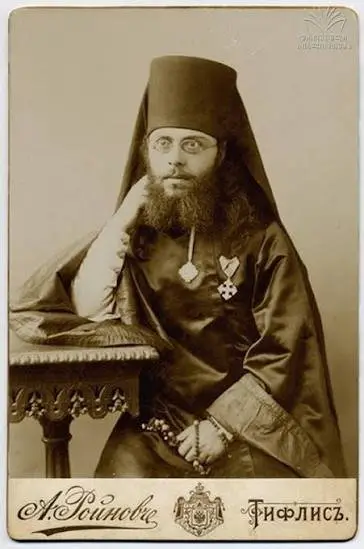
In 1887 Longinoz was tonsured a monk and given the name Leonide. The same year he was ordained hierodeacon, and in 1888 he became a hieromonk. On returning home he devoted his work to education and missionary activity. He worked as inspector of church schools and cared for the development of teaching in Pshavi, Khevsureti, Mtiuleti, Gudamakari and Saingilo. For him books and faith together served the education of the person, though this work took place in the difficult setting of imperial rule.
On the path of monastic ministry Leonide led the monasteries of Zedazeni and Khirsa, and then became superior of the Monastery of the Baptist at David Gareja. He took part in church administration and in correcting the sacred books. This work was of essential importance for the daily life of the Church. The accuracy of the Georgian text, the organisation of teaching and the care of monastic life created the foundation on which later renewal had to rest.
On 19 April 1898 Leonide was consecrated Bishop of Gori in Sioni Cathedral in Tbilisi. In 1900 he was entrusted with leading the eparchy of Imereti, and from 1908 he was Bishop of Guria and Samegrelo. He travelled through his eparchies, acquainted himself with the state of churches and schools and cared for the improvement of their work. His ministry included not only worship but also the practical questions without whose solution the spiritual life of the faithful could hardly develop.
The Georgian language and church chant held a special place in his work. Leonide opposed the Russification of education and supported the teaching of the mother tongue. Preserving Georgian chant also meant for him protecting the living memory of the Church. At the same time he published articles and historical reflections on the question of autocephaly. He sought to demonstrate that the right to govern its own Church belonged to Georgia's historical and canonical heritage.
In 1906, at the pre-conciliar deliberations held in Saint Petersburg, Leonide defended the restoration of the autocephaly of the Church of Georgia. This struggle was long and met with resistance. The disagreement with the Russian church authorities did not concern only administrative arrangements: the question included the assessment of a historical injustice, the national language and the self-government of the Church. Leonide became one of the important participants in this movement, though the restoration was the result of the joint efforts of many clergy and lay people.
On 12 March 1917, Old Style, the restoration of the autocephaly of the Church of Georgia was proclaimed in Svetitskhoveli. Leonide announced the decision to the assembled people and took the head of the provisional administration of the Church. After more than a century the Georgian Church had the opportunity to restore its own governance. Eparchies had to be organised, a council prepared, the clergy united and relations with other Churches defined.
In September of the same year the church council elected Kirion II Catholicos-Patriarch. Leonide, who had also been a candidate, continued his ministry as Metropolitan of Tbilisi. Within the restored Church there was tension and also personal conflict. In describing this period, creating only an ideal picture of unity would diminish historical truth. The return of freedom did not mean the end of all disagreements; the Church also needed to overcome its own internal difficulties.
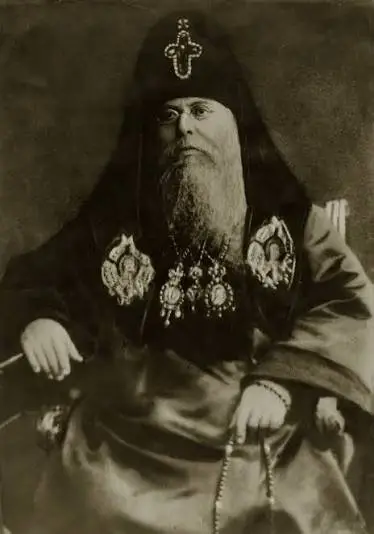
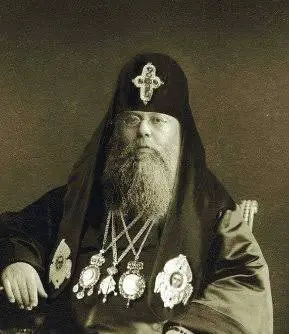
In June 1918 Kirion II was found dead at Martkopi monastery. The circumstances of his death are still debated, and unproven accusations cannot be regarded as established facts. After this tragedy Leonide took on the responsibility of leading the Church. In November 1918 the Council of the Catholicosate confirmed him as Catholicos-Patriarch, and on 23 February 1919 his enthronement took place in Svetitskhoveli. That is why his primacy is often counted from 1918, though the enthronement came later.
In newly independent Georgia the patriarch also had to define his relationship with the Social Democratic government. The separation of Church and state, educational questions and the material situation of the Church caused disagreements. Leonide was critical of some government decisions. For him the independent state was a great historical achievement, but this did not mean approving every step of the authorities. He linked loyalty to the homeland with the need to defend the rights of the Church and spiritual life.
In international church relations the recognition of autocephaly remained a challenge. In a letter sent in 1919 to Patriarch Tikhon of Russia, Leonide defended the historical rights of the Church of Georgia and rejected the legitimacy of the abolition of autocephaly in 1811. He also tried to restore links with other Christian centres. In his lifetime these efforts did not end in general recognition. The restored Church was still in a difficult international situation and was struggling to establish its own place.
In his sermons freedom was linked with human moral responsibility. The patriarch drew attention to respect for one another's dignity, self-restraint and service to one's neighbour. In this view freedom is no longer only a political condition: it must also show itself in everyday relations. Disregard for the pain of others, violence and intolerance empty freedom of its content. This side of his spiritual appeal is understandable today too, because the strength of national life also rests on trust between people.
In February 1921 the troops of Soviet Russia entered Georgia and occupied Tbilisi. The loss of independence brought a new trial to the Church. Leonide moved temporarily to Kutaisi and then returned to Tbilisi. Under the new power the confiscation of church property and restriction of the Church's activity began. The last months of the patriarch's life were spent in a setting where the freedom only recently restored had to keep struggling to exist.
Leonide died in Tbilisi on 11 June 1921. According to the most widespread historical account, the cause of death was cholera. The recollection about water, according to which he did not wish to enjoy conditions different from those of his flock, is a memoir tradition preserved about him. This story may be read as an expression of his compassion, but there is no need to embellish it into legend. The patriarch was buried in Sioni Cathedral in Tbilisi; his successor was Ambrose Khelaia.
In Leonide's brief primacy both the hope of Georgia's freedom and the pain of its loss were reflected. He did not manage to achieve all his goals, but he made an important contribution to restoring and defending autocephaly. His memory remains in the history of education, the Georgian language and responsible spiritual ministry. In the silence of Sioni, remembering his life brings us back to the question every generation answers anew: how to keep faith and dignity when the times test our steadfastness.