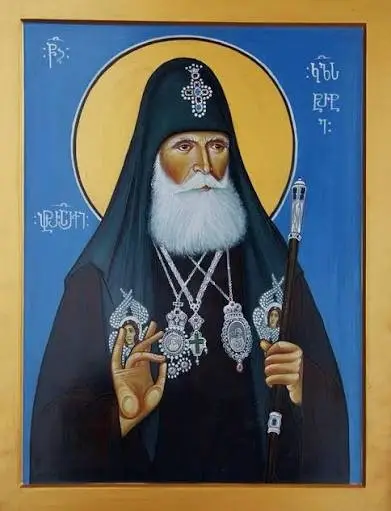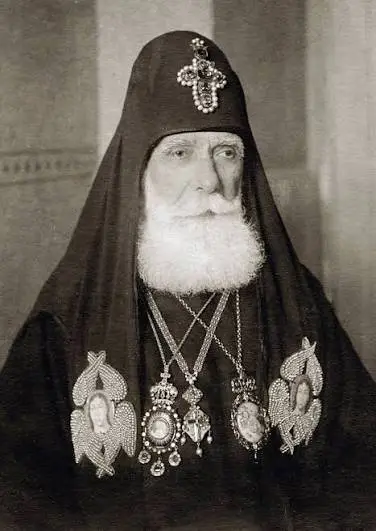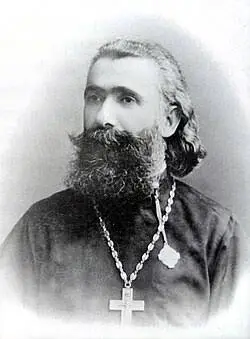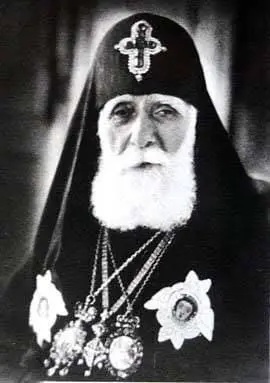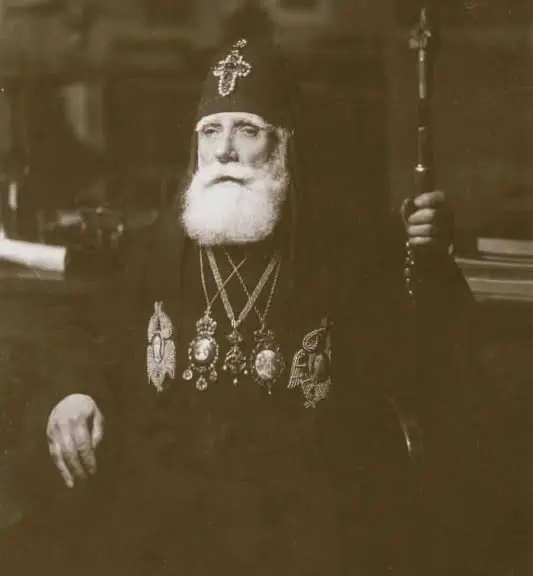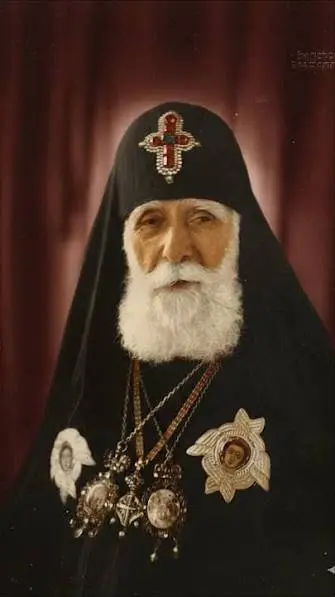
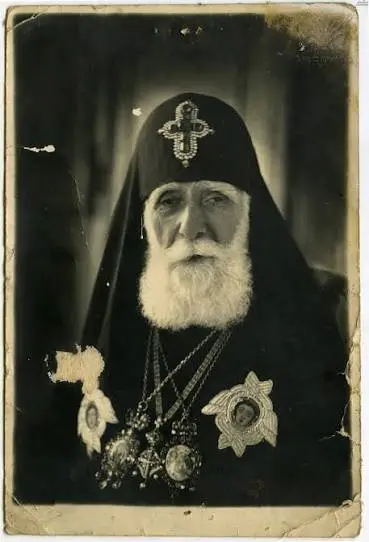
Kalistrate Tsintsadze, Catholicos-Patriarch of All Georgia
One hand carried book and cross with the same love: the scholar knew that knowledge does not oppose prayer, but strengthens it. Prison confined his body, but could not stop the road that led from the small village of Tobanieri to the throne of Svetitskhoveli. Today, a century later, the Church has confirmed what his life had already said: that work carried out with patience is itself holiness.
On 21 June 1932 the Church of Georgia elected Metropolitan Kalistrate as its new primate. Patriarch Christophorus III had died a few months earlier, and the Church had to exist under the strict control of Soviet power and its anti-religious policy. The new Catholicos-Patriarch had long church and scholarly experience. A heavy responsibility lay before him: to preserve church life, to care for the clergy and the faithful, and to hand on to future generations the spiritual heritage to whose protection he had devoted his life.
Kalistrate Tsintsadze was born on 24 April 1866, 12 April in the Old Style, in the village of Tobanieri in Imereti, in today's Vani municipality. His father, Mikheil Tsintsadze, was a priest, and his mother was Ekaterine Gogorishvili. In the family church books and prayer held an important place. From childhood the future patriarch heard the words of the services and saw how the daily life of a priest was bound up with caring for people.
His sister Matrona taught him to read and write, and his father's pupils helped him become acquainted with church books. This first knowledge he acquired while still in the family setting. Later books would hold a special place in his life: he would study the past of the Church of Georgia, collect manuscripts and work on texts whose preservation was essential for future generations.
In his childhood a meeting with Bishop Gabriel left an important mark on Kalistrate. According to his memoirs, the bishop asked the child to recite his prayers, gave him a cross and advised his father to send him to school. Bishop Gabriel's attention remained precious to him later as well. This meeting shows how the care of an older pastor can give direction to a young person's future and guide his abilities along the path of study and service.
In 1875 Kalistrate entered the Kutaisi theological school. He then continued his education at the Tbilisi Theological Seminary, from which he graduated in 1888. His years of study were an important period in the formation of his personality. Alongside theological education he became acquainted with the history of Georgia and the issues connected with the situation of the Georgian Church.
After the Tbilisi Seminary Kalistrate went to the Kiev Theological Academy. There he studied theology, ancient languages and church history. In 1892 he graduated from the Academy with the degree of candidate of theology. His scholarly work dealt with the history of the Church of Iberia in the Sasanian period. This choice already showed the interest that would accompany him all his life: to study the past of the Church of Georgia thoroughly and bring out its historical place.
On his return home Kalistrate began his church ministry. In 1893 he was ordained priest and assigned to the Church of the Mother of God at Didube in Tbilisi. Here his knowledge was joined to everyday parish life. A priest's work included contact with people, worship and care for the needs of the faithful. His scholarly interests remained in his life, but beside them now stood his responsibility to the people who sought consolation and spiritual guidance in the church.
From 1903 Kalistrate served at the Church of Saint George of Kashveti, and in 1909 he was given the rank of archpriest. Important years of his life were linked with this Tbilisi church. Later he also devoted a separate work to the history of Kashveti. For him the church was a place of worship and part of a historical heritage whose past needed study and preservation.
Kalistrate took part in the work of the church museum, in correcting Georgian liturgical books and in gathering historical materials. He paid special attention to manuscripts. Part of the manuscripts he acquired was given to Tbilisi University. In this work spiritual ministry and the protection of cultural memory merged: by preserving old books he left future readers the possibility of meeting Georgia's past.
One of the main directions of his work was the restoration of the autocephaly of the Church of Georgia. Kalistrate approached this question by studying its historical and ecclesiastical foundations. His work on the independence of the Church of Georgia, published in 1905, contained important scholarly arguments for the supporters of autocephaly. For him research served a concrete task facing the Church.
The work for the restoration of autocephaly united the efforts of many clergy and public figures. Kalistrate also took part in preparing the draft statute for the governance of the Church. Knowledge of history had practical value: the restored Church needed to organise its own life, define responsibilities and lay a foundation for the future. In this work his education and experience proved especially useful.
In 1917, after the restoration of the autocephaly of the Church of Georgia, Kalistrate was elected a member of the Council of the Catholicosate. This event was the result of a long struggle, but it also brought new concerns to the Church. Acting independently required organisation and concerted work. Kalistrate's ministry continued in these transitional years, when the restored Church was building its future against the background of a rapidly changing situation in the country.
After the establishment of Soviet power the situation of the Church worsened sharply. Clergy suffered persecution and restrictions, and church life came under constant pressure. Kalistrate was among the defendants in the case brought against Catholicos-Patriarch Ambrose and the members of the Council of the Catholicosate. At the trial held in March 1924 he was sentenced to imprisonment. At that time serving the Church also meant the risk of losing one's personal freedom.
The experience of imprisonment became a hard part of his biography. Behind the court's sentence lie separation from family, the disruption of daily life and uncertainty. Kalistrate's later path shows that this trial did not end his ministry. After his release he returned to the Church. The same task lay before him, though the environment was even harder and every decision required greater caution.
In 1925, with the blessing of Catholicos-Patriarch Ambrose, Kalistrate was consecrated Bishop of Ninotsminda. He was then raised to the rank of metropolitan and appointed co-locum tenens of the patriarch. This trust reflected his long experience and the place he held in church life. At the same time the Church was also suffering internal disagreements, which together with external pressure made governance harder.
Amid the conflicts of that time Kalistrate renounced the duties of co-locum tenens. From 1927 he governed the eparchy of Manglisi. His life was again bound up with episcopal ministry. Care for churches, clergy and faithful continued in an environment where the Church's possibilities for action were limited. The experience of these years gave the future patriarch direct knowledge of the situation of the country and the Church.
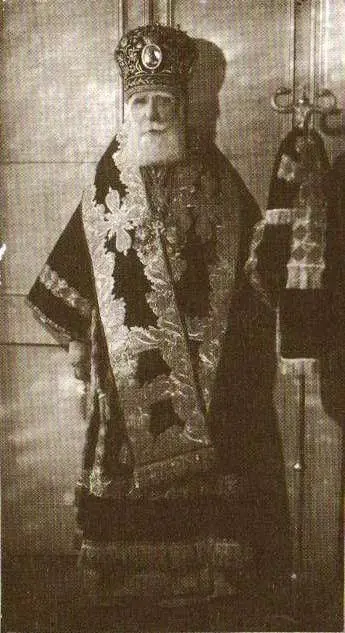
On 21 June 1932 the Sixth Church Council of Georgia elected Kalistrate Catholicos-Patriarch of All Georgia. On 24 June his enthronement took place in the patriarchal Svetitskhoveli Cathedral. At the head of the Church now stood a man who had gone through study, parish ministry, scholarly work and imprisonment. This experience was now united in the responsibility he had taken on before the whole Church.
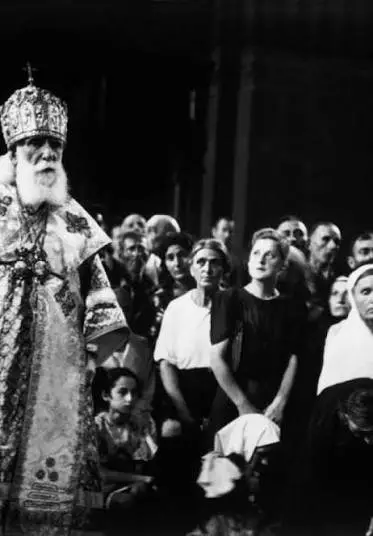
During Kalistrate's patriarchate the Church had to live under a harsh anti-religious policy. Preserving churches, continuing worship and supporting the clergy required constant effort. The primate had to deal with the authorities and submit petitions to defend the Church's needs. In assessing his work it is essential to take this environment into account: many of his steps served to preserve the possibilities that remained to the Church.
In such an age the importance of daily ministry grows especially great. The liturgy celebrated in church meant for the faithful the continuation of the life of faith. Prayer spoken in Georgian connected people with the spiritual heritage received from their ancestors. The history of Kalistrate's patriarchate must also be read against the background of these small but essential tasks: the life of the Church was made up precisely of people, worship and preserved spiritual bonds.
An important event of his patriarchate was the recognition of the autocephaly of the Church of Georgia by the Russian Orthodox Church in 1943. Eucharistic communion between the two Churches was also restored. This did not mean that the Church of Georgia regained its independence anew, because autocephaly had already been restored in 1917. A long church disagreement ended, and the Russian Church recognised the independent status of the Church of Georgia.
On 31 October 1943, in connection with this process, a solemn service was held in Sioni in Tbilisi. This event held a special place in Kalistrate's life: since his youth he had worked on the historical foundations of autocephaly. Decades later he witnessed an important result on this question as primate of the Church of Georgia. His personal path was once again joined to the cause he had served for many years.
His scholarly legacy remained an inseparable part of his life. The works devoted to church history and the materials he preserved still bear witness to his interests and labour. In Kalistrate's biography the scholar and the pastor complement each other. The one, by studying the past, created a foundation of knowledge; the other cared for the continuation of this heritage in the living setting of the Church. At the root of both tasks lay responsibility towards the Church of Georgia.
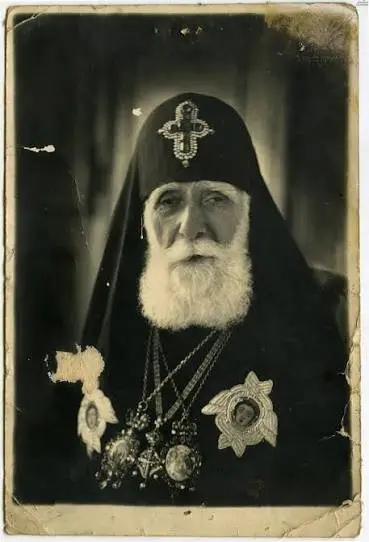
On 3 February 1952 Kalistrate Tsintsadze died in Tbilisi. He was buried in Sioni Cathedral. After him Melchizedek III was elected primate of the Church of Georgia. A patriarchate of almost twenty years came to an end, during which the Church had to endure the hardest historical conditions. His grave in Sioni keeps the memory of this age and recalls his long ministry.
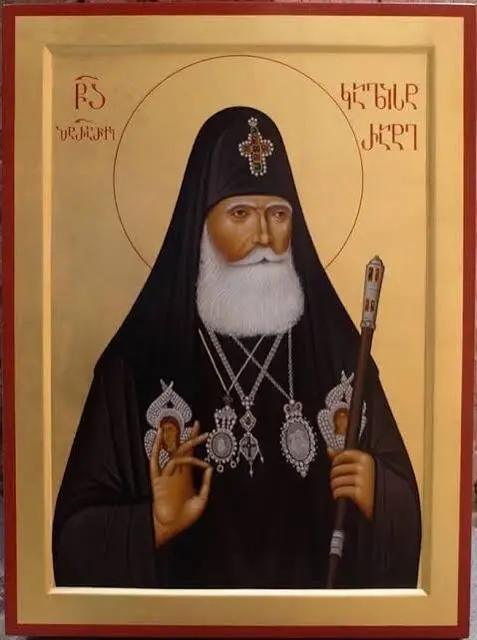
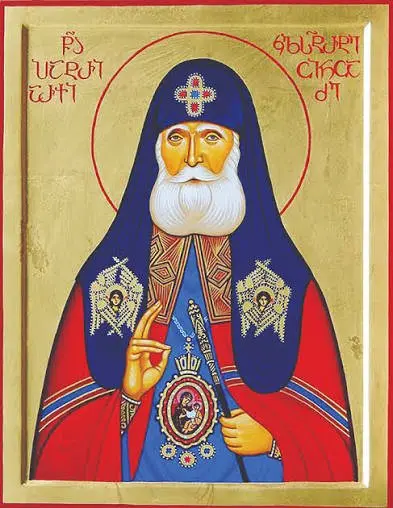
On 22 December 2016 the Orthodox Church of Georgia canonised Kalistrate Tsintsadze. Remembering his life cannot be limited to listing his patriarchal years. From Tobanieri to Sioni he travelled a path of education, research, priestly ministry and trial. In this long life one concern united his various duties: that the Church and future generations should keep their spiritual heritage.
His name reminds us that defending the faith is sometimes expressed in long work done with patience. In the life of Kalistrate Tsintsadze this work included ministry in church, saving books, studying history and preserving the life of the Church. After him remained the possibility for prayer to continue and a memory to which new generations still respond. In this legacy the path begun in Tobanieri continues to this day.