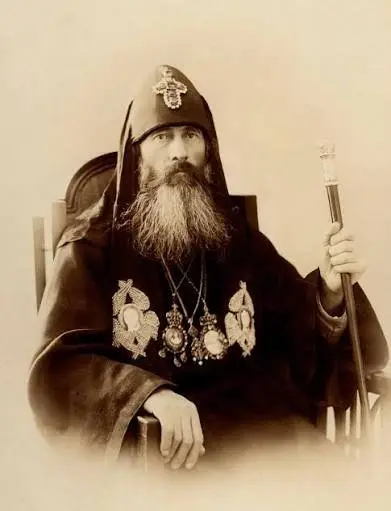
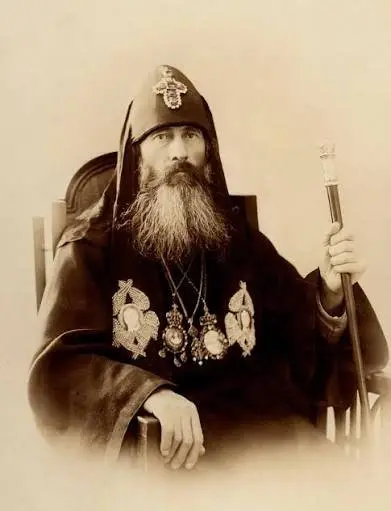
Christophorus III, Catholicos-Patriarch of All Georgia
His path does not allow a simple judgement. On the one hand, the boy from a poor village who fought for knowledge and brought the Georgian word into the schools; on the other, the patriarch who, in the hardest of times, had to take decisions that generations still judge differently. His story teaches us that sometimes one person's life holds both goodness and difficulty at once, and that true respect begins with acknowledging this complexity, not with hiding it.
In 1927 Metropolitan Christophorus was elected primate of the Church of Georgia. Patriarch Ambrose had died, and the Church was suffering pressure from Soviet power and internal conflicts. The new Catholicos-Patriarch had long experience of parish, teaching and episcopal ministry. He tried to ease the Church's situation by regularising its relations with the authorities. Yet the difficulties before him could not be solved by good will alone: anti-religious policy continued, churches were under threat and clergy had to struggle for their daily ministry.
Christophorus III, in the world Kristepore Murmanis dze Tsitskishvili, was born on 27 March 1873, 15 March in the Old Style, in the village of Vertkvichala in the Shorapani district, in today's Kharagauli municipality. His family was connected with church life. His father was a reader and well versed in church books. According to Christophorus's memoirs, it was his father who taught him his first prayers. This childhood experience proved to be the beginning of his long path in the Church.
He lost his father at an early age. The family was left in hard material circumstances, and the children's upbringing depended on the care of relatives. Christophorus first studied at the parish school in Tsevi. In his biography education was from the start linked with effort and help. The road to knowledge was not easy, which is why later in his life caring for village children's chance to study held special importance.
In 1882 Christophorus was enrolled in the Kutaisi theological school. Because of the family's poverty, his studies were in danger, but being admitted at state expense allowed him to stay at the school. He then continued his education at the Tbilisi Theological Seminary, from which he graduated in 1895. The knowledge gained in these years became the foundation of his later priestly, teaching and public work.
Alongside theological education Christophorus attached great importance to the Georgian language and literature. His notes show a man interested in history, folk traditions and social life. For him study was not merely the completion of a school programme. Through books he sought to understand the past of his own country and the setting in which his people had to live.
In 1895 Christophorus was ordained priest and first assigned to the Transcaspian region. Later he returned to Georgia and served in villages of the Gori district. His path was linked with Khidistavi and Itria. The young priest became involved in parish life and came to know people's daily needs at close hand. A village priest's ministry, besides worship, also touched the life of families, children and the local community.
In Itria Christophorus took care of developing the parish school. Through his efforts the school acquired a building, and children from neighbouring villages also studied there. He taught Scripture, Georgian language and literature and the history of Georgia. The work of pastor and of teacher merged in his life. For the village children the school was both a place of learning and an opportunity to get to know their own language and past.
The importance of teaching was felt especially in an environment where the Georgian language faced obstacles in education. Christophorus criticised the suppression of the Georgian language. For him education in the mother tongue was linked with the cultural life of the country and national self-awareness. This attitude shows an important side of his early work: the coming generation should know its own language and have the opportunity to learn the history of Georgia.
He also wrote down folk legends and local customs. He was interested in the history of villages, feasts and traditions connected with churches. Such records preserved a world kept in people's memory. In this part of Christophorus's biography we see, beside the future patriarch, a researcher who listened carefully to the people and tried to protect their stories from oblivion.
His church path later also led to Tbilisi. The experience gained serving in various parishes gradually grew into a wider church responsibility. Christophorus supported the restoration of the autocephaly of the Church of Georgia. For him the questions of the Georgian language, theological education and the independent governance of the Church were linked: the Church needed to preserve its own historical character and way of life.
In 1917 the restoration of the autocephaly of the Church of Georgia created new possibilities and new duties. The restored Church needed to organise its own governance, set up its eparchies and achieve concerted work among the clergy. Christophorus too took part in these processes. But within a few years the country's political situation changed sharply, and to the task of living independently was added the heavy concern of preserving the Church's very existence.
In 1922 Christophorus was consecrated bishop. His episcopal ministry was linked with the eparchies of Manglisi and Urbnisi. The same year, when the danger of Patriarch Ambrose's arrest arose, Christophorus was entrusted with leading the provisional administration of the Church. This decision is important for understanding their relationship: at first Ambrose entrusted him with responsibility and involved him in governing the Church in a difficult situation.
In the following years their attitudes towards relations with Soviet power diverged. Ambrose attached special importance to appealing to the international community about Georgia's situation and to exposing the actions of the authorities. Christophorus, on the other hand, was among the clergy who sought to preserve the Church's possibilities of action through agreement with the authorities. This difference deepened the conflict in church life.
In describing these events general words alone are not enough. Christophorus's participation in the so-called movement of supporters of renewal and reform is an important and disputed part of his biography. The movement demanded changes in the governance of the Church and in its relations with the state. Ambrose and some members of the Council of the Catholicosate opposed its actions. The history of this period therefore cannot be presented as a picture of united and peaceful cooperation.
At the end of 1926 a group gathered in Kutaisi set up a provisional administration of the Church. Ambrose did not recognise this gathering as a legitimate church council. The conflict also extended to the powers of the administration and control of the chancery. The authorities' intervention made the situation even worse. Christophorus took part in these processes, so treating his life with respect also requires honestly noting these difficult facts.
Against the background of the same conflict Metropolitan Kalistrate Tsintsadze renounced the duties of locum tenens of the patriarch. The events show how hard the Church's situation was: internal disagreement was added to external pressure. Choosing different paths affected the common outcome. The question of the Church's survival was now accompanied by the question of how its unity and canonical order could be preserved.
After the death of Patriarch Ambrose, in June 1927 the Fourth Church Council of Georgia elected Christophorus Catholicos-Patriarch of All Georgia. He took over the leadership of the Church after conflicts and heavy losses. The new primate tried to regularise relations with the authorities, but the results of this policy did not match the hopes his supporters had.
During Christophorus's patriarchate the anti-religious direction of the Soviet state did not change. The Church still had limited possibilities, clergy were under pressure and protecting churches required constant care. Expressions of loyalty to the authorities did not secure the Church's safety. It is in this setting that the main difficulty of his patriarchate must be considered: the search for agreement did not become a guarantee of free church life.
During his administration an attempt was also made to change the church calendar. The 1927 decision to celebrate feasts according to the New Style met with resistance and was revoked in 1928. This case showed how important the attitude of the faithful was towards changes connected with tradition. The life of the Church could not be transformed by administrative decision alone, especially when trust in society had already been shaken.
In his appeals to the authorities Christophorus also spoke of the unbearable situation of the Church. The appeal of 28 April 1931 bears witness to the obstacles the Church faced during his patriarchate. The importance of these documents lies in showing the complexity of events: despite the attempt to change relations with the authorities, the primate still had to defend the needs and rights of the Church.
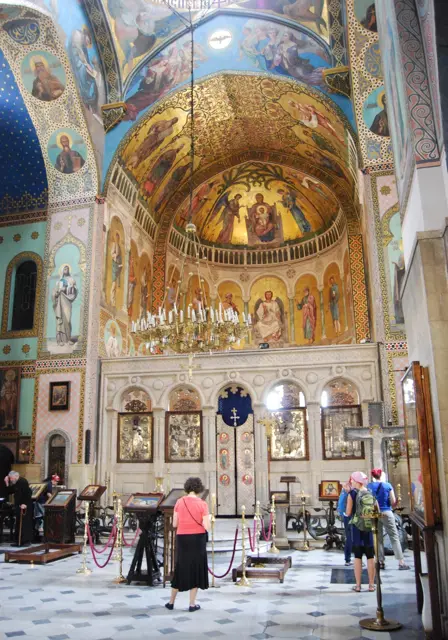
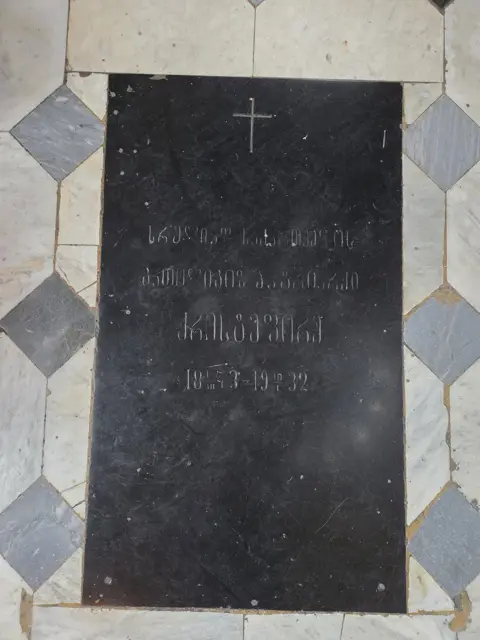
In the last years of his life his health deteriorated. The weight of illness was added to his daily responsibility. On 10 January 1932 Christophorus III died in Tbilisi and was buried in Sioni Cathedral. The same year Kalistrate Tsintsadze was elected primate of the Church of Georgia. The main trials facing the Church continued and became the responsibility of the new patriarch.
The assessment of Christophorus III's life cannot be limited to the disputed events of his patriarchate either. Behind him lay childhood poverty, effort spent on education, ministry as a village priest, care for a school and the defence of the Georgian word. The same biography also contains decisions that sharpened the church conflict. Seeing both sides gives us a fuller picture of the man and his age.
His path reminds us how hard it can be to lead the Church when the authorities restrict the life of faith and fear grips society. From Vertkvichala to Sioni, Christophorus went through study, ministry, hope and hard choices. Remembering his story requires both compassion and faithfulness to the truth, so that the past is handed on to the next generation in all its complexity.