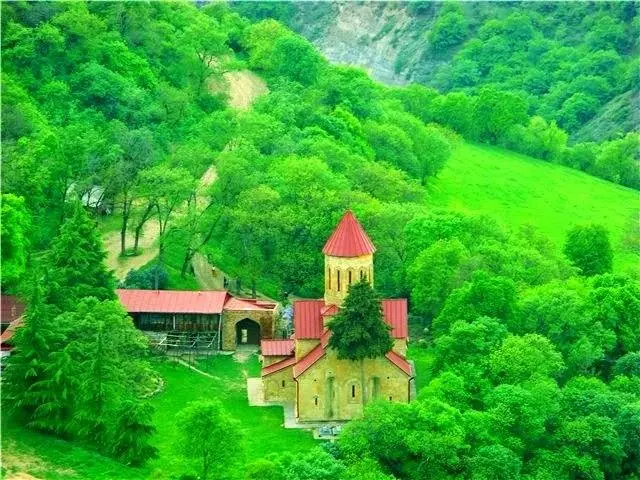
Betania Monastery
The forest hid what the world was not meant to lose: a stone church where the face of Tamar is written on the wall and time stands still. Through the centuries Betania fell into ruin and rose again, as though God had never forgotten this valley. Even today, in the shade of the trees, the old frescoes look silently on those who have climbed this far in search of prayer.
- Region
- Kvemo Kartli
- UNESCO
- No
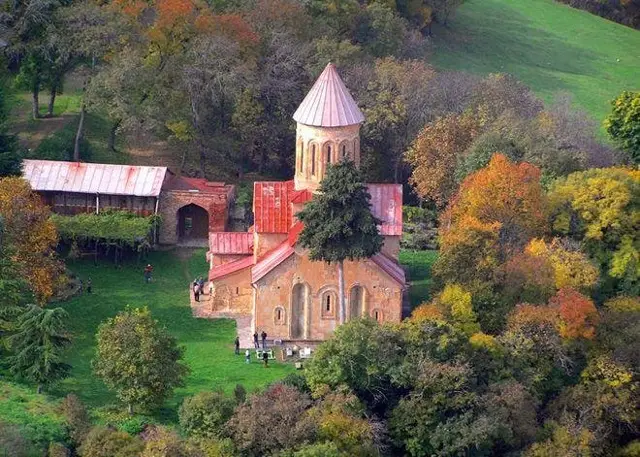
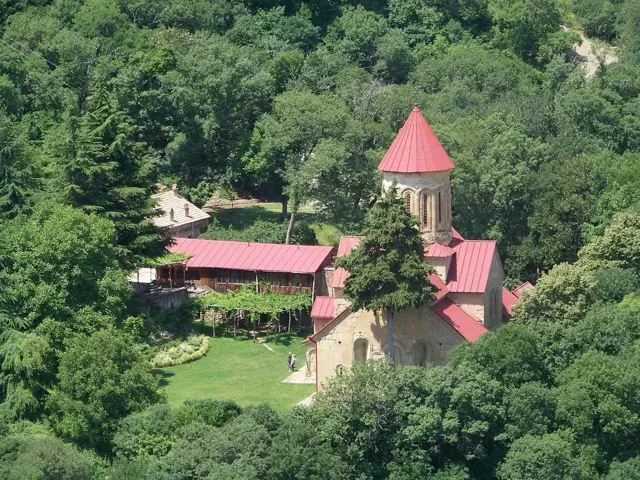
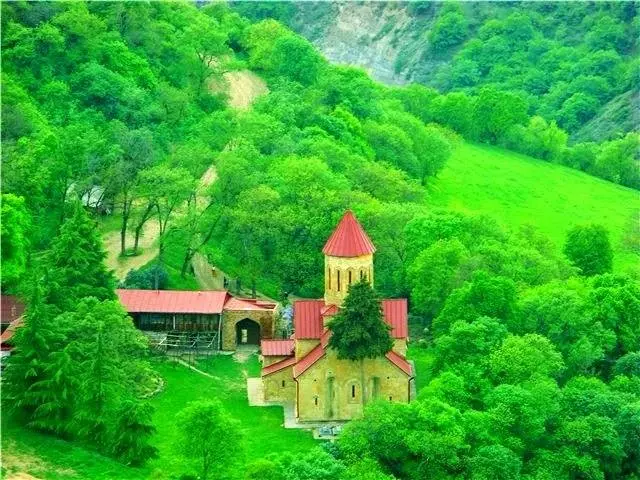
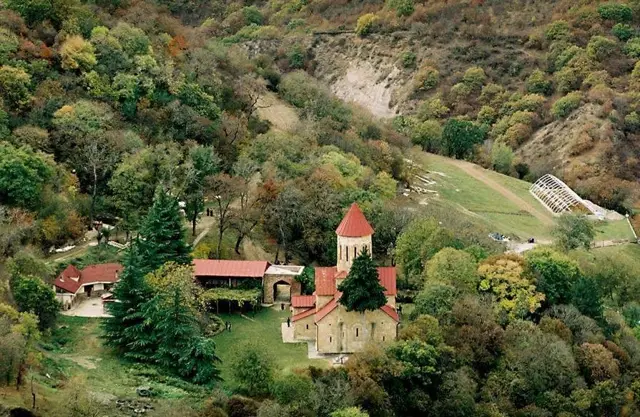
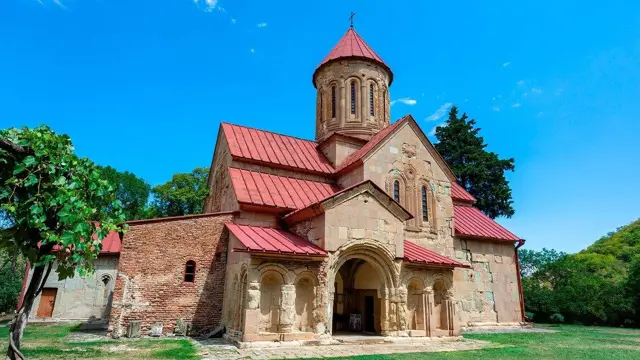
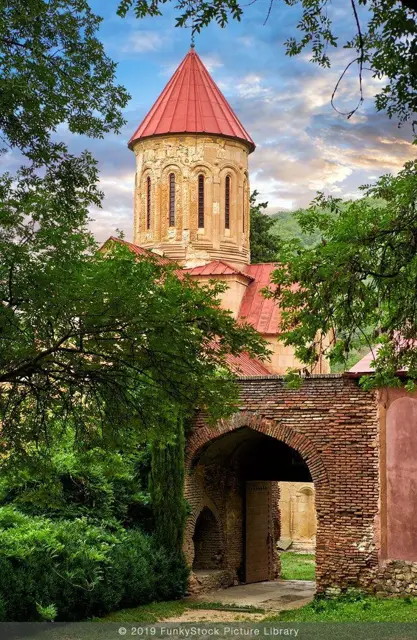
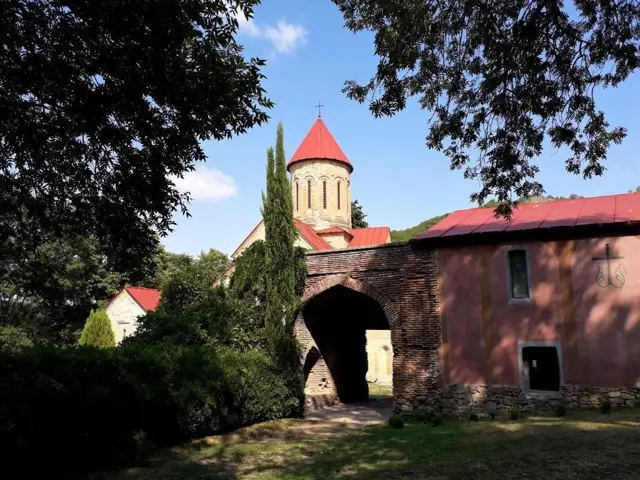
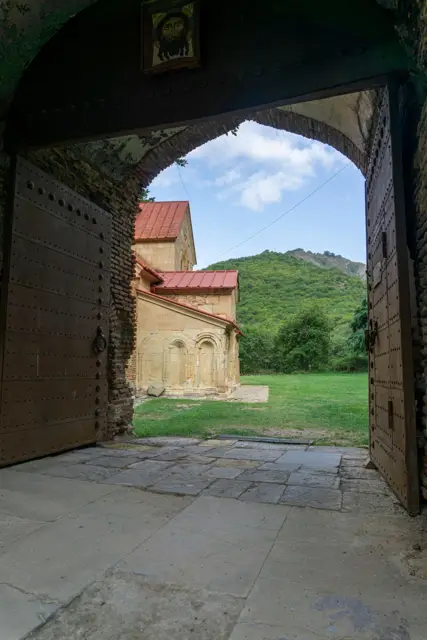
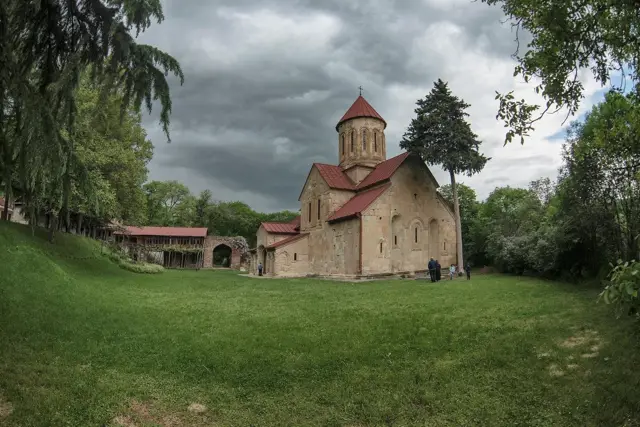
The Betania Monastery of the Nativity of the Most Holy Mother of God is one of the outstanding monuments of church architecture and monumental painting of medieval Georgia. It stands south-west of Tbilisi, in the valley of the river Vere, among forested mountains. The monastery's secluded location is not accidental: in Georgian monastic tradition such a setting was especially suited to prayer, silence and the hermit's life.
The early stages of Betania's history are not fully documented. It is known that a monastery existed on this site already in the 11th century, and that an older, small brick church stood on the site of the present main church. The main domed church, dedicated to the Nativity of the Mother of God, is linked with the end of the 12th and beginning of the 13th century, the period of Georgian history regarded as a time of the country's political and cultural rise.
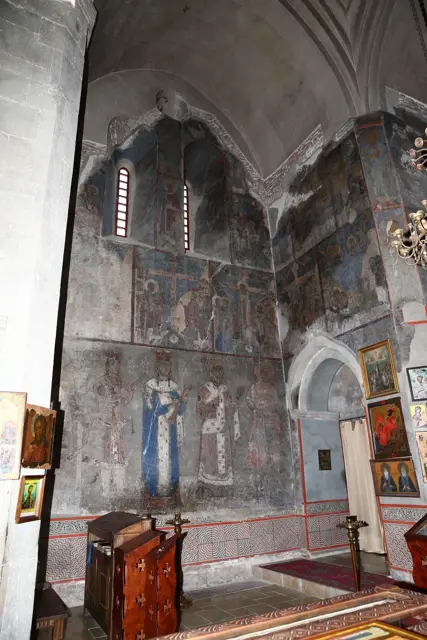
The monastery was historically connected with the feudal family of the Orbelis. The donor images preserved on the south wall of the church confirm this link. Here Sumbat Orbeli and his son are depicted, and Sumbat himself holds a model of the church in his hand. Such images in medieval Georgian churches were not only artistic compositions but also part of the historical memory of the church's founders and patrons.
In the Christian world the name "Betania" is linked with the Bethany of the Gospel, the place near Jerusalem where, according to the Gospel, Christ visited the family of Lazarus, Martha and Mary. The name of the Georgian monastery also carries the memory of this holy place. The seclusion and natural calm of the setting give this name a special spiritual content: here the monastery lies far from the noise of the city, in a deep valley.
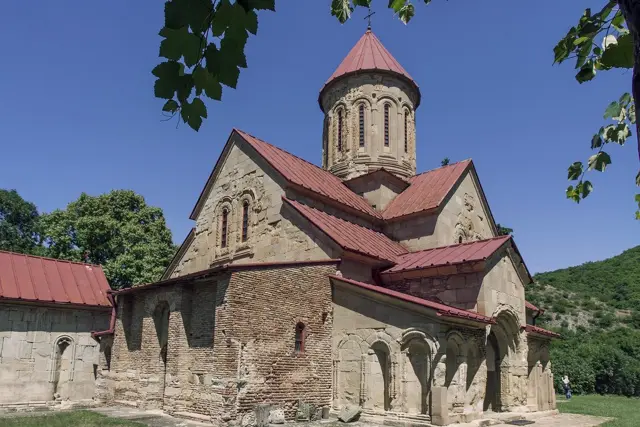
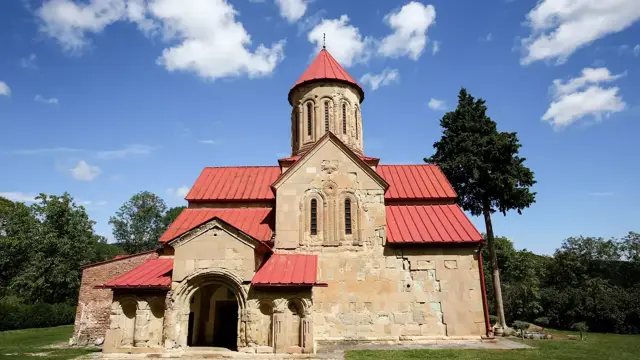
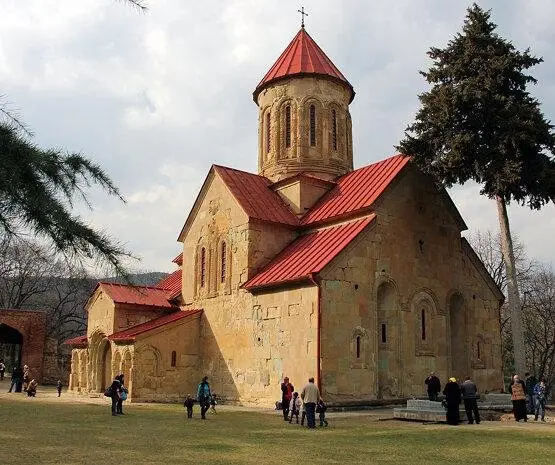
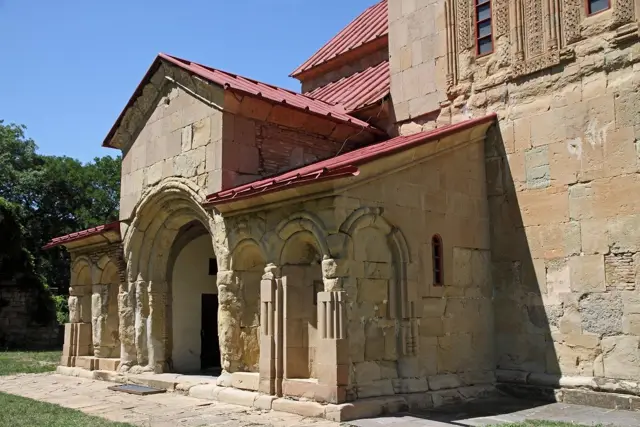
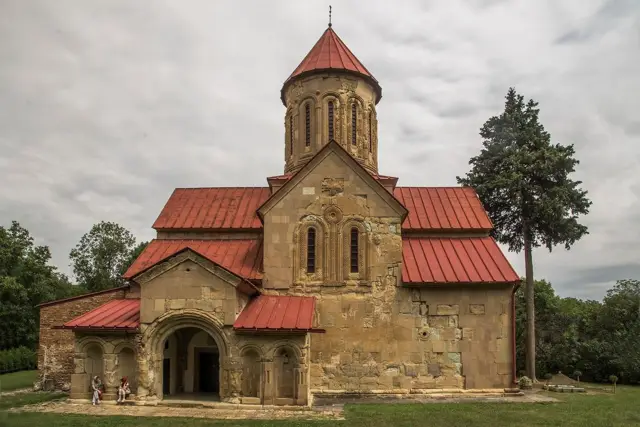
Betania's main church is an important example of Georgian cross-domed architecture. Its plan is close to a square, and the dome rests on two free-standing piers and on supports joined to the sanctuary walls. Outside the church is faced with dressed stone. On the relatively calm surface of the façades the stone carvings gathered around the windows stand out especially, and twelve windows are cut into the drum of the dome.
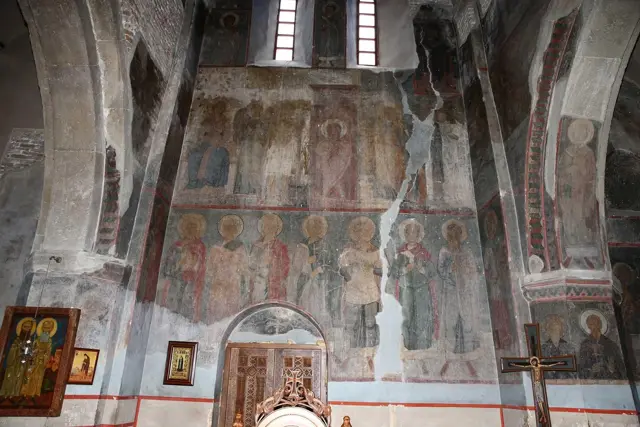
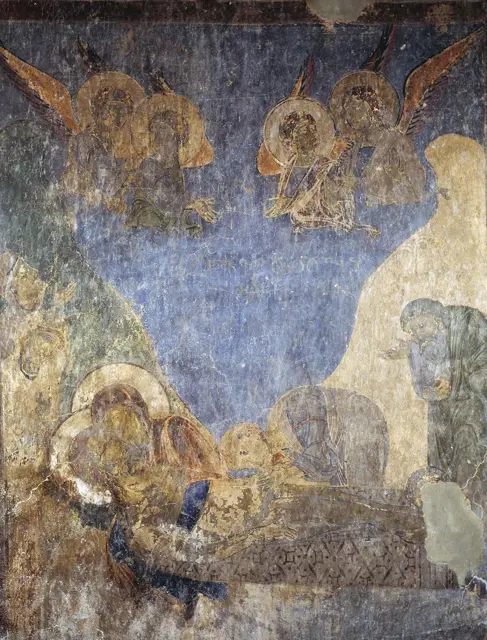
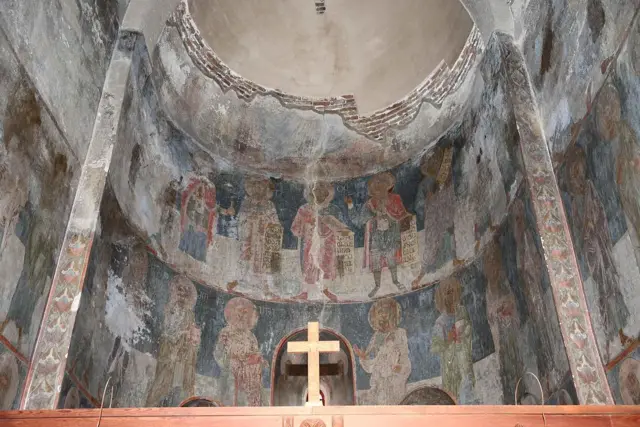
But Betania's greatest treasure is its wall painting. The frescoes preserved in the church belong among the most important examples of medieval Georgian art. The composition of the "Deesis" was originally depicted in the conch of the apse; today part of it survives in fragments. In the sanctuary there are images of prophets and apostles; on the north wall, the cycle of the Passion of Christ; on the south side, Old Testament scenes; and on the west wall the monumental composition of the "Last Judgement" partly survives.
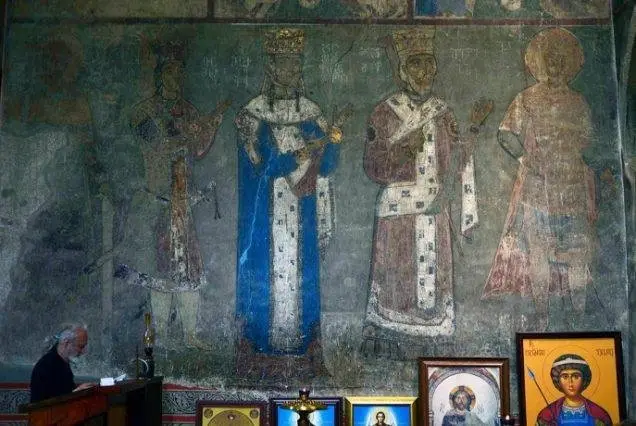
Of special historical importance are the royal portraits depicted on the north wall. Here George III, Queen Tamar and George IV Lasha are shown side by side. This composition makes Betania a special monument of Georgian historical painting. Tamar's portrait is one of the few medieval images that have preserved the face of the great sovereign of Georgia down to our time.
Betania's painting is not valued only for a few famous portraits. As a whole it shows how closely theology, the historical memory of royal power and monumental art were bound together in medieval Georgia. Biblical cycles, the faces of saints and portraits of historical figures create in one space the spiritual picture of an age. That is why the church is important not only for pilgrims but also for scholars of Georgian art, history and architecture.
Near the main church stands the small single-nave church of Saint George. According to the inscription preserved on it, it was built in 1196. Despite its small size, this church is an important part of the historical picture of the Betania complex and confirms that developed monastic life already existed here by the end of the 12th century. Remains preserved on the monastery grounds also indicate that in former times the monastery was larger and had monks' cells and other monastic buildings.
In the following centuries Georgia's difficult political situation also affected Betania. Wars, invasions and the general weakening of the country disrupted the monastery's life. The monastery gradually emptied, the buildings were damaged and for a time Betania was almost forgotten. Parts of the main church collapsed, the roof and dome were damaged, and the precious frescoes were left in a poor state because of natural conditions and neglect.
In the middle of the 19th century Betania again attracted the attention of scholars. In 1851 the monastery was visited by the historian Platon Ioseliani and the painter Grigory Gagarin. As rubble and fallen stones were cleared, the church's old painting, including the royal portraits, became more clearly visible. From this period Betania gradually returned to Georgian public and scholarly awareness.
At the end of the 19th century monks settled in the monastery again and began to restore the damaged monastery. The hieromonk Spiridon Ketiladze held an important place in this work. Despite hard conditions and limited means, the monks sought to revive the church and monastic life. It was this restoration effort that prepared Betania for one of the most remarkable historical missions of the 20th century.
In the Soviet era, when state policy against the Church was especially harsh, Betania became a rare refuge of Georgian monasticism. The monastery was not always officially regarded as a functioning monastery, but monks lived here, prayed and celebrated services. The archimandrites Ioane Maisuradze and Giorgi Mkheidze became especially well known, keeping monastic life with great steadfastness under the atheist regime.
Their life became so important in Betania's history that in 2003 the Holy Synod of the Orthodox Church of Georgia numbered them among the saints. Their graves are in the monastery courtyard, on the east side of the main church. Thus Betania did not remain only a medieval architectural monument: it also became a living witness to the resistance of the Georgian Church and the preservation of the faith in the 20th century.
After a period of interruption, monastic life was restored in 1978, when through the efforts of Catholicos-Patriarch Ilia II the return of monks to Betania became possible. This was especially significant in Soviet Georgia, where opening new monasteries was still extremely difficult. In the following years Betania became one of the important centres of the revival of Georgian monastic life.
Today Betania Monastery is again a functioning Orthodox monastery. The forested valley, the austere stone forms of the church and the frescoes darkened by the centuries create a special atmosphere here. Betania's significance lies precisely in the fact that within its walls several very different periods of Georgian history can be read at once: the medieval flowering, the later destruction, the 19th-century restoration and the monastic life that survived under Soviet atheism.
Over the centuries Betania was many times on the brink of disappearance, but each time life returned to it. Its walls were damaged, the monastery emptied and the weight of time left its mark on the frescoes, yet the place of prayer did not finally disappear. Even today, in the silence of the Vere valley, Betania reminds us that the power of holiness is not always expressed in grandeur: sometimes it is felt most strongly in solitude, in silence and in a spiritual memory unbroken through the centuries.