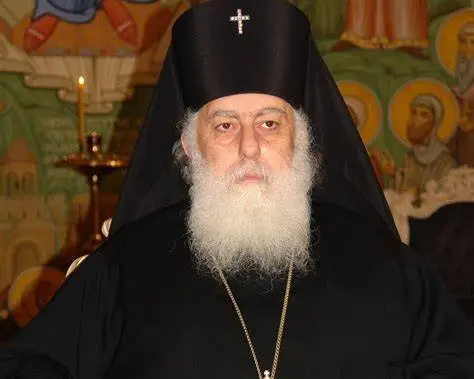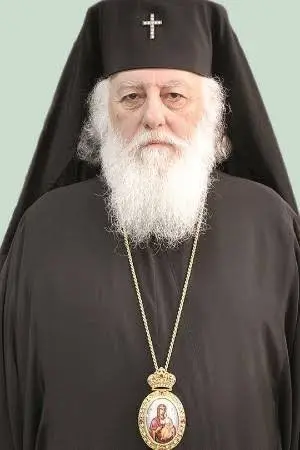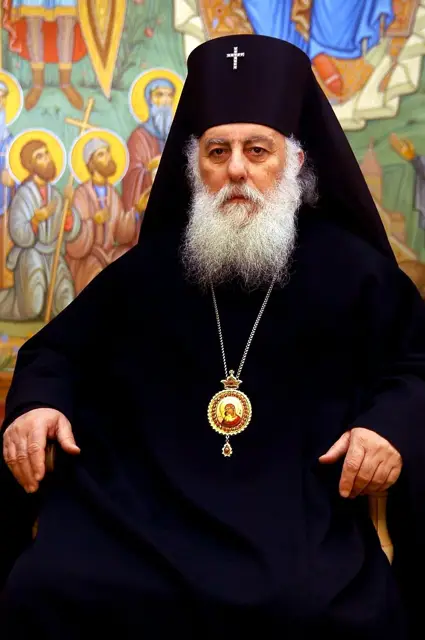
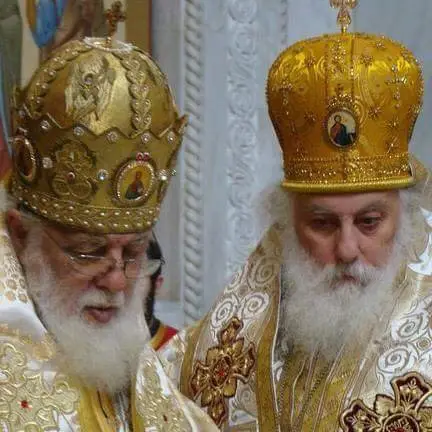
Metropolitan Abraham (Garmelia): from Georgia to Western Europe, a path of faith and service
There are ministries whose significance is not defined by a single church, city or eparchy. They bring together different countries, generations and people. Such a path describes the many years of work of His Eminence Abraham (Garmelia), Metropolitan of the Eparchy of Western Europe.
In his life a historian's education, a teacher's experience, a monastic vocation, service to theological education and a bishop's responsibility came together. This path, begun in Georgia, finally led to Western Europe, where thousands of Georgians lived far from their homeland and especially needed the spiritual closeness of the Mother Church.
Metropolitan Abraham's story is not only a list of church ranks and offices. It is the path of a man who at different stages of his life served education, the Church, the formation of generations of clergy and the strengthening of the bond between Georgians living abroad and the Mother Church.
From Sukhumi to Tbilisi: the first path of learning
Metropolitan Abraham, in the world Amiran Mamias dze Garmelia, was born on 15 November 1948 in the city of Sukhumi.
In 1953 his family moved to Tbilisi. The first important direction of the future bishop's life was linked precisely with education. After finishing secondary school he continued his studies at the Faculty of History of the Tbilisi State Pedagogical Institute, from which he graduated in 1971.
In the following years he engaged in teaching and scholarly work. The study of history, research and teaching experience laid an important foundation in his life. Years later, when Metropolitan Abraham was already leading one of the most important institutions of theological education, this academic experience would take on special significance.
Yet the path of his life was not limited to scholarly and teaching work. Ahead lay an entirely different choice, which would finally bind his life to the service of the Church.
The monastic vocation
In 1986 Amiran Garmelia enrolled at the Mtskheta Theological Seminary. Two years later, in 1988, he graduated from the seminary with distinction.
On 3 January 1988 Bishop Zosime of Tsilkani tonsured him a monk and gave him the name Abraham.
Within a few months a new stage of his church ministry began. On 3 April he was ordained hierodeacon, and on 29 May, on the feast of Pentecost, the Catholicos-Patriarch of All Georgia, His Holiness and Beatitude Ilia II, ordained him hieromonk.
Hieromonk Abraham's first ministry was linked with the oldest spiritual centres of Georgia. He served as superior of Dmanisi Sioni and then of Gelati Monastery.
Gelati holds a special place in the history of Georgian spirituality and education. For centuries it was not only a monastery but one of the most important centres of Georgian Christian thought and education. It was in precisely such a place that the young clergyman's ministry continued.
First steps from Georgia towards Europe
From May 1989 to July 1990 Father Abraham was at the Institute of Eastern Churches in the German city of Regensburg.
This period became especially important in his life. Even before his main diocesan ministry was linked with Western Europe, he had the opportunity to get to know at close hand the European Christian setting, relations between the Churches of East and West, and the space where years later he would meet many Georgian emigrants.
After returning to Georgia, from September 1990 he taught the Old Testament at the Tbilisi Theological Academy and Seminary. From September 1990 to October 1991 he also served in Sioni Cathedral in Tbilisi.
On 21 October 1991, for his faithful service to the Church, His Holiness and Beatitude Ilia II raised him to the rank of archimandrite. A few days later Archimandrite Abraham was appointed superior of one of Georgia's foremost holy places, the patriarchal Svetitskhoveli Cathedral.
The beginning of the episcopate
In December 1992 another important stage began in his life.
By decision of the Holy Synod of the Orthodox Church of Georgia, Archimandrite Abraham was elected Bishop of Nikortsminda, and on 25 December 1992 he was consecrated bishop.
The new responsibility now meant spiritual leadership not of a single church or monastery but of a whole eparchy.
In the following years Metropolitan Abraham led various eparchies. From 1996 to 1998 he governed the eparchy of Gurjaani and Sagarejo, and from 1998 to 2002 the eparchy of Chiatura and Sachkhere.
On 25 December 1996 he was raised to the rank of archbishop, and on 28 November 2000 to that of metropolitan.
In the service of theological education
Theological education in Georgia holds a special place in Metropolitan Abraham's biography.
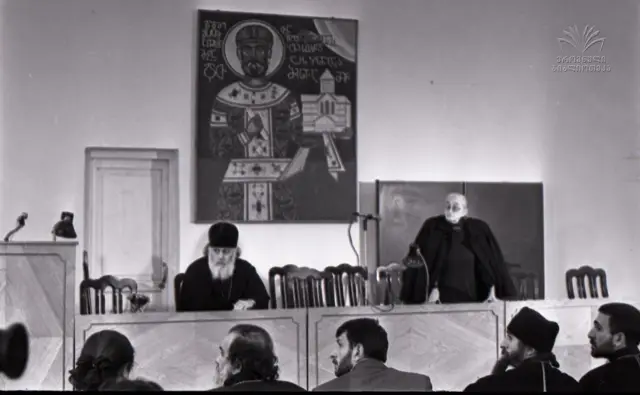
On 19 July 1993 he was appointed rector of the Tbilisi Theological Academy and Seminary. He bore this responsibility for almost ten years.
It was a period when the Church of Georgia, after the Soviet decades, was strengthening its own educational space in new conditions.
During Metropolitan Abraham's rectorship the Academy's educational directions expanded considerably. From 1994, on the basis of the faculties of Christian art history and Christian anthropology, the Theological Institute was formed.
From 1994 to 2000 the chairs of Georgian History, Theology, Art History, Georgian Language and Literature and Foreign Languages were gradually established.
Also during his rectorship the newspaper of the Academy and Seminary was founded. Thus one of the important aspects of his ministry became not only the training of clergy but also the strengthening of education, research and Christian culture.
For generations of future clergy this institution was not merely a school. Here the Church's future clergy were formed, and in this process Metropolitan Abraham bore an important responsibility for almost a decade.
The Church of Georgia's relations with the outside world
From June 1995 to October 2002 Metropolitan Abraham headed the Department of External Relations of the Orthodox Church of Georgia.
This period coincided with a difficult historical stage for Georgia. The country was going through its first years of independence, and more and more Georgians were going abroad.
The Church gradually had to face a new reality. Georgian communities were forming outside Georgia's borders that needed worship in their own language, Georgian clergy and a direct link with the Mother Church.
It was in precisely this historical situation that the question arose of creating an independent Georgian eparchy in Western Europe.
2002: a new eparchy in Western Europe
17 October 2002 became one of the most important dates in Metropolitan Abraham's life and in the history of the Georgian Church in Europe.
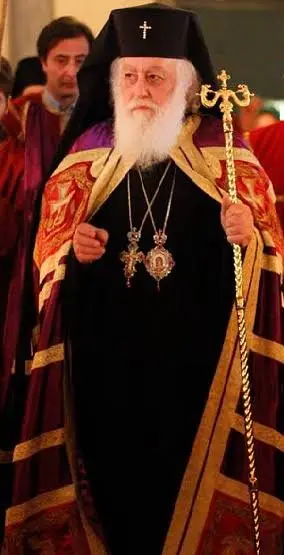
The Holy Synod of the Orthodox Church of Georgia decided to create the new Eparchy of Western Europe. By the same decision Metropolitan Abraham was released from governing the eparchy of Chiatura and Sachkhere and appointed ruling bishop of the Eparchy of Western Europe of the Patriarchate of Georgia.
An entirely new mission lay before him.
This time the eparchy's borders were no longer contained within one region or one country. Georgians lived in various states of Western Europe, thousands of kilometres from their homeland.
In 2004, when examining the situation of the Eparchy of Western Europe, the Holy Synod of the Church of Georgia stated plainly that many compatriots living in various countries of Western Europe needed the care and support of the Mother Church.
This became the very essence of the eparchy's existence.
The Church wherever there is a Georgian
Ministry in the Eparchy of Western Europe involved special difficulty. The faithful lived in cities and countries hundreds and sometimes thousands of kilometres apart.
New parishes had to be created, clergy sent, Georgians brought together, church life organised and people reached who abroad were often beginning an entirely new and difficult life.
Over the years, within the Eparchy of Western Europe, Georgian church life developed in France, Switzerland, Italy, Spain, Portugal, Malta and other European countries. Later, as Georgian parishes grew, the diocesan borders changed several times and certain territories became new church units.
These changes also became a kind of historical sign of the growth of Georgian emigration itself and of the Georgian Church in Europe.
Barcelona and the Parish of Saint Nino
An important part of Metropolitan Abraham's European ministry is linked with the formation and development of Georgian Orthodox life in Spain.
In 2007 the history of the "Parish of Saint Nino" began in Barcelona, and Archimandrite Luka (Palavandishvili) was appointed its rector.
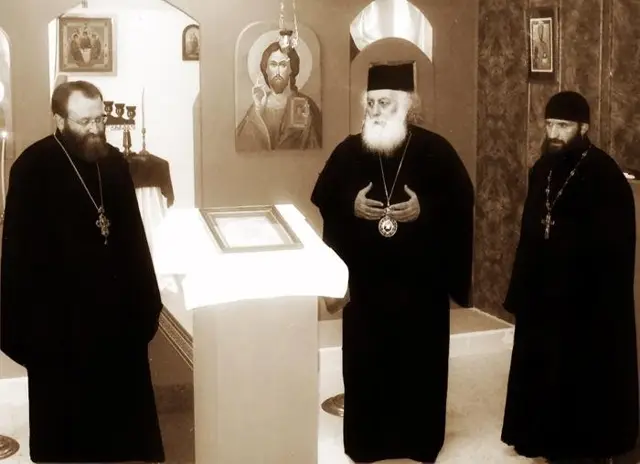
The development of the Georgian parish in Barcelona was carried out over the years with the blessing and under the spiritual guidance of Metropolitan Abraham.
With his blessing and spiritual support Georgian parishes were created and strengthened in various countries of Western Europe. Among them a special place belongs to the "Parish of Saint Nino" in Barcelona, which over the years has become one of the most important spiritual, educational and cultural centres of Georgians living in Spain.
In January 2008 Metropolitan Abraham visited the "Parish of Saint Nino" in Barcelona for the first time, celebrated a solemn service and met the faithful and the pupils of the Georgian Sunday school.
This was not merely a link between the ruling bishop of the eparchy and one particular parish. With his blessing many church, educational, cultural and pilgrimage projects were carried out over the years.
The development of Barcelona and other Georgian parishes in Europe clearly shows the idea the Eparchy of Western Europe served: a person living far from Georgia should not lose the bond with their Church, their faith and their homeland.
Recognition and many years of ministry
Metropolitan Abraham's long church ministry has been recognised with several high church awards.
On 25 December 2007 he was awarded the highest distinction of the Orthodox Church of Georgia, the Golden Order of Saint George.
On 16 November 2008 he was granted the right to wear a diamond cross on his skufia.
Yet the significance of a bishop's ministry is not measured only by church ranks and awards.
The trace of his ministry can be seen in the Georgian parishes that have taken shape in various European cities. It can be seen in churches where services are celebrated in Georgian. It can be seen in Georgian children who grow up abroad but come to know their own language, culture and faith through the Church, the school and the parish.
Far from the homeland, but close to the Mother Church
Metropolitan Abraham's life journey began in Sukhumi.
Then came Tbilisi, the study of history, teaching and scholarly work, the Mtskheta Seminary, monasticism, Dmanisi, Gelati, Regensburg, Sioni, Svetitskhoveli, the Theological Academy, eparchies in Georgia and finally Western Europe.
In the life of one person this path brings together many important stages in the recent decades of the Church of Georgia's history.
Today in many cities of Western Europe there is a Georgian church, a Georgian parish, a Sunday school and a place where a child born in emigration can hear a Georgian hymn for the first time, learn a Georgian prayer and understand that their homeland is not just a country on a map.
In shaping this great church path the Metropolitan of Western Europe, Abraham (Garmelia), held an important place for decades.
His ministry reminds us of an important truth: distance may separate a person from their homeland, but faith, the Church, language and shared spiritual memory still bind people to one another.
This is the path of Metropolitan Abraham's many years of ministry: from Georgia to Western Europe, from learning to church ministry, and from the Church of one country to the spiritual unity of Georgians living in many countries.