Manglisi Sioni
In the silence of the pine woods, in the hills of Manglisi, prayer has not ceased since the 4th century. A portion of the Life-giving Cross made this place holy, and the centuries cannot change what God has once blessed.
- Region
- Kvemo Kartli
- UNESCO
- No
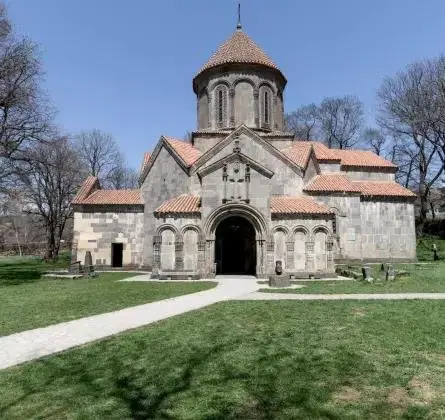
Manglisi Sioni Cathedral is one of the oldest and historically most important Christian holy places of Georgia. It stands in Kvemo Kartli, in the small town of Manglisi, in the mountainous setting of Trialeti, at about 1 200 metres above sea level. Its history is linked with the very first century of Georgia's conversion to Christianity, and for that reason Manglisi holds a special place in the history of the Orthodox Church of Georgia.
The origins of Manglisi Sioni go back to the 4th century, to the age when the preaching of Saint Nino completely changed the history of the kingdom of Kartli. The conversion of King Mirian III and Queen Nana to Christianity and the establishment of the new faith in Kartli are linked with the work of Saint Nino.
After Georgia's conversion the building of new churches began. According to Georgian historical tradition, one of the first important Christian churches was built precisely at Manglisi. The tradition of the "Kartlis Tskhovreba" links the founding of the first churches of Manglisi and Erusheti with the age of King Mirian.
The special importance of Manglisi is linked with another event of the first rank. After Georgia's conversion King Mirian sent an embassy to the Byzantine emperor Constantine the Great and asked for Christian holy objects and clergy. According to Georgian church tradition, relics connected with a particle of the Life-giving Cross of the Lord were brought to Georgia.
One of these relics was laid up at Manglisi. It was precisely this event that made Manglisi one of the first great pilgrimage centres of Georgia. Christians came from various places to venerate the relic connected with the Holy Cross.
This history is also closely linked with the life of Saint Nino. According to church tradition, Saint Nino wished the special relics brought from Jerusalem and Byzantium to be connected with Georgia's new Christian centre, Mtskheta. The laying up of some of them at Manglisi and Erusheti gave these places special church authority.
The fame of the Manglisi relic spread beyond Georgia's borders. Already in the early Christian period pilgrims came here from other Christian regions too. In this respect Manglisi shows that from the earliest period of its existence the Church of Georgia was connected with the wider Christian world.
It was in precisely this setting that the eparchy of Manglisi was formed. It became one of the oldest church sees of Georgia and for centuries played an important role in the spiritual life of Kvemo Kartli and Trialeti.
The present cathedral, however, is not entirely a 4th-century building. The first church was changed, enlarged and rebuilt several times over the centuries. That is why the traces of several different eras of Georgian Christian architecture can be read at once in the architecture of Manglisi Sioni.
The oldest significant building layers of the present cathedral belong to the early Middle Ages, while a major transformation of its architectural appearance took place in the 11th century. It was in this very period, when the united kingdom of Georgia was growing stronger, that many old church centres were renewed and the building of monumental churches reached a special scale.
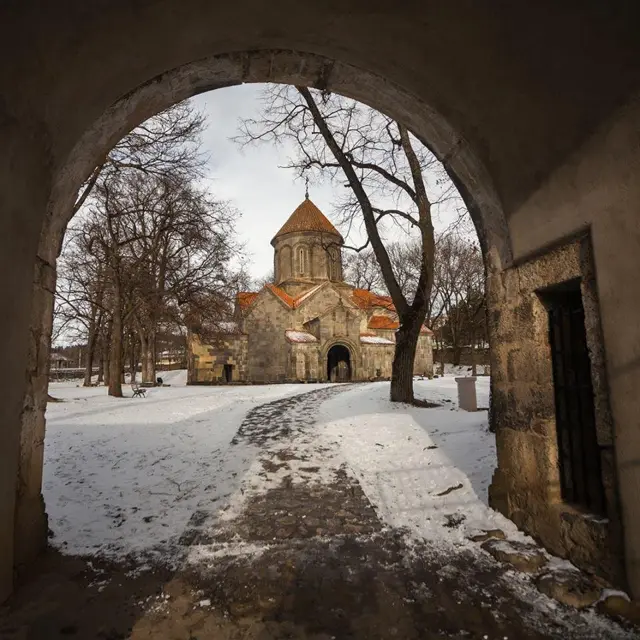
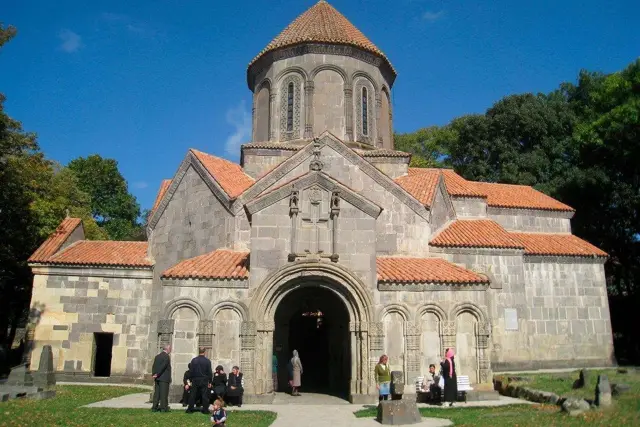
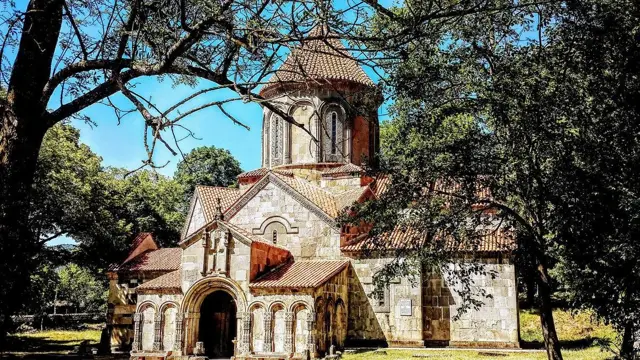
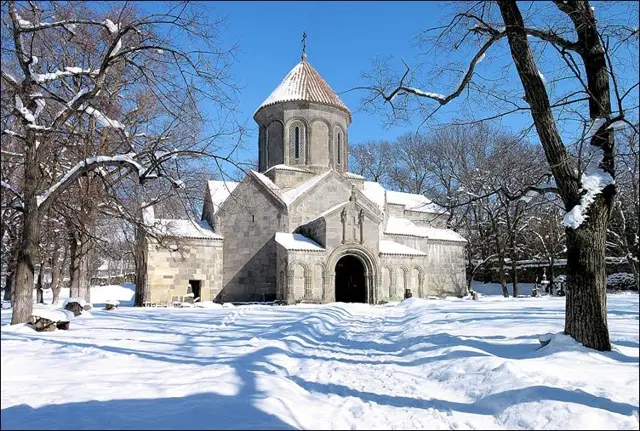
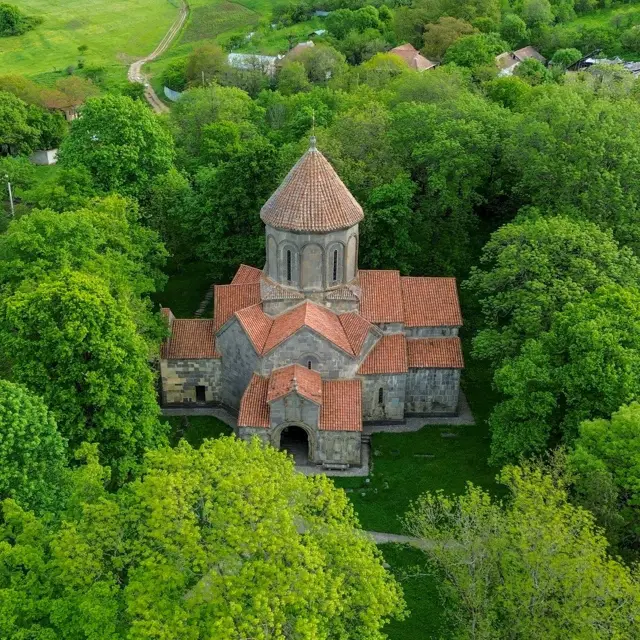
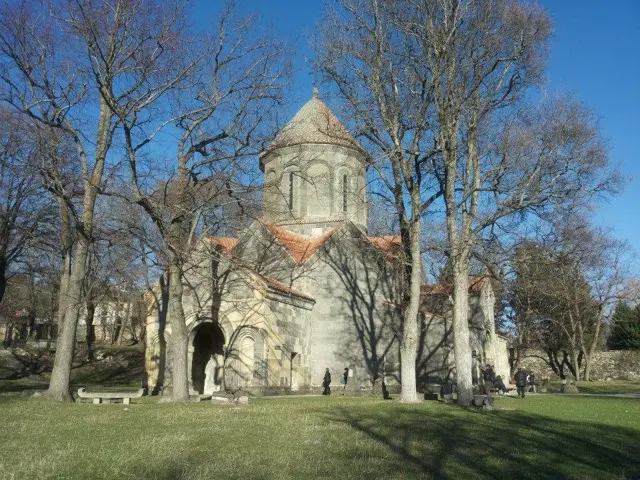
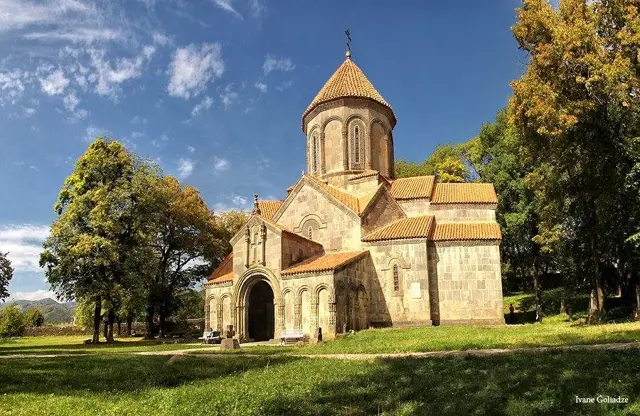
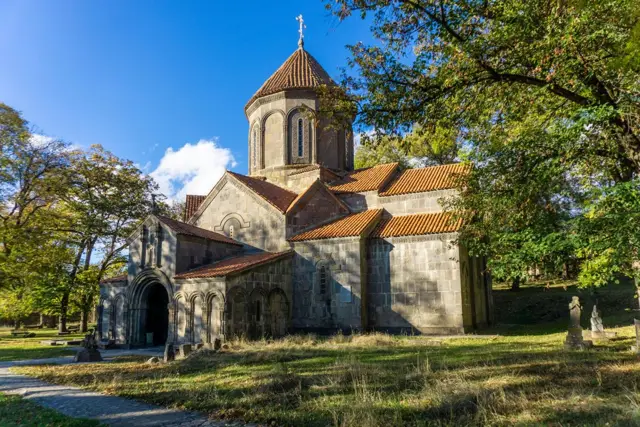
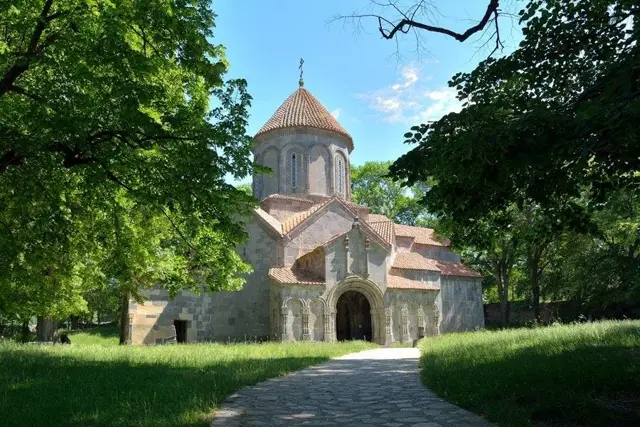
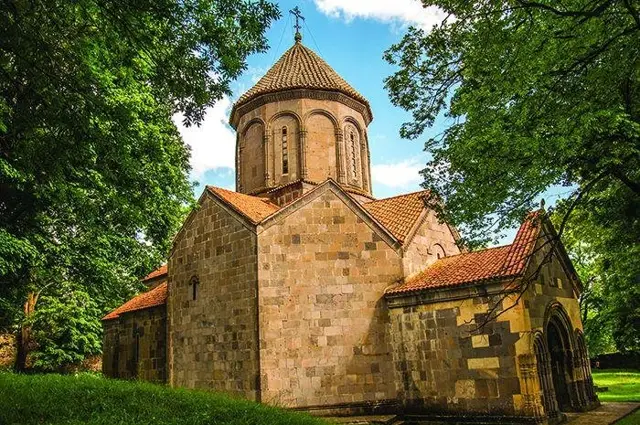
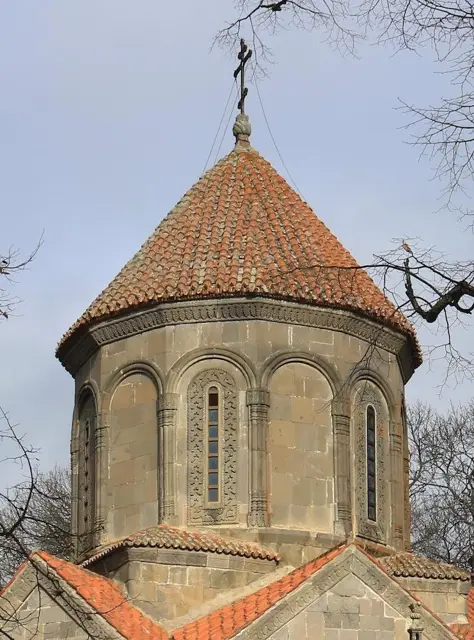
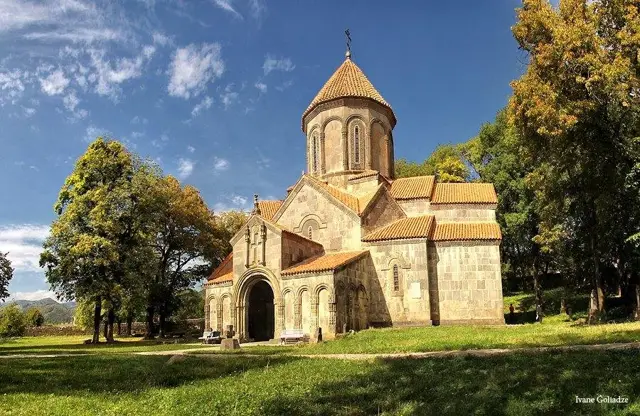
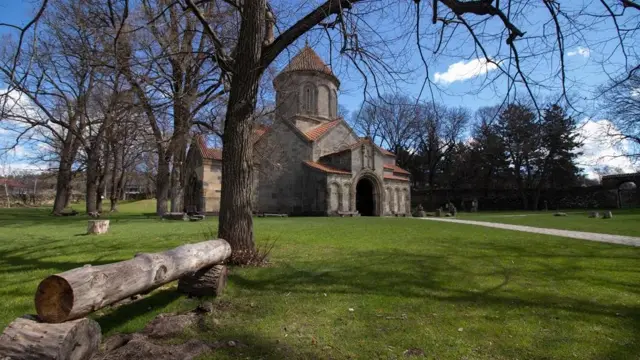
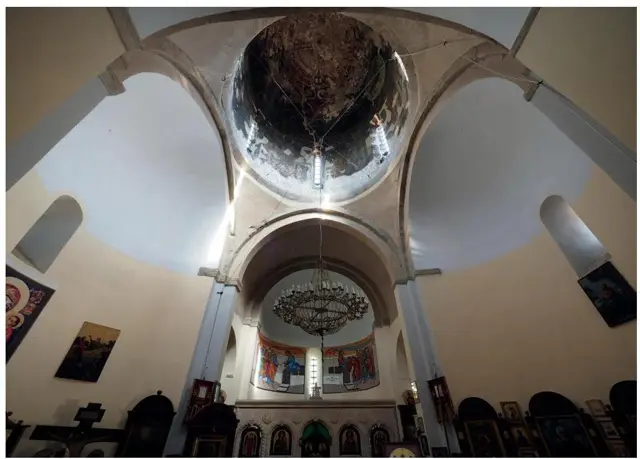
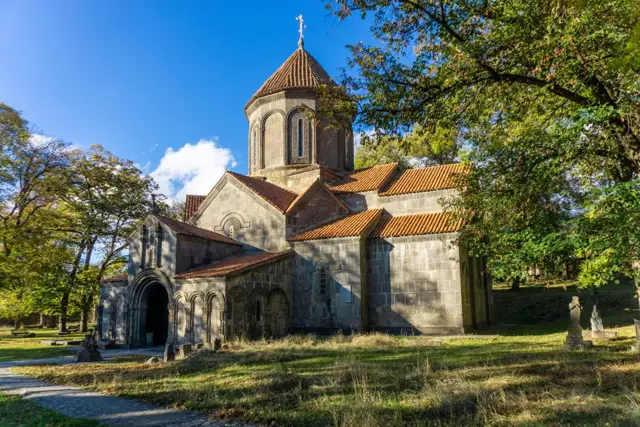
Architecturally, Manglisi Sioni is an interesting monument of medieval Georgian architecture. In its present form the central domed space takes on special importance. The massive stone walls, the arched forms and the overall proportions give the building a monumental and at the same time harmonious appearance.
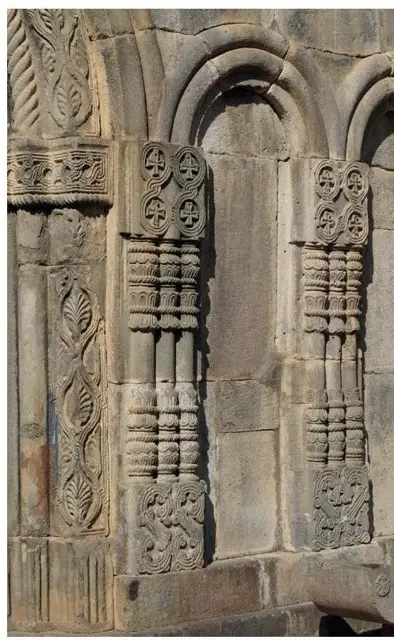
In the cathedral's exterior the decorative working of the stone is especially interesting. On the façades there are crosses, geometric and plant ornaments and other details characteristic of medieval Georgian church art.
This decoration was not used merely to beautify the church. In medieval Georgian architecture stone ornaments often had a symbolic meaning as well, carrying Christian ideas into the architectural language of the building itself.
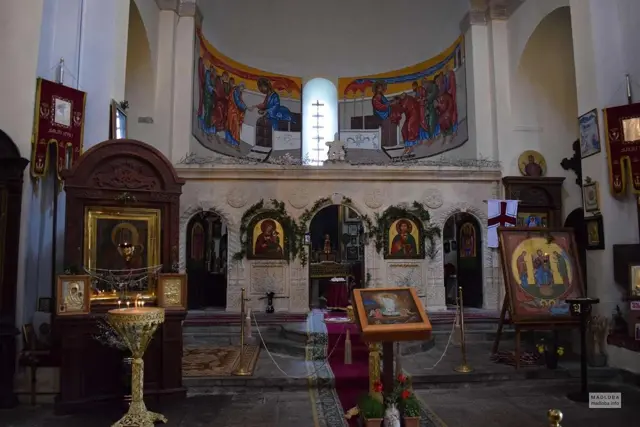
Traces of different historical periods also survive in the interior of Manglisi Sioni. The fragments of frescoes on the walls tell of the cathedral's centuries-long artistic life. Some of them have been damaged over time, yet the surviving painting is still an important source for the study of Georgian church art.
At the centre of the cathedral's spiritual significance for centuries remained the tradition connected with the Life-giving Cross of the Lord. It was this relic that created Manglisi's authority as a special place of prayer in the very first centuries of Christianity in Georgia.
Another interesting aspect of Manglisi's history is its link with Jerusalem and the Holy Land. The very name "Sioni" is connected with Mount Zion in Jerusalem. The existence in Georgia of churches named after Zion expressed the spiritual bond of Christian Georgia with the Holy Land.
Over the centuries the eparchy of Manglisi covered a considerable territory. The bishops who served here took part in the life of the Church of Georgia, and the cathedral was not only a place of prayer for the local parish but also an important church administrative centre.
Its location strengthened this significance even further. Manglisi lay near historical routes and connected various regions of southern Georgia with the central part of the country. That is why religious, cultural and social life naturally merged here.
The hard periods of Georgian history also touched Manglisi Sioni. Foreign invasions, political conflicts and the break-up of the country into various kingdoms and principalities affected the state of the cathedral as well. In some periods church life weakened and was later restored again.
Especially difficult were the eras when Kvemo Kartli became a scene of military conflict between Georgia and neighbouring states. In such conditions churches were often damaged, the population declined and the functioning of the oldest church centres became difficult.
Nevertheless, Manglisi Sioni kept its historical significance. In various periods the cathedral was restored and repaired, which is why traces of both medieval work and later restoration can be seen in its present architecture.
In the 19th century, after Georgia became part of the Russian Empire, a new stage began in the life of Manglisi. Its favourable climate, wooded surroundings and relatively cool summers also made the settlement a place of rest. At the same time the historic cathedral remained the centre of attention.
In the 20th century the establishment of Soviet power greatly restricted the life of the Church of Georgia. Like many churches, Manglisi Sioni went through a difficult period. Nevertheless, its historical and architectural significance was not lost and the monument remained part of Georgia's cultural heritage.
After Georgia regained its independence, church life in the cathedral revived again. Today Manglisi Sioni is a functioning Orthodox cathedral and continues the historical tradition of the eparchy.
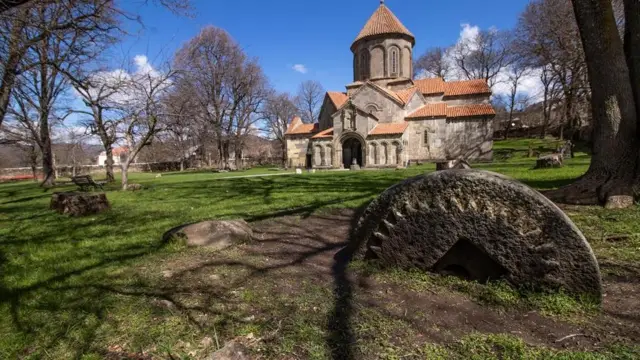
The natural setting also shapes the special character of Manglisi. The settlement lies in the highlands of Trialeti and is surrounded by forests and mountain landscape. Its relatively high position creates a climate and atmosphere quite different from those of the low-lying part of Tbilisi.
The cathedral's stone architecture blends with this setting in an especially impressive way. Green forests in summer, varied nature in autumn and snow-covered ground in winter give Manglisi Sioni a different look in each season.
Today whoever comes here meets several great eras of Georgia's Christian history in one space: from the 4th century of Saint Nino and King Mirian, through medieval Georgian architecture, to present-day Orthodox life.
Manglisi Sioni is a place where the oldest history of Georgia's conversion to Christianity can be felt especially vividly. The founding of the first Christian church, the arrival of the relic connected with the Holy Cross, the formation of an ancient eparchy and the many renewals of the cathedral over the centuries form one great historical path.
Manglisi Sioni Cathedral still remains today one of the oldest spiritual centres of Georgian Orthodoxy: a holy place whose history begins with the first steps of the Christian state of Georgia and still continues after almost seventeen centuries.