Svetitskhoveli
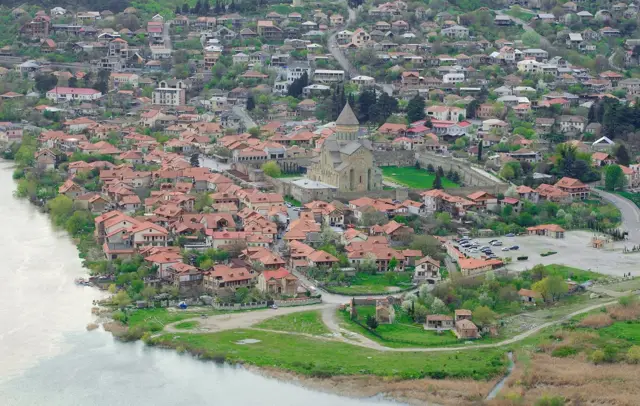
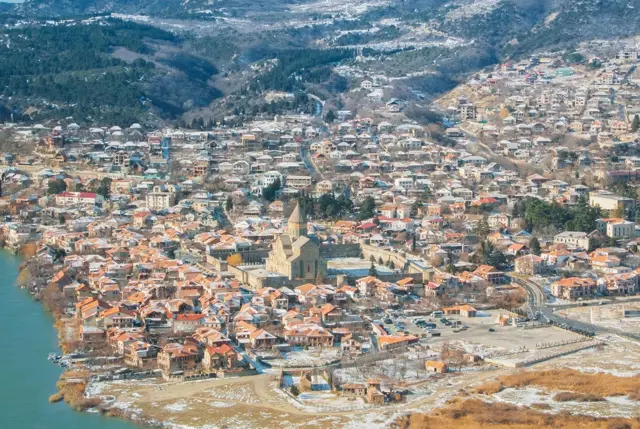
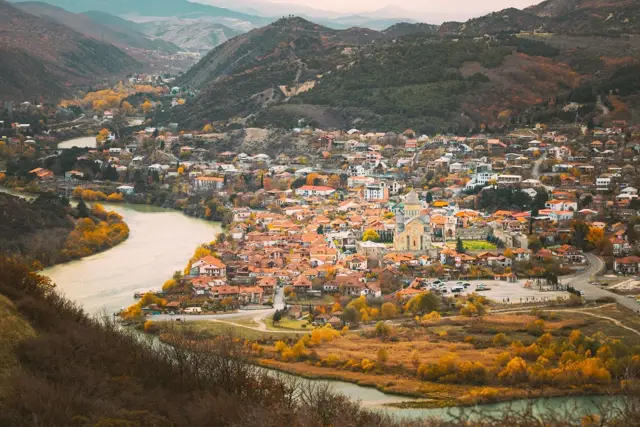
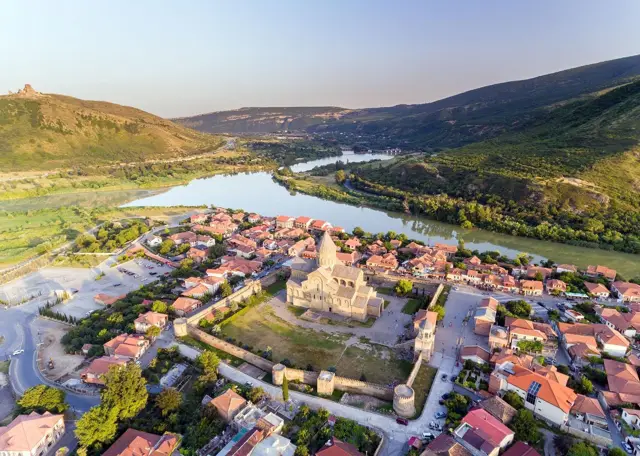
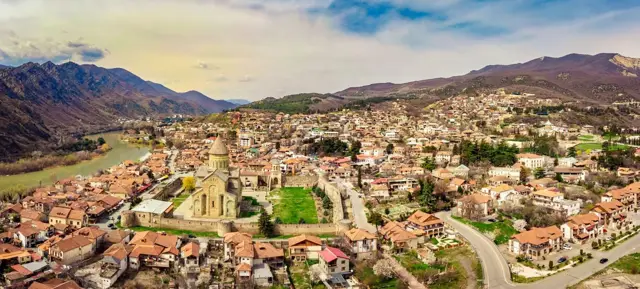
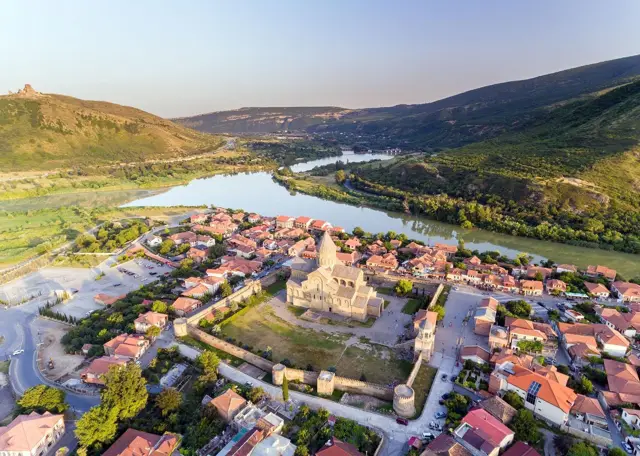
In the heart of Mtskheta, where two rivers embrace, lies what Georgia has kept for two thousand years: the robe of Christ, asleep in the depths of the earth. Above it a cathedral was raised in the 11th century, but older than the cathedral is the faith itself, which was born here. For centuries kings received their crown here and here laid it down for ever, and one thing has never changed: the living pillar, from which the church took its name, still reminds us that some foundations are eternal.
- Region
- Mtskheta-Mtianeti
- UNESCO
- Yes
Svetitskhoveli Cathedral is one of the holiest and historically most important Christian sites in Georgia. It stands in Mtskheta, the ancient capital of Georgia, the city where in the 4th century one of the main events of the conversion of Kartli took place. The history of Svetitskhoveli is almost inseparable from the history of Christianity in Georgia: here the ancient tradition of the robe of Christ, the work of Saint Nino, the conversion of King Mirian III, the building of the first Georgian church and, in later centuries, the most important events of the Georgian kingdom and Church all come together.
The best-known tradition in the history of Svetitskhoveli is connected with the robe of Jesus Christ. According to Georgian Church tradition, in the 1st century Elioz, a Jew from Mtskheta, was in Jerusalem at the time of Christ's crucifixion. There he acquired the robe of Christ and, on returning to Mtskheta, gave it to his sister Sidonia.
According to tradition, when Sidonia pressed the robe of Christ to her heart, she died from overwhelming spiritual emotion. The holy garment could not be taken from her hands, and so Sidonia was buried together with the robe of Christ. This very place later became the foundation of the main sanctuary of Svetitskhoveli. According to the faith of the Georgian Church, the robe of Christ remains buried in this holy place to this day.
Later a great cedar grew on Sidonia's grave. Several centuries afterwards, when in the 4th century King Mirian III and Queen Nana were converted to Christianity through the preaching of Saint Nino, it was decided to build one of Georgia's first Christian churches on this very spot.
To build the church the cedar was cut down and seven pillars were made from its wood. The builders raised six pillars, but they could not move the seventh from its place. According to Church tradition, Saint Nino prayed all night long. Then a miracle happened: the pillar rose by an invisible power and afterwards came down into its place.
Tradition tells that fragrant myrrh flowed from this pillar and the sick were healed. This miraculous pillar was called "Sveti Tskhoveli", the "living pillar", and from this the name of the cathedral, Svetitskhoveli, was born. Thus its name is directly linked with one of the most important church traditions of the conversion of Georgia.
The first church on this site was built in the 4th century, in the time of King Mirian III, and was a wooden structure. In the 5th century, during the reign of Vakhtang Gorgasali, a larger stone basilica was built in its place. From that time Mtskheta and Svetitskhoveli became the most important centre of Georgian church and state life.
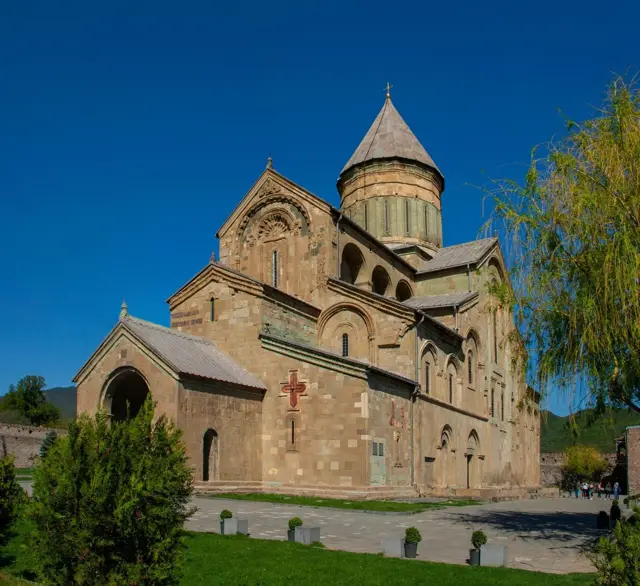
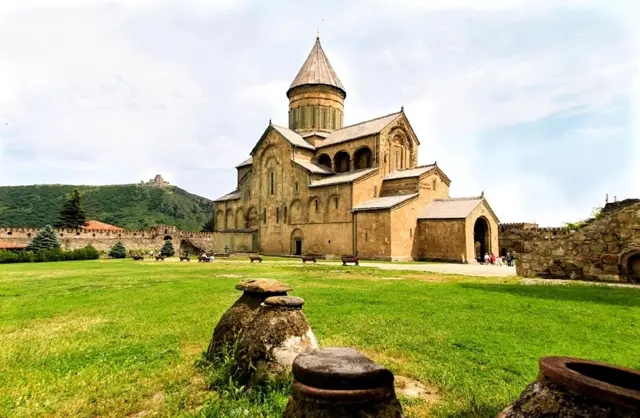
The main building of present-day Svetitskhoveli was erected at the beginning of the 11th century. On the initiative of Catholicos Melchizedek I of Georgia, construction of a new, much larger cathedral began on the site of the old church. The work was directed by the Georgian architect Arsukidze, whose name became forever linked with this masterpiece of Georgian architecture.
The cathedral was built approximately between 1010 and 1029, in the age of King George I of Georgia. This was a period when the unified Georgian state was growing stronger, and monumental church architecture became one of the expressions of the country's political and spiritual rise.
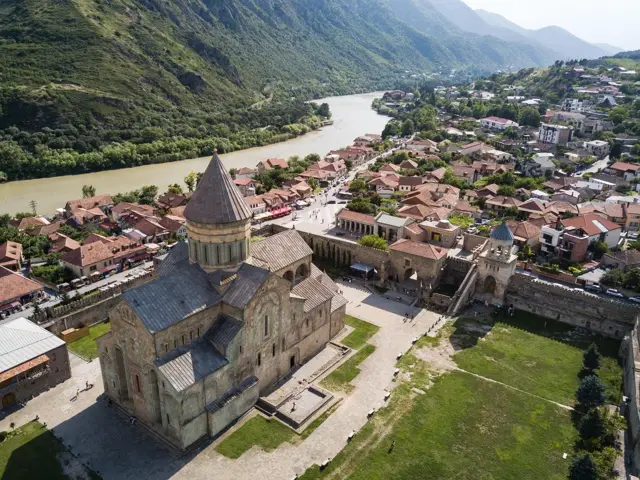
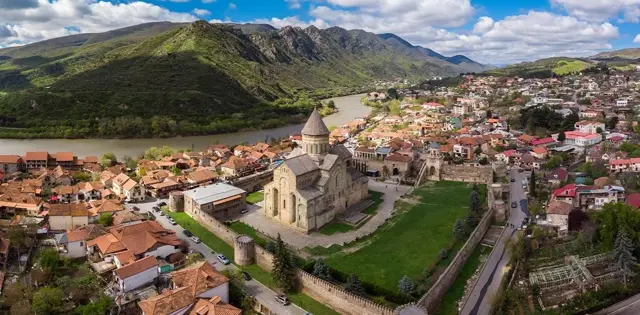
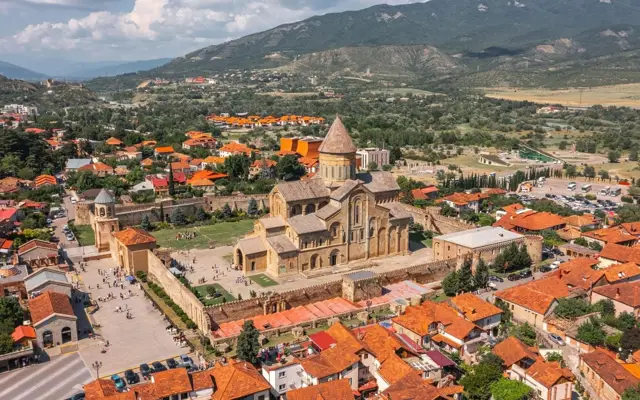
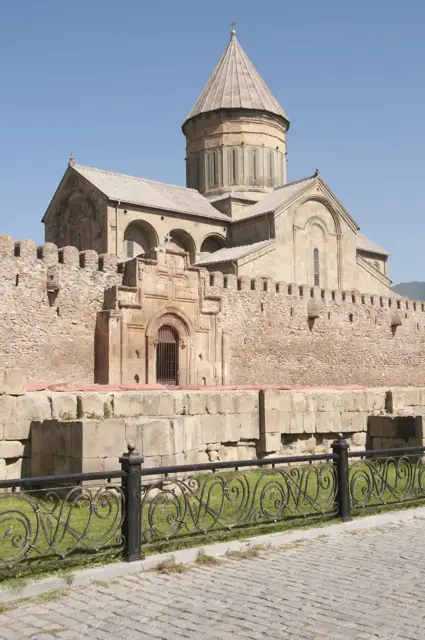
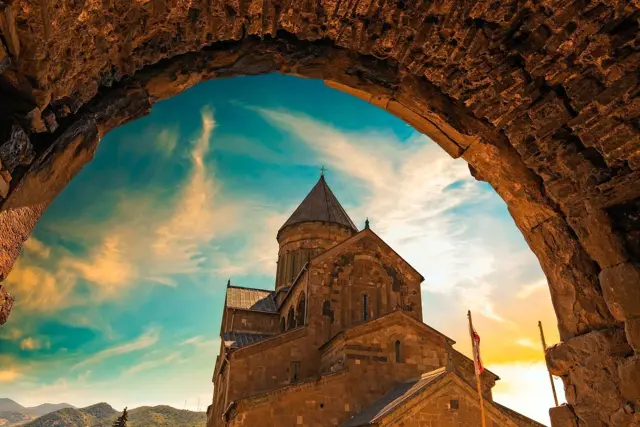
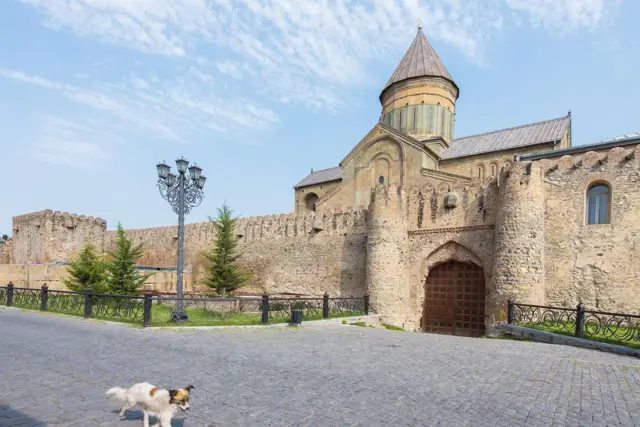
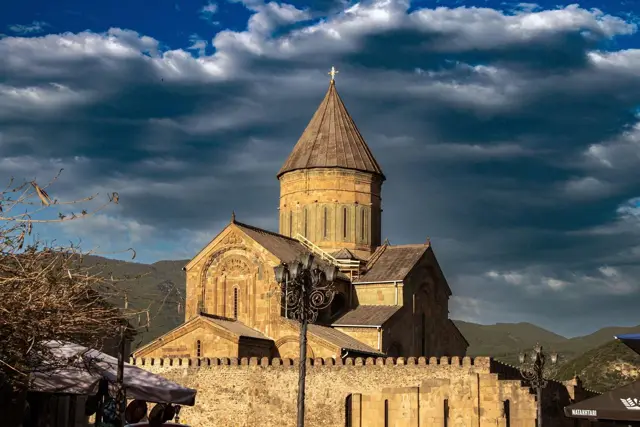
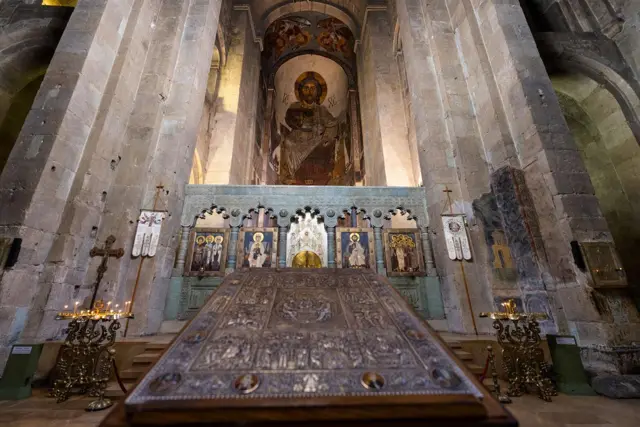
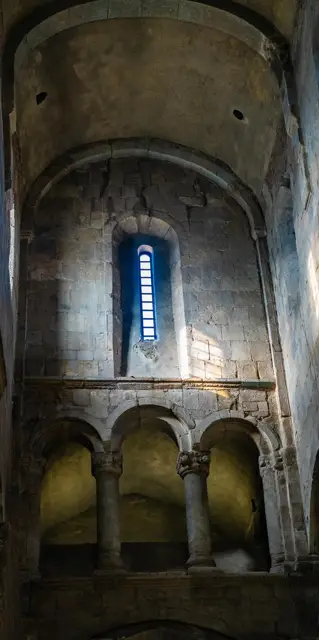
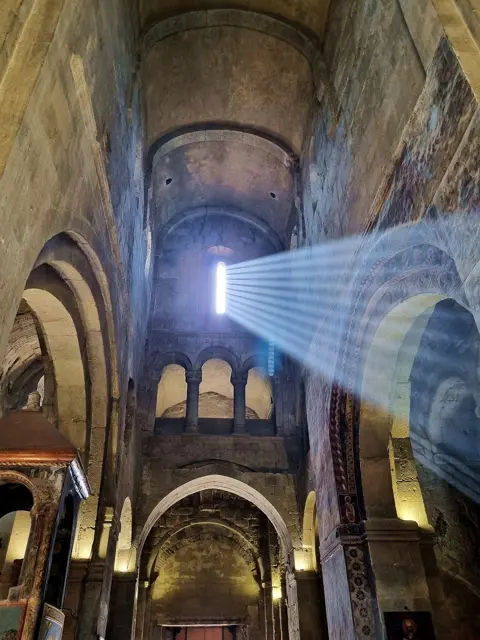
Architecturally, Svetitskhoveli is one of the most important examples of Georgian medieval cross-domed architecture. The tall central dome, clear proportions and monumental interior space give the cathedral a special grandeur. Its architecture is at once monumental and harmonious, which speaks of the high engineering and artistic skill of the Georgian masters of the 11th century.
The façades of the cathedral are rich in stone carving, arches, crosses, plant ornament and symbolic reliefs. Particularly interesting is the stone relief connected with Arsukidze: the image of a hand and a building tool with an inscription preserving the architect's name. This detail has kept alive for centuries the memory of the man who created the present architectural form of Svetitskhoveli.
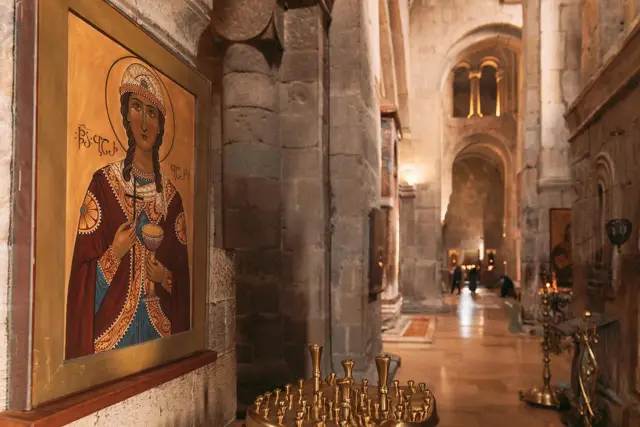
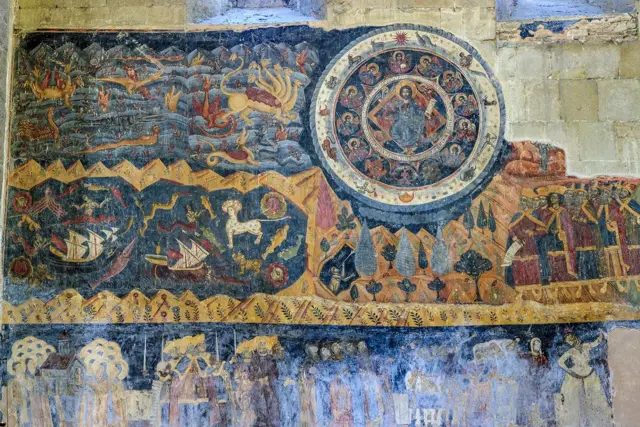
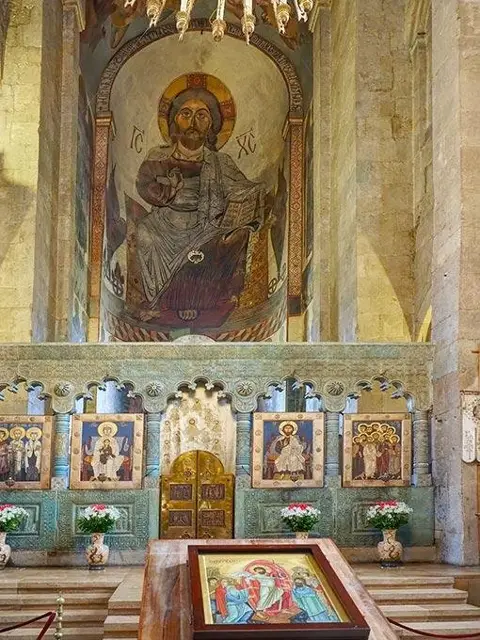
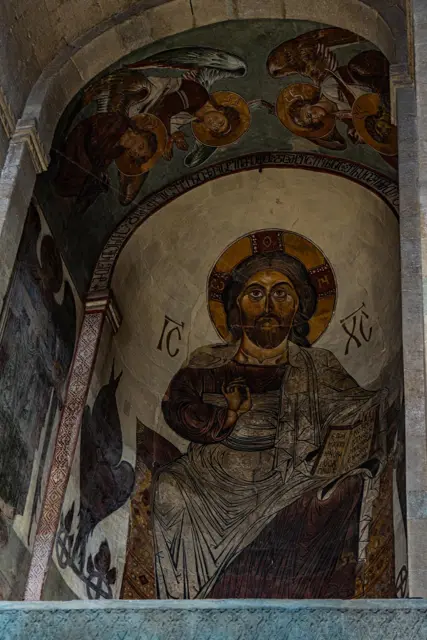
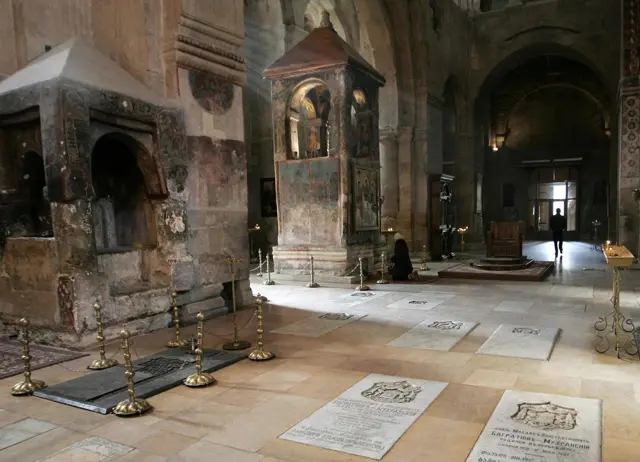
The interior of Svetitskhoveli is also of special historical and artistic importance. Frescoes, icons and examples of church painting from different periods are preserved in the cathedral. A particularly important place is held by the area connected with the robe of Christ and the life-giving pillar, which keeps a centuries-old tradition linked with the cathedral's chief holy relics.
Svetitskhoveli was also the royal cathedral of Georgia. Over the centuries important state and church ceremonies, the anointing of kings, church councils and events of great significance for the country took place here. That is why its history belongs not only to the Georgian Church but also to the history of Georgian statehood.
The cathedral also became the burial place of the kings of Georgia and of high church dignitaries. Here rests one of Georgia's greatest kings, Vakhtang Gorgasali, the legendary ruler linked with the founding of Tbilisi. George VIII, Erekle II, George XII and other members of the Bagrationi royal dynasty are also buried in Svetitskhoveli. Their tombs make the cathedral a special memorial space of Georgia's political history as well.
Over the centuries Svetitskhoveli endured many invasions, wars and destructions. Georgia was repeatedly the target of attack by foreign powers, and Mtskheta too often suffered. The cathedral was damaged and restored in different periods, but its chief spiritual significance was never lost.
The stone wall raised around Svetitskhoveli, which gave the complex a fortified appearance, is of special historical importance. Over the centuries the cathedral was not only a place of prayer but also an important place for protecting the nation's holy treasures.
In the 19th century, after Georgia's incorporation into the Russian Empire and the abolition of the autocephaly of the Georgian Church, the church life of Svetitskhoveli also faced a new reality. Even harder was the Soviet period, when religious life was severely restricted. Nevertheless, Svetitskhoveli kept its special place in the historical and spiritual memory of the Georgians.
After Georgia regained its independence, the church life of the cathedral fully revived. Today Svetitskhoveli is a functioning Orthodox cathedral and one of the most important places of pilgrimage in Georgia. The feast of Svetitskhovloba is celebrated here with special solemnity, when countless faithful from all over Georgia gather in Mtskheta.
In 1994 the historical monuments of Mtskheta, of which Svetitskhoveli is the most important part, were inscribed on the UNESCO World Heritage List. This international recognition underlines not only the cathedral's architectural value, but also its special place in the history of Georgia and of the whole Christian Caucasus.
Today Svetitskhoveli is still regarded as one of the main spiritual centres of Georgian Orthodoxy. Within its walls come together the ancient tradition of the robe of Christ, the work of Saint Nino, the history of the first Christian kings, medieval Georgian architecture and the centuries-old legacy of the kings of Georgia.
Svetitskhoveli is not merely an 11th-century cathedral. It is the place where, according to Georgian Church tradition, the robe of Christ rests; where the prayer of Saint Nino is linked with the miracle of the life-giving pillar; where for centuries kings, catholicoi and the Georgian people prayed, and where the most important events of Georgian history unfolded.
Svetitskhoveli still remains one of the chief spiritual pillars of the Georgian nation: a cathedral where almost two thousand years of Christian tradition, the history of Georgia and the Orthodox faith come together in one holy space.