Metekhi Church of the Nativity of the Mother of God
In the heart of Tbilisi, on the rock rising above the Mtkvari, the church of Metekhi has stood for centuries as a silent guardian of faith and history. Kings, conquerors and empires came and went, but the church remained: a sanctuary of stone that neither time nor trial can overcome.
- Region
- Tbilisi
- UNESCO
- No
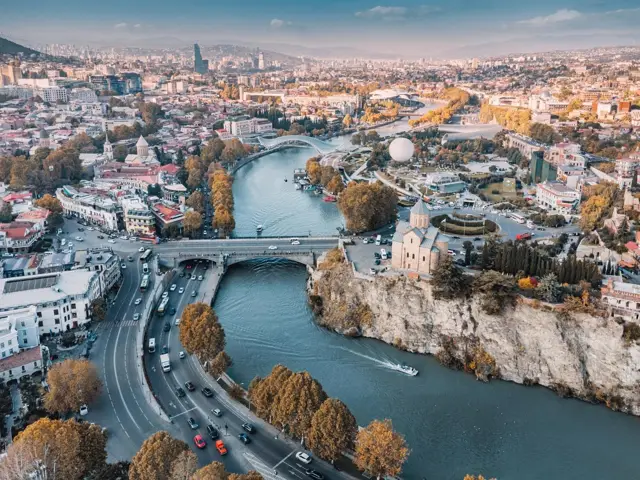
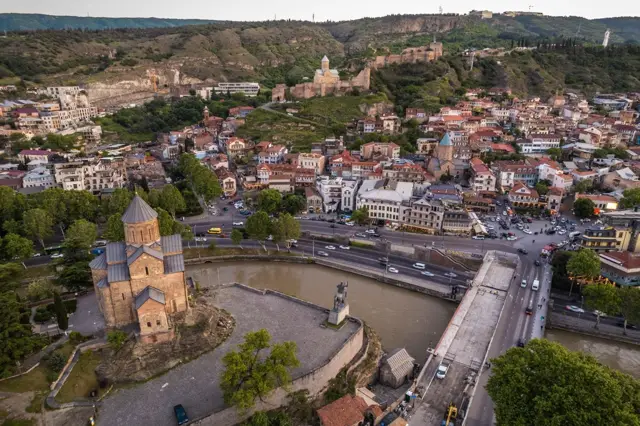
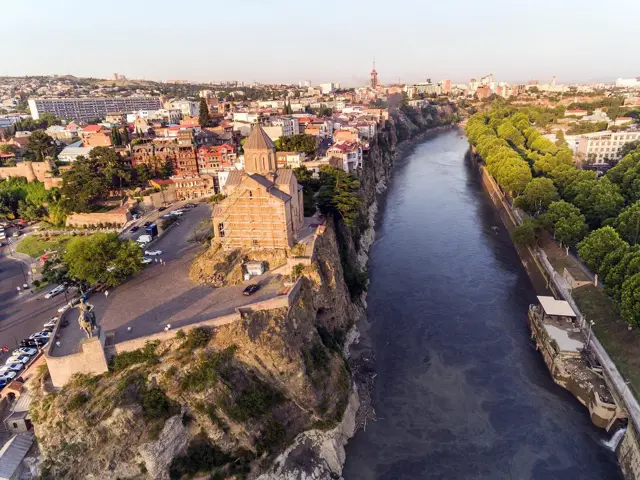
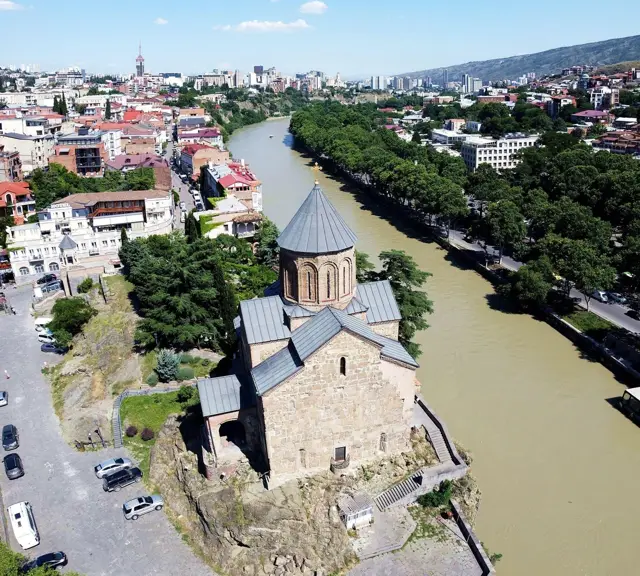
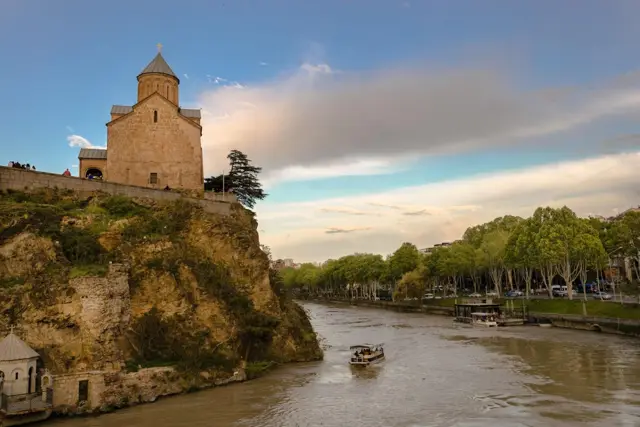
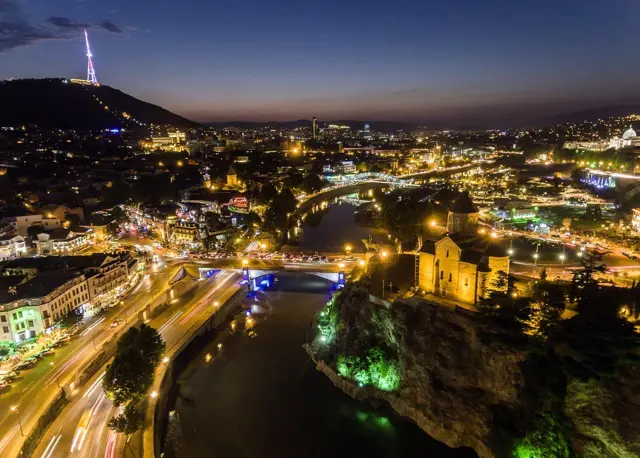
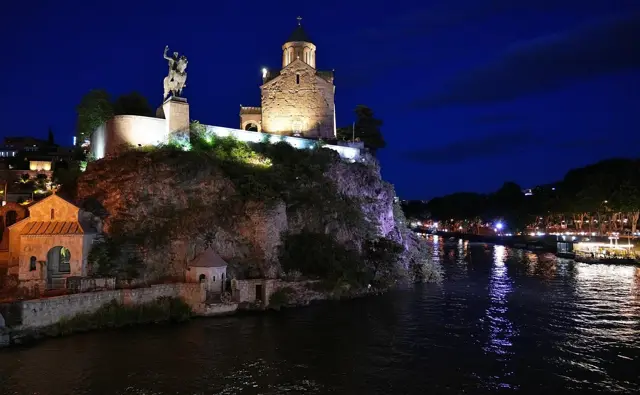
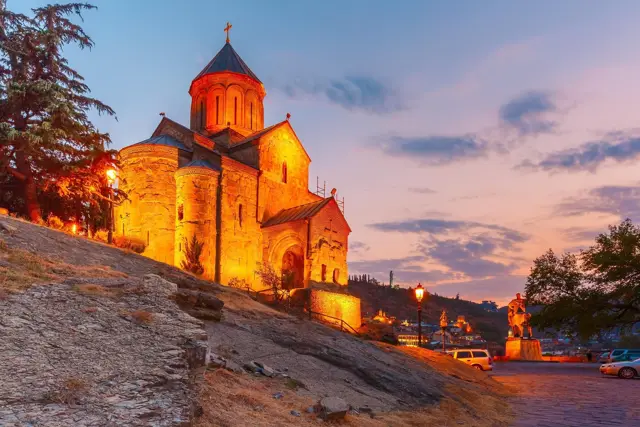
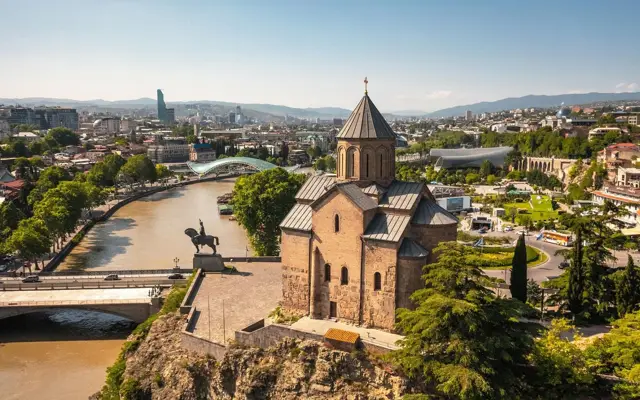
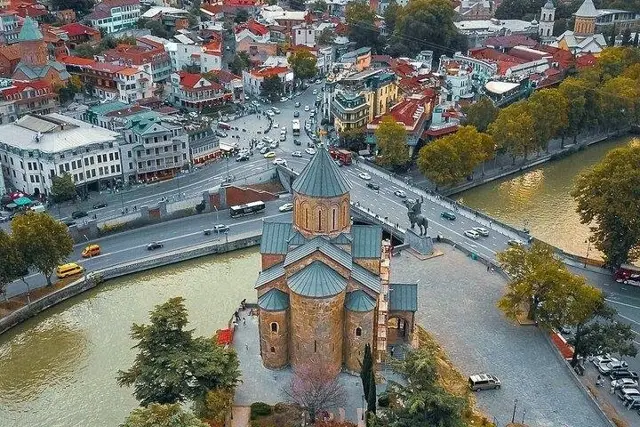
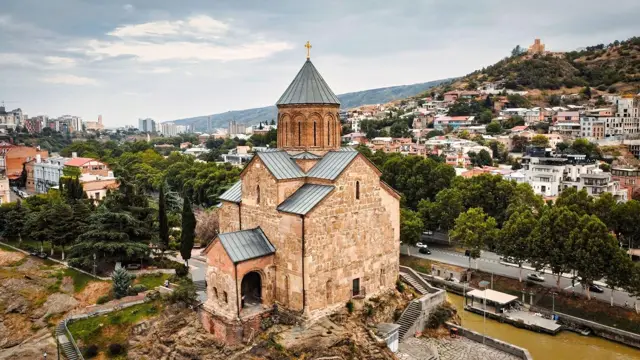
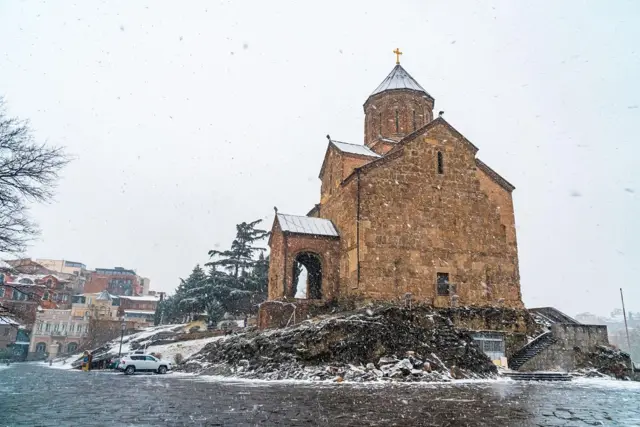
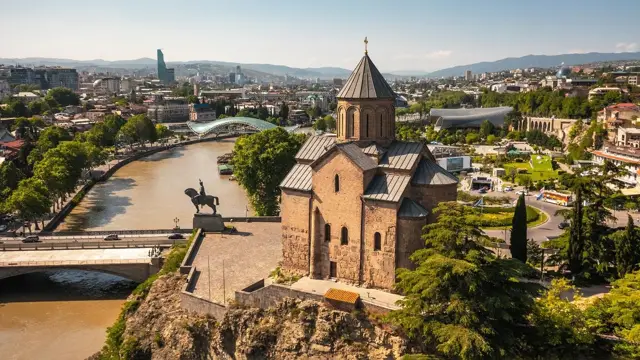
The Metekhi Church of the Nativity of the Mother of God is one of the best-known historical and Christian sanctuaries in Georgia. It stands in the historical centre of Tbilisi, on the left bank of the river Mtkvari, on the rock of Metekhi, from which there is an outstanding view of Old Tbilisi. Over the centuries this place was a royal residence, a spiritual centre, a defensive site and later also a prison. That is why the history of Metekhi is almost a reflection of the centuries-old history of Tbilisi itself.
The earliest history of Metekhi is traditionally linked with the 5th century and King Vakhtang Gorgasali. According to Georgian historical tradition, the king, with whose name the founding of Tbilisi and the moving of the capital here are connected, had a royal residence on the rock of Metekhi, and there was also a church here. The high rock overlooked the Mtkvari gorge and important roads of the city, which gave the place royal, religious and strategic significance at once.
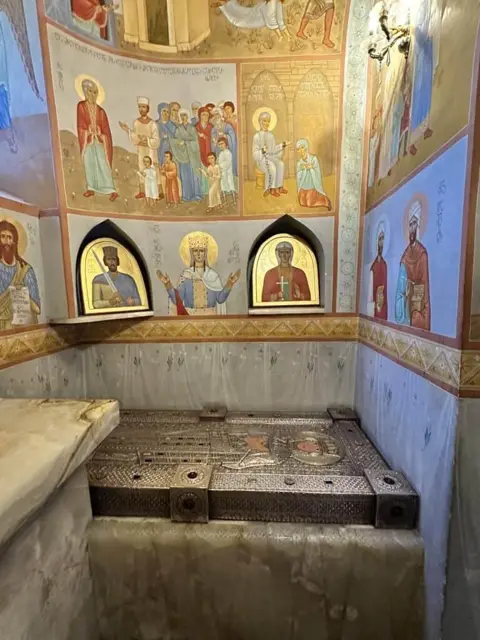
One of the oldest spiritual traditions connected with Metekhi concerns the holy Queen Shushanik. In the 5th century she refused to deny the Christian faith and after many years of suffering died a martyr. According to Georgian Church tradition, her holy relics were later translated to Metekhi. Although not all the historical circumstances of the translation are unambiguously confirmed by documents, the memory of Saint Shushanik remained for centuries an important part of Metekhi's spiritual tradition.
Because of Tbilisi's strategic position, the city was repeatedly at the centre of foreign invasions and political struggles. The Metekhi complex too was damaged, destroyed and restored many times. The buildings here changed from one period to another, but the religious and political importance of the rock did not disappear.
After the unification and strengthening of Georgia, Metekhi again became an important royal centre. Its link with the age of Queen Tamar is especially notable. At the turn of the 12th and 13th centuries Tbilisi was the political centre of unified Georgia, and Metekhi an important part of the royal complex. The Georgian chronicles connect this place with royal life in Tamar's time and with prayers offered after Georgia's military victories.
A special place in the history of the present church is held by Saint Demetre II the Self-Sacrificing. He was king of Georgia from 1270 to 1289, in one of the hardest periods of Mongol domination. It was during his reign, at the end of the 13th century, around 1278–1289, that the church of the Nativity of the Mother of God at Metekhi was built or thoroughly restored. The main medieval appearance of the building that survives today is linked with this period.
Demetre II's life ended tragically. When the Mongol authorities brought accusations against him and there was a danger that the people of Georgia would be punished, the king could have fled. But he knew that if he hid, harsh vengeance would fall upon the country.
Demetre chose to protect his people rather than save his own life. He voluntarily presented himself before the Mongol khan and in 1289 was put to death. Because of this sacrifice the Orthodox Church of Georgia numbered him among the saints, and history has kept for him the name "the Self-Sacrificing". That is why the Metekhi church is directly linked with the king who gave his life to save his people.
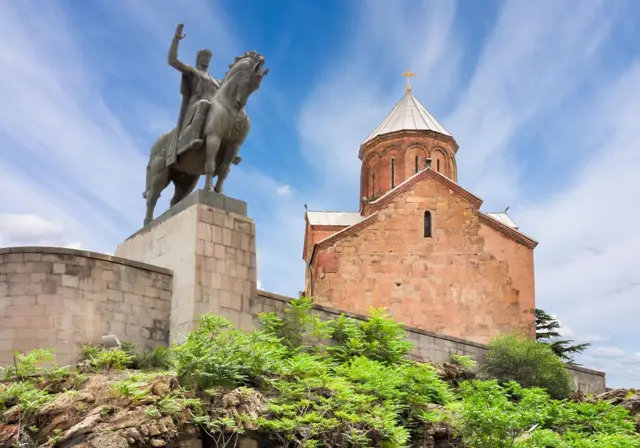
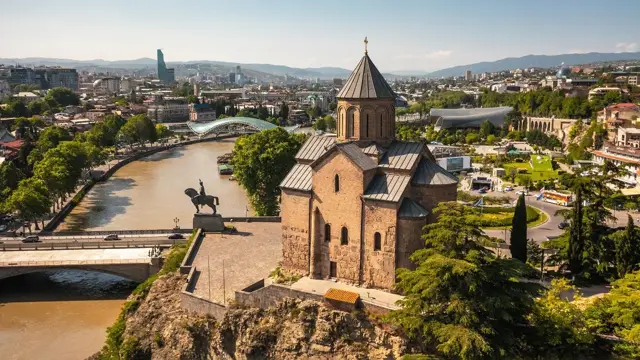
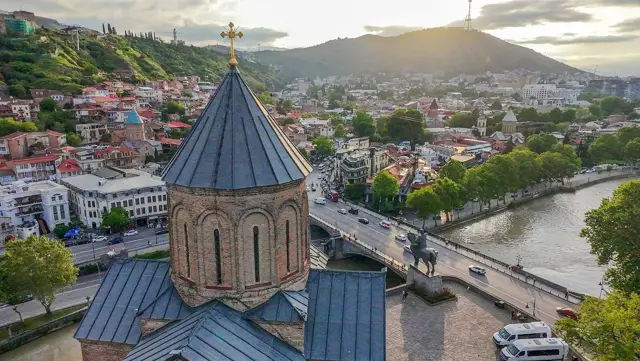
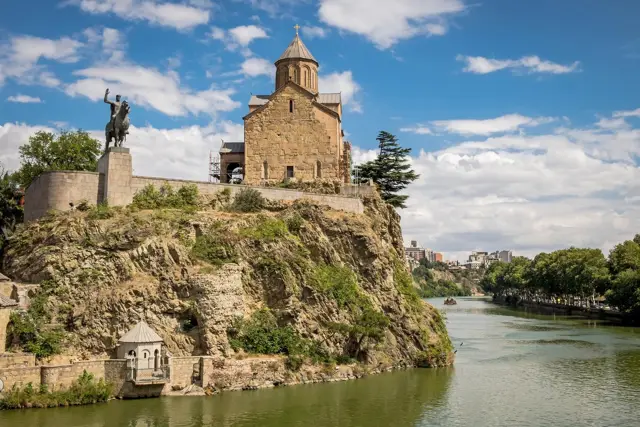
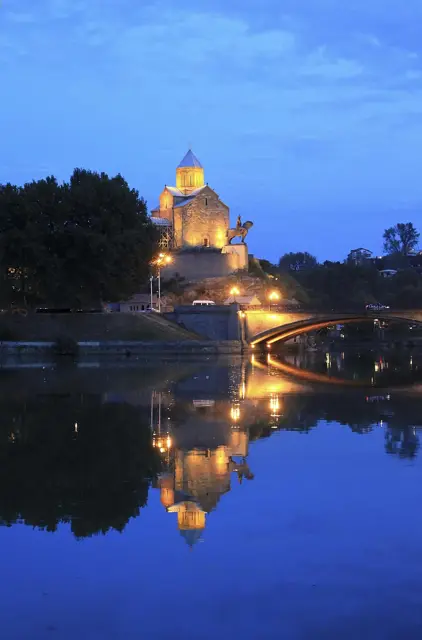
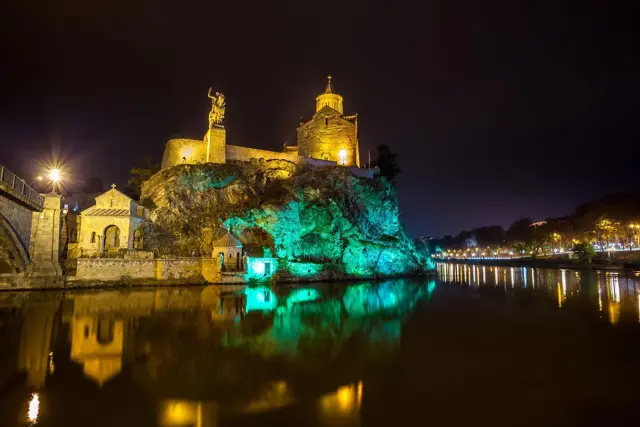
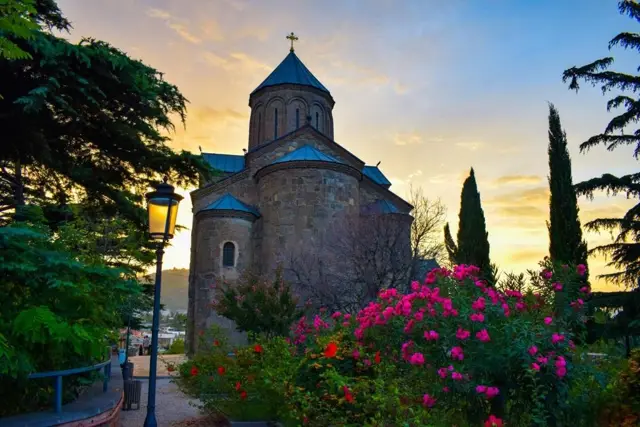
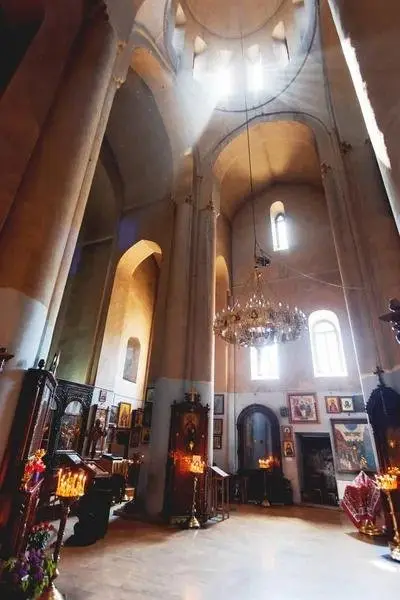
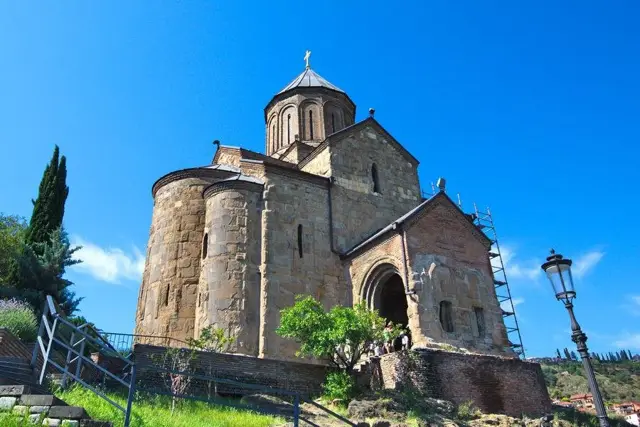
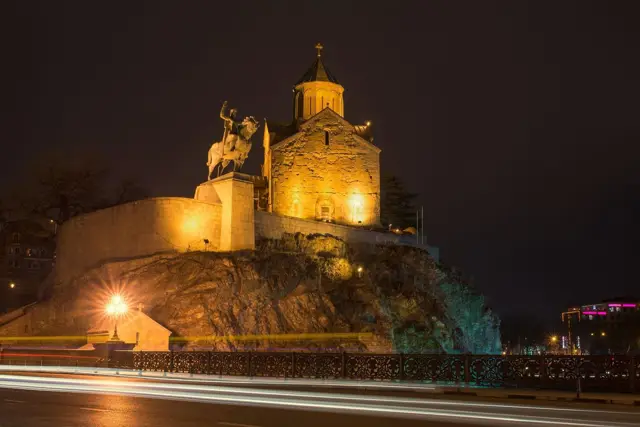
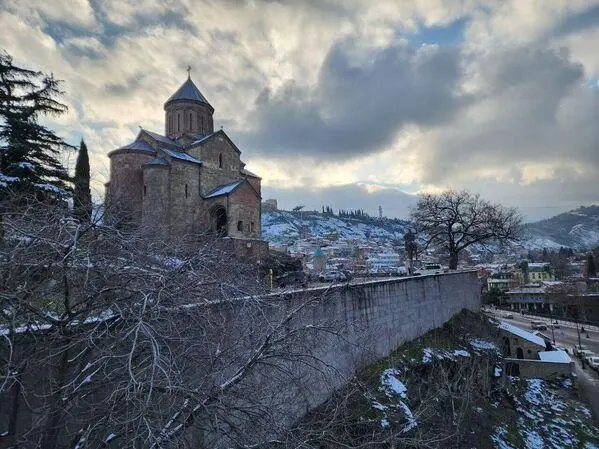
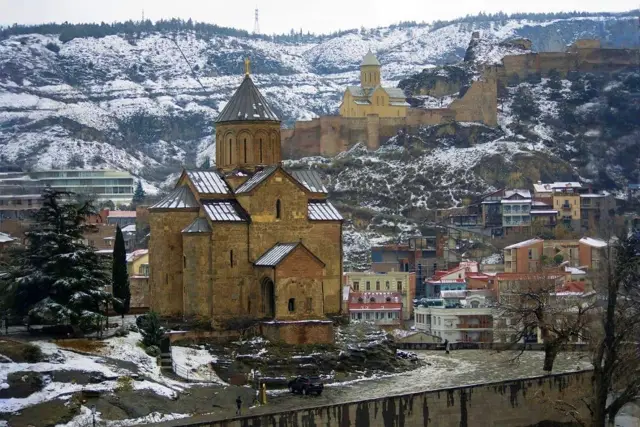
Architecturally, the Metekhi Church of the Nativity of the Mother of God is a cross-domed building. Its austere stone façades, high dome and position on the edge of the rock give it special monumentality. The church seems to have become a continuation of the Metekhi rock itself. Despite repeated damage and restoration, the building has kept the main character of Georgian medieval church architecture.
In later centuries Metekhi endured many invasions. The campaigns of the Mongols, Timur, the Persians and other conquerors swept over Tbilisi. The church was damaged and restored again, and the rock of Metekhi remained an important place for the city's defence.
Especially severe was the invasion of Agha Mohammad Khan in 1795, when Tbilisi was cruelly sacked and a large part of the city was destroyed. Metekhi too witnessed these tragic events, but the church once again managed to survive.
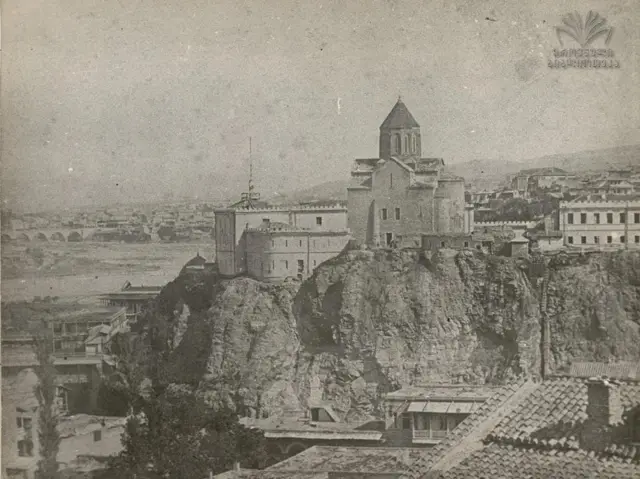
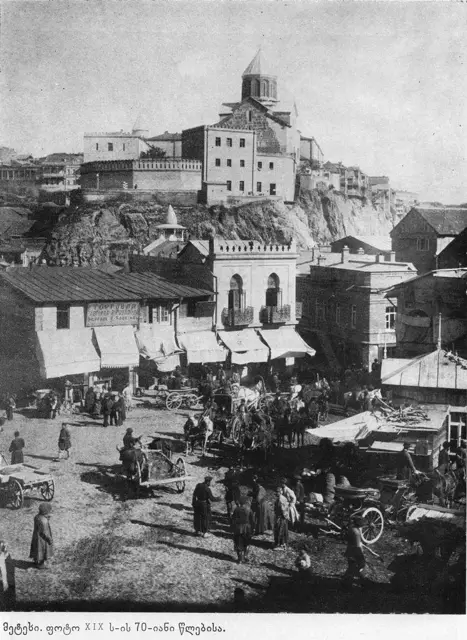
In the 19th century, after Georgia came under the Russian Empire, the history of Metekhi changed sharply. A large part of the old royal and defensive complex gradually disappeared, and the area was used for military and prison purposes. Metekhi castle became one of the well-known prisons of Tbilisi.
Where for centuries there had been a royal residence and a Christian sanctuary, prison cells and military buildings appeared. The church survived, but its historical surroundings changed considerably. Metekhi found itself, as it were, in a world completely opposite to its own past.
In the 20th century the church faced an even graver danger. Under the Soviet atheist regime churches were closed, clergy were persecuted and Christian monuments were often used for secular purposes. In the 1930s there was even a danger that the Metekhi church would be demolished.
Closely connected with the story of the church's protection is the name of the Georgian painter and public figure Dimitri Shevardnadze. He fought to protect Georgia's cultural heritage. During the Soviet repressions, in 1937, Dimitri Shevardnadze was shot. Metekhi, however, was finally saved, although in the Soviet period it no longer had its original church function.
A new stage in the history of the church began in 1988, when Metekhi was returned to the Orthodox Church of Georgia and services were restored here. After decades of enforced silence, prayer was heard again on the rock.
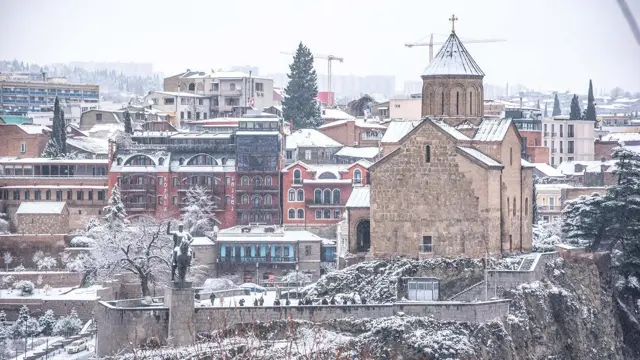
Today the equestrian monument of King Vakhtang Gorgasali stands in front of the church. Below flows the Mtkvari, and from the rock Abanotubani, Narikala and the historical districts of Old Tbilisi can be seen. This view has become one of the most recognisable images of Georgia's capital.
Yet Metekhi's significance lies not only in its architecture and location. In one rocky space many layers of Georgian history are gathered: the Tbilisi of Vakhtang Gorgasali, the martyr's memory of Saint Shushanik, Tamar's strong kingdom, the sacrifice of Demetre the Self-Sacrificing, foreign invasions, the imperial prison and Soviet atheist persecution.
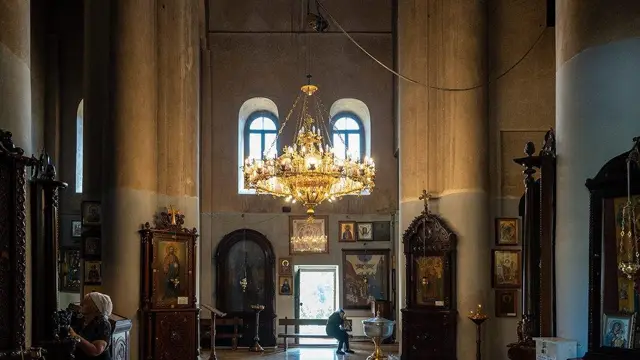
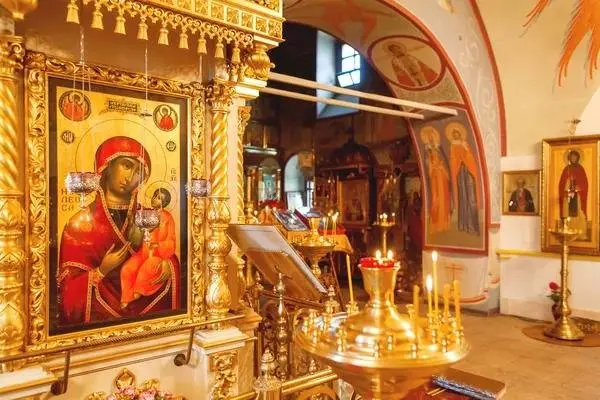
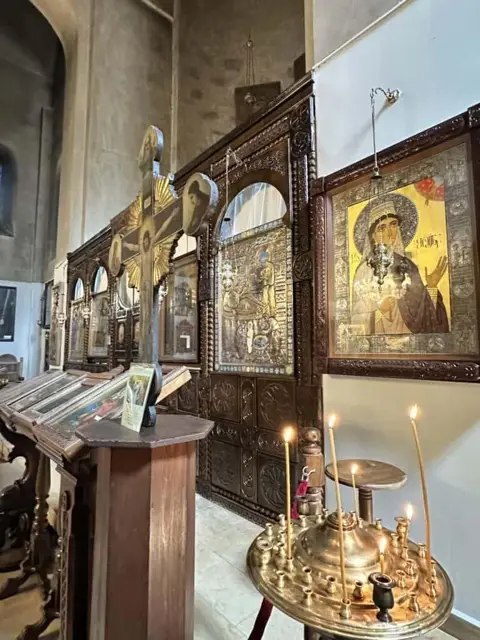
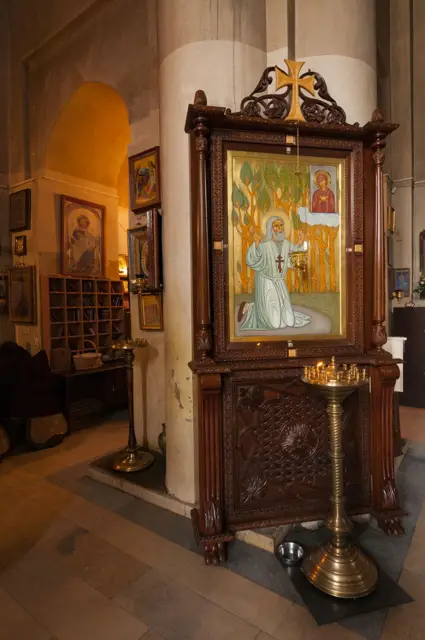
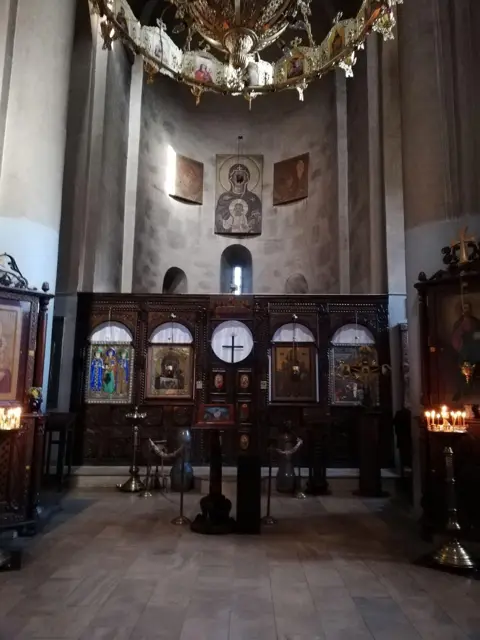
Today the Metekhi Church of the Nativity of the Mother of God is a functioning Orthodox church. Services are held here again, and the tradition of prayer continues on the same rock that has seen almost the whole history of Tbilisi.
The Metekhi Church of the Nativity of the Mother of God is not only one of the most beautiful buildings of Old Tbilisi. It is a living witness to Georgia's centuries-long history: a place that has passed through royal glory, wars, destruction, imprisonment and atheist persecution, yet has kept its spiritual meaning.
From Vakhtang Gorgasali to Saint Shushanik, from the age of Tamar to the sacrifice of Demetre the Self-Sacrificing, from the imperial prison to Soviet persecution, ages changed on the rock of Metekhi, but the church remained. Its walls, rising above the Mtkvari, still keep the history of Tbilisi, the faith and the spiritual memory of Georgia.