Ananuri Church of the Dormition of the Mother of God
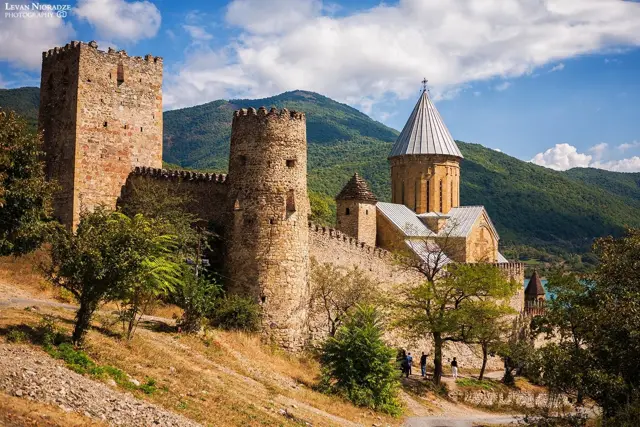
The walls that had known the noise of war sheltered a church where only prayer was heard. The stone carving of vine and cross bore witness that, in the midst of blood and constant unrest, the Mother of God still found a refuge. Today, reflected in the mirror of blue water, Ananuri still prays quietly for the days when its towers waited for the enemy.
- Region
- Mtskheta-Mtianeti
- UNESCO
- No
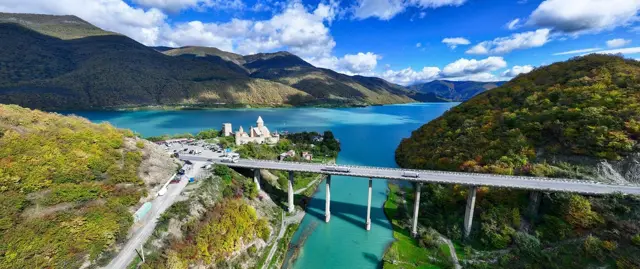
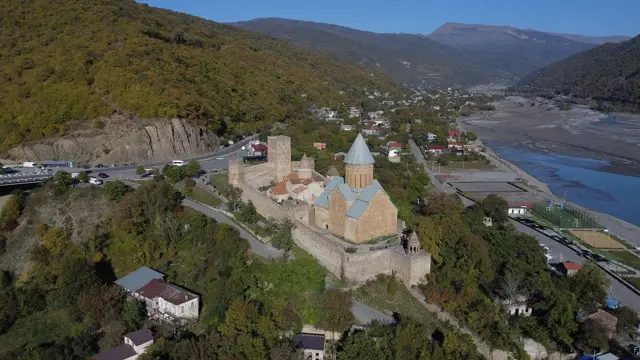
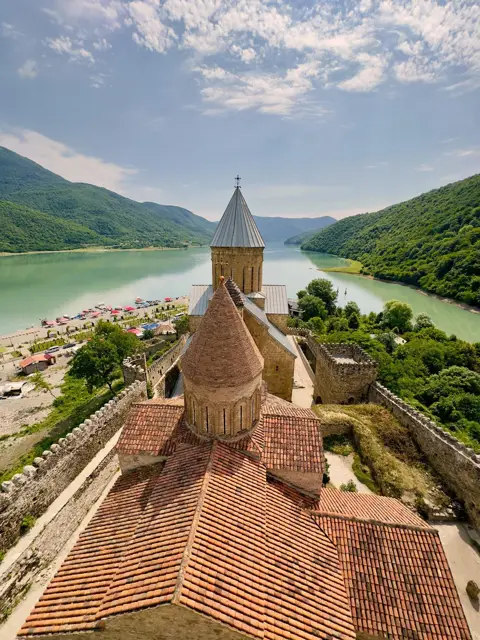
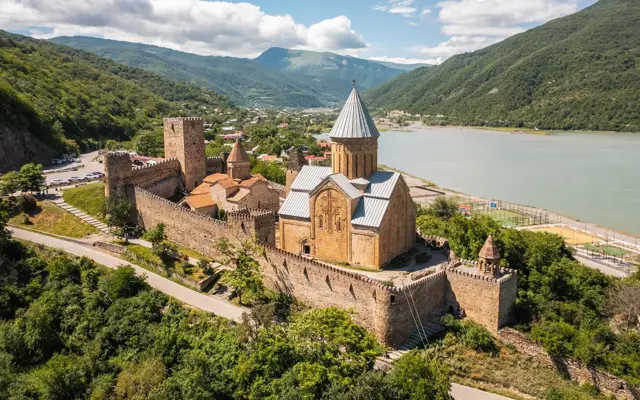
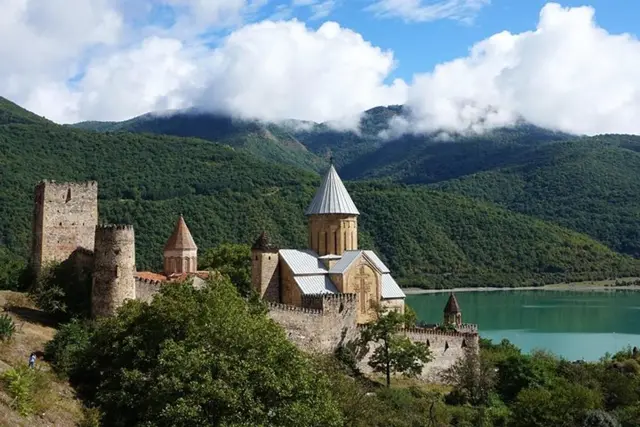
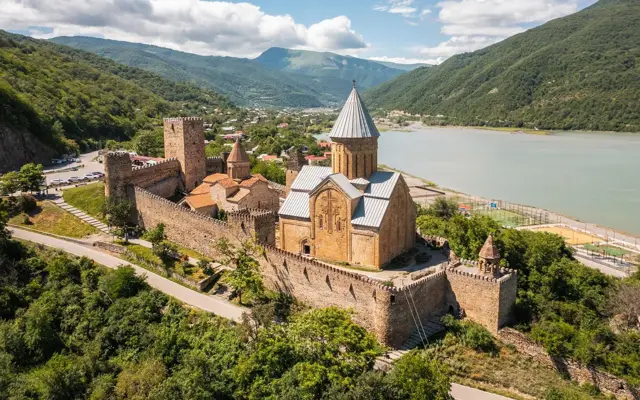
The Ananuri Church of the Dormition of the Mother of God is one of the best-known historical and architectural monuments of Georgia. It stands in Mtskheta-Mtianeti, in the Aragvi valley, on the old road leading north from Tbilisi. Today the Zhinvali reservoir, spreading blue below the church, gives the view of Ananuri special beauty, but for centuries this place was not merely a picturesque setting: it was an important military and political gateway on the road to mountain Georgia.
The history of Ananuri is inseparably linked with the eristavis of the Aragvi, a powerful feudal family that for several centuries controlled the Aragvi valley and the surrounding territories. Ananuri was of special importance to their power: from here it was possible to control the valley, the roads and the routes leading from the north into the interior of Georgia.
The history of the complex begins earlier than the present great church. The exact date of the oldest parts of the Ananuri fortress has not been fully established, but an important part of the existing buildings belongs to the 16th and 17th centuries. Over the centuries a closely connected castle, churches, towers, enclosure wall and dwellings took shape here.
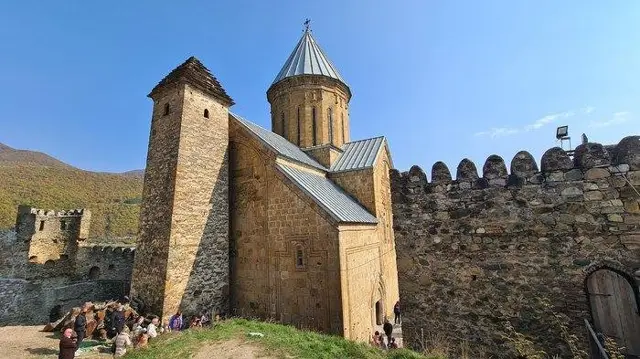
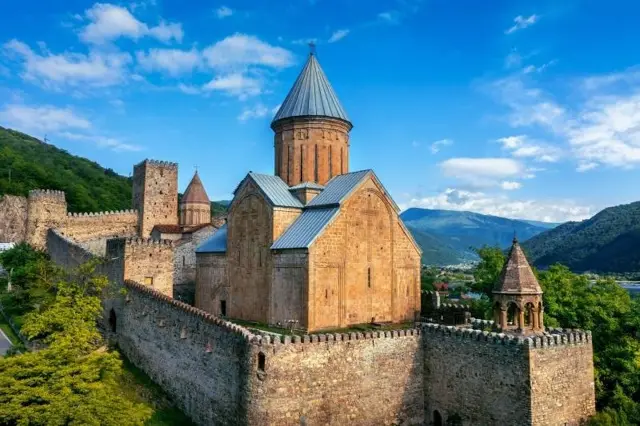
Two churches are especially important in the Ananuri complex. The older is the church of the Saviour, or of the Divinity, and the largest and today best-known building of the complex is the church of the Dormition of the Mother of God.
The great church was built in 1689. The building inscription preserved on the south façade gives information about its construction and links the church with the history of the family of the eristavis of the Aragvi. It was at the end of the 17th century that the upper fortress of Ananuri took on the monumental appearance that has become one of the best-known architectural panoramas of Georgia.
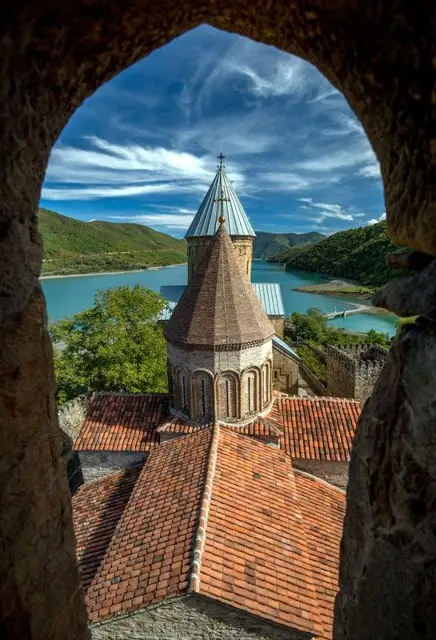
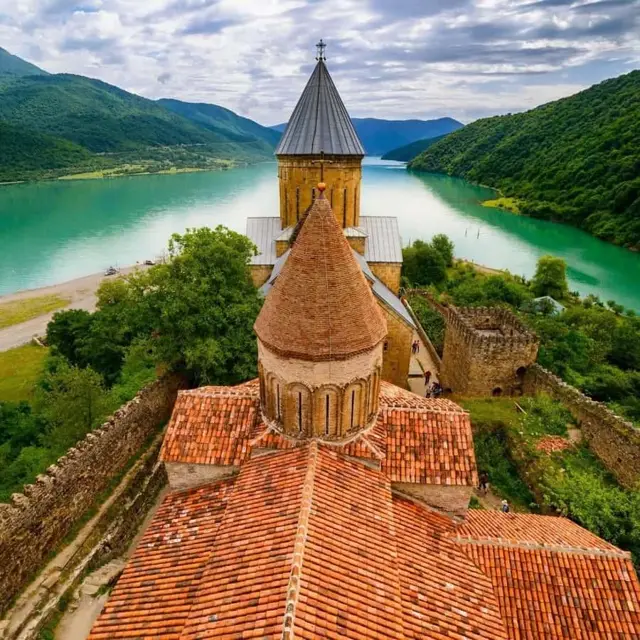
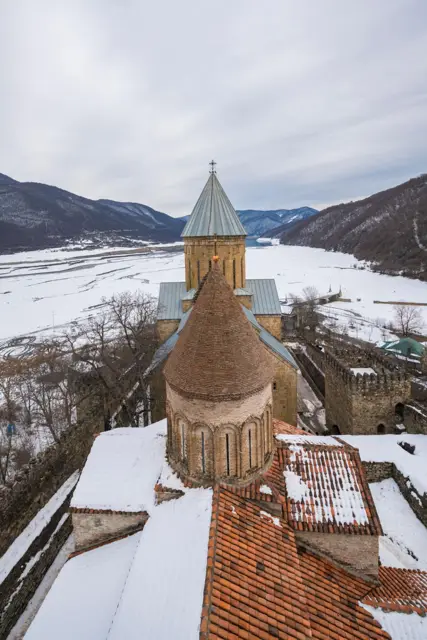
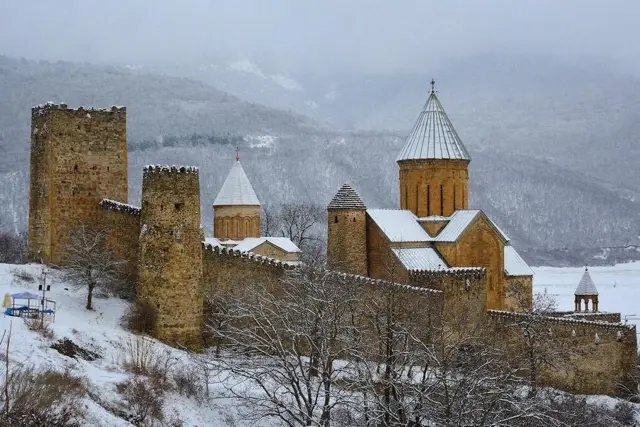
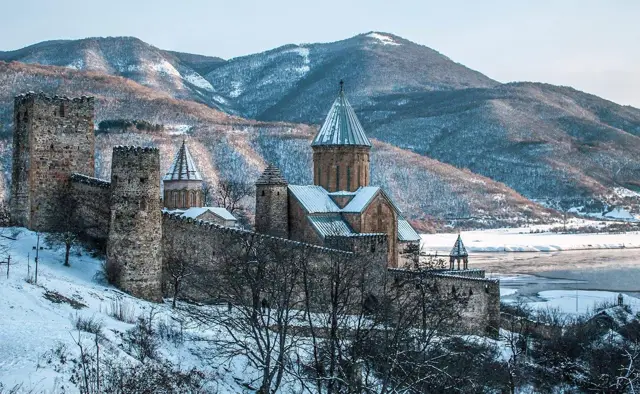
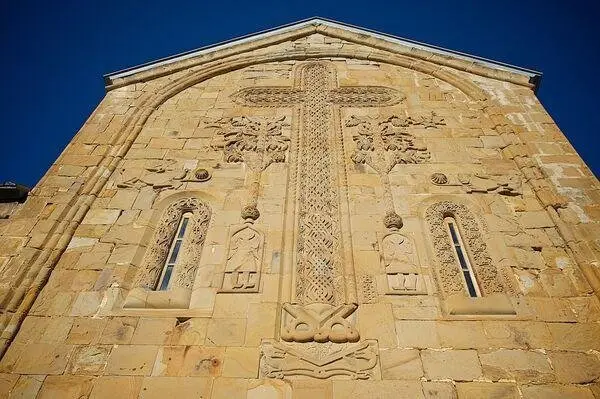
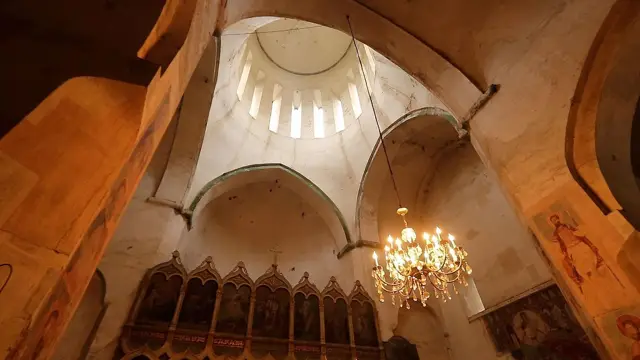
The church is an outstanding example of late medieval Georgian cross-domed architecture. The high dome, clear proportions and rich decoration of the stone façades make it stand out especially against the austere walls of the fortress.
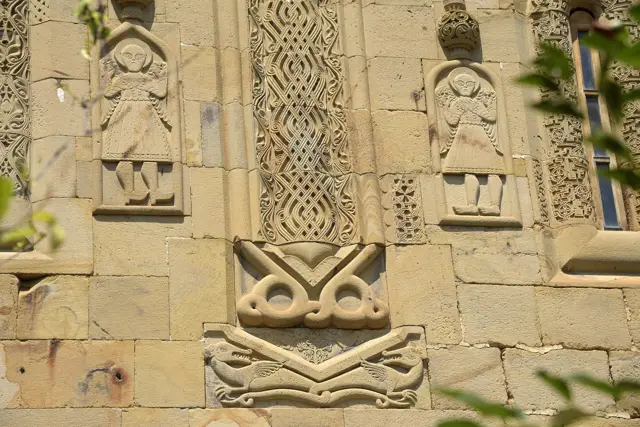
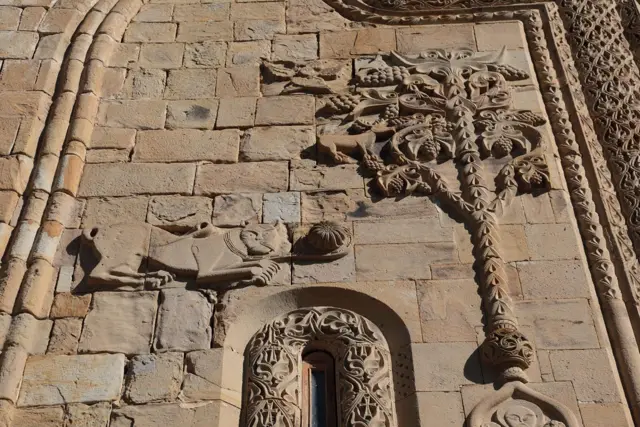
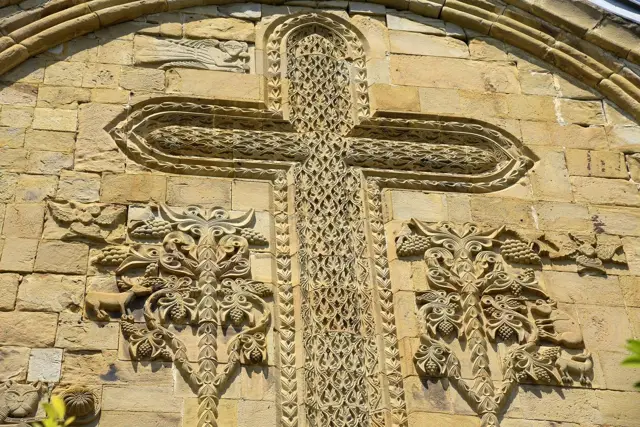
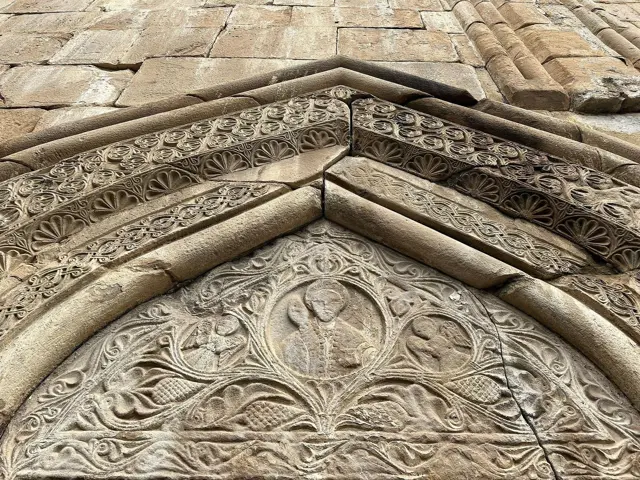
Most impressive are the stone carvings on the church's façades. Here there are large carved crosses, plant ornaments, geometric forms, vine motifs and images of animals and birds. On the south façade the composition of the great cross stands out especially, with masterfully worked decorative elements unfolding around it.
This stone decoration is not merely ornament. In Christian art the vine is a symbol of life and of union with Christ, and the cross remains the spiritual centre of the whole composition. That is why on the façade of Ananuri the stone seems to go beyond the limits of ordinary building material and to become a language of Christian symbols.
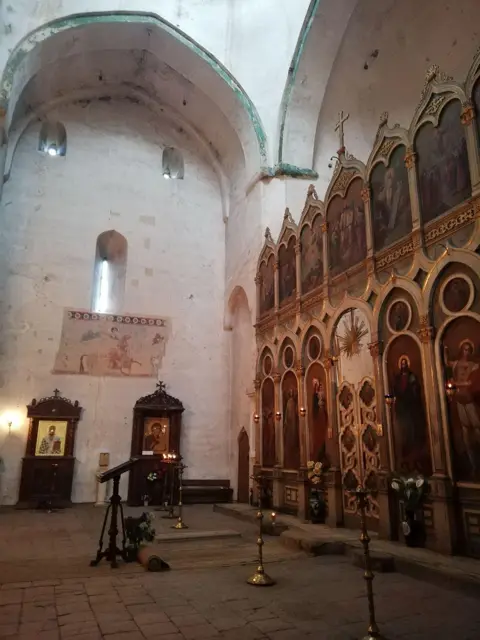
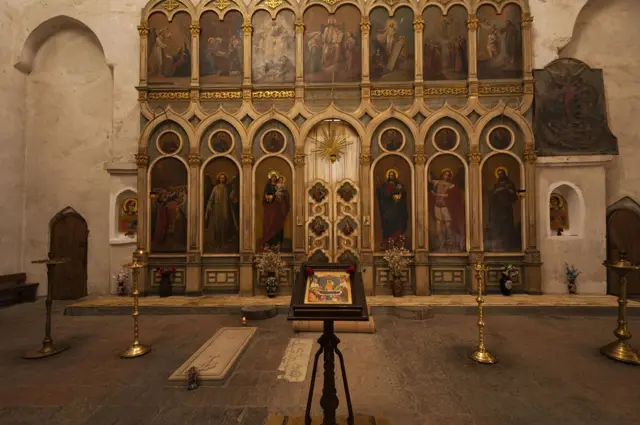
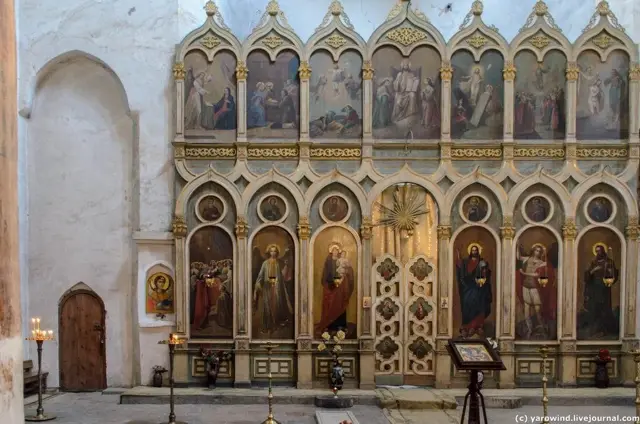
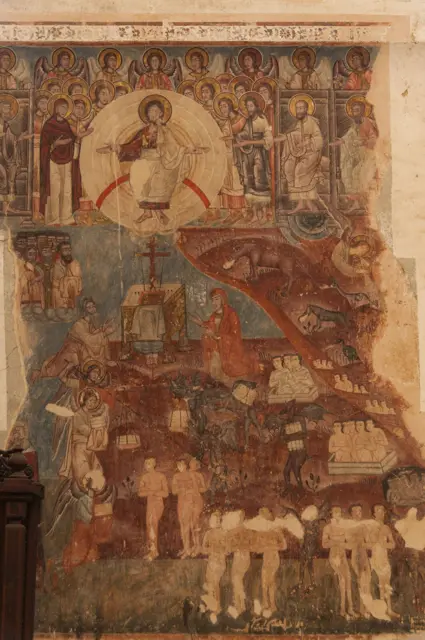
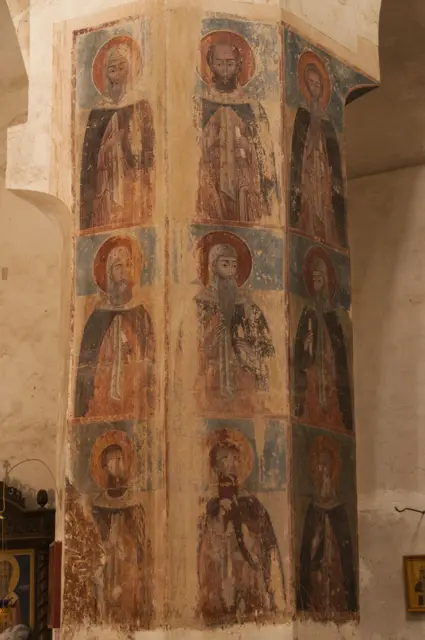
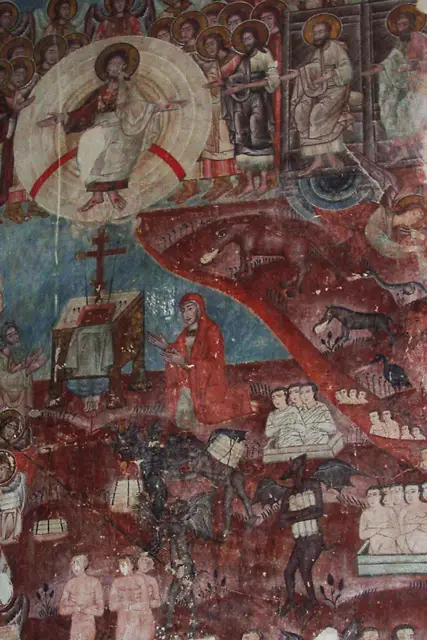
In the church's interior the 17th-century frescoes are of special importance. Although a large part of the painting has been damaged over time, biblical scenes and scenes from the lives of the saints still survive on the walls. Among them are large compositions characteristic of Christian iconography and images of saints.
In the space of the church architecture and painting create a single spiritual setting. The light falling from the high dome, the massive stone walls and the frescoes darkened by the centuries give the interior of Ananuri the special austerity characteristic of Georgia's old churches.
Beside the church stands the older church of the Saviour, with which burials connected with the family of the eristavis of the Aragvi are also linked. The existence of this small church reminds us that Ananuri is not an architectural ensemble created in a single period: it grew and changed over the centuries.
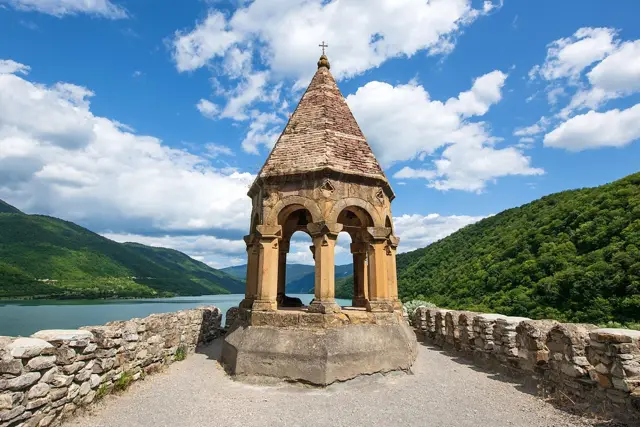
Another outstanding building of the complex is the Khevsur-style tower. Its stepped, pyramidal roof recalls the defensive architecture of mountain Georgia and differs sharply from Ananuri's other towers. It is counted among the oldest parts of the castle and gives the complex a special character.
Ananuri's walls and towers had a defensive purpose. From the high walls it was possible to control the Aragvi valley and the road. That is why for centuries Ananuri was not only a church centre but also a military and strategic one.
Its walls also remember hard battles. In the first half of the 18th century the struggle for power among the eristavis of the Aragvi took an especially cruel form. In 1739 Ananuri became the centre of conflict when the forces of Shanshe, eristavi of the Ksani, attacked the fortress. The battle was followed by the tragedy of the family of the eristavis of the Aragvi, and one of the bloodiest episodes in Ananuri's history was written.
A few years later the political power of the eristavate of the Aragvi was finally weakened. In 1743 King Teimuraz II abolished the eristavate of the Aragvi, and later its territories came under the control of the royal power. After this Ananuri gradually lost its importance as an old feudal residence, although its strategic location remained significant.
In the 19th century too the fortress had a military function. After the Russian Empire abolished the Georgian kingdom, Ananuri was used for some time as a military post. Later its defensive importance declined and the complex took on the character of a historical monument.
The setting of Ananuri changed considerably in the 20th century. After the creation of the Zhinvali hydroelectric station and reservoir, part of the old valley was covered with water. The fortress remained on the high bank, and the huge blue reservoir that appeared below it completely transformed the panorama of Ananuri.
Today Ananuri is one of the most visited historical places on the Georgian Military Road. Yet behind its famous view lies a much deeper history. This was a place where prayer and power, church and fortress, spiritual life and military struggle existed side by side.
The Ananuri Church of the Dormition of the Mother of God is still a functioning Orthodox sanctuary today. Services are still held within its walls, and the old frescoes, carved crosses and stone walls keep the unbroken memory of three centuries.
In Ananuri this contrast is felt most strongly: outside stands a fortress built for war, and at its heart a church created for prayer. From the towers people once watched for the enemy, while in the church they asked the Mother of God for peace and help. The sound of weapons fell silent long ago, but in the church of Ananuri prayer goes on.