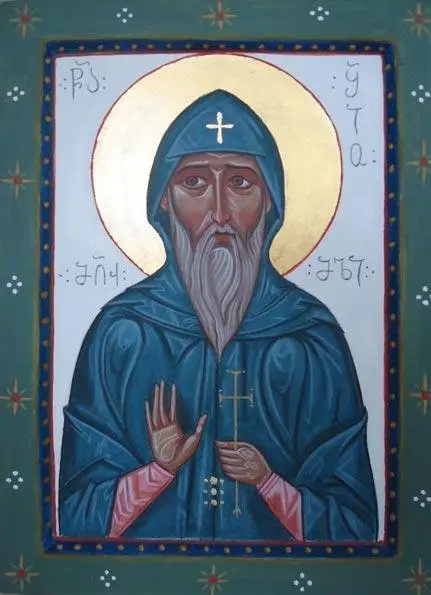
Saint Shio of Mgvime
A dove showed mankind where holiness lay hidden: in the depth of the rock, where only prayer breathed. Shio laid fire on the palm of his hand and was not burned, for faith proved stronger than flesh. The cave received his body, but his soul sowed in the heart of Georgia a light of centuries.
- Feast
- 9 (22) May
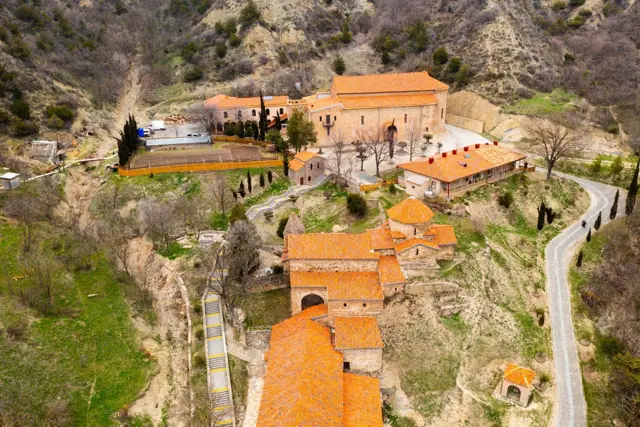
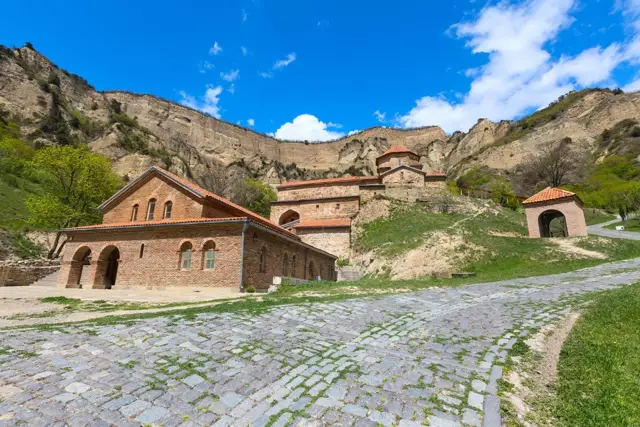
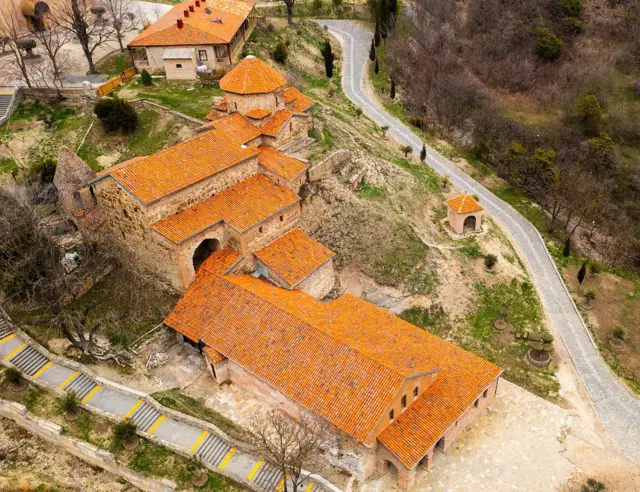
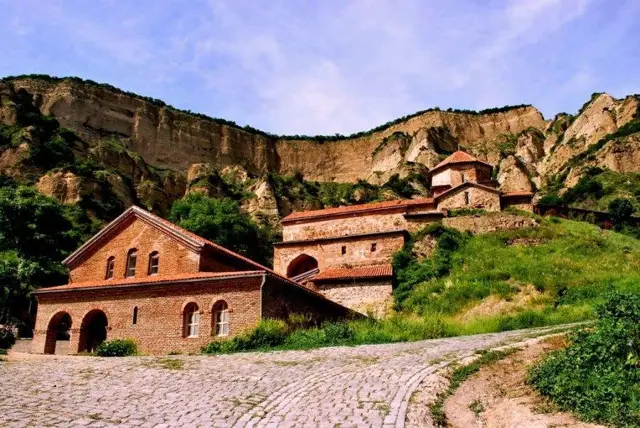
Saint Shio of Mgvime is one of the greatest figures of the 6th-century Georgian Orthodox Church, a wonderworker and one of the Thirteen Assyrian Fathers. He devoted his life to the complete service of God, to obedience, fasting, unceasing prayer and solitude. From his name comes also the name of one of the oldest and most important monastic centres of Georgia: Shiomgvime Monastery. Over the centuries this monastery became one of the outstanding homes of Georgian monasticism, worship and spiritual learning.
Saint Shio was born in Antioch, into a devout and well-to-do Christian family. He was his parents' only child and from childhood received a good education. He especially loved reading Holy Scripture and studying Christian teaching. In his youth his desire grew ever stronger to renounce worldly glory and possessions and to devote his life wholly to God.
At about the age of twenty Shio heard of the renowned ascetic Saint John of Zedazeni. He resolved to go to him and became his disciple. The years spent beside Saint John had the greatest influence on Shio's spiritual formation. He learned monastic obedience, fasting, vigil, prayer and the solitary life.
Later Shio distributed his property among the poor and the monasteries and withdrew for good from worldly life. As the fruit of long struggle, he was distinguished by great humility and deep prayer. According to Church tradition, God also granted him the grace of healing and of working miracles.
In the 6th century Saint John of Zedazeni came to Georgia with his disciples. Among them was Saint Shio. The work of the Thirteen Assyrian Fathers in Georgia became one of the most important events in the history of the Georgian Church. They settled in different regions, founded monasteries, strengthened monastic life and called the Christian people to faithfulness in the faith.
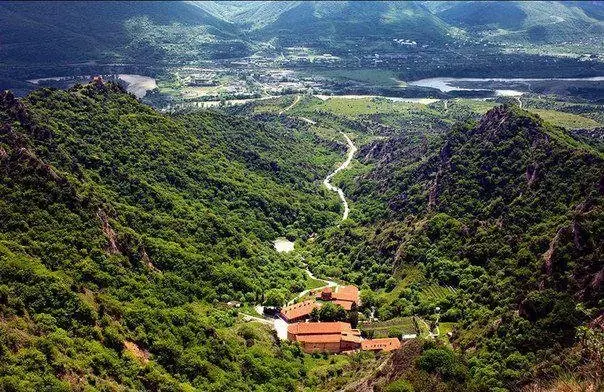
For a time Shio laboured together with his teacher, but his desire to live in complete solitude grew ever stronger. With Saint John's blessing he chose a deserted place near Mtskheta, in the rocky gorge of Sarkineti. This area was marked by its harsh nature, its rocks and its solitude, and was almost unfit for human habitation.
At first Saint Shio lived entirely alone. He made his home in a small cave in the rock, spent his days in prayer and fasted strictly. The conditions of his life were extremely hard, but it was just such solitude that he regarded as the way to a deeper communion with God.
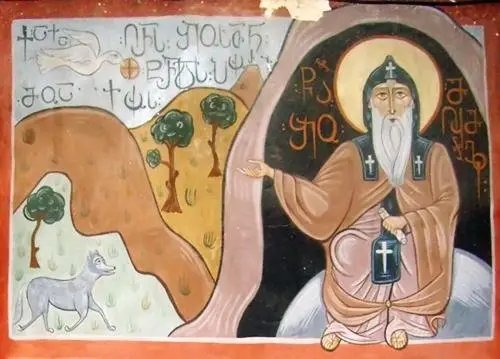
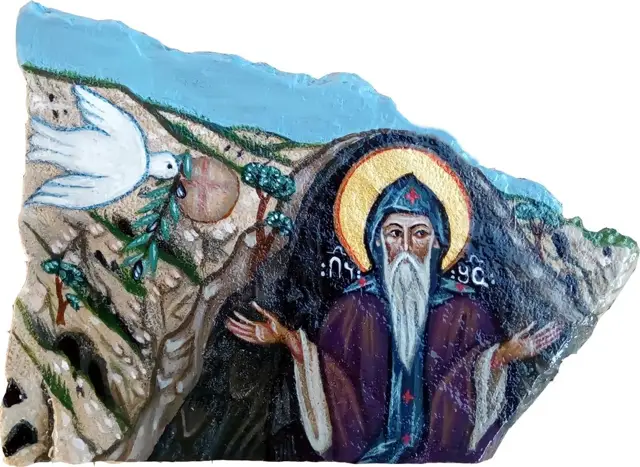
One of the best-known traditions connected with the life of Saint Shio is that of the dove that brought him food. According to Church tradition, by God's providence a dove carried food to the saint. This miracle later became the cause of his being discovered.
Evagre, the influential commander-in-chief of the king of Kartli and lord of Tsikhedidi, noticed a bird that held food in its beak and was flying towards the rocky gorge. He followed the dove and found Saint Shio in the cave. The poverty, peace and spiritual strength of the solitary monk made so strong an impression on Evagre that it became a turning point in his life.
Evagre gradually left his high worldly position and became a disciple of Saint Shio. Others too learned of his example. Soon more and more people were coming to Shio in the wilderness: some for spiritual counsel, some to ask for prayer, and some to begin the monastic life.
In this way one hermit's small cave was turned into a great monastic brotherhood. The number of disciples gathered around Saint Shio grew quickly, and it became necessary to arrange a more organised monastic life.
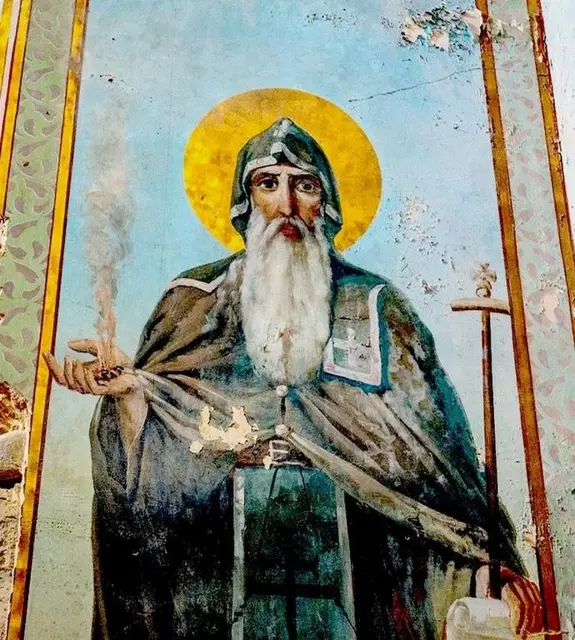
Especially well known in Church tradition is another miracle, connected with the choice of the site for the church. When the brotherhood needed to build a church, Saint Shio begged God to show him a fitting place.
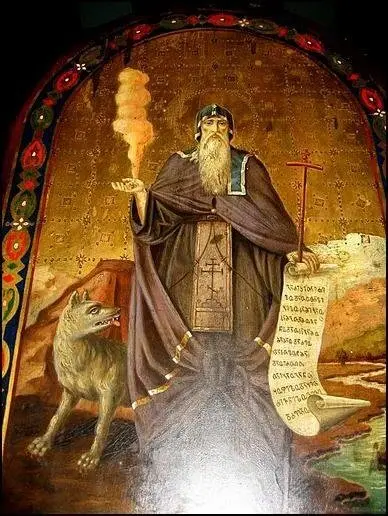
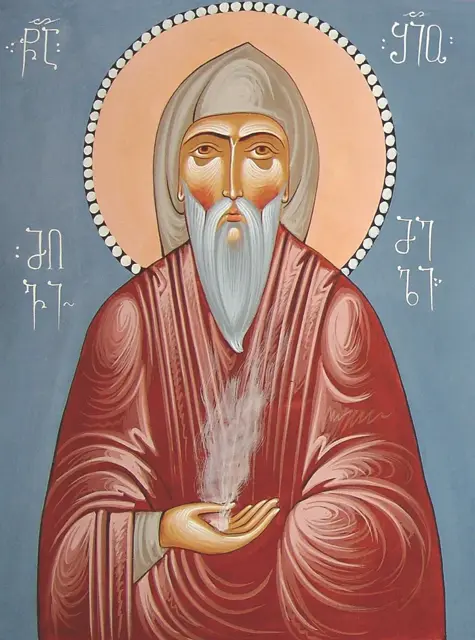
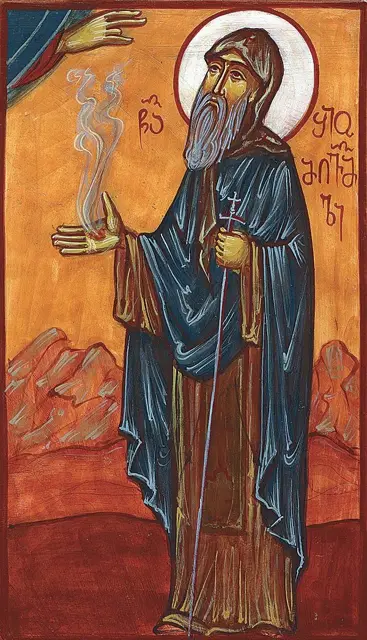
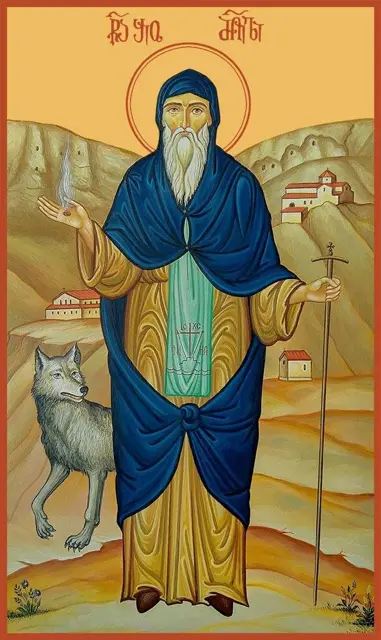
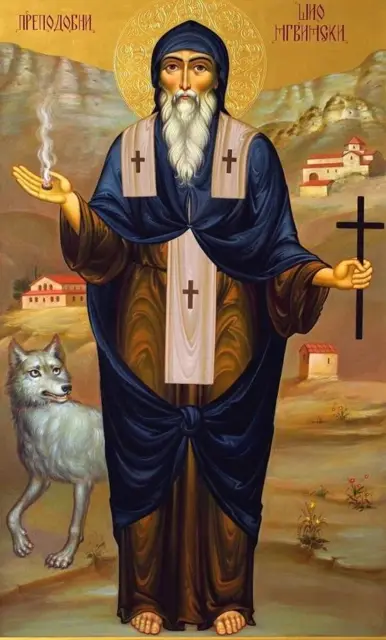
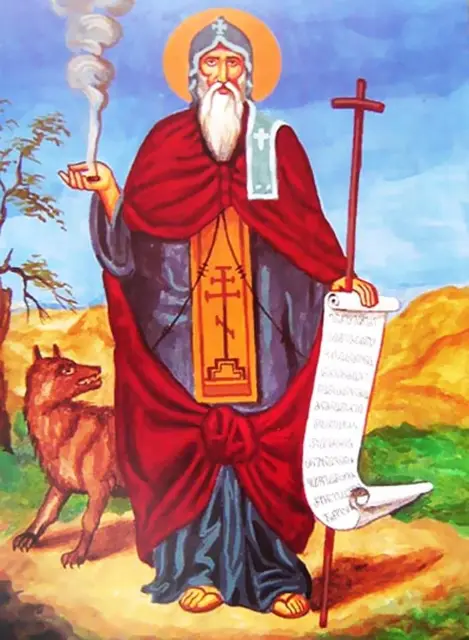
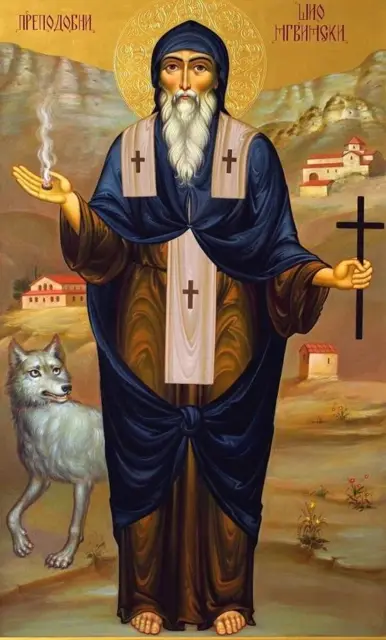
According to tradition, he laid burning embers and incense on the palm of his hand, yet the fire did not burn it. The saint followed the smoke of the incense, and where the smoke rose in a remarkable way straight up to heaven, he marked the spot with his staff. It was there that one of the first churches of the monastery was built.
The brotherhood of Shiomgvime grew so much that the small hermitage became one of the most important monastic centres of Georgia. The monastery was no longer only a place of prayer: it became a place where monks lived, studied, celebrated the divine services and handed on spiritual experience from generation to generation.
Although many disciples had already gathered around Saint Shio and he was regarded as their spiritual father, his heart still longed for complete solitude. For him the growth of the monastery was no cause for personal glory. On the contrary, he tried to remain still further from human honour and attention.
In the last period of his life Saint Shio chose one of the strictest of ascetic labours: he went down into a deep cave and continued his life there. It is with this special labour that his name “Mgvimeli”, “of the Cave”, is connected.
Life in the cave demanded extreme austerity. The saint was almost wholly cut off from the outside world; he prayed, fasted and entrusted himself entirely to the will of God. His disciples passed him the food and water he needed, while Shio himself spent the rest of his life in special silence and prayer.
For him the cave was not a place of hatred for the world or of flight from people. It was a place of spiritual struggle, where the saint, freed from every earthly care, could live in full attentiveness to God.
The spiritual influence of Saint Shio reached beyond the monastery even in his lifetime. The faithful came to him from different places, asking for prayer, blessing and spiritual counsel. Church tradition links with his name many accounts of healings and miraculous help.
Saint Shio reposed in the 6th century. In accordance with his wish, he was buried in the same cave where he had spent the last years of his life. Over the centuries this cave and his grave became a special place of prayer.
The veneration of his holy relics and of his grave became one of the most important parts of the spiritual life of Shiomgvime. The faithful still turn to the saint in prayer today and ask for his intercession in spiritual trial, in illness and in the hard times of life.
Shiomgvime Monastery is his greatest visible legacy. The small monastic dwelling born among the rocks near Mtskheta grew through the centuries and remained, in different periods of Georgian history, a spiritual centre of the first importance.
The life begun by Saint Shio expresses well the essence of the Assyrian fathers' mission in Georgia. They did not come to win glory in great cities or at the royal court. Often they chose the most deserted places, where by prayer and personal example they created monasteries that later influenced the spiritual life of the whole country.
The Georgian Orthodox Church celebrates the memory of Saint Shio of Mgvime on 9 (22) May: 9 May by the old calendar and 22 May by the new. His memory is also kept on the Thursday of Cheesefare Week.
To this day Saint Shio of Mgvime remains one of the greatest examples of Georgian monasticism, of humility, obedience, prayer and complete self-denial. His life teaches us that spiritual strength is shown not in outward glory, possessions or power, but in a person's inner life, in trust in God and in obedience.
His story reminds us especially that a work begun by the prayer of one solitary man may continue for centuries. The small cave in the rock where Shio lived alone was turned into a great monastery, and his name has remained for ever in the history of the Church of Georgia. Shiomgvime Monastery still bears witness today to the labour of that great father who turned a wilderness into one of the most important centres of prayer and spiritual life.
Hymns of Saint Shio of Mgvime
🎵 Troparion
სიყრმითგან ფრთოვან ქმნილმან სათნოებითა წარმართე ყოველი ცხორება შენი, ღმერთშემოსილო და სასწაულთა, ღვთისა მიერ მოცემულთა, იღვწიდ ქართველთა ერსა, ვინაცა მხედველნი შენ შორის მადლითა სულიერითა, ვადიდებთ შემოქმედსა, ღირსო შიო და აწ ძვალნი შენნი შიშველნი, მღვიმით ქვეშე ქვეყანით, ფრთე მაღლობით აღმოიწევის სიმღლედ, მეოხად მორწმუნეთა და კურნებად სულთა ჩუენთა.
🎵 Kontakion
ცხოვრება შენი ღვთისმსახურებით წარმართე და ჯვარისა აღმღებელმან, დაუტევე ყოველივე სოფლისა, უდაბნოსა შვენიერებაო, შიო, ვინა ვითარცა ცხოველსა გხადით ერი ქართველთა და ნაწილთა შენთა მღვიმით აღმოსრულთა სურვილით შევეტკბოთ, მამაო, ნუ დააცადებ ოხასა ჩუენთვის.