Batumi Holy Trinity Church
Where the mountain meets the sea and prayer meets the wind, there stands the Church of the Trinity. From the summit Batumi looks small, and God near.
- Region
- Adjara
- UNESCO
- No
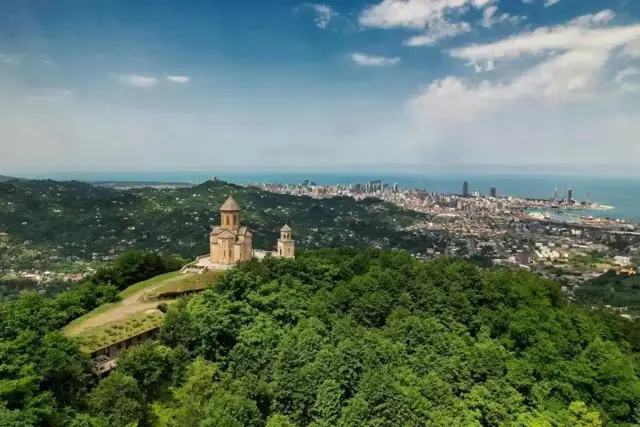
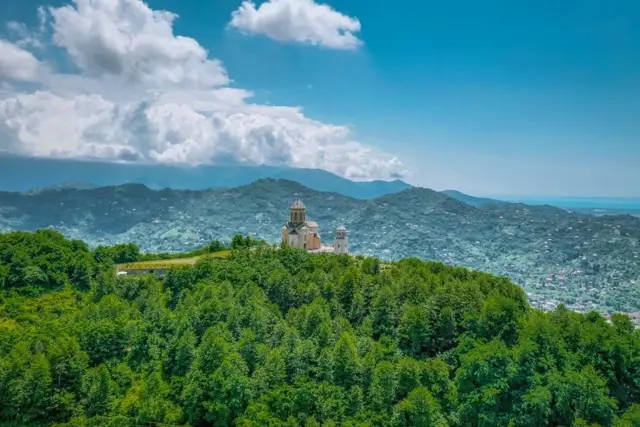
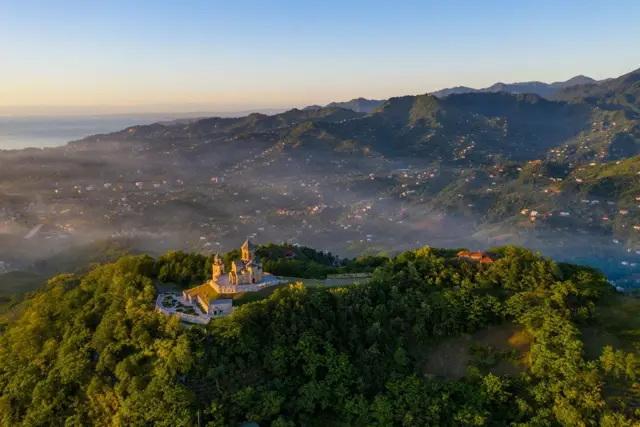
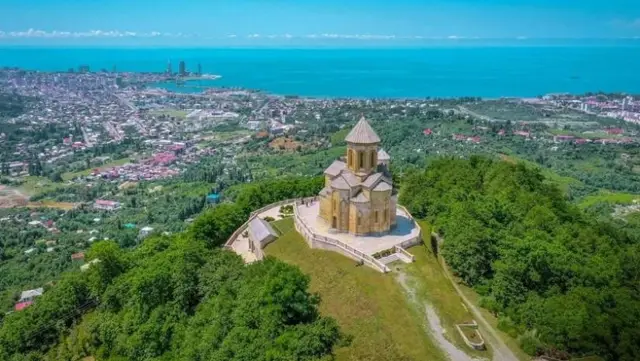
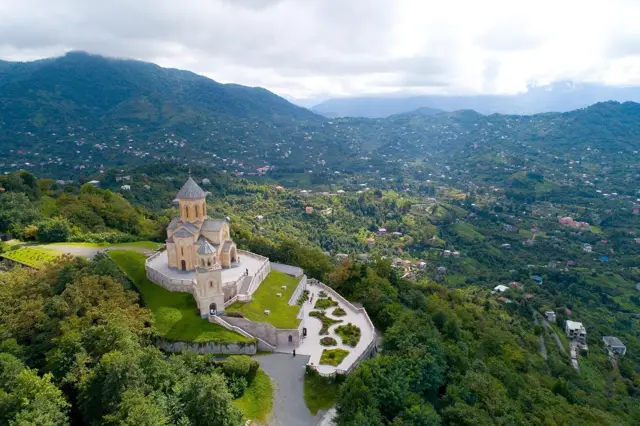
The Holy Trinity Church of Batumi is one of the outstanding Orthodox holy places of Adjara. It stands near Batumi, on Mount Sameba, above the city and the Black Sea coast. Because of its position the church is at once a place of prayer, an important centre of Christian life in Adjara and one of the best-known viewpoints in the surroundings of Batumi.
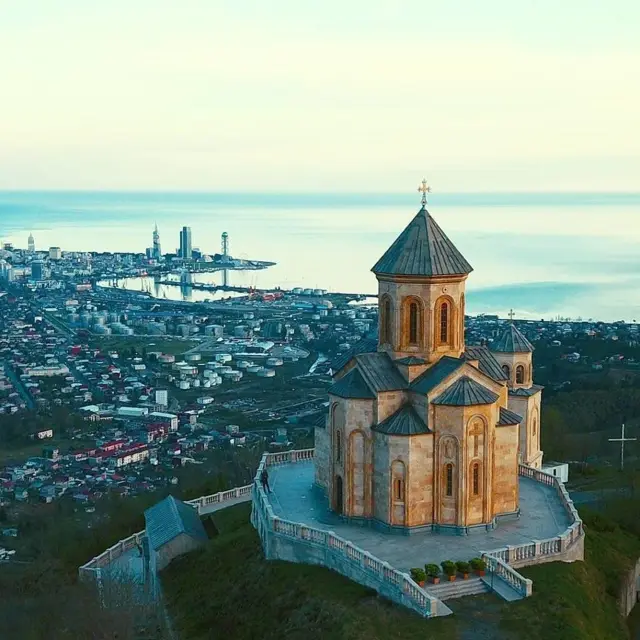
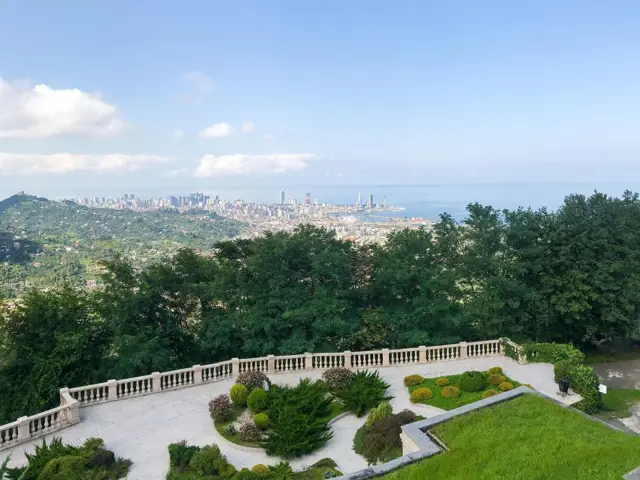
From Mount Sameba a wide panorama opens over Batumi, the Black Sea, the city's coastline and the mountainous surroundings of Adjara. It is precisely this position that creates the church's special character. Away from the noise of the city, the church raised on the height is for believers a space of prayer and solitude, and for visitors a place from which Batumi and its natural setting can be seen as a whole.
In discussing the history of Batumi Sameba it is important to distinguish confirmed historical information from local traditions. There are various traditions about the spiritual significance of Mount Sameba, but not every detail of the history of earlier church buildings on this site is confirmed with equal precision by written sources.
The Christian history of Adjara itself, however, is much older. South-western Georgia and the Black Sea coast are linked with the oldest areas of the spread of Christianity. Over the centuries churches and monasteries were built in this territory, and the region was an important part of Georgian Christian culture.
The history of Adjara became especially difficult after the rise of the Ottoman Empire. Important territories of south-western Georgia came under Ottoman political influence for a long time. These processes greatly affected the religious and cultural life of the region as well, and part of the Christian church network gradually weakened or disappeared.
In the second half of the 19th century the political situation of Batumi and Adjara changed again. After 1878 Batumi became part of the Russian Empire and the city began rapid economic and urban development. Batumi became an important Black Sea port, its population grew and the religious life of the city also became diverse.
In this broad historical context the restoration of Georgian Orthodox life in Adjara took on special significance. Churches were not only places of worship: they also expressed the historical memory of the region and its cultural link with the rest of Georgia.
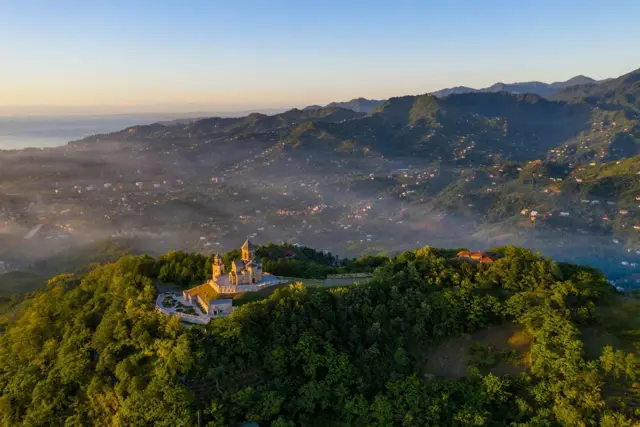
By its position Mount Sameba naturally creates a feeling of solitude. As one climbs, the city gradually falls away below and a mountainous landscape takes its place. In Georgian monastic and church tradition such places were often chosen for prayer, because height, silence and closeness to nature created a secluded spiritual setting.
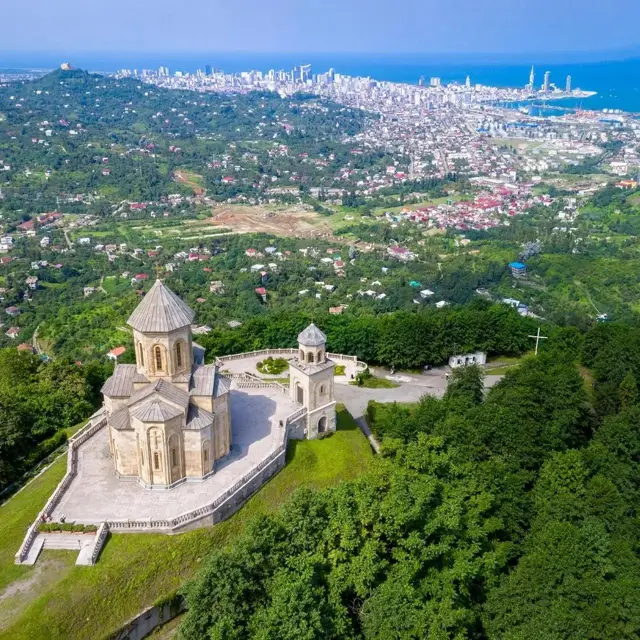
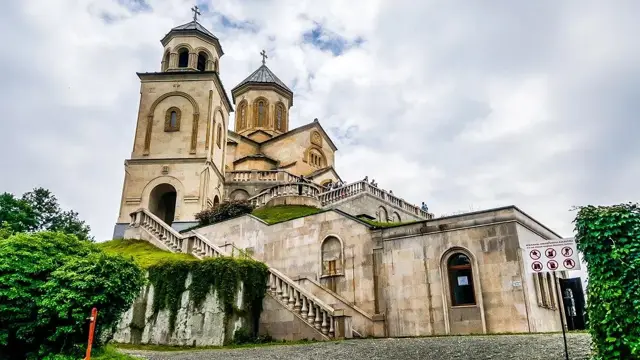
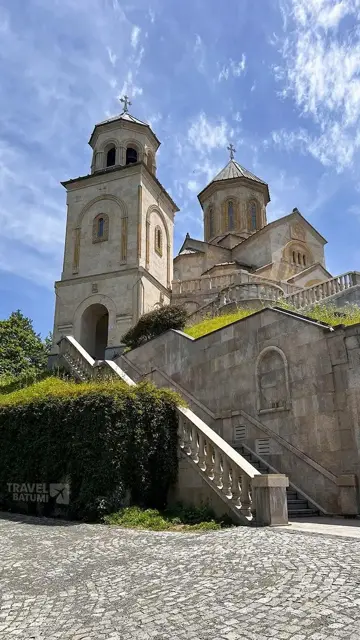
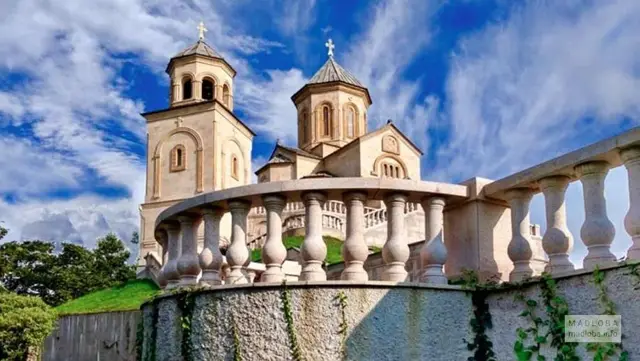
The present Holy Trinity Church of Batumi continues the traditions of Georgian Orthodox architecture. Its architectural appearance focuses attention on the central church space, the dome, the arched forms and the stone material. The scale of the church is so linked with its surroundings that the building is perceived as an important part of the mountain panorama.
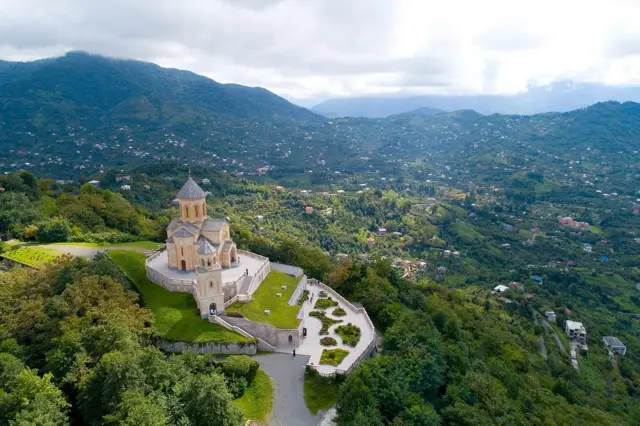
One of the most important features of its architecture is its relationship with the surroundings. Like many historic churches of Georgia, Sameba too is not perceived as an isolated building: an important part of its architectural effect comes precisely from its unity with the landscape.
The church's dome and vertical forms can be made out from afar, and the open space around the church allows one to see both the church and the panorama of sea and mountains at once. That is why Batumi Sameba cannot be grasped through its interior alone: the whole of Mount Sameba creates the impression of a single spiritual and natural space.
The church interior is arranged according to the traditional liturgical layout of an Orthodox church. Here are the sanctuary, the iconostasis, icons and other church elements. Unlike the panoramic setting outside, the interior creates a calmer and more concentrated atmosphere.
Icons are an important part of the church's spiritual life. In the Orthodox tradition they are not merely decorative images: before the icons believers pray, light candles and take part in the liturgical life of the Church.
In the history of Batumi Sameba the general context of the Soviet period of the 20th century is especially important. Under the atheist state policy in Georgia many churches and monasteries were closed, damaged or used for secular purposes. Religious life was strictly controlled and the public expression of religious traditions was severely limited.
For Adjara this period was added to an especially difficult historical legacy. That is why preserving and later reviving the Georgian Christian tradition in the region was not only a religious matter: it also had cultural and historical significance.
At the end of the 20th century, after the break-up of the Soviet Union and the restoration of Georgia's independence, Orthodox church life revived considerably throughout the country. Old churches were restored, new churches were built and monastic life was renewed.
This spiritual revival became especially visible in Adjara too. In Batumi and its surroundings Orthodox communities grew stronger, and traditions linked with historically Christian places gained new life.
The Holy Trinity Church of Batumi is also today part of this revived church life. It is a functioning Orthodox church where the Divine Liturgy, prayers and various church services are celebrated. On the great feasts especially, many believers gather here.
The dedication of the church to the Most Holy Trinity carries in itself a deep Christian meaning. At the foundation of the Orthodox faith stands belief in one God in three persons: the Father, the Son and the Holy Spirit. That is why churches dedicated to the Holy Trinity hold a special place in Georgian church tradition.
For believers the road itself often makes the climb up Mount Sameba a special experience. Moving from the city towards the mountain, the surroundings gradually change: the urban space is left behind and its place is taken by greenery, mountains and the wide horizon of the sea.
That is why for many people visiting Sameba does not mean merely stepping into the church for a few minutes. Coming here can become an experience of prayer, silence and temporary withdrawal from everyday life.
One of the best-known features of Mount Sameba is its panoramic views. In good visibility much of Batumi can be seen from here, along with the Black Sea coast, the city's urban fabric and the mountains of Adjara rising around it.
A special impression is created when city and sea come together in a single view. Batumi's modern high-rise buildings, the port, the coastline and the wide expanse of the Black Sea are seen from the mountain in an entirely different perspective.
Yet the church's significance should not be defined only by its tourist views. Sameba is first of all a functioning Orthodox holy place. That is why, when visiting it, respect for the church's liturgical and monastic setting is as important as getting to know its architecture and panorama.
Today Batumi Sameba is an important place of prayer for the local population and for believers coming from other regions of Georgia. At the same time its location makes it one of the interesting Christian monuments of Adjara for foreign visitors as well.
The Holy Trinity Church of Batumi is distinctive because it brings together in one space the difficult historical memory of Adjara, present-day Orthodox life, Georgian church architecture and the remarkable nature of the Black Sea coast.
The modern city of Batumi spread out below is constantly changing and growing, while the Holy Trinity Church rising above it creates an entirely different space: a peaceful place where the city, the sea and the mountains of Adjara become part of one view.
Batumi Sameba remains today one of the outstanding Orthodox places of prayer in Adjara: a holy place raised on a mountain, where prayer, Georgian Christian tradition and the natural beauty of the Black Sea coast come together in special harmony.