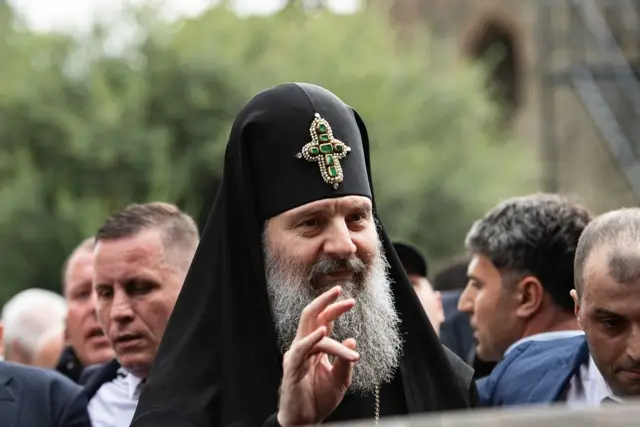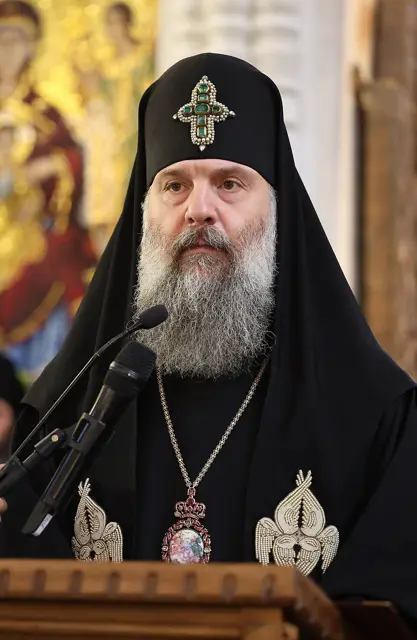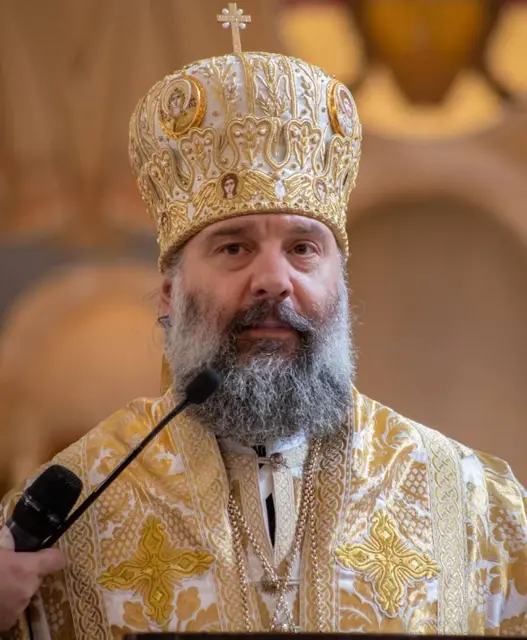
Shio III, Catholicos-Patriarch of All Georgia
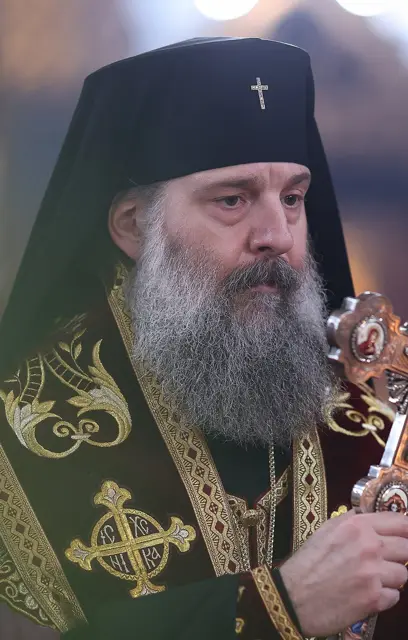
From monastic obedience to the patriarchate of All Georgia, the path of Shio III is a story of spiritual service and great responsibility. With his enthronement in 2026 a new chapter began in the history of the Church of Georgia.
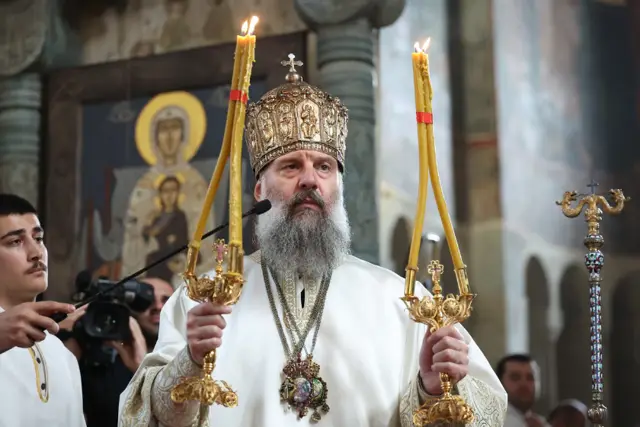
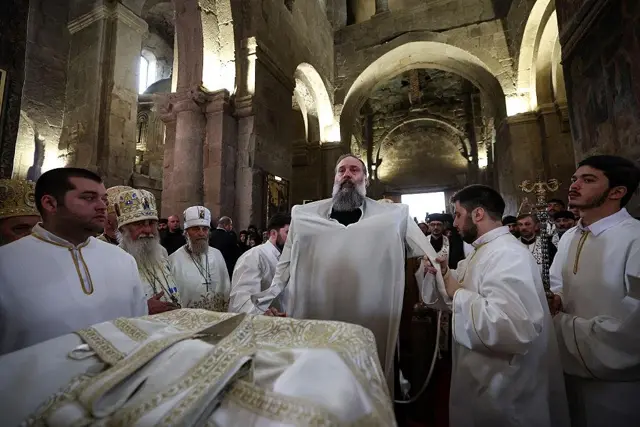
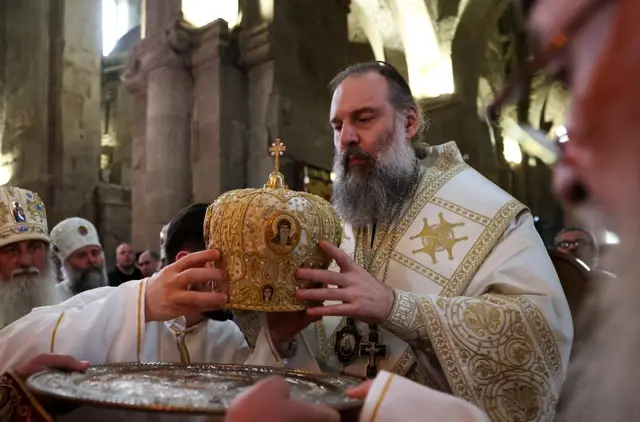
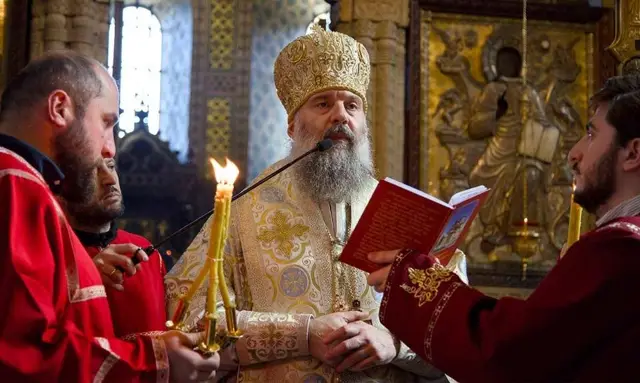
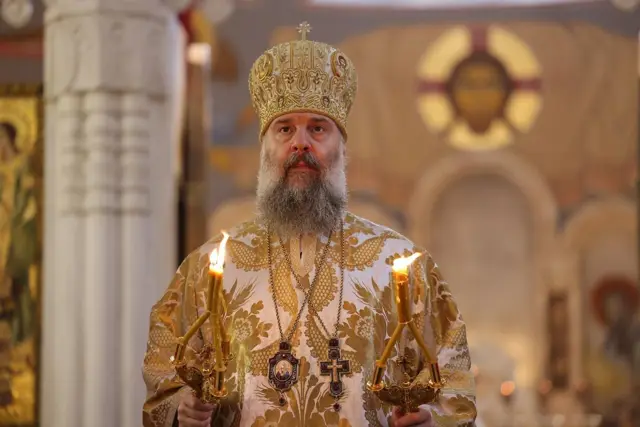
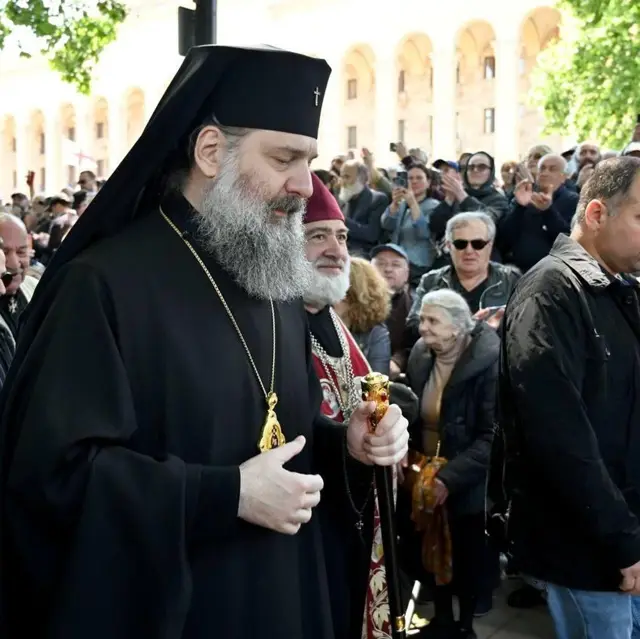
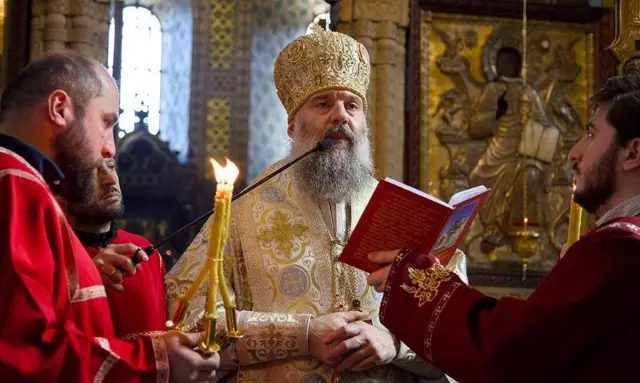
On 12 May 2026, in the patriarchal Svetitskhoveli Cathedral in Mtskheta, a new page opened in the centuries-old history of the Orthodox Church of Georgia. In the very cathedral where in 1977 Ilia II, Catholicos-Patriarch of All Georgia, was enthroned, the Church of Georgia welcomed a new patriarch almost half a century later.
The day too was special: the commemoration of Saint Andrew the First-Called, the apostle whom church tradition regards as the first preacher of Christianity in Georgia. In Svetitskhoveli Shio III was vested with the patriarchal insignia and enthroned as Catholicos-Patriarch of All Georgia, Archbishop of Mtskheta-Tbilisi and Metropolitan of Bichvinta and Tskhum-Abkhazia.
The road to this day spanned several decades: from the musical world of Tbilisi to obedience in a monastery, from the peace of the monastery to the responsibility of a bishop and finally to the highest ministry of the Church of Georgia.
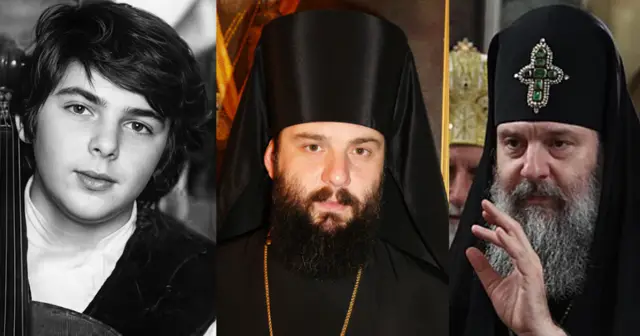
Shio III, in the world Elizbar Teimurazis dze Mujiri, was born on 1 February 1969 in Tbilisi. The first great passion of his youth was music. Alongside his studies at Tbilisi Secondary School No. 53 he received a musical education, and in 1988 he continued his studies at the Tbilisi State Conservatory in the cello class.
Already in his first year at the conservatory he won first place in the First Republican Competition of Cellists. The path of a musician was opening before him, a path that demanded daily work, attention, listening, patience and discipline.
But in the life of the young Elizbar Mujiri another choice gradually ripened.
In 1991 he chose an entirely different setting and settled as a novice in the monastery of Shiomgvime near Mtskheta, one of the oldest and most important monasteries of Georgia. Founded in the 6th century, this monastery is connected with the name of Saint Shio of Mgvime, one of the Thirteen Assyrian Fathers.
The move from the concert world of the Tbilisi Conservatory to the life of an ancient monastery was a sharp turn in his life. Here daily life was set by another rhythm: prayer, obedience, worship and the ordinary work the monastery needed.
On 5 February 1993 the novice Elizbar was tonsured a monk and given the name Shio. At first he was given the service of the monastery refectory and then that of steward. Thus the church path of the future patriarch began not with high ranks but with the ordinary obedience of monastic life.
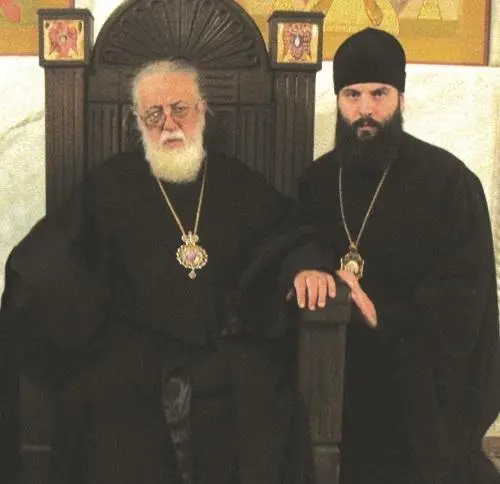
In 1995 the monk Shio was ordained deacon. A year later, in 1996, the Catholicos-Patriarch of All Georgia Ilia II ordained him priest. This was the beginning of a relationship that in the following decades was to take on special importance, both in Shio's own life and for the future history of the Church of Georgia.
In 1997 Hieromonk Shio was appointed rector of the Church of Saint George in Kldisubani, Tbilisi. In the following years he served in various historic churches of Tbilisi, among them Anchiskhati and the Church of Saint Nicholas at Narikala.
In the same period he also continued his theological education. He graduated from the Saint John the Theologian Theological Seminary in Batumi and continued his studies at theological schools in Moscow and at the Saint Tikhon Theological Institute.
In 1998 he was given the rank of hegumen with the right to wear a gold cross.
An important part of his ministry was also connected with Georgians living outside Georgia. From 2001 he was rector of the Church of Saint George of the Georgian community in Moscow. Later, already as a bishop, he was also entrusted with the spiritual care of the Georgian faithful in Australia and New Zealand.
This experience takes on special importance for the Georgian Church, a significant part of whose faithful today live outside the homeland's borders. The Church's ministry in such a setting does not mean only celebrating services: it often also serves to preserve the Georgian language, faith, family tradition and spiritual bond with the homeland.
On 18 August 2003 the Holy Synod of the Orthodox Church of Georgia elected Hegumen Shio bishop of the newly created eparchy of Senaki and Chkhorotsku.
His address on being named bishop gives an important idea of how he understood a bishop's responsibility already at the beginning of his episcopate. He stressed that a bishop is responsible for the spiritual state of his flock and clergy, but at the same time must know well the issues of contemporary life, because every age brings new questions before the Church.
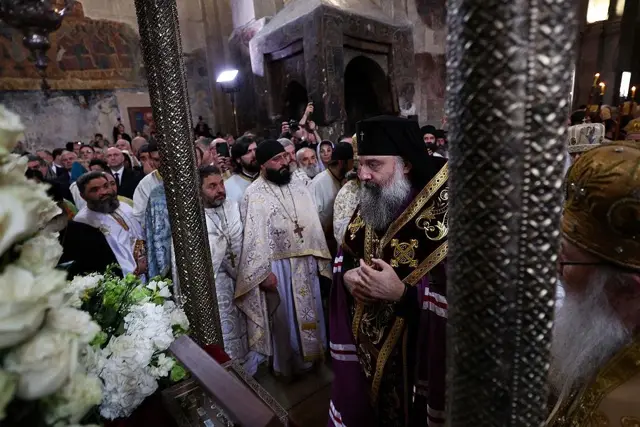
On 7 September 2003, in the patriarchal Svetitskhoveli Cathedral, Ilia II together with members of the Holy Synod performed his episcopal consecration.
On that day Shio remembered with special gratitude Ilia II, whom he regarded as his spiritual father. His words showed that he attached special importance to the patriarch's advice and support in the difficult periods of his own church life.
The eparchy of Senaki and Chkhorotsku entrusted to him carried a rich spiritual heritage. Linked with this region is the Venerable Alexi Shushania, whose life and spiritual legacy later became a subject of Shio's research and interest.
In his years as a bishop his responsibility gradually grew.
In 2007 Bishop Shio was awarded the Order of Saint George. In 2009 he was raised to the rank of archbishop, and on 2 August 2010 he received the rank of metropolitan and was appointed chorbishop of the Catholicos-Patriarch of All Georgia.
He also took part in the work connected with the canonisation of saints of the Church of Georgia. His ministry gradually ceased to be limited to the borders of a single eparchy and became more and more linked with the common responsibility of the whole Church of Georgia.
On this path the decisive date was 23 November 2017, the feast of Giorgoba.
Ilia II, Catholicos-Patriarch of All Georgia, appointed Metropolitan Shio as his locum tenens.
This decision marked the beginning of a new stage in Shio's church life. The status of locum tenens carried special responsibility and made him one of the principal figures of the coming transitional period of the Church of Georgia.
In the following years he served beside Ilia II at a time when the era created by the patriarch over almost half a century was gradually drawing to a close.
In 2018 the Holy Synod also granted Metropolitan Shio the right to wear a diamond cross on his skufia.
Yet in his life the responsibility that had gradually grown over many years remained more important than outward church honours: from monk to priest, from priest to bishop, metropolitan, chorbishop and then the patriarch's locum tenens.
An entirely new reality came for the Church of Georgia on 17 March 2026, when Ilia II, Catholicos-Patriarch of All Georgia, died.
With his death one of the longest eras of modern Georgia's church history came to an end. Ilia II led the Orthodox Church of Georgia for almost half a century, and for several generations his name was identified with the recent history of the Georgian Church itself.
The next day, 18 March, the Holy Synod confirmed Metropolitan Shio as locum tenens of the patriarchal throne. He was entrusted with leading the Church of Georgia until the election of a new Catholicos-Patriarch.
This was no longer preparation for a future responsibility. After the death of Ilia II, Shio found himself directly at the centre of a historic transitional period.
The election of the new patriarch took place on 11 May 2026 in the Holy Trinity Cathedral of Tbilisi, at the 14th Extended Council of the Orthodox Church of Georgia.
The 39 members of the Holy Synod voted for the candidates by secret ballot. Metropolitan Shio received 22 votes and was elected Catholicos-Patriarch of All Georgia in the first round.
Thus he became Shio III, the 142nd primate of the Orthodox Church of Georgia and the tenth patriarch since the restoration of the autocephaly of the Church of Georgia in 1917.
For the first time in almost half a century Georgia had a new Catholicos-Patriarch.
Only one day after the election, on 12 May, Shio III was enthroned in Svetitskhoveli.
It was the first patriarchal enthronement in Georgia since 1977.
For this event Svetitskhoveli was not merely a historic cathedral. For centuries it was one of the main spiritual centres of Georgia's state and church life. The history of many Georgian kings, catholicoi and patriarchs was linked with this very place. Here Ilia II was enthroned, and here, forty-nine years later, his successor's patriarchate began.
In the first patriarchal sermon delivered after his enthronement, Shio III spoke of the role and responsibility of the Church in today's world.
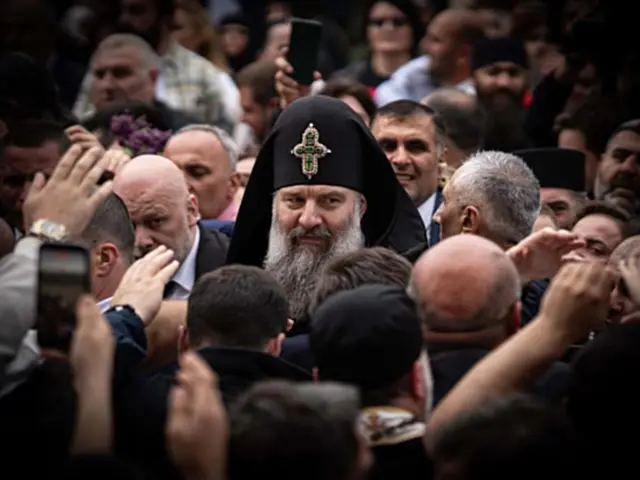
In his words the need to meet the human person held an important place. The patriarch drew attention to the need to open the doors of the Church wide to all: not only to those already in the church but also to those who still remain outside it.
This thought became symbolic of the first day of his patriarchate.
The Church, in his view, should not be only a place to which a person comes. The Church itself must be able to go to the person, understand their pain, listen to their spiritual questions, talk with the young and serve with love.
He also remembered with special honour his predecessor Ilia II and his long legacy.
A difficult responsibility lies before Shio III. He must lead a Church that has a Christian tradition of almost two millennia, a spiritual heritage accumulated over centuries and a special place in the public life of modern Georgia.
At the same time the new era also raises new questions: how the Church should speak with the young generation, how to preserve religious and national identity in a globalised world, how to serve Georgians living in the homeland and in emigration, and how to respond to spiritual challenges unknown to previous centuries.
The answers to these questions are still being written.
Shio III's patriarchate began only in May 2026, so a historical assessment is premature. Time will finally reveal the significance of the decisions he makes and of the Church's future direction.
But the path he has travelled so far is already remarkable in itself.
The young cellist from Tbilisi who left the path of professional music; the novice of Shiomgvime monastery who served as refectorian and steward; the priest who served in various churches; the bishop entrusted with an eparchy and then also with the spiritual care of Georgians living abroad; the chorbishop and locum tenens of Ilia II; and finally the Catholicos-Patriarch of All Georgia.
This path did not end on the patriarchal throne of Svetitskhoveli.
On the contrary: on 12 May 2026 its hardest and most responsible stage began.
Today Shio III stands at the head of a Church that throughout Georgia's history has seen the rise and fall of kingdoms, invasions by foreign powers, the abolition and restoration of autocephaly, Soviet persecution and a new revival of Christian life.
The new link in this centuries-old chain is now connected with his name.
And just as the young Elizbar Mujiri once left his familiar world and set out on the road to Shiomgvime monastery, today a new road again lies before Shio III: a road on which he bears responsibility not only for his own ministry but for the future of the whole Church of Georgia.