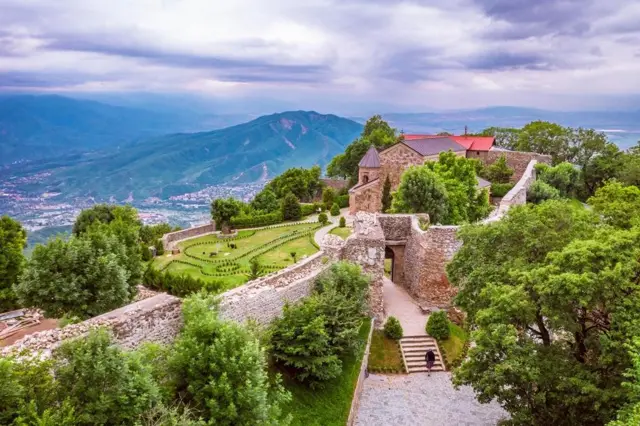
Zedazeni Monastery
Once the idol of Zaden was worshipped here, and centuries later, on the same mountain, Saint John of Zedazeni chose his place of prayer. From here the great spiritual road of the Thirteen Assyrian Fathers spread out to the different corners of Georgia. Even today, on the heights of Zedazeni, one seems to feel the silence of that prayer which changed this mountain for ever.
- Region
- Mtskheta-Mtianeti
- UNESCO
- No
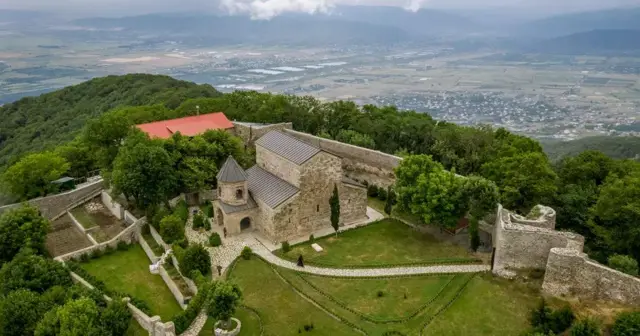
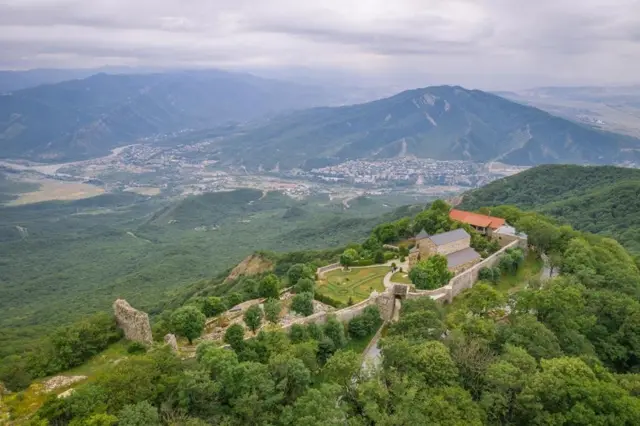
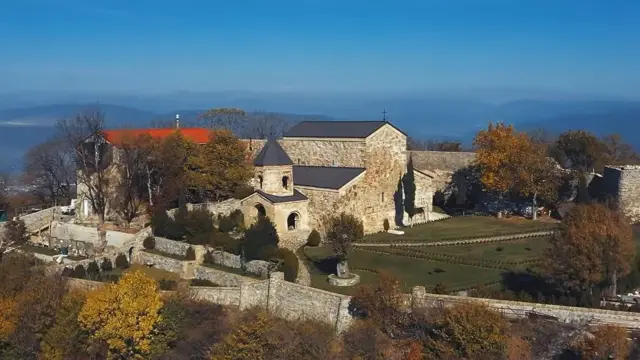
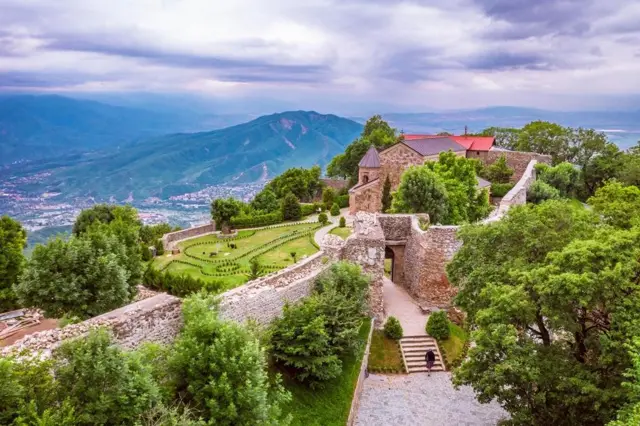
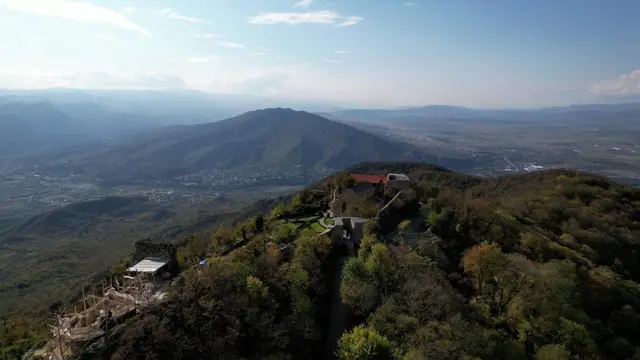
Zedazeni Monastery is one of the oldest and most important monastic centres of Georgia. It stands north-east of Mtskheta, on the Saguramo range, on Mount Zedazeni, from which a wide view opens over the surroundings of Mtskheta, the Aragvi and Mtkvari valleys and towards Tbilisi. The monastery's history is especially closely linked with Saint John of Zedazeni, who laboured in Georgia in the 6th century, and with the Thirteen Assyrian Fathers, who played an important role in strengthening and spreading Georgian monastic life.
Mount Zedazeni was of special importance even before Christianity. In ancient Kartli it was a pagan religious centre and in Georgian historical tradition is linked with the cult of the idol Zadeni. After the conversion of Kartli the importance of the pagan religion gradually faded, and several centuries later Christian monastic life took shape on the same mountain. In this sense Zedazeni became one of the symbolic places of Georgian history: a space where an ancient pagan past was replaced by Christian spiritual tradition.
The most important stage of the monastery's history begins in the 6th century, when the Assyrian Fathers came to Georgia. Their leader was Saint John of Zedazeni. According to Church tradition, the fathers first came to Mtskheta and, after receiving the blessing of the Church of Georgia, began their work in various parts of the country. John chose Mount Zedazeni for a life of solitude.
Life on the mountain top was not easy. The harsh natural conditions, the winter cold, the difficult approach and above all the scarcity of water were a daily test for the monks. Nevertheless, Saint John and his disciples devoted themselves to prayer, fasting, solitude and ascetic life. It was in this setting that Zedazeni took shape as one of the most important early monastic centres.
The importance of Saint John of Zedazeni is not limited to founding a single monastery. The fathers gathered around him later continued their work in different parts of Georgia. Among them were Shio of Mgvime, David of Gareja, Joseph of Alaverdi, Anthony of Martkopi, Abibos of Nekresi and Ise of Tsilkani. Many important monasteries and church centres of Georgia are linked with their names.
That is why Zedazeni can be regarded as one of the original spiritual centres from which the Georgian monastic revival of the 6th century spread to different parts of the country. Shiomgvime, David Gareja, Alaverdi and other important monasteries took shape in different regions, but their histories are united by a common spiritual foundation: the work of the Assyrian Fathers.
Saint John remained at Zedazeni until the end of his life. In the church traditions preserved about his life, prayer, strict asceticism and miraculous events hold a special place. According to tradition, as his end drew near the saint wished to be buried in the very place where he had laboured for years.
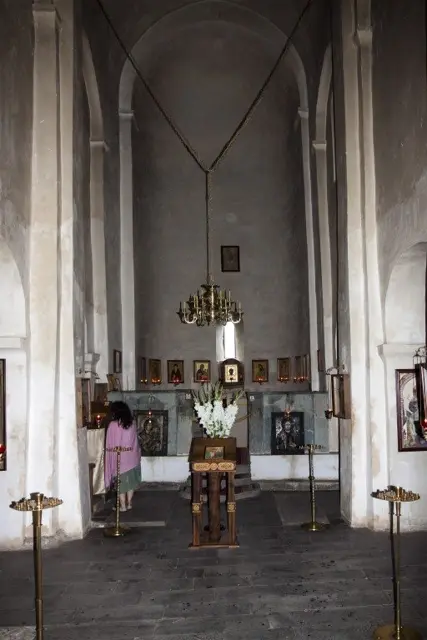
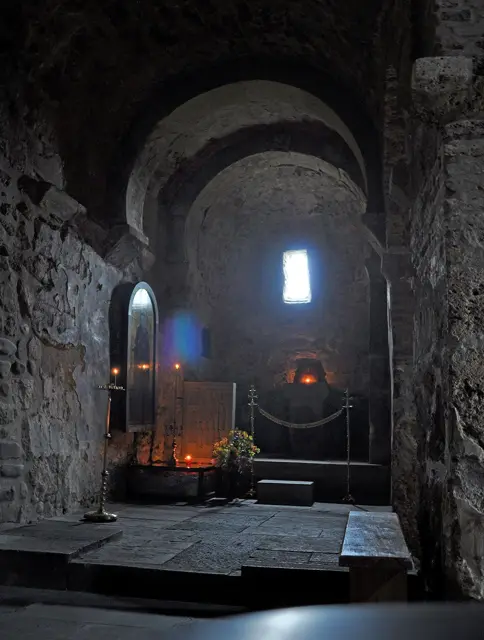
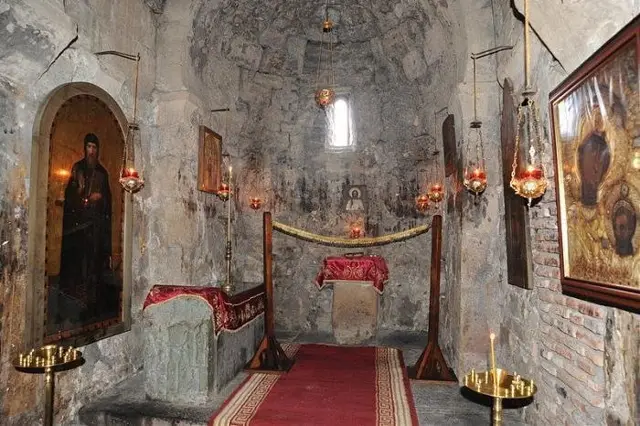
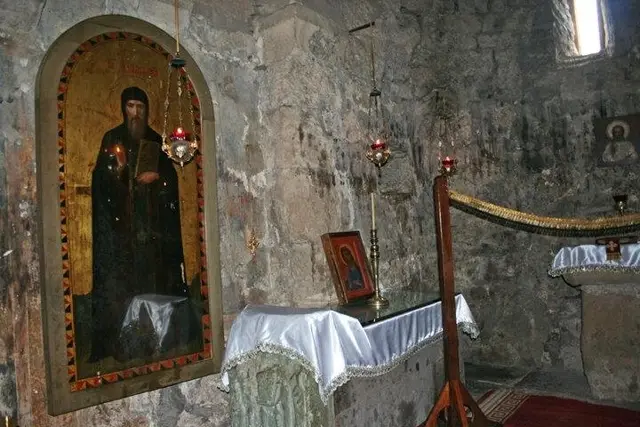
Today the tomb of Saint John of Zedazeni is one of the monastery's chief holy places. Over the centuries believers came here from all over Georgia to honour the saint and pray before him. Thus Zedazeni is not only a historical monastic complex but also a place of pilgrimage directly linked with the life of Saint John.
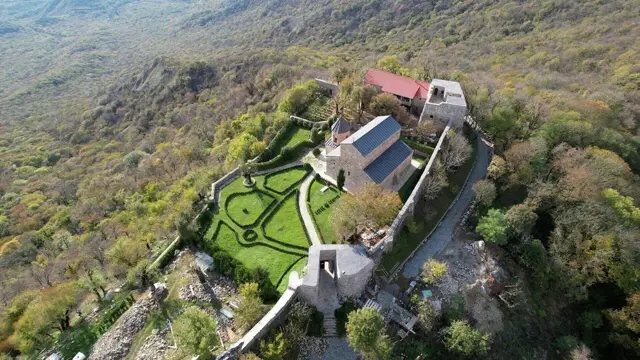
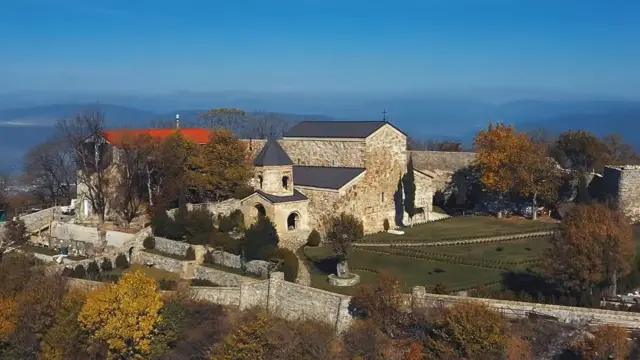
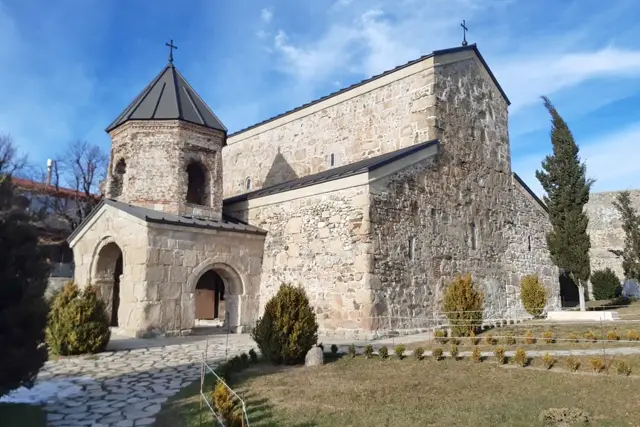
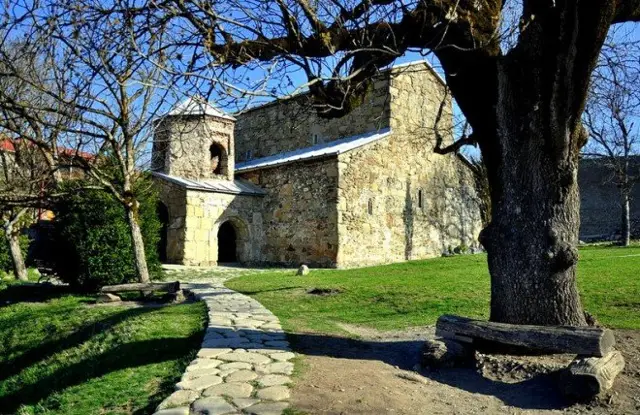
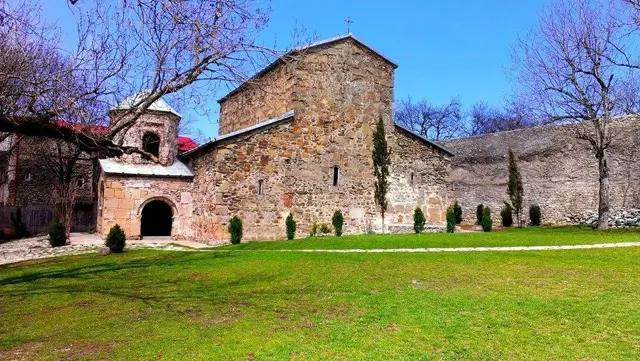
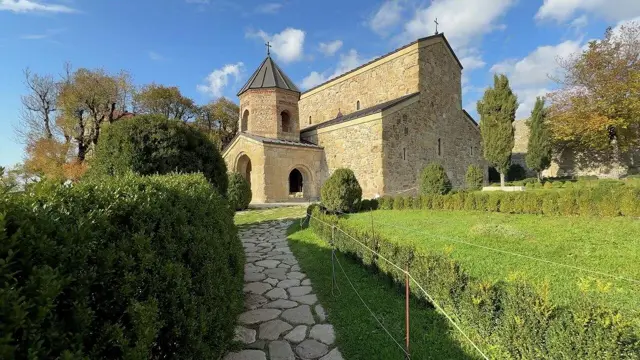
Architecturally, Zedazeni Monastery is interesting because its complex brings together buildings formed in different periods. Over the centuries churches, chapels, living quarters and service buildings were built, altered and restored here. That is why the monastery's present appearance is not the building of a single period, but the result of centuries of development.
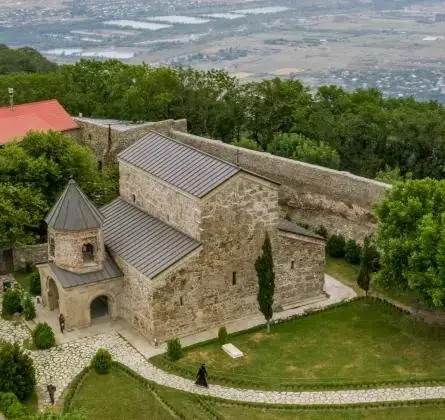
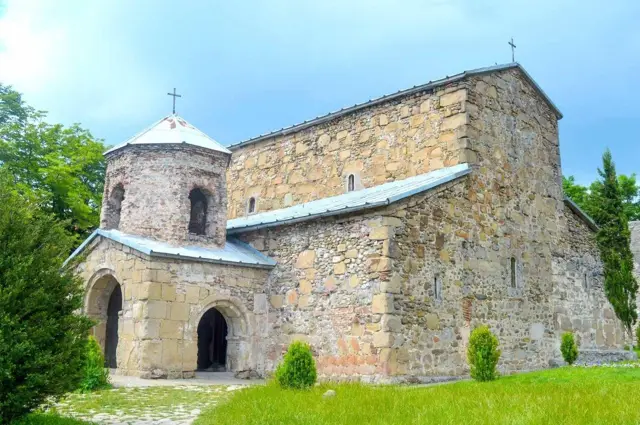
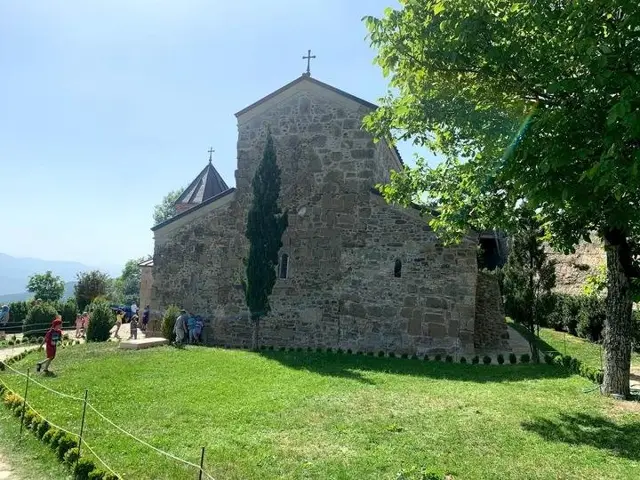
The main church of the complex is consecrated to Saint John the Baptist. Its present architectural form is mainly linked with the early medieval period, although the church took shape on the site of an older Christian building. The massive stone walls, relatively austere forms and restrained decoration blend naturally with the harsh setting of Mount Zedazeni.
In the monastery's architecture special attention is drawn not only to the churches but also to the defensive and service elements. Its high mountain position offered both the possibility of solitude and a strategic advantage. Over the centuries, when Kartli suffered enemy invasions, such a position also helped to protect the monastery.
One of the most interesting questions in the history of Zedazeni is the water supply. The scarcity of natural springs on the mountain top made the monastery's existence very difficult. That is why special cisterns were used here to collect and store water. This system allowed the monks to collect rain and snow water and use it for daily needs.
Water also holds a special place in the traditions connected with the life of Saint John of Zedazeni. Church tradition tells of miraculous events linked with the saint's prayer and with water. Even when historical facts and church traditions are distinguished from one another, these stories clearly show how important water was for the first monks living at Zedazeni.
Over the centuries the monastery lived through many hard periods of Georgian history. Its location near Mtskheta and Tbilisi meant that the wars, invasions and political conflicts of Kartli affected Zedazeni too. The monastery was damaged, restored and rebuilt at different times, but the spiritual tradition linked with Saint John did not disappear.
In periods of Georgia's political weakness Zedazeni too lost its former means, but for the local people and clergy it remained a holy place. Its historical importance was especially linked with the fact that one of the most important stages of the work of the Thirteen Assyrian Fathers in Georgia began here.
In the 19th century, after Georgia's incorporation into the Russian Empire, the situation of the Georgian Church changed considerably. The abolition of the Church's autocephaly and the reorganisation of church government affected the life of many Georgian monasteries. Zedazeni too lost part of its former importance, although its holy places and historical buildings were preserved.
Even harder was the Soviet period, when religious and monastic life was severely restricted. Under the state's atheist policy many Georgian churches and monasteries were closed or lost their original function. Nevertheless, the historical memory of Zedazeni and the veneration of Saint John were preserved among the people.
After Georgia's independence and the revival of church life, monastic tradition was restored at Zedazeni Monastery. Today it is a functioning Orthodox monastery and an important place of pilgrimage. The faithful who come here especially honour Saint John of Zedazeni and his tomb.
The natural setting also strengthens the monastery's spiritual character. The wide views from Mount Zedazeni, the forests, the silence and a space far from the noise of the city still create today the atmosphere of solitude and prayer for which Saint John chose this place some fifteen centuries ago.
Zedazeni Monastery is the place where several of the most important layers of Georgian history meet: the pagan past of Zadeni's mountain, the Christian transformation of Kartli, the work of Saint John of Zedazeni and the Thirteen Assyrian Fathers, medieval Georgian monasticism and today's living Orthodox life.
Zedazeni remains today one of the most important symbols of Georgian monastic tradition: a monastery from which the trace of the great spiritual movement begun in the 6th century continued in many monasteries of Georgia. Its ancient walls, the tomb of Saint John and the solitary mountain setting keep, almost fifteen centuries later, the spiritual significance that made Zedazeni one of the outstanding places of Georgia's Christian heritage.