Shiomgvime Monastery
A dove knew the way to his cave before people heard of Saint Shio: in a rocky gorge a hermit prayed, and by God's providence a bird brought him food. Soon a great monastery grew up around him, and in the rocks of Shiomgvime there still remains the trace of the prayer that turned a wilderness into a holy dwelling.
- Region
- Mtskheta-Mtianeti
- UNESCO
- No
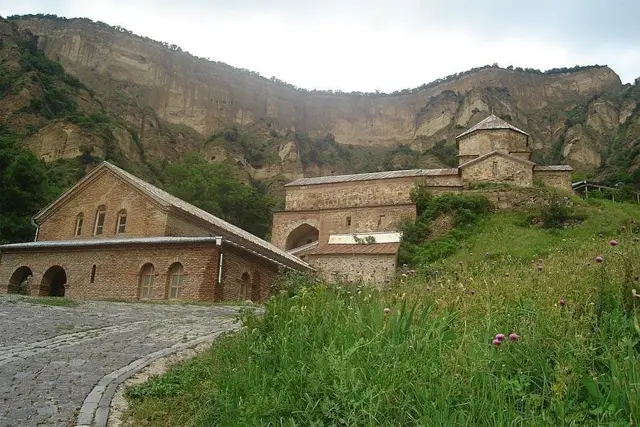
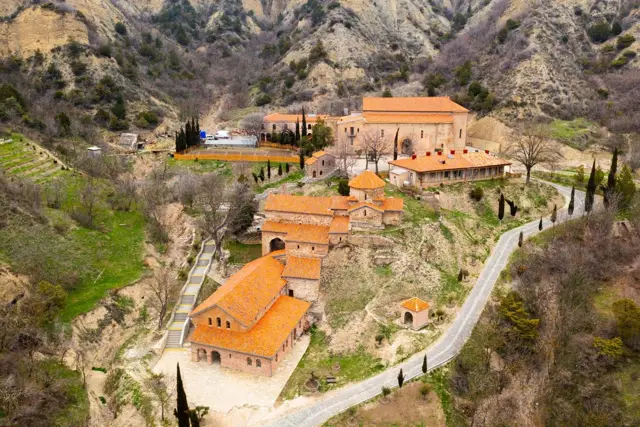
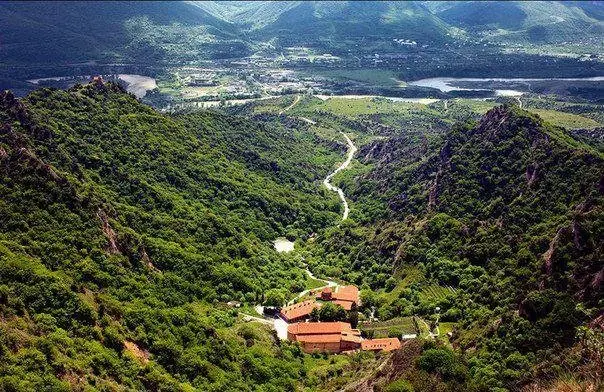
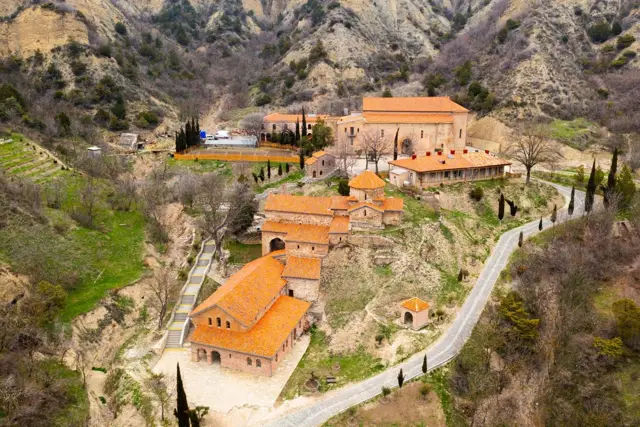
Shiomgvime Monastery is one of the oldest and most important monastic centres of Georgia. It stands near Mtskheta, on the left side of the river Mtkvari, in a dry and secluded gorge enclosed by rocks. The monastery was founded in the 6th century and its history is inseparably linked with Saint Shio of Mgvime, one of the Thirteen Assyrian Fathers, who played a special role in strengthening monastic life and spreading the Christian faith in Georgia.
Saint Shio of Mgvime came to Georgia with his teacher, Saint John of Zedazeni, and the other Assyrian Fathers. Their work in Georgia is linked with one of the important periods in the history of the Georgian Church. The fathers settled in different regions, founded monasteries and by their strict ascetic life gathered many disciples.
After some time Saint Shio chose an almost uninhabited rocky gorge near Mtskheta for a life of solitude. The nature there was harsh: dry rocks, scarce water and surroundings far from human settlements. Such a place was just what suited the ascetic life to which the saint aspired.
In the gorge Saint Shio found a cave and settled there. He spent his days in prayer, fasting, solitude and spiritual struggle. It was the life connected with this cave that gave him his name, Shio of Mgvime ("of the cave"), and later the monastery that grew up around him was called Shiomgvime.
Many church traditions are connected with the life of Saint Shio. One of the best-known stories concerns how he received food during his solitary life. According to tradition, by God's providence a dove brought food to Saint Shio. This story has remained in Georgian Church tradition as one of the best-known episodes of the saint's complete trust in God and of his ascetic life.
At first Saint Shio lived completely alone, but news of his holiness and labours gradually spread. People came to him seeking counsel, prayer and spiritual guidance. Some of them stayed there and began monastic life. In this way the cave of one hermit gradually became an organised monastic community.
Shiomgvime grew quickly and, according to Georgian Church tradition, at its height the number of monks living here reached about two thousand. Although this figure is preserved mainly by church tradition, it clearly expresses the great importance Shiomgvime acquired in the history of early Georgian monasticism.
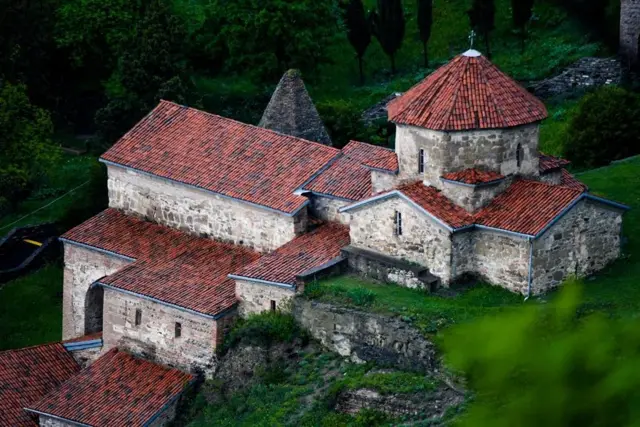
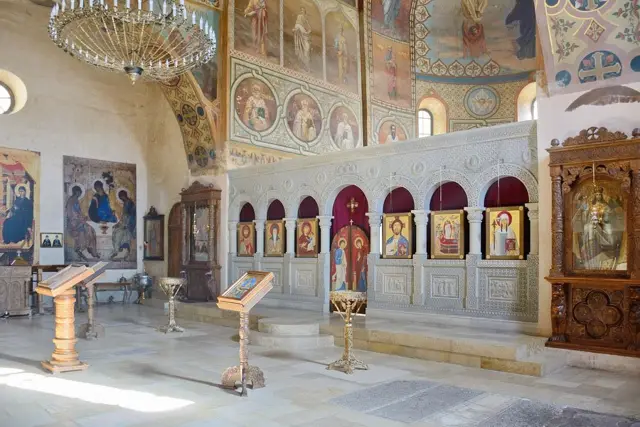
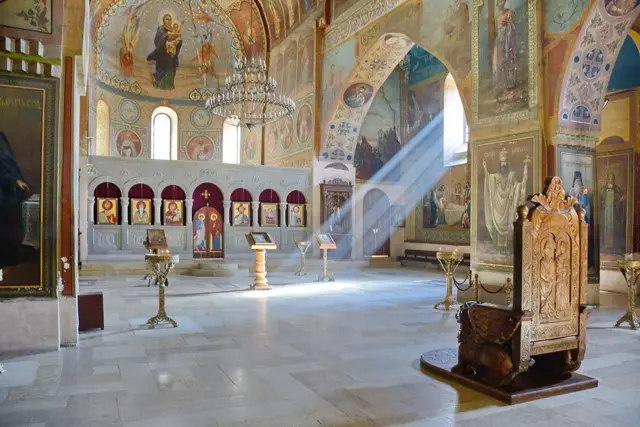
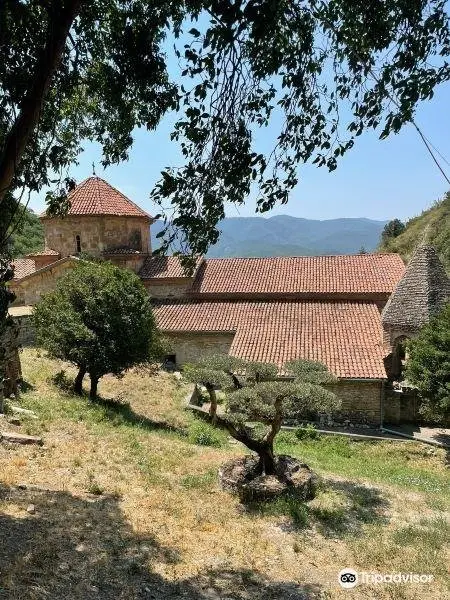
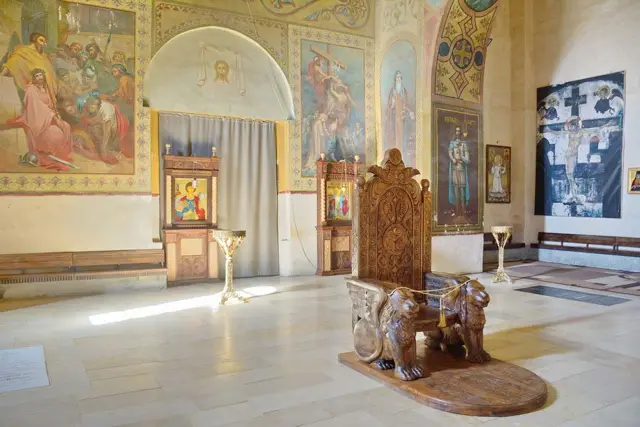
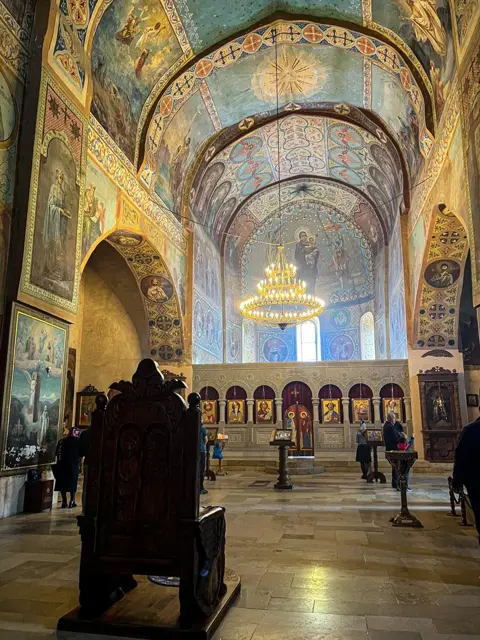
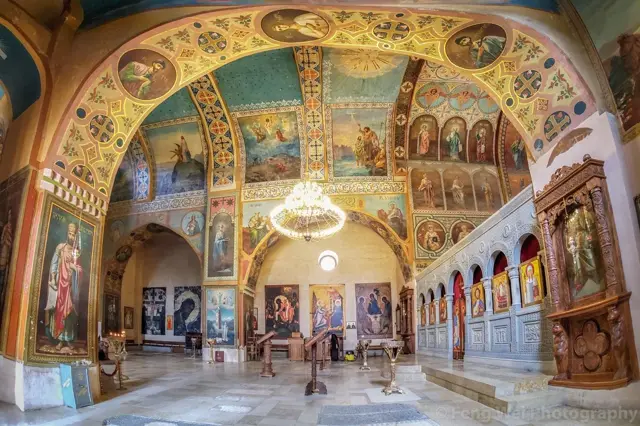
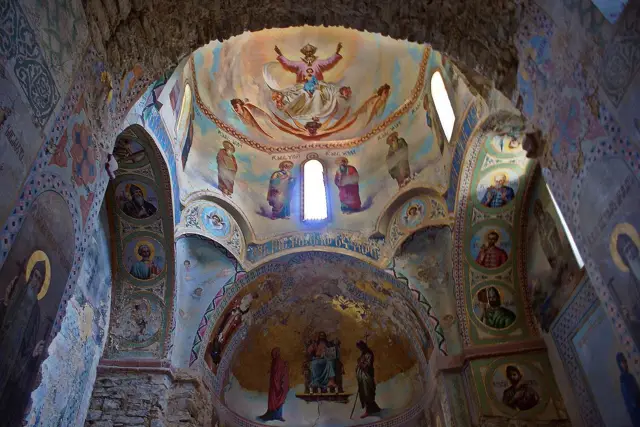
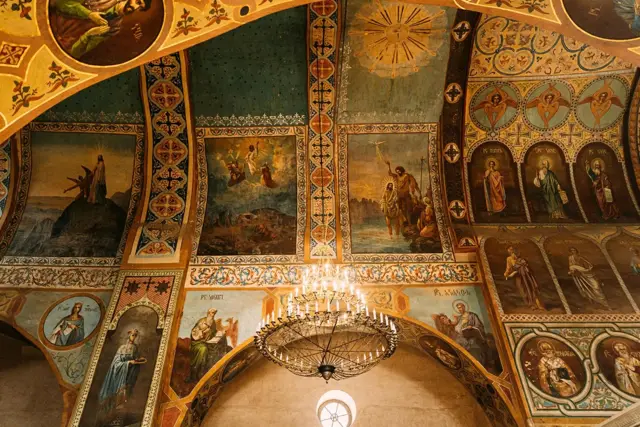
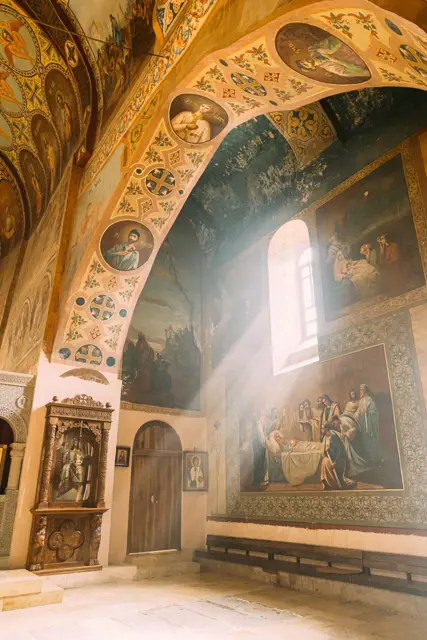
As the monastery developed, it became necessary to build churches and other buildings. One of the oldest and most important buildings of the complex is the church of Saint John the Baptist, which dates from the 6th century. It is an important monument of early Christian Georgian architecture and a direct material witness to the monastery's earliest history.
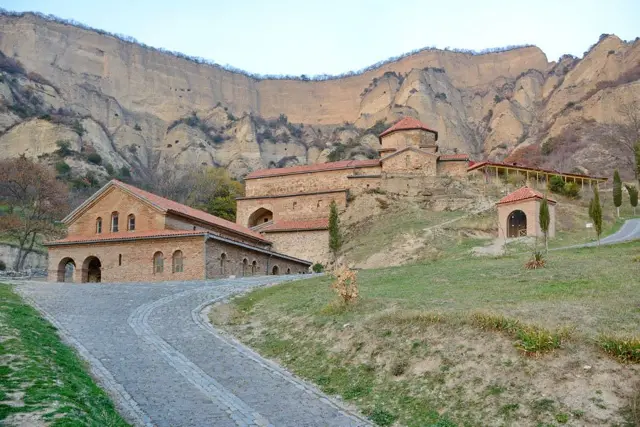
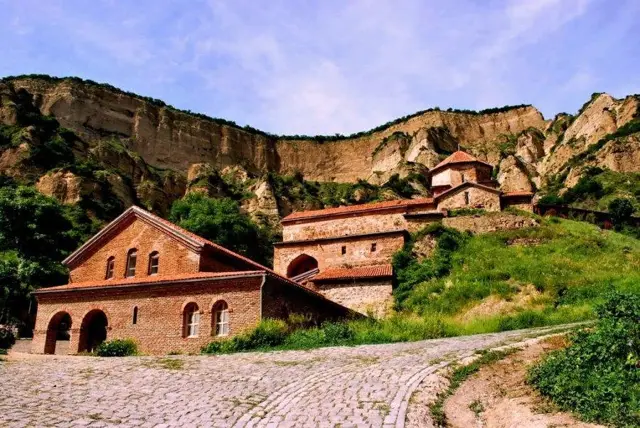
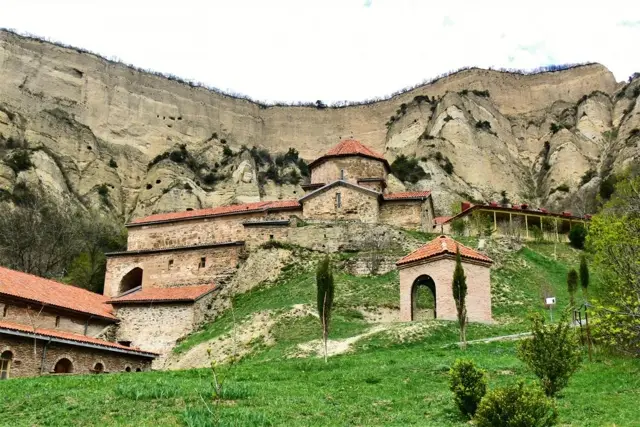
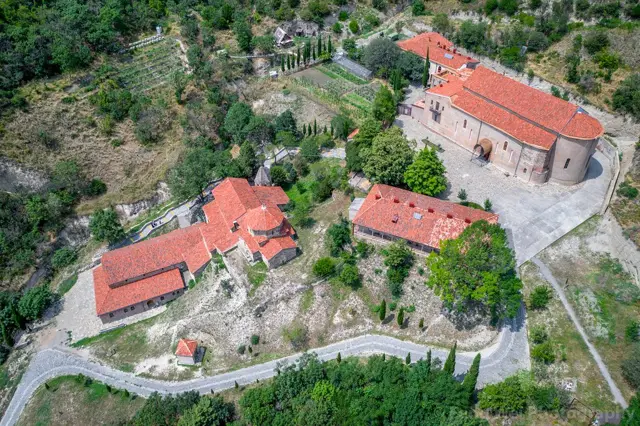
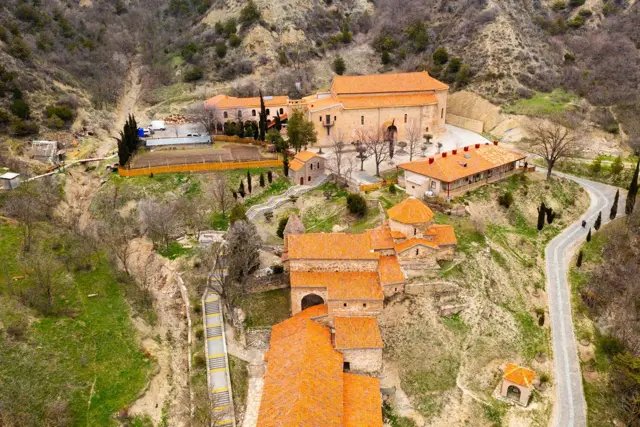
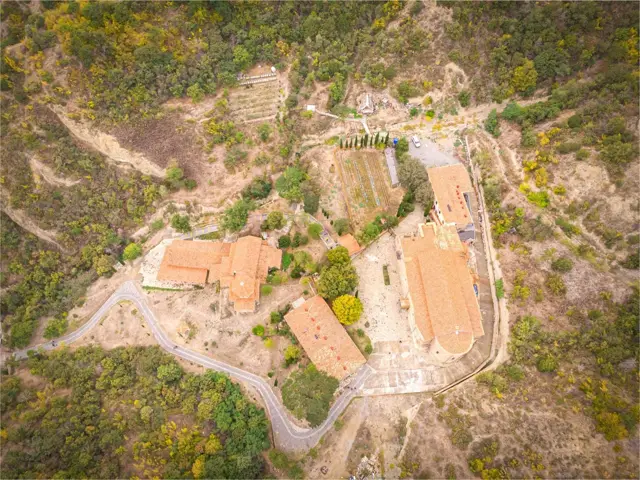
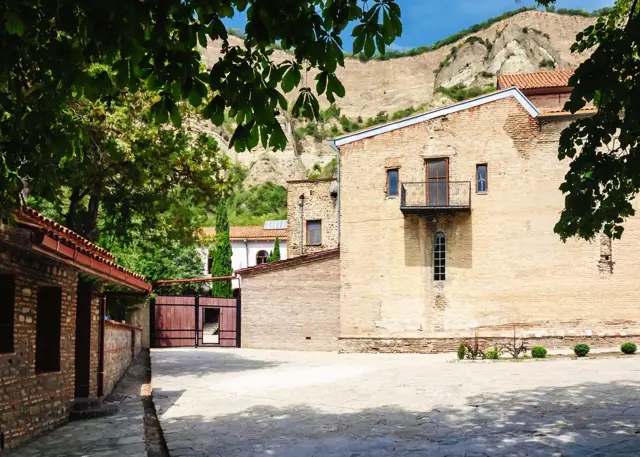
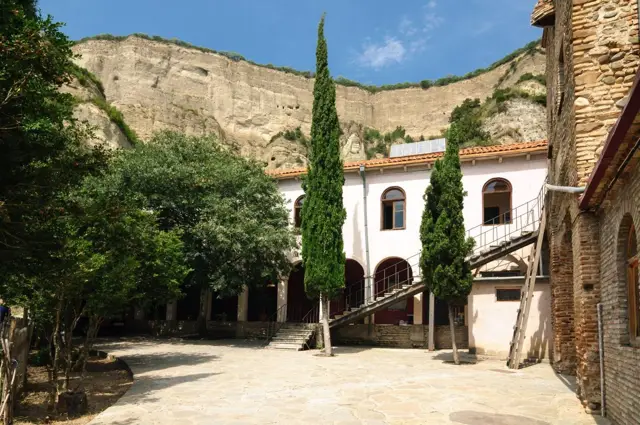
Architecturally Shiomgvime is especially interesting, because buildings from different centuries are gathered here in one complex. To the oldest churches were later added new churches, chapels, monks' living quarters and service buildings. As a result, several stages of the development of Georgian church architecture can be read in the monastery's present appearance.
Another important monument of the complex is the church of the Dormition of the Mother of God. Over the centuries various building and restoration works were carried out at the monastery, so its architectural appearance was constantly developing. Of special interest is the monastery's historical refectory, which speaks of the scale and organisation of medieval Georgian monastic life.
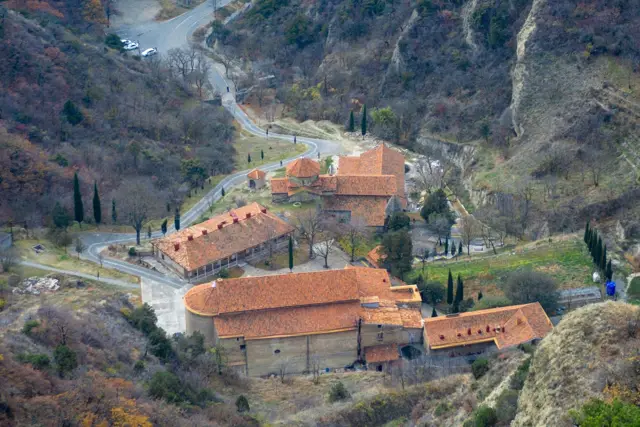
The architecture of Shiomgvime cannot be fully grasped without its natural setting. The monastery seems part of the rocky gorge. Harsh, almost bare rocks surround the stone churches and other buildings. Unlike many green and wooded monasteries of Georgia, the setting of Shiomgvime is marked by a desert-like austerity.
This natural setting was not chosen by chance. In the tradition of early Christian monasticism the desert and the uninhabited place had special meaning: they gave a person the possibility of withdrawing from the everyday world and of a solitary relationship with God. That is why the rocky gorge of Shiomgvime became part of the spiritual character of the monastery itself.
The monastery's most important holy place is the cave connected with Saint Shio and his resting place. At the end of his life the saint chose an even stricter ascetic life. According to Church tradition, he decided to seclude himself in a deep cave and spent the last period of his life there in prayer.
Saint Shio asked his disciples to leave his body there after his death. That is why his resting place became one of the monastery's chief holy places. Over the centuries the faithful came here to pray before Saint Shio of Mgvime and to ask for his help.
Georgian kings and nobles also played an important role in the development of Shiomgvime. In different periods the monastery had lands, donations and royal patronage. Its connection with one of Georgia's greatest kings, David IV the Builder, is especially interesting.
At the beginning of the 12th century, in the period of Georgia's political and cultural strengthening, Shiomgvime was still an important spiritual centre. In the age of David the Builder Georgian monasteries were important pillars not only of religious but also of cultural and educational life. The support of the royal power also helped to strengthen Shiomgvime's position.
Monastic life in the monastery was based on a strict rule. The monks' daily round included prayer, fasting, work and common worship. Solitary cells and common monastic spaces were connected and created an environment in which personal ascetic struggle and the common life of the monastery complemented each other.
Shiomgvime was not only a place of prayer. Over the centuries monasteries in Georgia played an important role in preserving letters, learning and church culture. Shiomgvime too was part of this great monastic tradition, and within its walls the Georgian Christian spiritual heritage was carried on from generation to generation.
The hard periods of Georgian history damaged the monastery more than once. Foreign invasions, political turmoil and the country's economic weakening affected the life of Shiomgvime as well. Periodically the monastery lost its former means, its buildings were damaged and the number of monks declined.
Nevertheless, Shiomgvime was restored again and again. The tradition linked with Saint Shio and the monastery's special importance never disappeared from the memory of Georgian believers. It is this centuries-long vitality that makes it one of the most important symbols of Georgian monasticism.
In the 19th century the changes in the situation of the Church of Georgia also affected Shiomgvime. Later, in the period of the Soviet atheist regime, monastic life was severely restricted. Like many other Georgian monasteries, Shiomgvime lost part of its traditional function, but its ancient churches and the holy places connected with Saint Shio survived.
After Georgia regained its independence, spiritual and monastic life revived at the monastery. Today Shiomgvime is a functioning Orthodox monastery, where services are held and where pilgrims come from all over Georgia.
Anyone who comes to the monastery still sees today the setting that drew Saint Shio some fifteen centuries ago. The rocky slopes, the silence, the caves and the ancient stone churches create a special space where a person removed from the modern world can easily imagine the life of the first hermit monks.
Shiomgvime Monastery is the place where one man's solitary spiritual struggle became the beginning of a great history. From Saint Shio's small cave arose a monastery that kept its importance through the centuries and became one of the most important centres of Georgian Christian culture.
Shiomgvime still vividly recalls today the labours of Saint Shio of Mgvime, the great spiritual heritage of the Thirteen Assyrian Fathers and the ancient tradition of Georgian monasticism. The rocky wilderness, the saint's cave, the ancient churches and prayer continued through the centuries are united here in one historical and spiritual space: a space that, almost fifteen centuries later, remains one of the outstanding Orthodox sanctuaries of Georgia.