Samtavro Monastery
In the heart of Mtskheta, where two rivers hold each other close, the grace of the Mother of God laid the crown of kings and the humility of saints to rest in one and the same earth. Here prayer has never fallen silent: it has crossed the centuries, from the voice of Saint Nino to the silence of Gabriel.
- Region
- Mtskheta-Mtianeti
- UNESCO
- Yes
Samtavro Monastery is one of the oldest and most important Christian sanctuaries of Georgia. It stands in Mtskheta, the ancient capital of Georgia, where in the 4th century the most important events connected with the conversion of the country took place. What is unique about Samtavro is that its history brings together almost the whole path of Georgia's Christian life: from the age of Saint Nino, King Mirian III and Queen Nana to Saint Gabriel, confessor and fool for Christ.
The beginning of Samtavro's history is directly connected with Saint Nino's work in Georgia. Having come from Cappadocia in the 4th century, the saint preached Christianity in Kartli and finally settled in Mtskheta. According to Georgian Church tradition, Saint Nino lived for some time precisely on the site of present-day Samtavro.
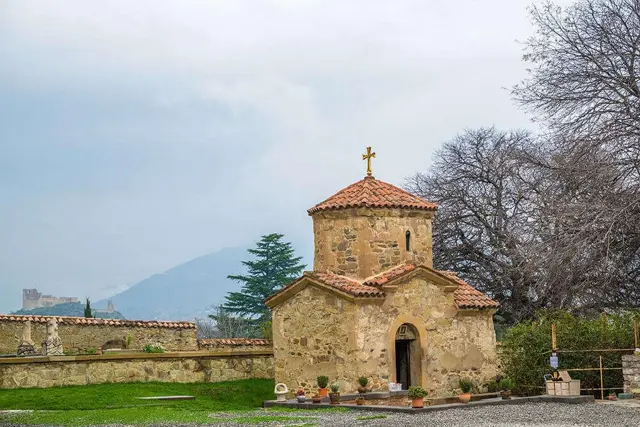
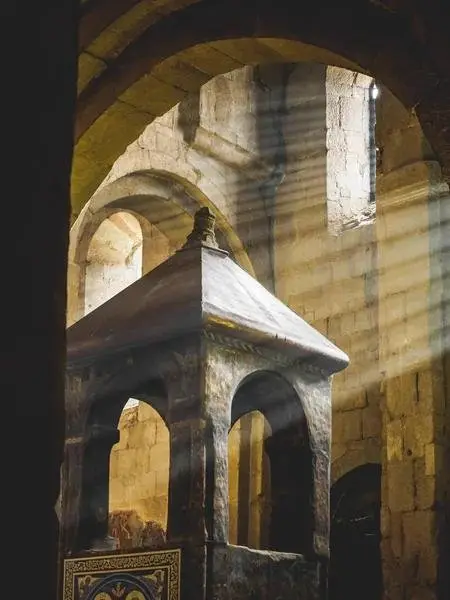
Tradition tells that the saint chose a place beside a bramble bush to live. Here she prayed in solitude, fasted and asked God for the conversion of the Georgian people. One of Samtavro's most precious places is connected with this: Makvlovani, that is, the small church of Saint Nino.
Makvlovani is still held in special veneration today. According to tradition, it was at this very place that Saint Nino prayed before the conversion of Georgia, and from here Samtavro's history connects directly with the beginning of the country's Christian life. That is why for pilgrims coming to the monastery this small church is as important a holy place as the great cathedral.
Saint Nino's preaching was followed by a turning point in Georgian history. King Mirian III of Kartli and Queen Nana accepted Christianity, and in the 4th century Christianity became the state religion of the kingdom of Kartli. This event completely changed the course of Georgia's political, cultural and spiritual development.
According to Georgian Church tradition, after the conversion King Mirian ordered a church to be built on the site of Samtavro. The appearance of the original building changed over the centuries, but the place remained a centre of Christian worship. That is why Samtavro is among the rare Georgian holy places whose historical memory goes back to the very first age of the country's conversion.
Samtavro is given even more special significance by the fact that the holy King Mirian III and the holy Queen Nana are buried here. Their tombs are inside the main church and are one of the most important material symbols of the beginning of Georgia's Christian statehood.
In the history of Georgia the names of Mirian and Nana are inseparably linked with that of Saint Nino. Their conversion was not merely a personal decision of the royal family: it opened the way to the wide spread of Christianity in Georgia, to the building of churches and to the formation of an entirely new Christian culture.
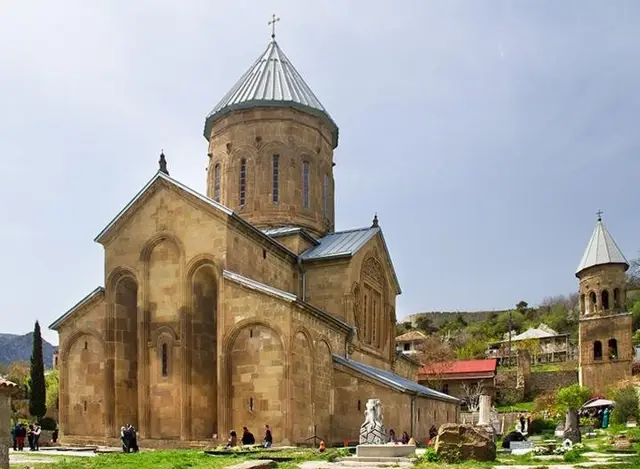
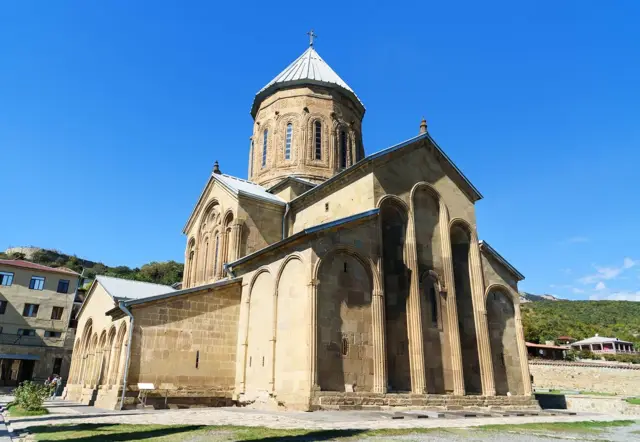
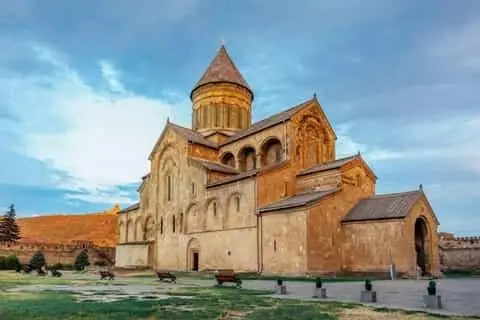
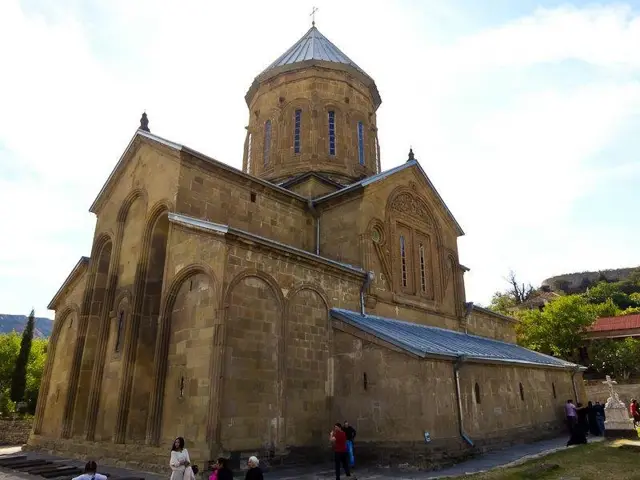
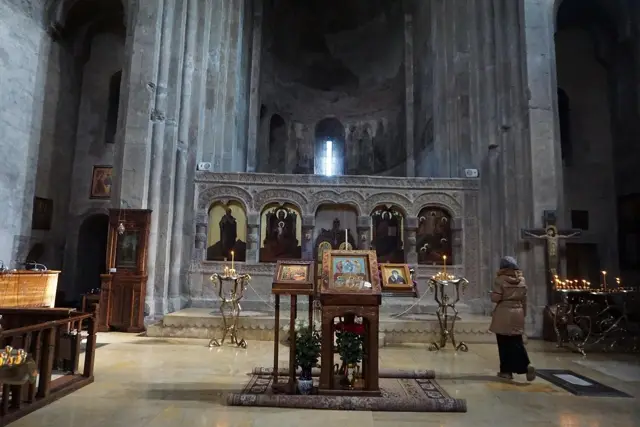
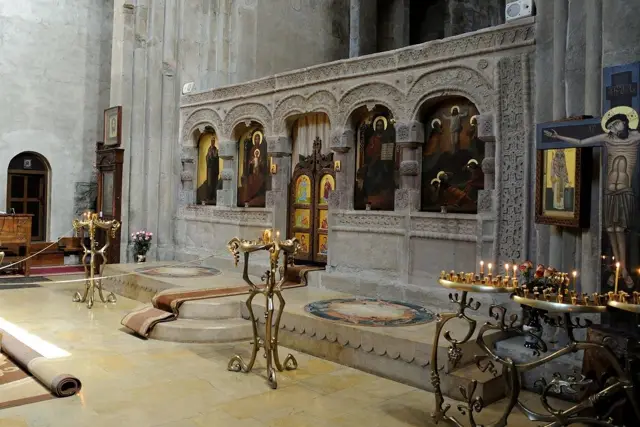
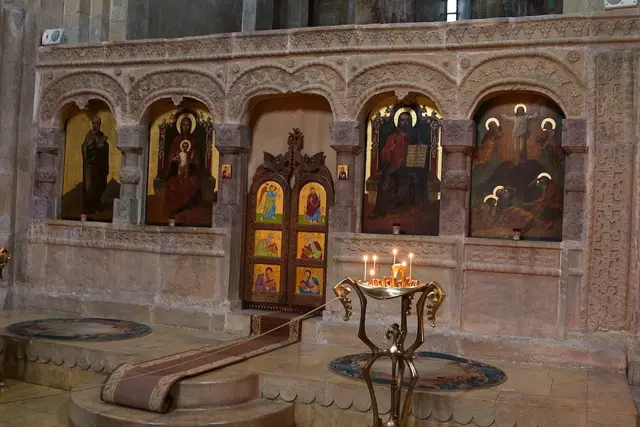
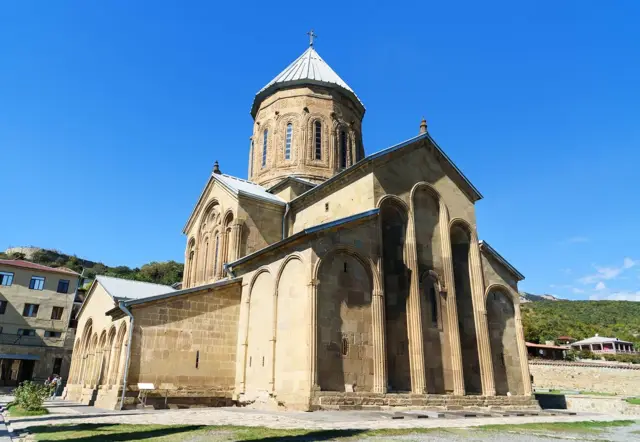
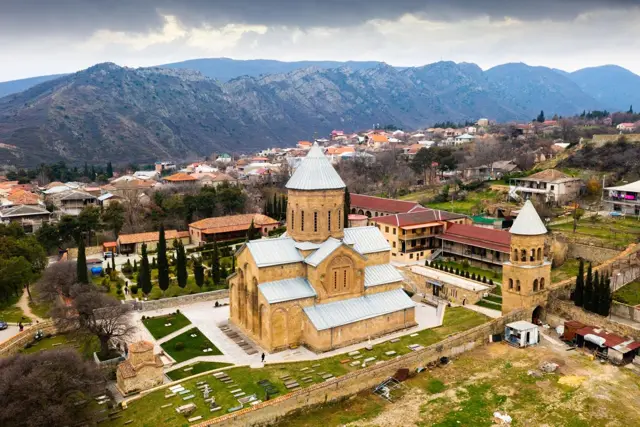
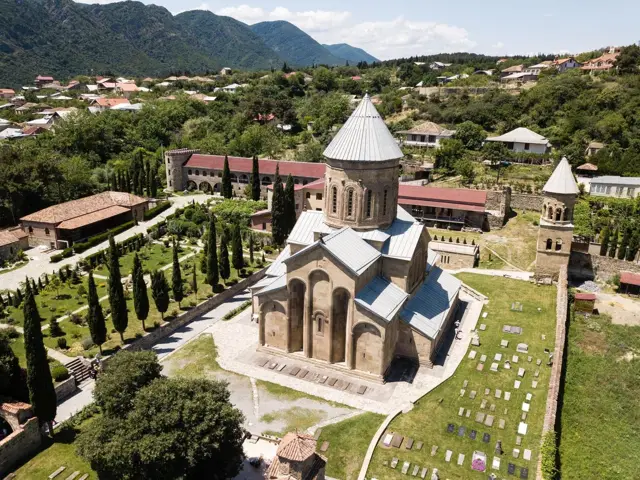
The present main church of Samtavro is consecrated to the Transfiguration of the Lord and dates mainly from the 11th century. It took shape in the period of great cultural rise when, together with the strengthening of the unified Georgian state, church architecture was also developing in a special way.
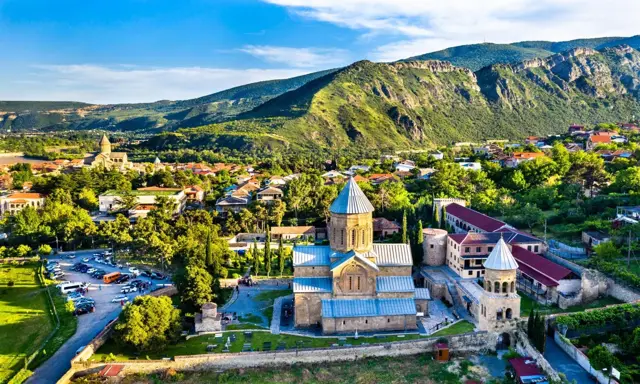
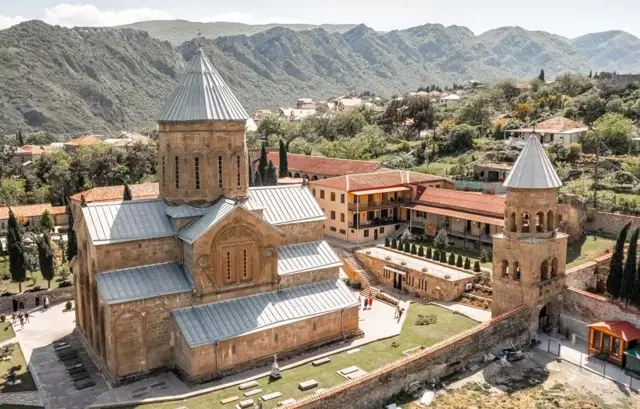
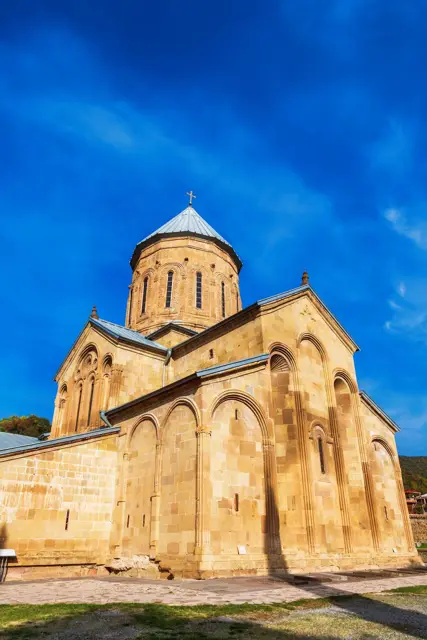
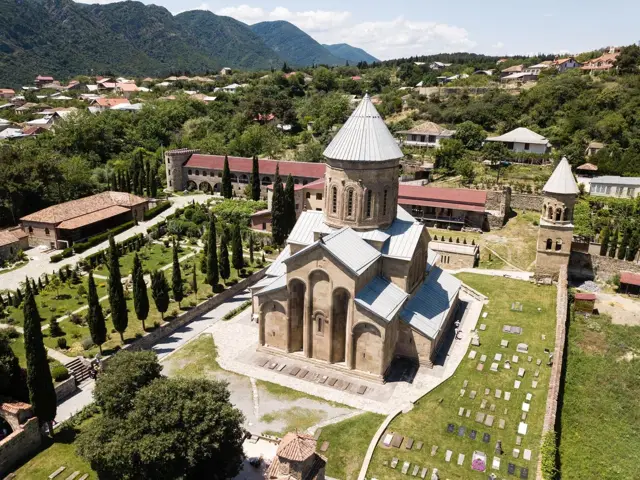
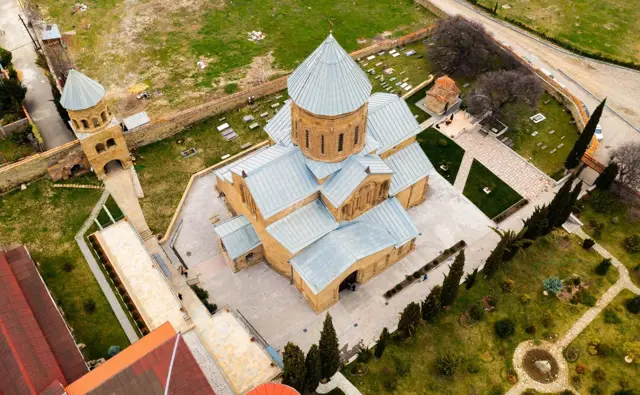
Architecturally, Samtavro's Church of the Transfiguration is a cross-domed building. A high dome forms the centre of its composition, and the massive stone walls, arches and clear organisation of space create the monumentality characteristic of Georgian medieval church architecture.
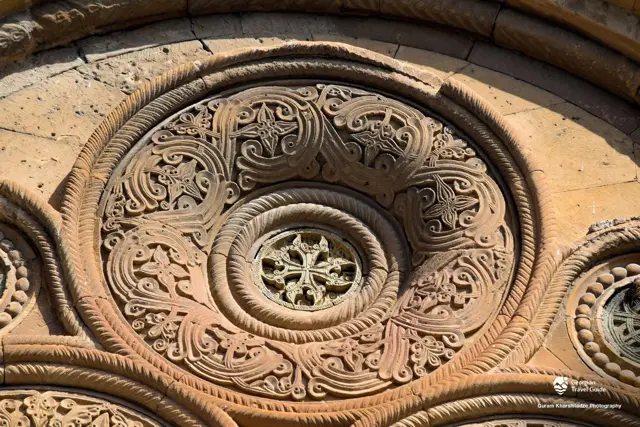
Georgian stone ornaments, crosses and decorative motifs are preserved on the church's façades. Their workmanship shows the high level of the stone-carving art that existed in 11th-century Georgia. Although the building was restored and altered several times in later centuries, its medieval architectural basis can still be clearly read.
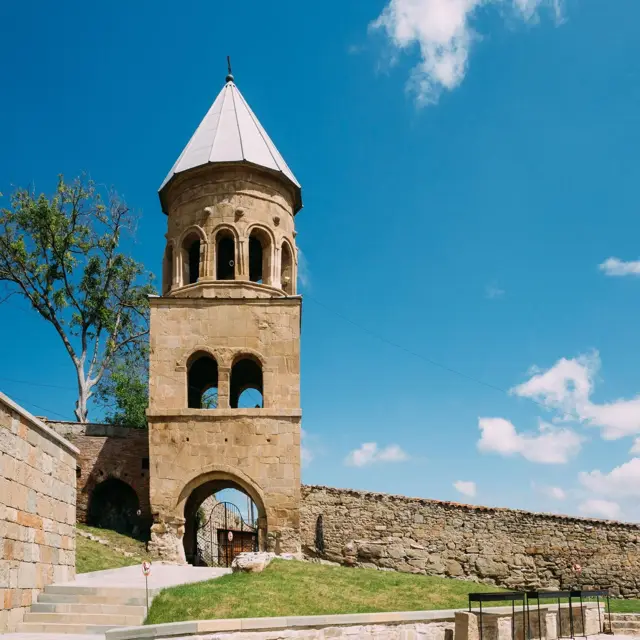
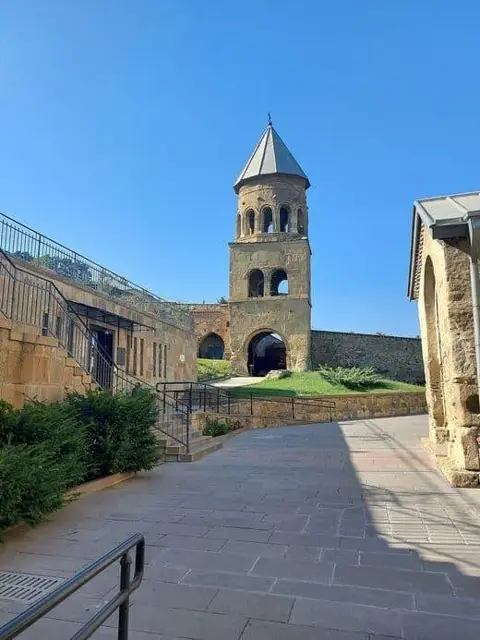
The Samtavro complex is not limited to the main church. On its grounds stand Makvlovani, the bell tower, the enclosure wall, monastic buildings and other historical spaces. Created in different periods, these elements bring the centuries-long history of the monastery together in one complex.
Over the centuries Samtavro faced many historical trials. Like Georgia's other great holy places, it was affected by foreign invasions, political turmoil, earthquakes and the hard events of different periods. The church was damaged and restored several times, but it did not lose its main spiritual function.
The 19th century holds a special place in the monastery's history. In this period a convent was formed at Samtavro, and monastic life developed with new strength. Besides praying, the nuns cared for the churches and holy places and kept up Samtavro's centuries-old Christian tradition.
The 20th century brought the Church of Georgia a completely different trial. Under the Soviet atheist regime churches were closed, clergy were persecuted and monastic life was severely restricted. Despite these hard conditions, the Samtavro convent managed to preserve its spiritual life.
The most remarkable part of Samtavro's modern history is connected with Saint Gabriel, confessor and fool for Christ, Gabriel Urgebadze, one of the most beloved modern saints of the Orthodox Church of Georgia.
Father Gabriel lived under the Soviet atheist regime and openly confessed the Christian faith. One of the best-known events of his life was the burning of a huge portrait of Lenin in Tbilisi on 1 May 1965. For this act he was arrested, cruelly beaten and even placed in a psychiatric institution. Despite persecution, Father Gabriel did not deny his faith.
In the last years of his life Father Gabriel lived precisely in the Samtavro convent. He lived in a small dwelling, prayed and received a great many people who came to him for counsel, consolation and spiritual help.
The main marks of his life were humility, love of neighbour, almsgiving, prayer and complete faithfulness to Christ. Outwardly his behaviour sometimes seemed strange, because he followed the path of foolishness for Christ, but the people around him saw in him special spiritual strength and love.
Father Gabriel died on 2 November 1995 and, according to his own wish, was buried in the Samtavro monastery. His grave soon became a place of pilgrimage for great numbers of believers. The Orthodox Church of Georgia canonised him in 2012.
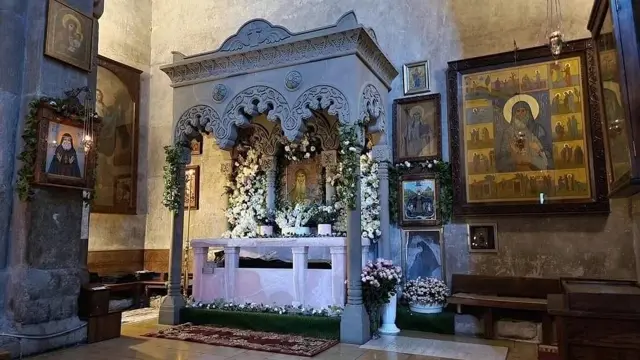
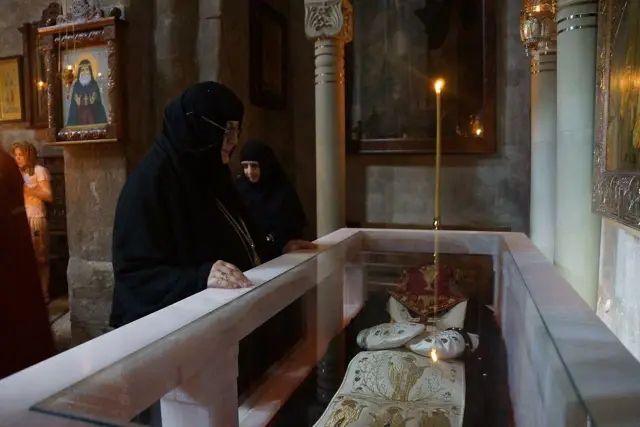
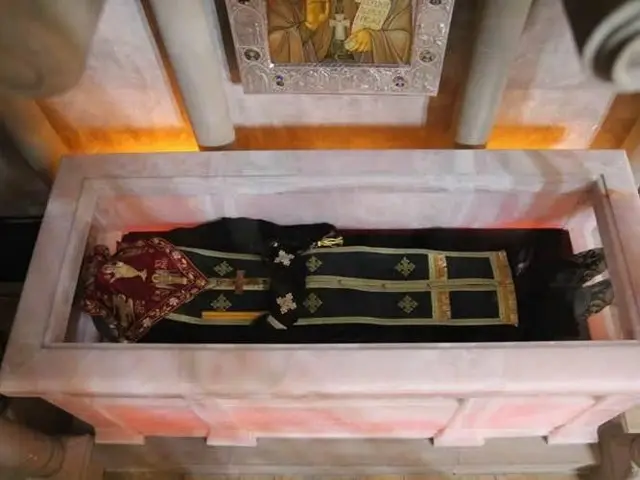
In 2014 the holy relics of Saint Gabriel were uncovered. Later they were enshrined in the main church of Samtavro, where they are kept with special honour today. That is why Samtavro has become one of the best-known places of pilgrimage in modern Georgia.
Thus at Samtavro two periods of Georgia's Christian history, almost seventeen centuries apart, come together in a remarkable way. On one side are Saint Nino, King Mirian and Queen Nana, in whose time Georgia received Christianity; on the other is Saint Gabriel, a 20th-century confessor who defended the same faith under an atheist regime.
Samtavro's significance is even wider, because it lies within the historical area of Mtskheta, near Svetitskhoveli and Jvari Monastery. The historical monuments of Mtskheta are on the UNESCO World Heritage List, and Samtavro is an important part of this unique Christian and cultural heritage.
Today Samtavro is a functioning convent. Services are held here every day, the nuns continue monastic life, and believers from Georgia and many parts of the world come to venerate the holy places.
Some pray in Saint Nino's Makvlovani, some honour the tombs of King Mirian and Queen Nana, and many come to the holy relics of Saint Gabriel. It is this many-layered spiritual heritage that creates Samtavro's special character.
Samtavro Monastery is not merely an ancient architectural complex. It is a living chronicle of Georgia's Christian history: a place where the conversion of the 4th century, medieval Georgian architecture, monastic tradition, the persecution of the Soviet era and present-day Orthodox life meet in one space.
From Saint Nino's Makvlovani to the tombs of Mirian and Nana, from the 11th-century Church of the Transfiguration to the relics of Saint Gabriel, Samtavro has kept an unbroken tradition of prayer for almost seventeen centuries. That is why it remains today one of the most outstanding symbols of Georgia's Christian memory, faith and spiritual steadfastness.