Motsameta Monastery
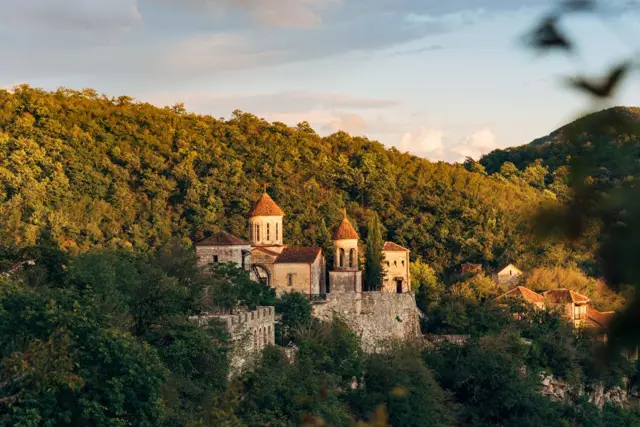
In the gorge of the Tskaltsitela, the monastery raised on the rock is hallowed by the blood of two brothers, who chose their faith even at the price of death. Centuries have passed, but their self-sacrifice still breathes in the stone.
- Region
- Imereti
- UNESCO
- No
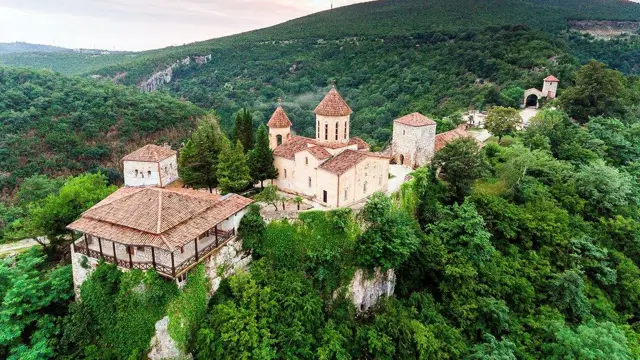
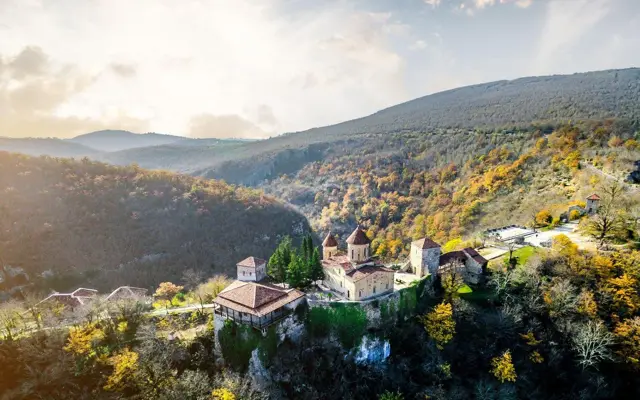
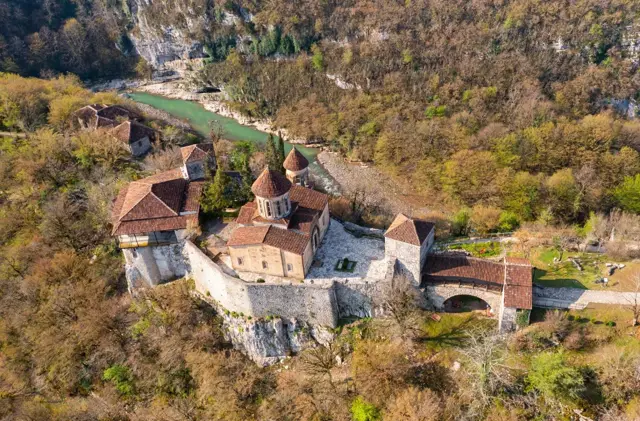
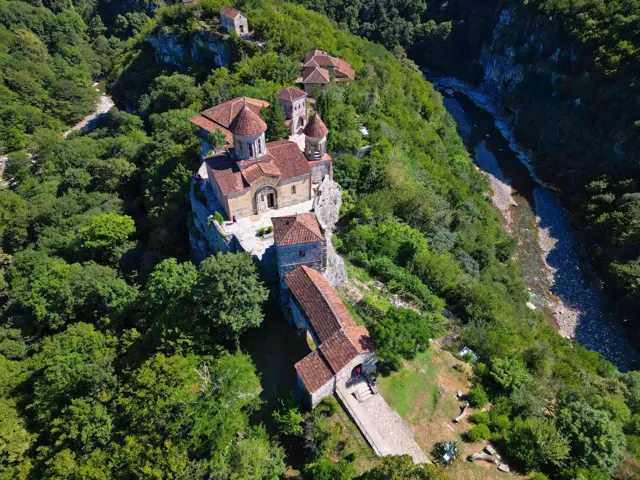
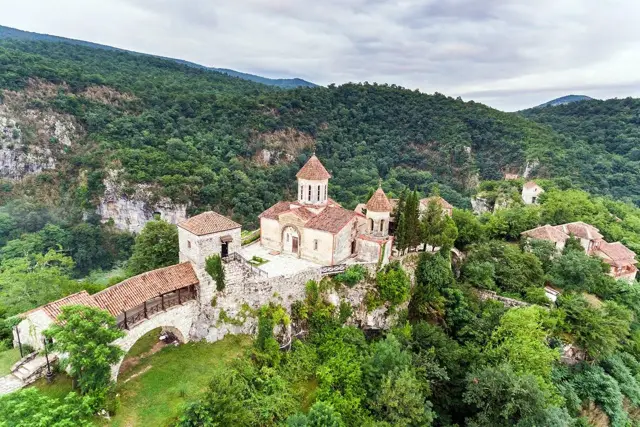
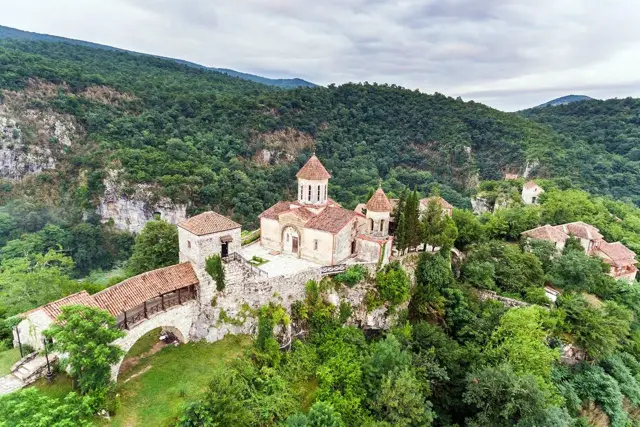
Motsameta Monastery is one of Georgia's outstanding Orthodox sanctuaries. It stands in Imereti, a few kilometres from Kutaisi, in the deep, wooded gorge of the river Tskaltsitela. Raised on a high rocky promontory, the monastery is bounded on three sides by the river gorge and forms a special unity with its natural surroundings. Yet Motsameta's main significance is linked less with its beautiful setting than with the holy martyr brothers David and Constantine Mkheidze, whose holy relics are kept in the monastery.
The most important events in the history of Motsameta are linked with the 8th century, when Georgia was going through the hard period of Arab campaigns. According to Georgian historical tradition, the region of Argveti in western Georgia was ruled by the brothers David and Constantine Mkheidze. They were Christian princes and took part in the defence of the country and the faith.
In the first half of the 8th century a great Arab campaign was carried out in the Caucasus, led by Marwan ibn Muhammad, the future Caliph Marwan II. In Georgian historical memory he became known as Murvan the Deaf. His campaigns brought heavy destruction to various parts of Georgia, and this age has remained one of the hardest periods in the country's history.
According to Georgian Church tradition, David and Constantine resisted the enemy with their forces, but were finally defeated and taken prisoner. It is after their capture that the story begins which made them among the best-known martyrs of the Church of Georgia.
According to tradition, the enemy demanded that the brothers deny the Christian faith in return for their lives. David and Constantine refused to deny Christ and chose death rather than change their faith. Neither pressure nor torture could change their decision.
Church tradition tells that the brothers were cruelly tortured and finally died as martyrs. Their bodies were thrown into the river. The centuries-long veneration of David and Constantine as martyrs who gave their lives for the Christian faith is linked with this tragic event.
According to tradition, the bodies of the holy brothers were later found by the faithful and buried with great honour. Their grave gradually became a place of prayer, and around the memory of the saints the spiritual tradition took shape which later determined the special importance of Motsameta Monastery.
The name "Motsameta" is linked precisely with the martyrs. For centuries this name has kept the memory of David and Constantine and directly expresses the monastery's main spiritual purpose: to be a place of faithfulness to the Christian faith and of martyr's self-sacrifice.
An important stage in the monastery's development is linked with the 11th century. In the age of Georgia's unification, the restoration of Motsameta and important church building are connected with the name of King Bagrat III. From this period the veneration of Saints David and Constantine became still more firmly established in the church life of western Georgia.
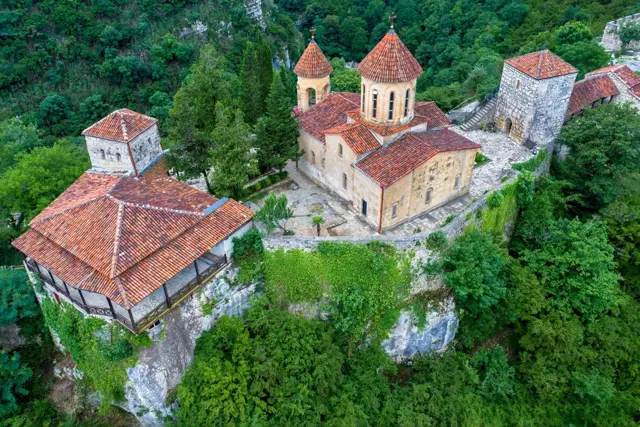
Over the centuries the monastery was rebuilt, renewed and restored many times. That is why the present architectural complex is not the building of a single historical period. Its appearance bears the traces of building and restoration work carried out in different centuries.
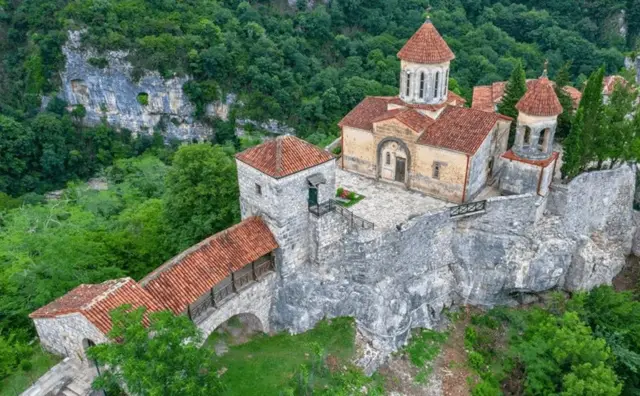
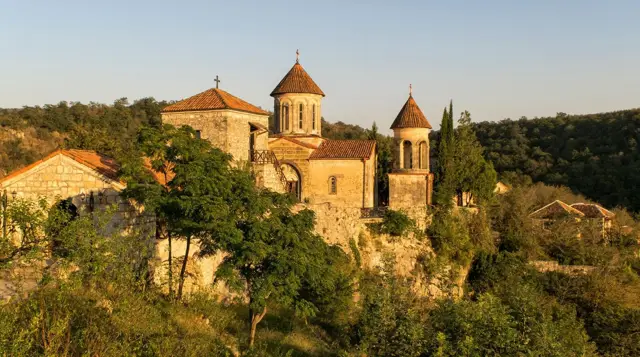
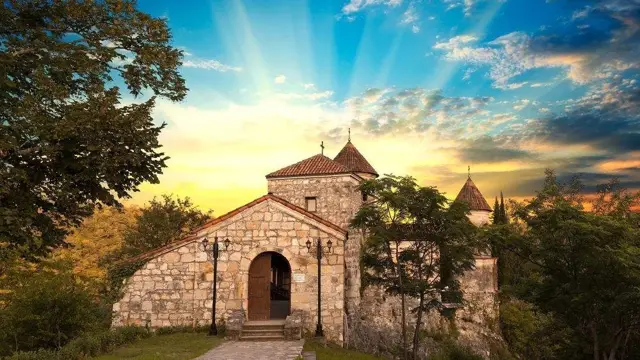
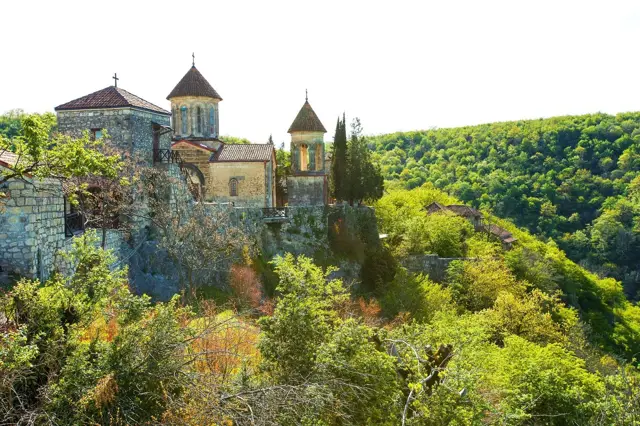
Architecturally, one of the most important features of Motsameta Monastery is its location. Built on a rocky promontory, the complex blends directly with the Tskaltsitela gorge. The monastery walls, the church and other buildings are arranged in a limited mountain space, which gives the complex a character at once secluded and protected.
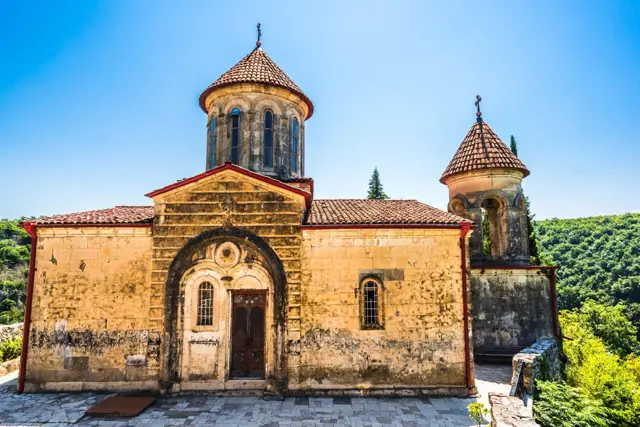
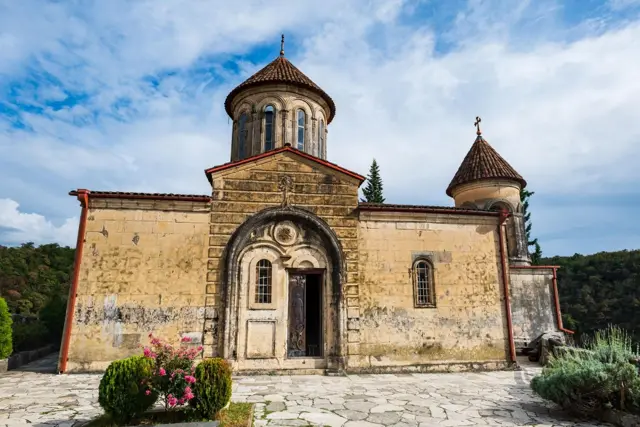
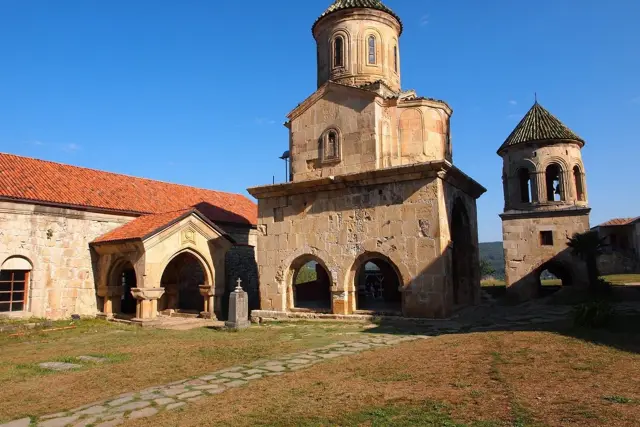
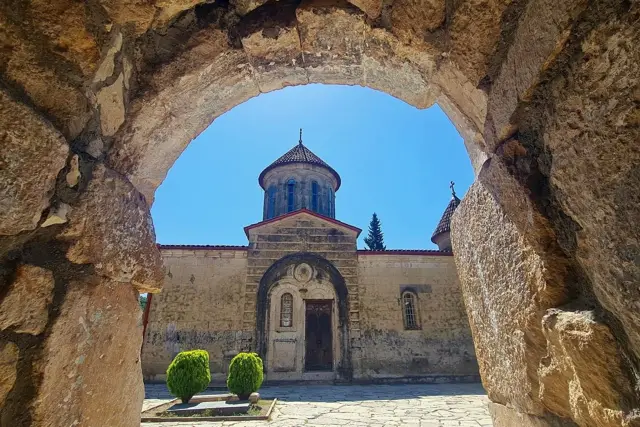
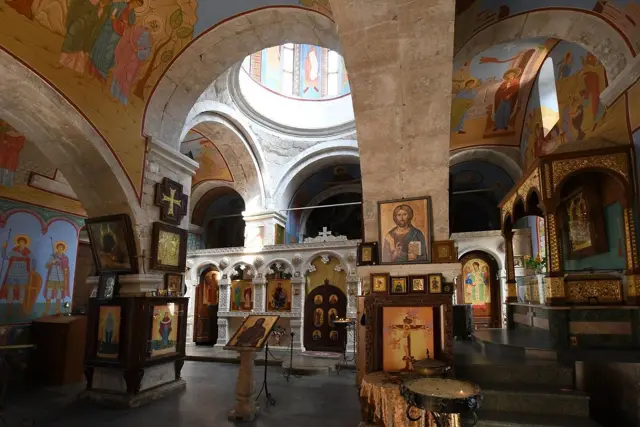
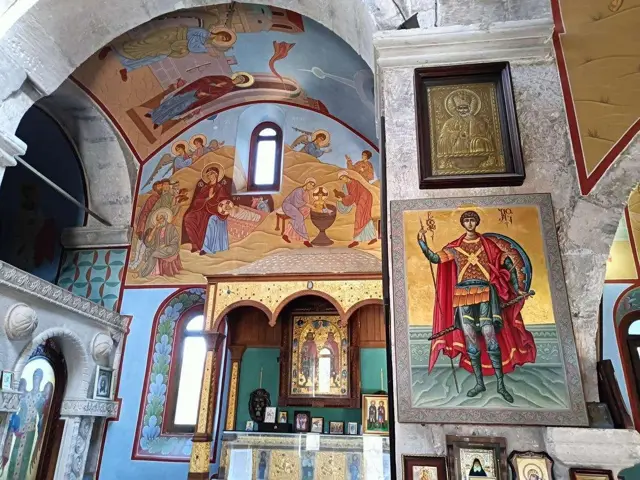
The church's architecture includes stone constructions, arched forms and decorative elements characteristic of Georgian church architecture. Its overall appearance combines monumentality and simplicity, and its closeness to the natural rock makes the monastery's architectural image especially impressive.
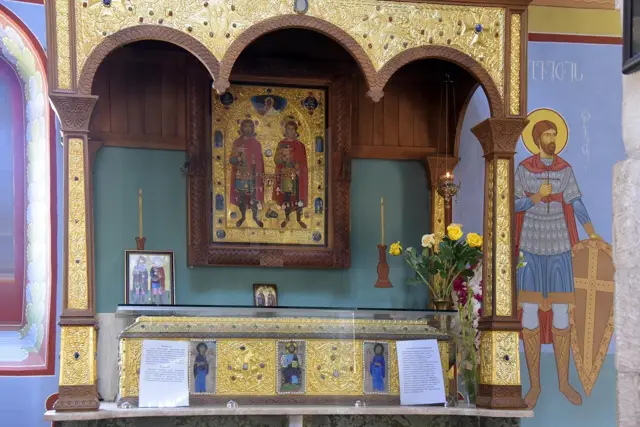
Motsameta's chief holy treasure is still the holy relics of Saints David and Constantine. They rest in the church in a special reliquary and for centuries have been the object of special veneration. It is to venerate them that most of the faithful come here.
Many church and popular traditions are connected with the relics of the holy brothers. Stories of their help and miracles were handed down from generation to generation. Believers turned to the saints in various trials and prayed before them for health, peace in the family and spiritual strength.
The Tskaltsitela gorge creates Motsameta's special atmosphere. The river flows in a deep rocky bed, and the monastery is surrounded by dense forest. Centuries ago this location gave the monastery natural protection and seclusion; today it makes it one of the most recognisable and impressive monastic views in Georgia.
Over the centuries Motsameta remained an important place of prayer in western Georgia. Kings, nobles, clergy and ordinary believers came here. The story of David and Constantine was especially significant in periods when the country had to fight foreign powers and defend its Christian identity.
Georgia's political trials also affected the monastery's history. Wars in western Georgia, foreign invasions and internal conflicts made its life difficult many times. Nevertheless, the tradition connected with the holy relics of David and Constantine was preserved, and Motsameta was restored again as a living spiritual centre.
Especially difficult was the Soviet period, when monastic and church life in Georgia was severely restricted. Like many other Georgian holy places, Motsameta lost part of its traditional religious function. But the memory of Saints David and Constantine did not disappear among the people.
After Georgia regained its independence, church life revived at the monastery. Today services are held here, the relics of the holy brothers are still kept with special honour, and the monastery is visited by countless pilgrims from all over Georgia.
The feast day of Saints David and Constantine is of special importance, when the faithful gather at Motsameta to honour their struggle. Their story remains in the Orthodox Church of Georgia an example of faithfulness to Christ and of self-sacrifice for the faith.
Motsameta Monastery is often visited together with Gelati, because both holy places are near Kutaisi. But their spiritual character is different: Gelati is especially linked with David the Builder, learning and Georgia's Golden Age, while Motsameta's main story is one of Christian martyrdom and faithfulness to the faith.
Today Motsameta Monastery is not only a historical and architectural monument, but a functioning Orthodox sanctuary. Its main strength still lies in the story that began almost thirteen centuries ago with the choice of David and Constantine: they preferred death to denying Christ and did not give up their faith even in the face of death.
Motsameta Monastery is the place where Georgian history, Christian martyrdom and the natural setting come together with special force. From the hard age of Murvan the Deaf's invasion to the martyrdom of David and Constantine, from the veneration of their holy relics to today's living monastery, this place has kept for centuries the memory of faithfulness to the faith.
Motsameta remains today a living symbol of the self-sacrifice of Saints David and Constantine: a place that reminds future generations that true faith, spiritual steadfastness and faithfulness endure through the centuries.