Martvili Monastery
On the soil of Samegrelo, where pagan voices were once heard, the faith of Christ took root and passed down through the centuries. In the stone ornaments there still quietly breathes the age that made this place holy.
- Region
- Samegrelo
- UNESCO
- No
Martvili Monastery is one of the most important historical and spiritual centres of western Georgia. It stands in Samegrelo, in the present-day town of Martvili, on a high hill from which wide views open over the Colchis lowland and Samegrelo. The monastery's centuries-long history links the ancient traditions of Georgia's conversion, medieval Georgian architecture, the history of the princes of Samegrelo and the church life of western Georgia.
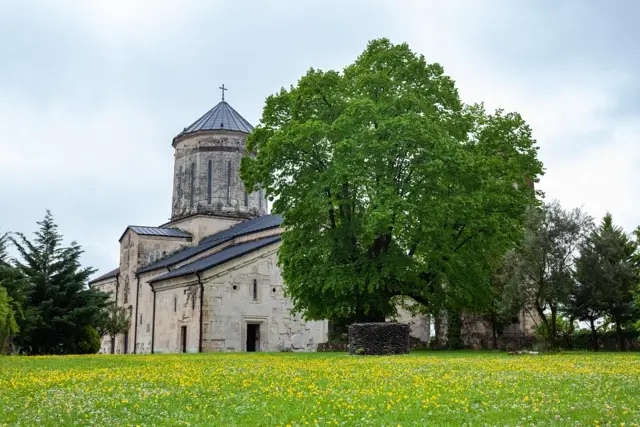
The site of Martvili is also linked with the pre-Christian period. According to historical and local tradition, there was a pagan cult place here and a sacred oak to which the local people paid special honour. With the spread of Christianity in western Georgia, the old pagan cults were gradually replaced by the Christian faith.
Tradition tells that after Christianity was established, a Christian holy place took shape on the site of the pagan sanctuary. Not every detail of this early period is confirmed with equal precision by historical sources, but the tradition itself is important, because it links Martvili with the most ancient history of the spread of Christianity in western Georgia.
The monastery's name also has special meaning. In Georgian Church tradition the word "martvili" means a martyr and is connected with the root of the Greek "martyr". This name became so established over the centuries that later the town itself took the name Martvili.
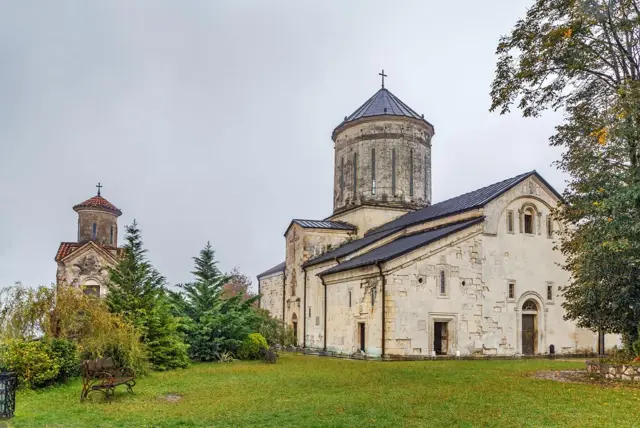
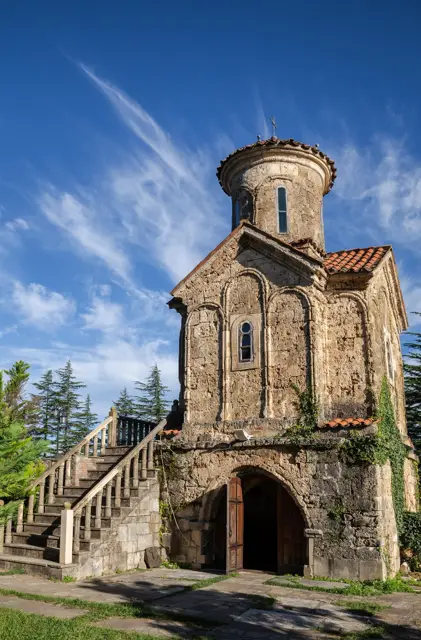
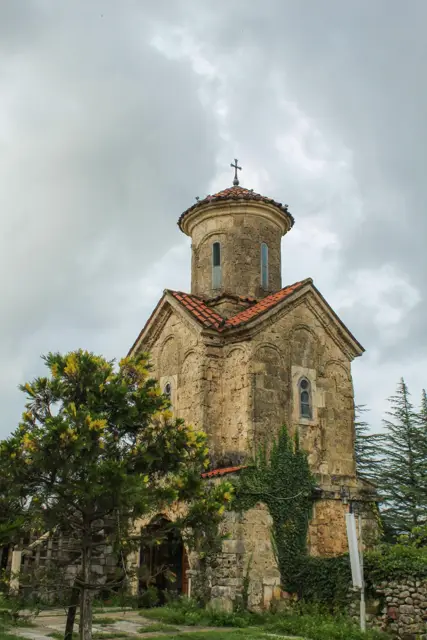
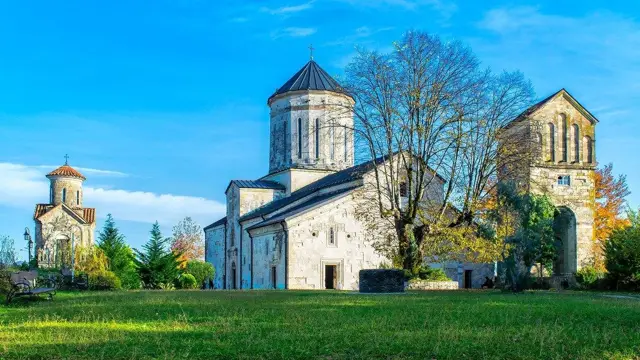
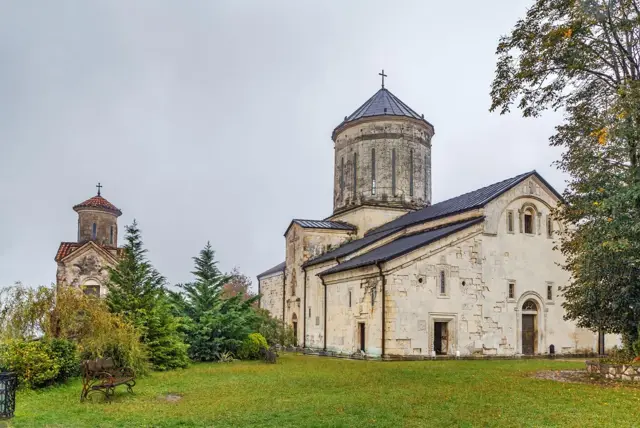
The history of the present monastery's main church is mainly linked with the 7th century. It is an important example of early medieval Georgian church architecture and is consecrated to the Dormition of the Mother of God. Over the centuries the church was rebuilt, restored and enlarged many times, so traces of different historical periods survive in its architecture.
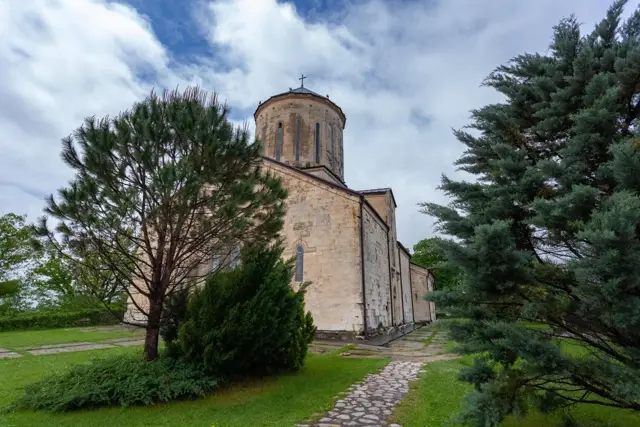
Architecturally, the main church of Martvili is an important monument of Georgian cross-domed architecture. Its plan, central domed space and stone construction reflect the developed tradition of early medieval Georgian church building.
In the church's exterior the stone relief decoration and ornaments especially attract attention. The carvings and figurative compositions preserved on the façades are important material for studying medieval Georgian art. They show both Christian symbolism and the high artistic skill of the Georgian stone-carvers of that age.
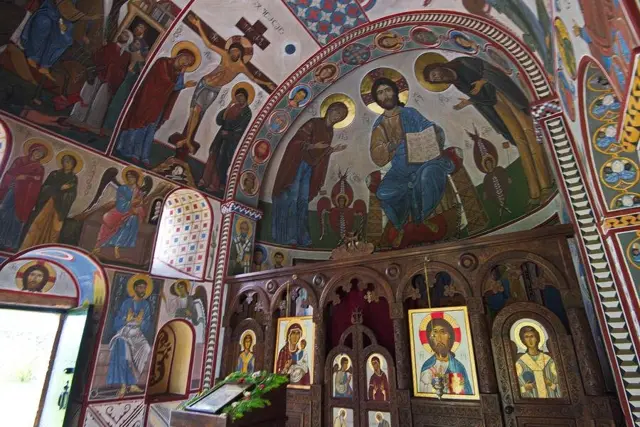
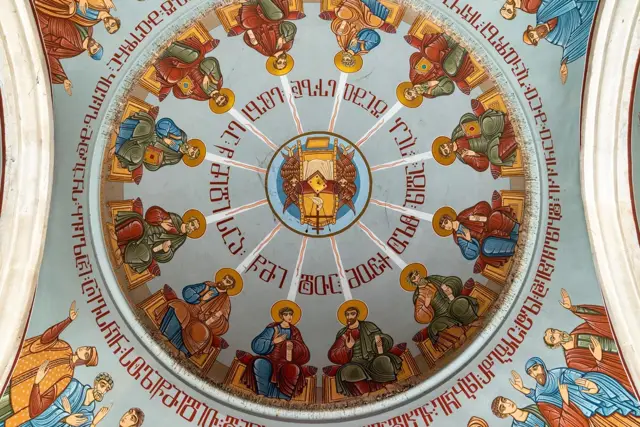
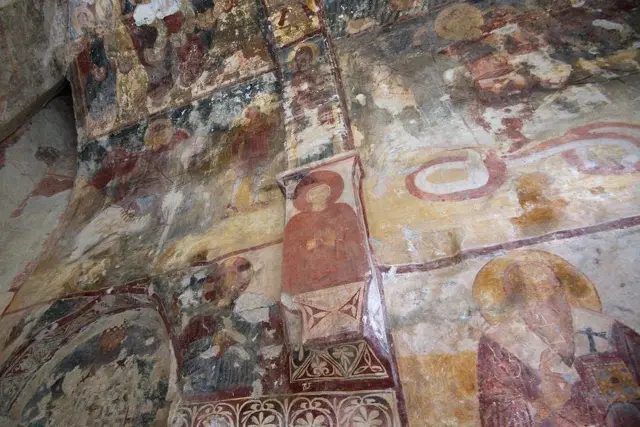
One of Martvili's special artistic treasures is its frescoes. Wall paintings from different periods survive in the church's interior. Especially important are the late medieval frescoes, which include images of Christ, the Mother of God, the saints and biblical events.
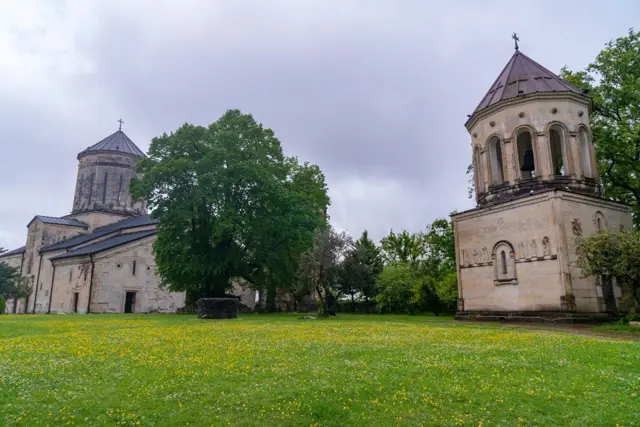
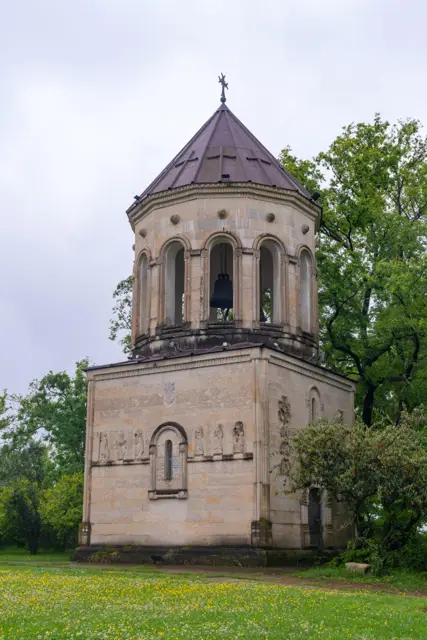
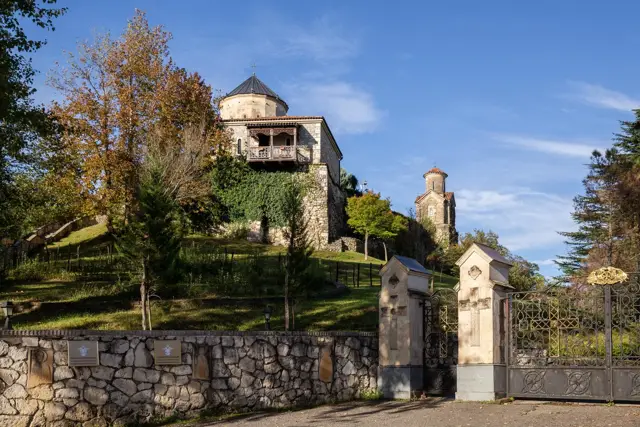
The present monastery complex is not limited to the main church. Over the centuries church buildings of various purposes, a bell tower and monastic spaces were created around it. The architectural development of the complex shows clearly that Martvili was for a long time an active and important church centre.
In the Middle Ages Martvili became one of the important episcopal centres of western Georgia. Its importance grew especially in the period when, after the break-up of the unified kingdom of Georgia, independent political entities grew stronger in western Georgia and the principality of Samegrelo was formed.
Martvili Monastery became closely connected with the Dadiani family, which ruled Samegrelo for centuries. The Dadianis were patrons of the monastery, took part in its restoration and adornment and kept it as an important church centre. Various traces of their era can still be found today in the monastery's history and painting.
As a result of this patronage Martvili was not merely a local church. It was a place where church authority, the political life of Samegrelo and Georgian culture were linked together. Important church and social events took place around the monastery, and its bishops played an important role in the life of the region.
Martvili was also an important centre of learning and letters. Clergy connected with the monastery took part in copying manuscripts, in church education and in preserving Georgian written culture. In periods when Georgia lived under political division and the pressure of foreign powers, monasteries remained one of the main places protecting the Georgian language and Christian culture.
The episcopal see of Chkondidi is especially connected with the history of Martvili. Martvili is historically linked with Chkondidi, and the title of Chkondideli came to carry special significance in the church and state history of medieval Georgia.
The best-known bearer of this title was Giorgi Chkondideli, the closest associate of David IV the Builder and one of the most outstanding church and state figures in Georgian history. Giorgi Chkondideli played a great role in David the Builder's reforms and in the strengthening of the country. Although not every episode of his life took place within the walls of the present monastery, the history of the see of Chkondidi links Martvili with the state history of Georgia's Golden Age.
Over the centuries Martvili Monastery lived through many hard periods. Wars in western Georgia, internal political conflicts and pressure from foreign powers also affected the monastery's life. The church was damaged and restored at different times, but its church significance did not disappear.
In the 19th century, when the Russian Empire established control over western Georgia too, the region's political and church organisation changed considerably. The traditional structures of the Georgian Church underwent changes, which also affected Martvili's role.
In the same century Martvili remained an important cultural milieu. The Georgian educational tradition connected with its monastic and church space helped to preserve literacy and national culture in the region.
The Soviet period proved especially hard. Under the atheist authorities monastic life in Georgia was severely restricted, many churches were closed and church activity ceased. Martvili Monastery also lost an important part of its traditional function, but its historical buildings and works of art survived.
After Georgia regained its independence, church and monastic life revived at Martvili. The historical complex regained its religious purpose and today is a functioning spiritual centre of the Orthodox Church of Georgia.
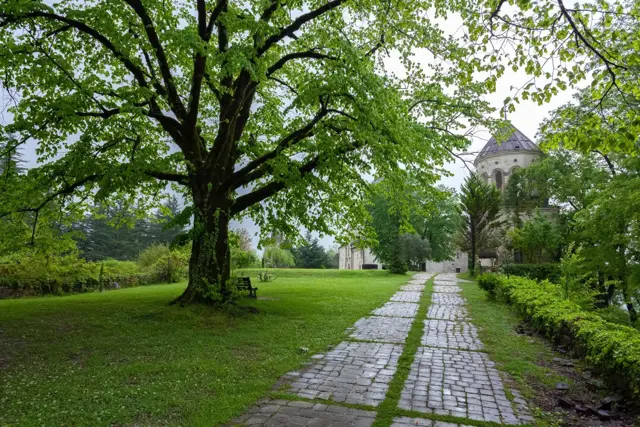
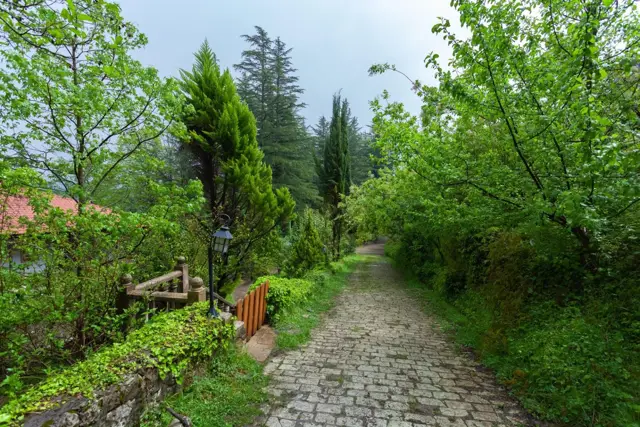
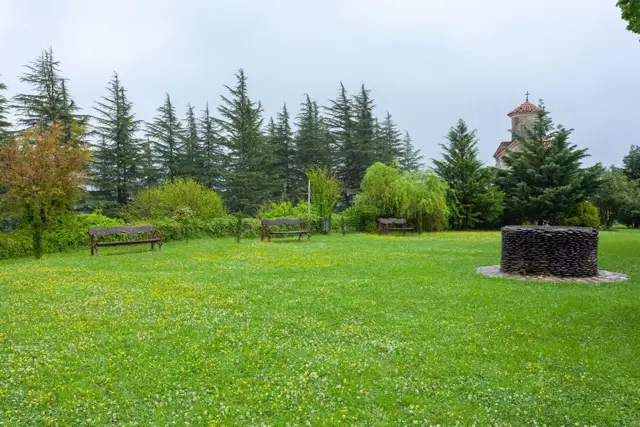
The monastery's location is also part of its special character. From the high hill a wide panorama of Samegrelo opens out, and the monastery courtyard and historical buildings create a peaceful setting where nature and centuries-old architecture come together harmoniously.
Today Martvili Monastery is both a functioning Orthodox sanctuary and an important monument of Georgia's cultural heritage. Believers come here to pray, and people interested in historical architecture and Georgian art discover in the monastery the cultural layers of different centuries.
Martvili Monastery is the place where the ancient Christian tradition of western Georgia, 7th-century architecture, medieval frescoes, the history of the episcopal see of Chkondidi and the cultural heritage of Samegrelo come together as one whole.
Martvili remains today one of the important symbols of the Georgian Orthodox faith, of the history of Samegrelo and of national culture: a spiritual dwelling built up over the centuries that has withstood many historical trials and preserved its Christian and cultural heritage to this day.