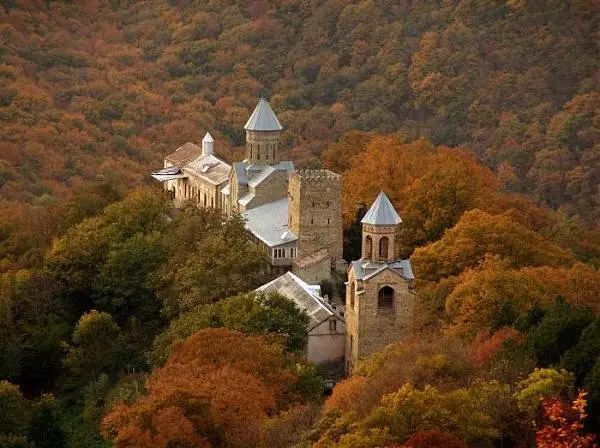
Martkopi Monastery
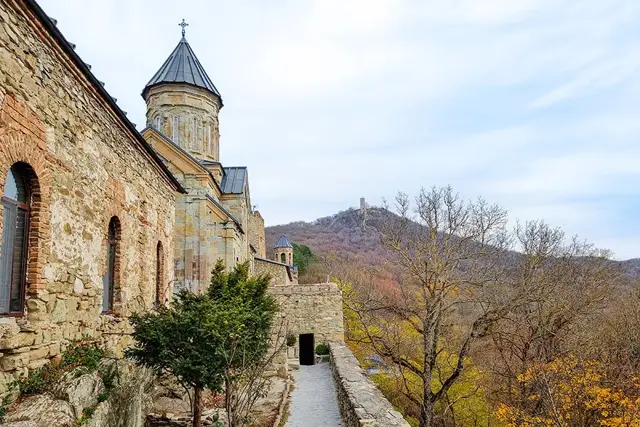
In forest-covered hills, in silence and seclusion, the monastery of Martkopi has for centuries kept the prayer of Saint Anthony. Here, where the path climbs to his solitary pillar, stone has become a witness to ascetic labour, and silence has become prayer. This is a place where, almost fifteen centuries later, one can still feel the spirit of the monk who found closeness to God in solitude.
- Region
- Kvemo Kartli
- UNESCO
- No
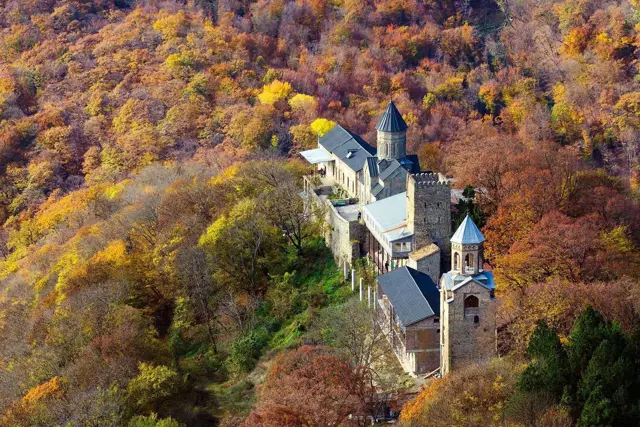
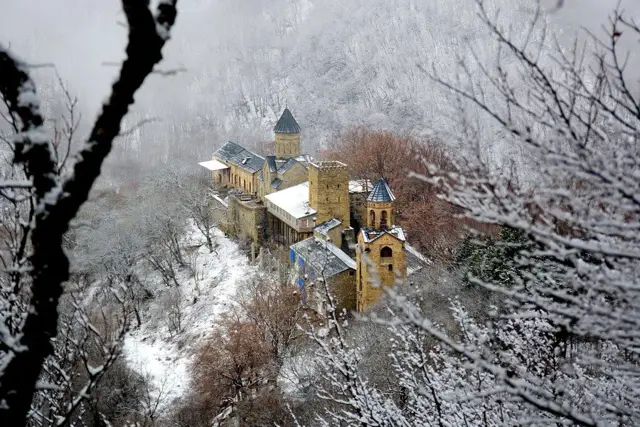
Martkopi Monastery is one of the oldest and most important monastic centres of Georgia. It stands in the Gardabani municipality, near the village of Martkopi, east of Tbilisi, on the wooded slopes of the Ialno range. The monastery's history spans almost fifteen centuries and is especially closely linked with Saint Anthony of Martkopi, who laboured in the 6th century, one of the Thirteen Assyrian Fathers, who played a special role in strengthening and spreading Georgian monastic life.
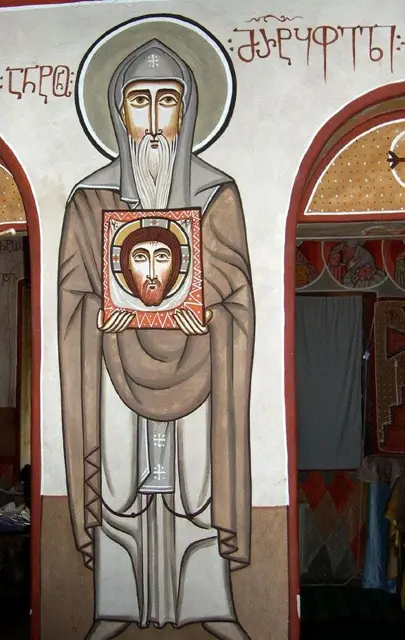
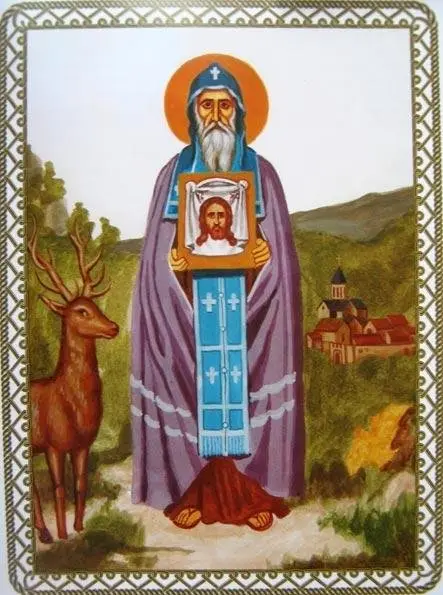
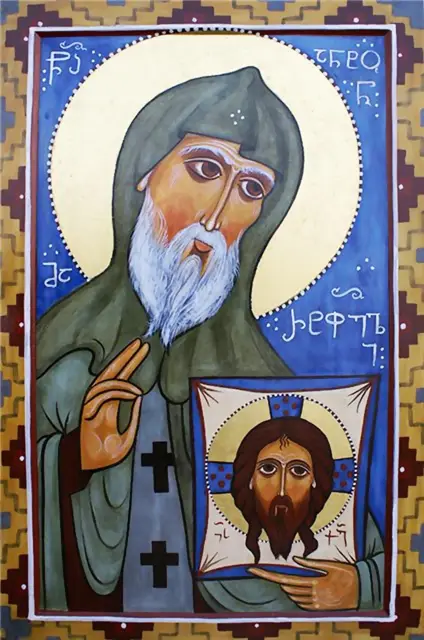
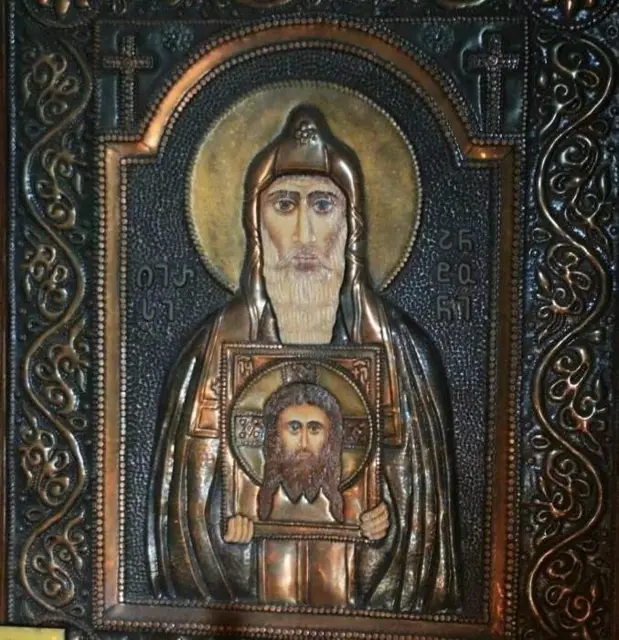
The beginning of monastic life at Martkopi is linked with the second half of the 6th century. It was in this period that Saint Anthony began his work here. He came to Georgia with the other Assyrian Fathers and at first took part in their common spiritual life, but later chose the path of solitary labour. His name became so closely bound up with this place that over the centuries Martkopi and Saint Anthony became inseparable.
Saint Anthony was especially drawn to solitude, prayer and strict ascetic life. It was because of his solitary life that he was called "the one who lives alone", and later "Martkopeli". In Georgian Church tradition the origin of the name Martkopi is also linked with this name. Thus the monastery's name is not only a geographical place-name, but also expresses the character of its founder's ascetic life.
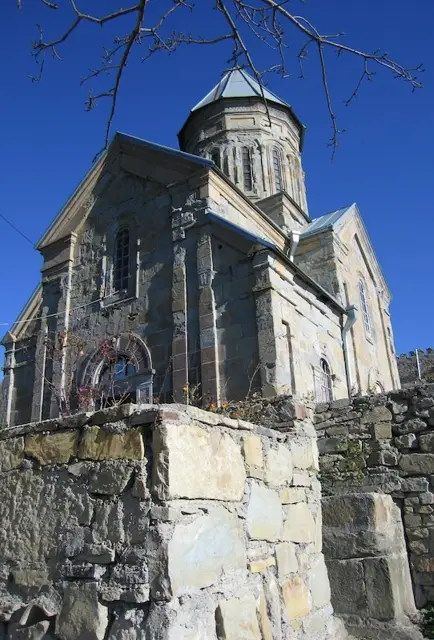
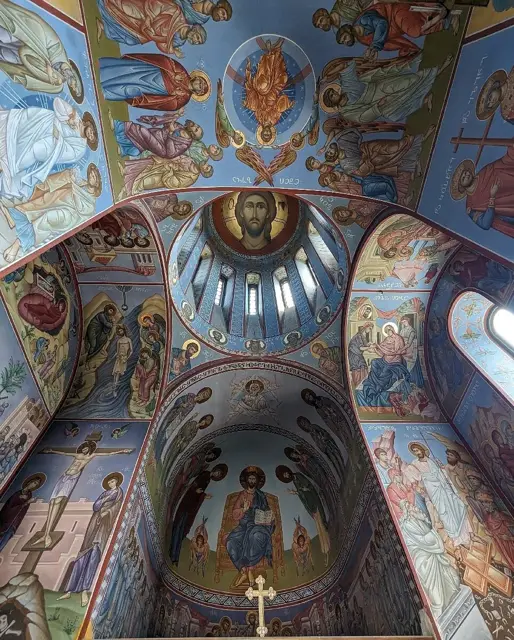
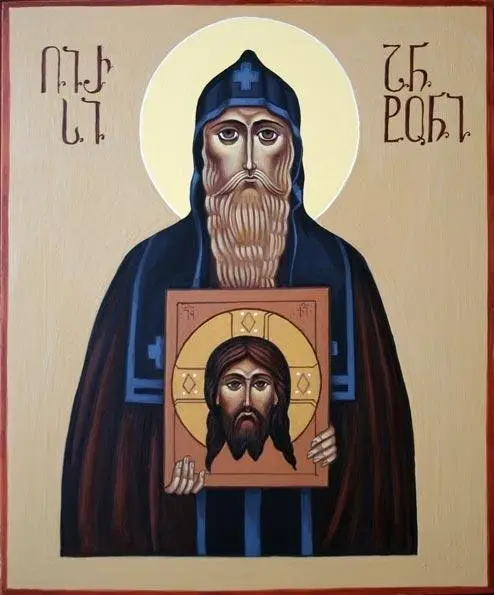
A special place in Martkopi's history is held by the tradition of the icon of the Saviour not made by hands. According to Church tradition, Saint Anthony brought from Edessa to Georgia the image of the Saviour not made by hands on a tile. The monastery's well-known name, the Martkopi Monastery of the Divinity, is linked with this holy relic. The main church, consecrated in honour of the icon of the Saviour not made by hands, was for centuries the spiritual centre of the monastery.
One of the most remarkable places connected with Saint Anthony's labours is the pillar of Anthony of Martkopi, rising on the mountain above the monastery. According to Church tradition, the saint spent the last years of his life in solitude precisely on the pillar. Here he devoted himself to prayer, fasting and strict ascetic labour and withdrew still further from the everyday world.
The high and solitary position of the pillar clearly expresses the spiritual ideal to which early Christian monasticism attached special importance. Saint Anthony's pillar is still one of the most recognisable symbols of Martkopi Monastery and an important place of pilgrimage.
After Saint Anthony's death the monastery continued to exist and gradually became an important church centre. Its importance grew especially in the Middle Ages. Martkopi was no longer only a secluded dwelling of monks: it became an important church and cultural centre of eastern Georgia.
An important change in the monastery's history took place in 1265. As a result of the campaign of Berke Khan, ruler of the Golden Horde, Rustavi was destroyed. After this the episcopal see of Rustavi was moved to Martkopi. This event considerably raised the monastery's status and for several centuries made it one of the important centres of regional church life.
But Martkopi's history was not peaceful. Like many other monasteries of Georgia, it too repeatedly faced wars, foreign invasions and political turmoil. One of the heaviest blows came in 1395, during Timur's invasion, when the monastery was devastated.
The loss of the monastery's chief holy relic, the icon of the Saviour not made by hands connected with Saint Anthony, is also linked with this historical period. Its later fate is unknown. Nevertheless, the spiritual tradition connected with the icon of the Saviour not made by hands continued at Martkopi, and the monastery kept the name "Monastery of the Divinity".
After the severe destruction, Martkopi was restored again. Over the centuries the churches and other buildings were repaired and altered several times. Especially important building and restoration work took place in the 17th and 18th centuries. In this period the monastery also gradually took shape as a fortified complex.
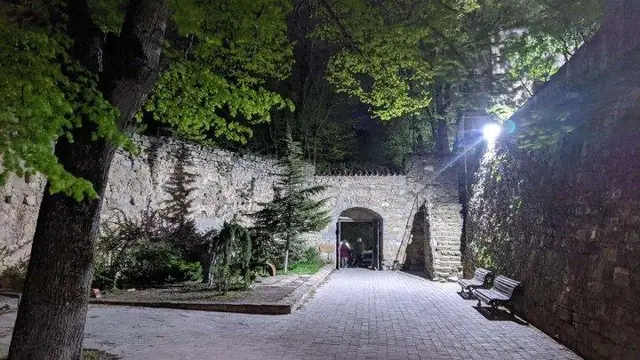
The 18th-century Georgian historian and geographer Vakhushti Bagrationi describes Martkopi as a fortified monastery. The monastery was surrounded by a defensive wall which, in difficult political conditions, served to protect the monks, the monastery's property and its holy treasures. This shows well that medieval Georgian monasteries were often not only spiritual but also important social and defensive centres.
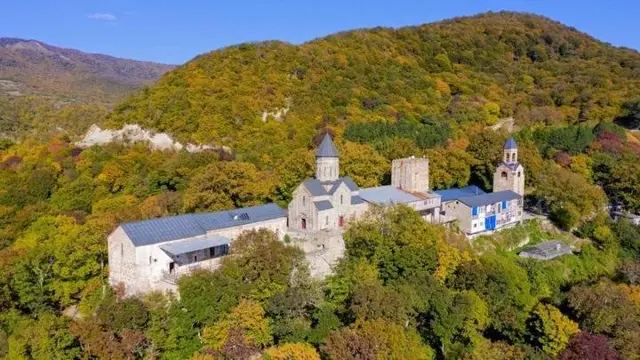
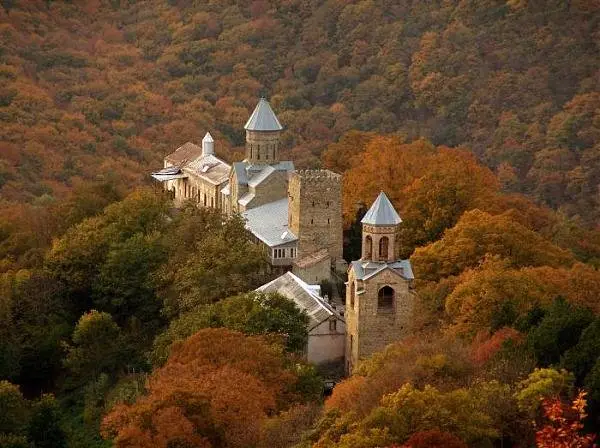
One of the outstanding historical buildings of the complex is the bell tower built in 1699. The Georgian inscription preserved on it provides important information on the history of its construction. The bell tower is an interesting example of Georgian church architecture and today is one of the important parts of the monastery's historical complex.
In the 18th century the monastery again found itself in a difficult situation. The frequent Lek raids in eastern Georgia constantly threatened the monastery's safety. In 1752 the situation became so grave that Bishop Ioseb Jandierishvili of Rustavi was forced to leave the monastery and move the episcopal residence to a safer place.
These events dealt a heavy blow to Martkopi's old episcopal and educational life. Nevertheless, the monastery did not entirely lose its religious significance and remained a holy place for the faithful.
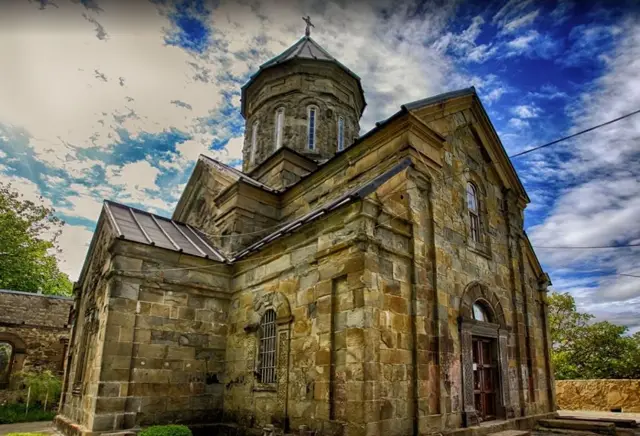
Another serious event in the monastery's architectural history was the earthquake of 1823. The earthquake badly damaged the main church: the dome and part of the building collapsed. The damage was so great that in the 19th century a large-scale restoration and in effect a rebuilding of the main church became necessary.
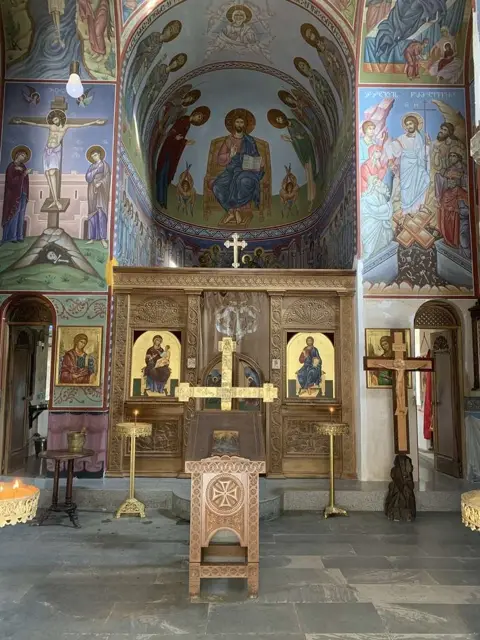
With the changes to the old church an important part of its artistic heritage was also lost. Historical descriptions mention old frescoes and images of Georgian kings, including portraits of Vakhtang Gorgasali and David the Builder. Later the rebuilding of the church removed a large part of the old painting.
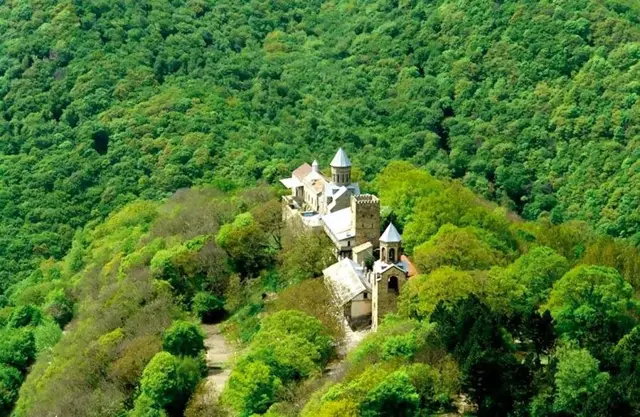
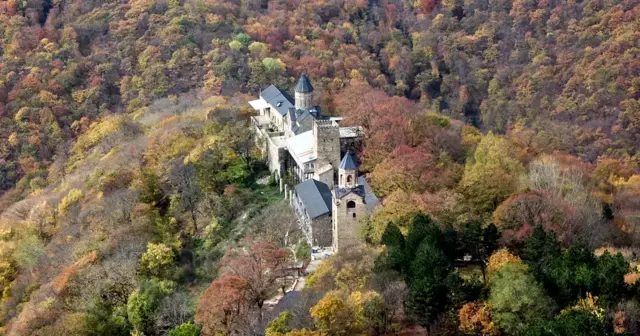
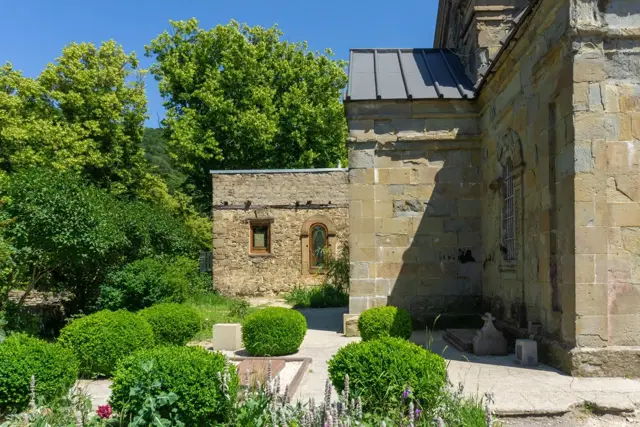
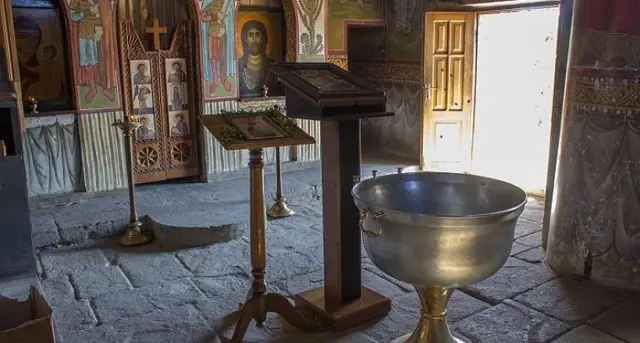
That is why the present Martkopi complex is a group of buildings from different centuries. Its main dominant feature is the church of the icon of the Saviour not made by hands, but on the monastery grounds there are also other church and monastic buildings, the historical bell tower and Saint Anthony's pillar rising above the monastery.
Another important figure of the Church of Georgia is connected with the history of Martkopi: Kirion II, Catholicos-Patriarch of All Georgia. After the restoration of the autocephaly of the Orthodox Church of Georgia, he became the first Catholicos-Patriarch of the restored autocephalous Church.
In 1918 Kirion II was found dead in his cell at Martkopi Monastery, from a gunshot wound. The circumstances of his death remain one of the most tragic and never fully clarified episodes in the recent history of the Church of Georgia.
In the 20th century the Soviet period proved especially hard for the monastery. Under the state's atheist policy many churches and monasteries in Georgia were closed. Monastic life also ceased at Martkopi, and the complex for a time lost its original religious function.
In the Soviet period the monastery buildings were used for various secular purposes. Nevertheless, the memory of Saint Anthony of Martkopi and of the ancient monastery was preserved among the local people and the faithful. The monastery continued to be seen as an important part of Georgia's Christian past.
With the revival of Georgia's national and church life, monastic life was restored at Martkopi in 1989. The monastery again became a functioning Orthodox monastery, services were restored and care of the historical complex began.
Today one of the monastery's chief holy places is the tomb of Saint Anthony of Martkopi. The faithful come here from different parts of Georgia to honour the saint and to pray. Pilgrims also climb to Saint Anthony's pillar, the solitary place that Church tradition links with the last ascetic period of his life.
Martkopi's natural setting also makes a special impression. The wooded mountains, the slopes of the Ialno range, Saint Anthony's pillar above the monastery and the silence all around still keep the atmosphere of solitude and prayer that almost fifteen centuries ago bound Saint Anthony to this place.
Martkopi Monastery is the place where many important layers of Georgia's Christian history meet: the work of the Thirteen Assyrian Fathers, the ascetic life of Saint Anthony of Martkopi, the tradition of the icon of the Saviour not made by hands, the medieval episcopal centre, foreign invasions, centuries of destruction and restoration, the tragic story of Catholicos-Patriarch Kirion II and the monastic life revived after the Soviet era.
Martkopi remains today one of the outstanding symbols of Georgian monastic tradition: a monastery that over almost fifteen centuries has endured many destructions and historical upheavals. Saint Anthony's tomb, his solitary pillar, the old bell tower and the monastery surrounded by mountains still keep the spiritual significance whose foundation was laid in the 6th century by the labours of Saint Anthony of Martkopi.