Jruchi Monastery
An earthquake destroyed in a moment what centuries had built: the stones fell, the dome collapsed, but prayer did not fall silent even among the ruins. One monk raised a chapel among the grey stones and proved that the soul has no need of walls. Today Jruchi is growing again, stone upon stone, just like its faith, which never died away.
- Region
- Imereti
- UNESCO
- No
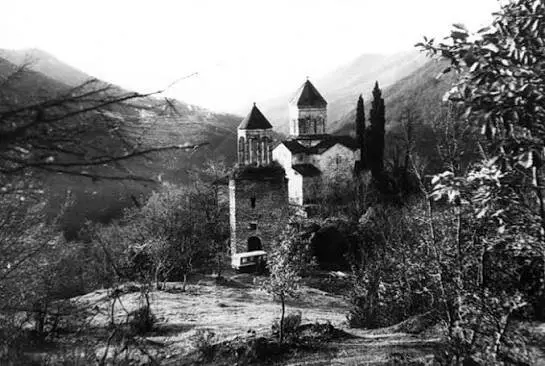
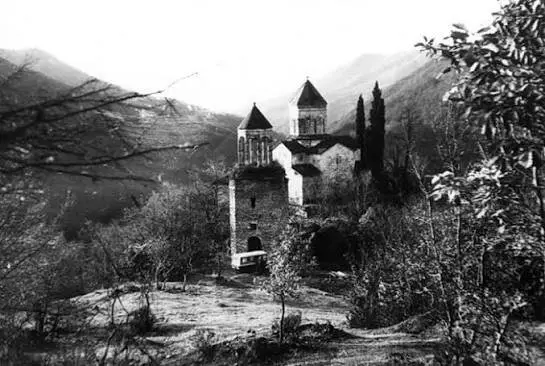
The Monastery of Saint George at Jruchi is one of the important historical and spiritual monuments of Georgia. It stands in Imereti, in the Sachkhere municipality, near the village of Tskhomareti, in the valley of the river Jruchula. Surrounded by mountains and forests, the monastery was for centuries not only a place of prayer but an important cultural, educational and monastic centre of western Georgia.
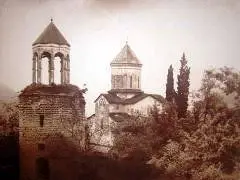
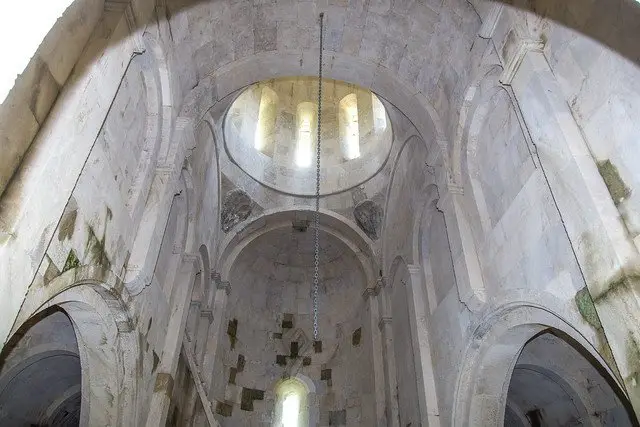
The exact date of the founding of Jruchi Monastery is not known. According to historical and architectural evidence, its oldest layers belong to the 9th–11th centuries. Originally the church was probably a three-nave basilica, later rebuilt and enlarged. In different periods new architectural parts were added to the church, so that the traces of several historical periods could be read at Jruchi.
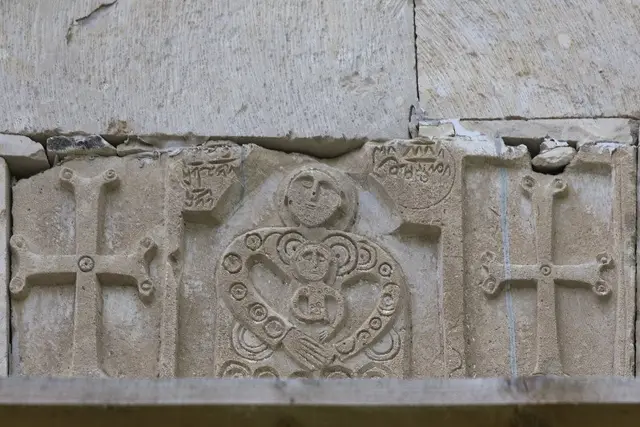
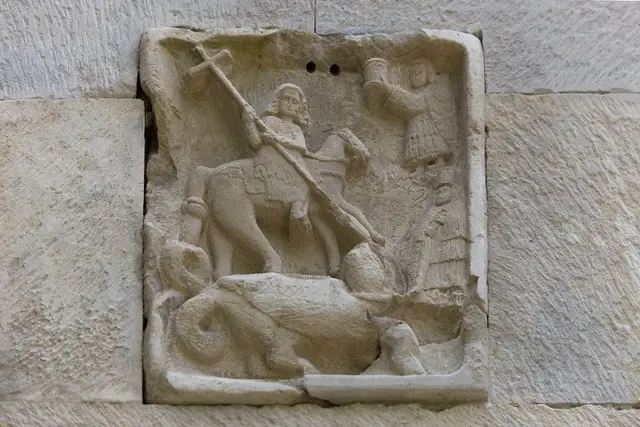
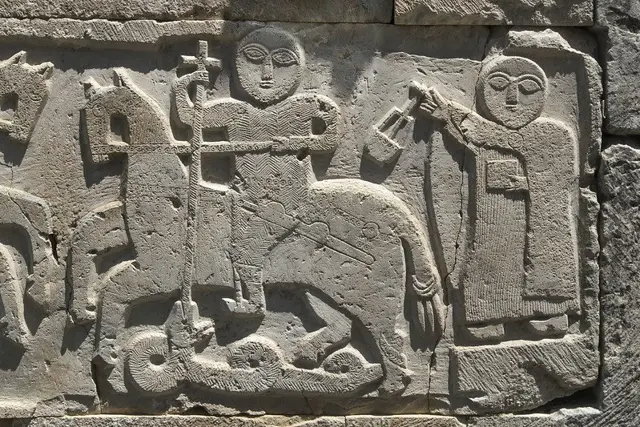
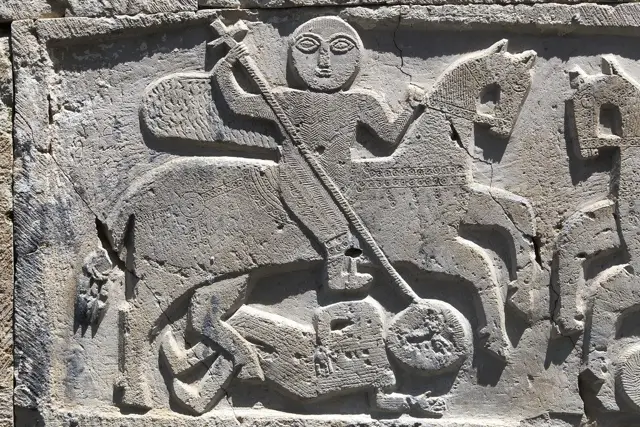
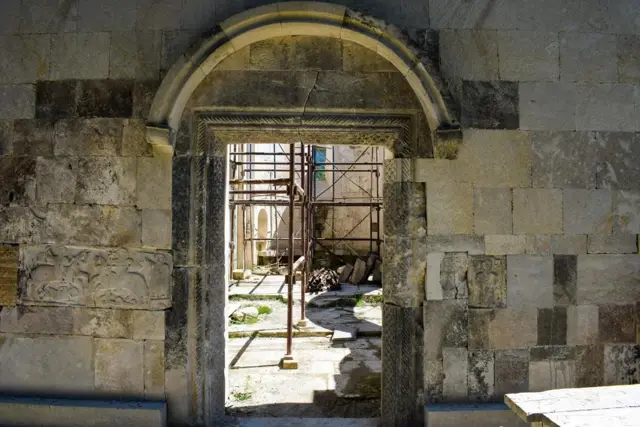
The monastery is consecrated in the name of Saint George. Its façades were adorned with stone carvings, reliefs and images of saints. Especially important were the reliefs dedicated to Saint George, some of which survived even among the ruins and were carefully protected during the later restoration.
Jruchi's history is closely linked with well-known Georgian families. For a time the monastery was connected with the Palavandishvili family, and later it passed into the hands of the Tsereteli family. From the 16th–17th centuries the monastery became one of the important spiritual and family centres of the Tseretelis. They made a significant contribution to the monastery's development, its care and its endowment with church objects.
In the 18th century a hard period came for Jruchi Monastery. For a time it was in the hands of the eristavis of Racha and was also used for military purposes. Later King Solomon I of Imereti returned the monastery to church life and handed it over to the Tseretelis.
Metropolitan David Tsereteli holds an important place in the monastery's history. At the beginning of the 19th century he was closely connected with Jruchi and laboured greatly for the restoration and renewal of the church. In this period the monastery underwent significant architectural changes and became one of the outstanding monastic centres of western Georgia.
Jruchi was not only a place of prayer. It was an important centre of learning and culture. Manuscripts, church books, icons, relics and precious church objects were kept in the monastery.
Two important monuments of Georgian manuscript culture are especially linked with the name of Jruchi: the Jruchi I and Jruchi II Gospels. The first was copied in 936 at Shatberdi Monastery and later came to Jruchi. The second manuscript belongs to the 12th century and is known for its rich miniatures. These manuscripts clearly testify to Jruchi's importance in the history of Georgian church learning and spiritual education.
Relics of Saint George, reliquaries, icons of the Mother of God and precious liturgical objects were also kept in the monastery. Jruchi was also an important burial place of the Tsereteli family, and many of its members and clergy were buried here.
Saint Hilarion the New Georgian, Iese Kanchaveli, is linked with the spiritual history of Jruchi. According to one of the sources of his life, in his youth his spiritual upbringing was entrusted to Archimandrite Geronti Sologhashvili, who was connected with the Monastery of Saint George at Jruchi. In this setting Iese came to know monastic life and the tradition of prayer. Later he became confessor to King Solomon II of Imereti and one of the well-known Georgian ascetics of Mount Athos.
In the 20th century an especially hard time came for the monastery. In the years of Soviet power monastic life ceased, part of the church property was removed, historical objects were taken to museums and the church was left without care.
The hardest event for Jruchi was the strong Racha earthquake of 1991. The centuries-old church collapsed almost entirely. The dome, walls and architectural parts fell, and of the once majestic monastery only ruins and fragments remained.
Nevertheless, spiritual life at Jruchi did not disappear completely. Archimandrite Luka Palavandishvili holds a special place in its recent history. In 2002, after his monastic tonsure, Father Luka was sent to the Monastery of Saint George at Jruchi. In the conditions of the ruined monastery he, together with other clergy, helped restore monastic life.
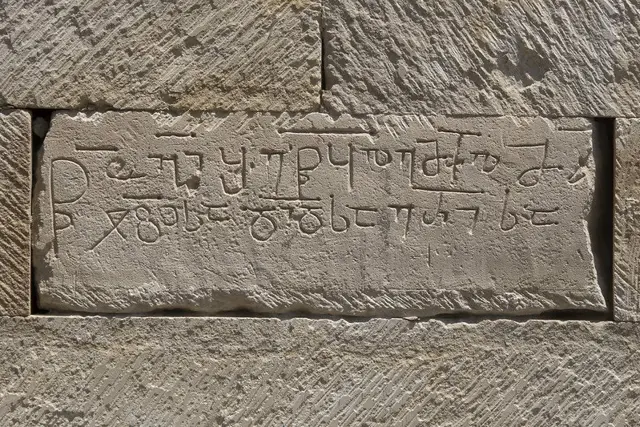
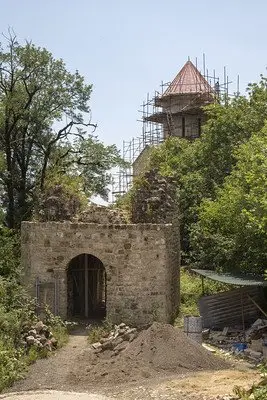
During his ministry a small chapel was arranged by the ruins, where prayer was again offered. Part of the monastery grounds was cleared, and special attention was given to protecting the historic stones, inscriptions and carved fragments. Later a small chapel dedicated to Saint Hilarion the New Georgian was also built at the monastery, where services were held until the main church was restored.
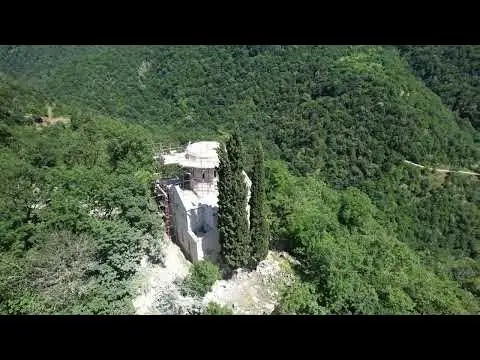
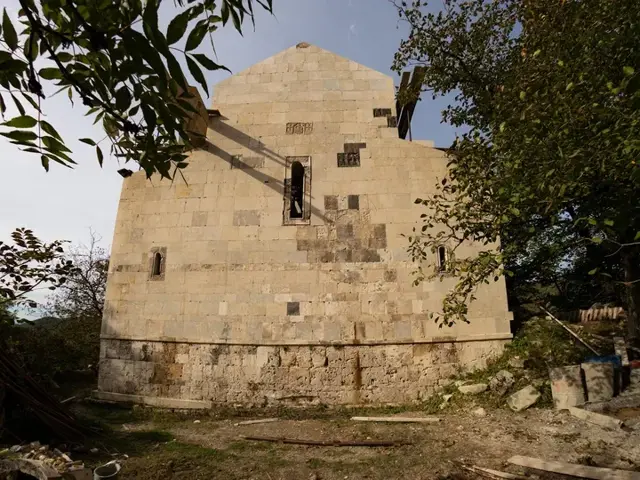
From 2011 the clearing of the ruins and preparation for rehabilitation began, and in 2018 the large-scale restoration of the main church started. The old stone fragments, carvings and reliefs were specially studied so that the church would keep its historical appearance as fully as possible.
Today the construction and restoration work on the main church has been completed. The cross has already been raised and blessed on the dome, and it has become one of the important symbols of Jruchi's revival. The consecration of the restored church is planned for next year, which will open a new spiritual stage in the monastery's recent history.
Today the Monastery of Saint George at Jruchi is again a living spiritual place. Its history shows that a monastery is not only stone walls. Jruchi survived political struggles, Soviet persecution, abandonment and a devastating earthquake, yet its spiritual memory did not disappear.
Jruchi is today a living part of Georgia's spiritual heritage, where medieval history, Georgian manuscript culture, the memory of Saint Hilarion the Georgian, the ministry of Father Luka Palavandishvili and the new life of the restored monastery come together.