Gelati Monastery
The king who united the country by the sword did not forget the mind. At Gelati the book acquired the power of the sword. Here the monks did not only pray: they read, asked questions and searched for answers, and so the place where faith and wisdom joined hands was called a “new Athens”. David is buried here, the crowned king who knew that true strength lies in knowledge too, and not in the sword alone.
- Region
- Imereti
- UNESCO
- Yes
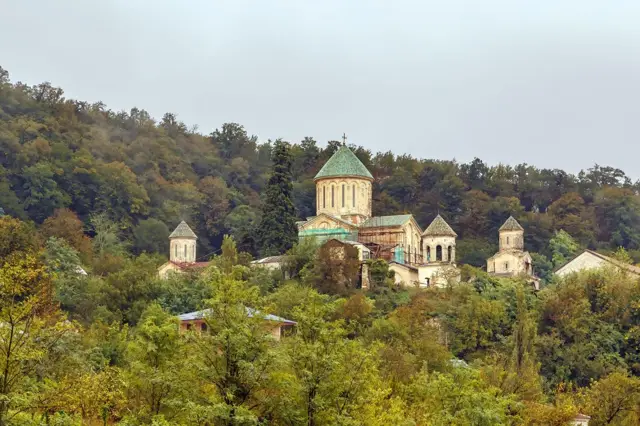
Gelati Monastery is one of the most important spiritual, cultural and historical centres of Georgia. It stands near Kutaisi and was founded in 1106 by King David IV the Builder of Georgia. The creation of Gelati coincided with one of the most significant periods in Georgian history: a long age of struggle was gradually coming to an end, and a time of political strengthening, cultural rise and the flourishing of a unified Georgian state was beginning.
For David the Builder, Gelati was not merely a monastery. The king wished to create a strong spiritual and educational centre where Christian faith, science, philosophy and learning would come together. That is why, together with the monastery, the Gelati Academy was formed, which held a special place in the intellectual life of medieval Georgia.
The period of Gelati's foundation is linked with David the Builder's great work of strengthening Georgia. The king carried out important reforms, strengthened royal power and created a strong Georgian state. The victory won at the battle of Didgori in 1121 opened the way to Georgia's further rise, and in 1122 Tbilisi returned to Georgian hands. Gelati remained one of the greatest spiritual and cultural legacies of this age.
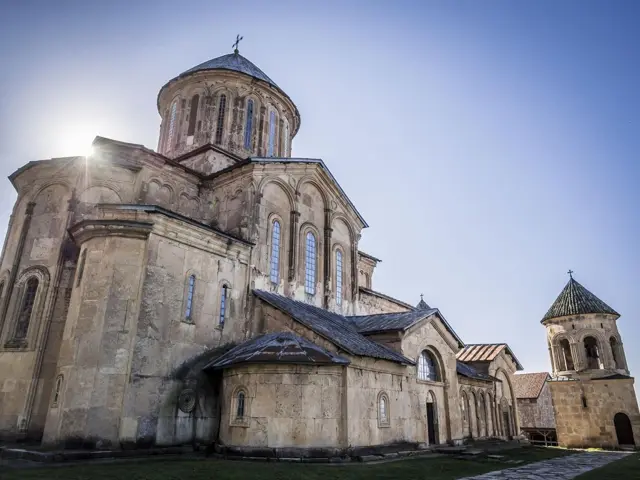
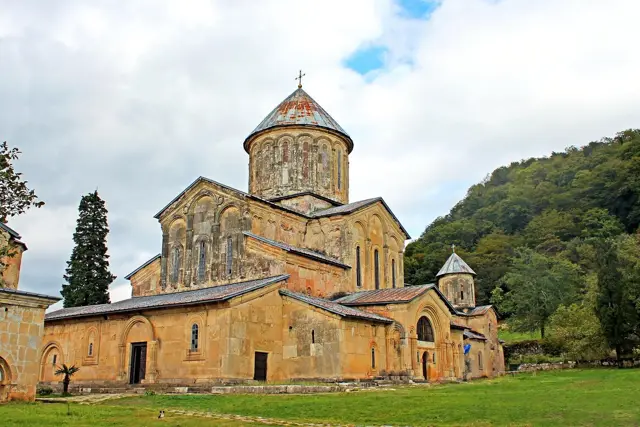
The main church of the monastery is consecrated to the Nativity of the Mother of God. Its construction began during David the Builder's lifetime, but the king did not live to see the complex completed. After David's death in 1125 his successors continued the work, and in the following centuries new churches and other buildings were added to Gelati.
One of the main foundations of Gelati's special importance was its academy. David the Builder invited here well-known Georgian scholars of his time, some of whom had worked in important cultural and educational centres of Byzantium. Gelati gradually became a place where Georgian Christian thought merged with the achievements of Byzantine philosophical and scientific traditions.
The name of Ioane Petritsi, one of the greatest Georgian philosophers and translators of the Middle Ages, is especially linked with the Gelati Academy. Arsen of Ikalto was also connected with the intellectual milieu of Gelati. Theological and philosophical texts were studied, translated and interpreted here. The subjects taught included theology, philosophy, rhetoric, grammar, mathematics and astronomy.
Precisely because of this intellectual significance, Georgian historical tradition called Gelati the "new Athens" and the "second Jerusalem". "Athens" stood for knowledge and philosophy, and "Jerusalem" for Christian holiness. These names show clearly the place Gelati held in the minds of medieval Georgians.
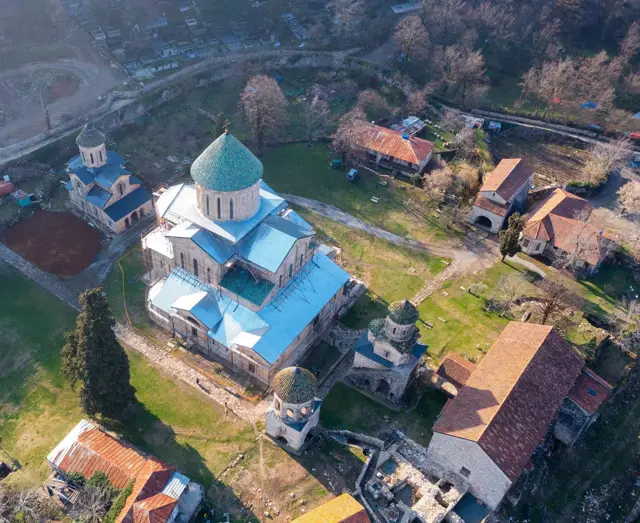
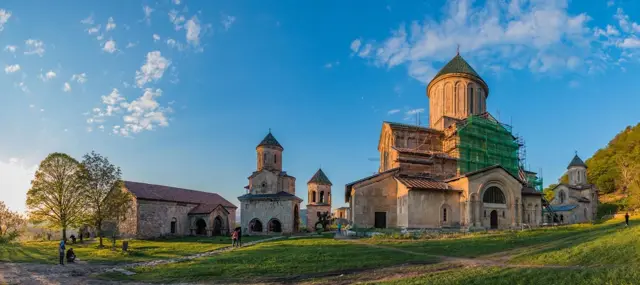
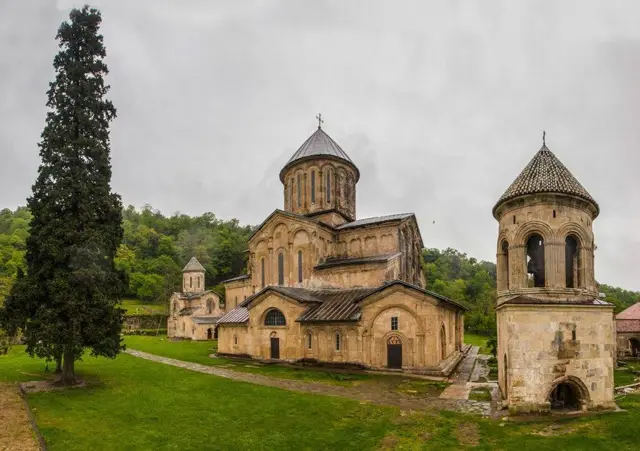
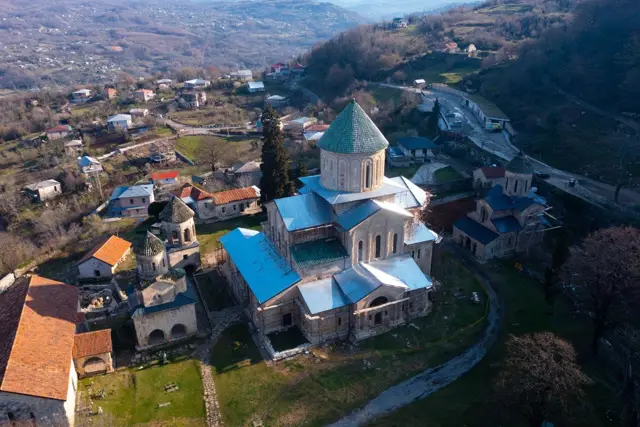
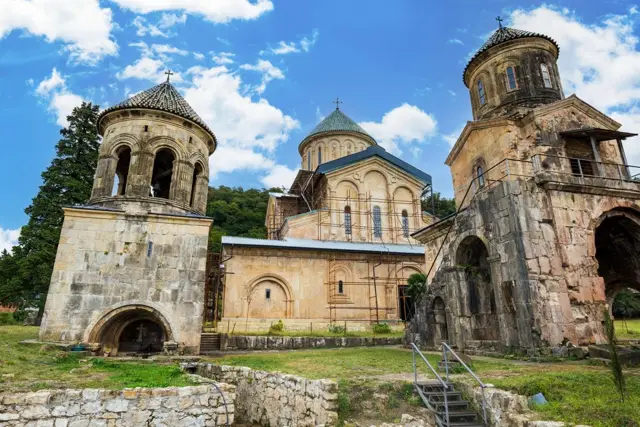
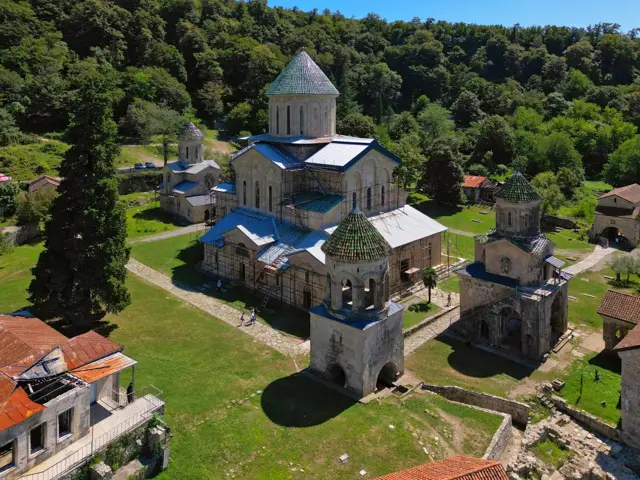
Architecturally, Gelati Monastery is one of the outstanding complexes of Georgian medieval church architecture. The main church of the Mother of God is a domed building whose harmonious proportions, stone façades and monumental interior reflect the high level of 12th-century Georgian architecture.
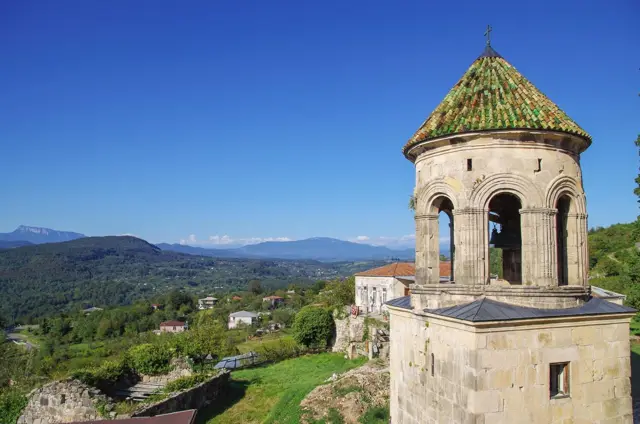
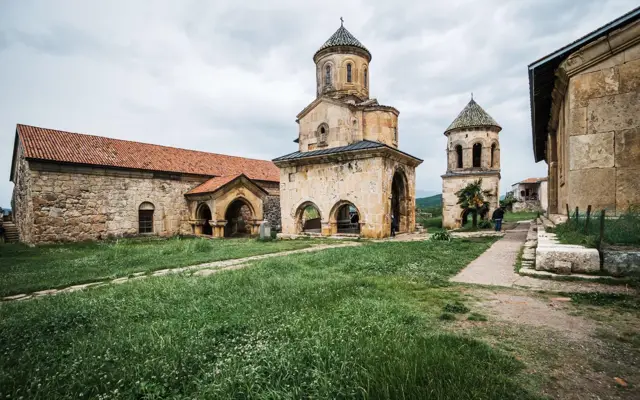
The monastery is not limited to the main church. The complex includes the church of Saint George, the church of Saint Nicholas, the bell tower, the academy building and other historical structures. Created in different centuries, these buildings form a single architectural space and reflect the centuries-long development of Gelati.
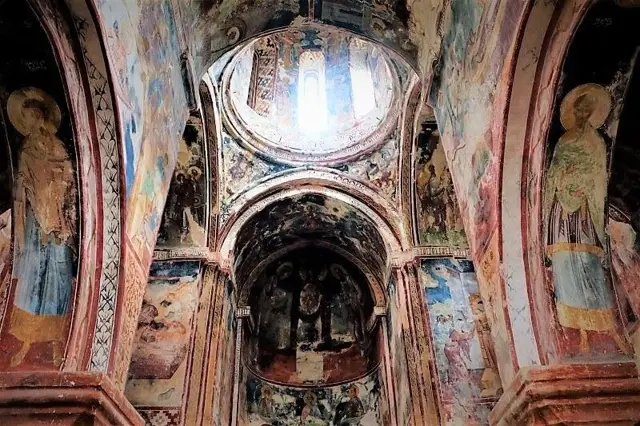
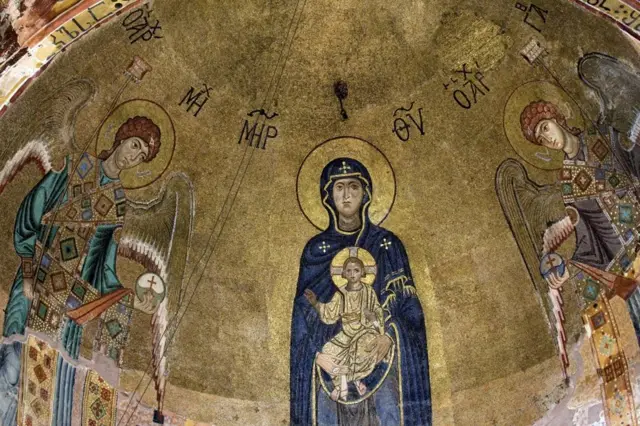
Gelati's greatest treasures are its mosaic and frescoes. In the conch of the sanctuary apse of the main church the famous 12th-century mosaic is preserved, showing at its centre the Mother of God with the Christ Child, flanked by the archangels Michael and Gabriel. The golden background and the monumental character of the figures make it one of the outstanding examples of medieval Christian art.
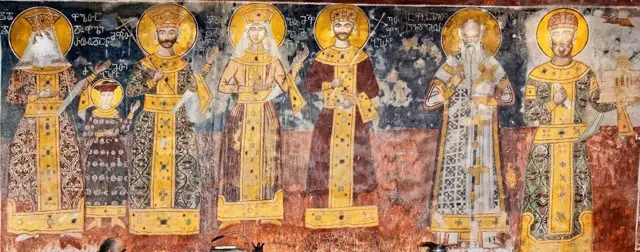
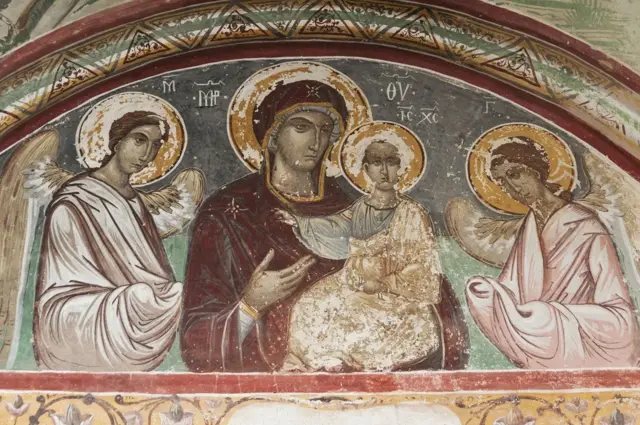
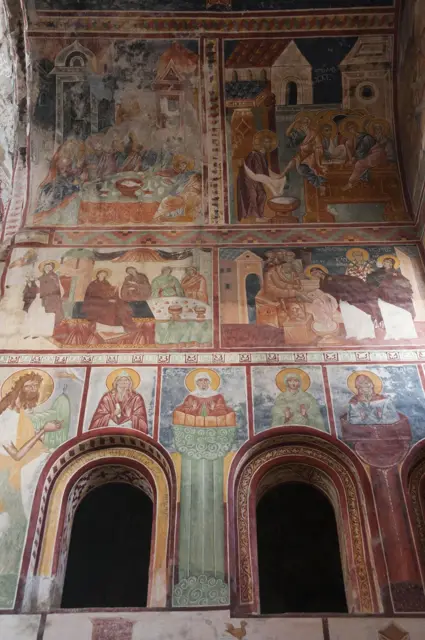
The walls of the church are also covered with frescoes from different periods. Among them are images of Christ and the saints, biblical scenes and portraits of historical figures. Of special importance are the images of the kings of Georgia, which are an important visual source not only for religious art but also for the history of the country.
A special place in Gelati's history is held by the tomb of David the Builder himself. According to the king's wish, he was buried at the gate of the monastery. By the traditional explanation, David chose this place as a sign of humility, so that those entering the monastery would walk over his grave. Such a burial of one of Georgia's greatest kings expresses in a special way his Christian understanding of kingship and service.
In later centuries too Gelati was an important royal burial place. Members of the royal dynasty of Georgia and later of Imereti were buried here. The monastery became especially important after Georgia's political unity broke apart and Kutaisi became the main centre of the kingdom of Imereti.
Over the centuries Gelati Monastery endured many severe trials. Invasions by foreign powers, internal political struggles and the fragmentation of the country affected the monastery too. Especially serious was the damage caused in the 16th century by invasions from the North Caucasus. Nevertheless, Georgian kings and clergy restored Gelati many times and continued its spiritual life.
In the 19th century, after Georgia's incorporation into the Russian Empire, the situation of the Georgian Church changed considerably. Even harder was the Soviet period, when monastic life ceased and religious activity was severely restricted. Nevertheless, Gelati's architecture, frescoes and mosaics survived and remained a most important part of Georgia's cultural heritage.
After Georgia regained its independence, church life revived at Gelati. The monastery still holds a special place today in the history of the Orthodox Church of Georgia and of national culture.
In 1994 Gelati Monastery was inscribed on the UNESCO World Heritage List. International recognition emphasised the unique architectural, artistic and historical value of the complex. Protecting its frescoes and buildings remains an important responsibility today, because this heritage, created over almost nine centuries, requires special care.
What is unique about Gelati is that here faith, knowledge and the history of the Georgian state cannot be separated. It was at once a monastery, a centre of learning, a royal burial place and the place where one of the most important intellectual schools of medieval Georgian culture took shape.
Today Gelati Monastery is one of the most impressive legacies of Georgia's Golden Age. The tomb of David the Builder, the Gelati Academy, the unique mosaic of the Mother of God, centuries-old frescoes and Georgian architecture bring together in one space the most important parts of Georgia's spiritual and cultural history.
Gelati Monastery is not merely a medieval historical monument: it is the living legacy of David the Builder's vision, a place where faith and knowledge complete each other. Known as the "new Athens" and the "second Jerusalem", Gelati remains today one of the greatest symbols of Georgia's learning, culture, Orthodox faith and national memory.