David Gareja Monastery
Among the desolate rocks of Gareja, where silence turns into prayer, spiritual life has glowed for centuries in the footsteps of Saint David. The dwelling carved in stone still guards the memory of those who gave up their souls for the faith.
- Region
- Kakheti
- UNESCO
- No
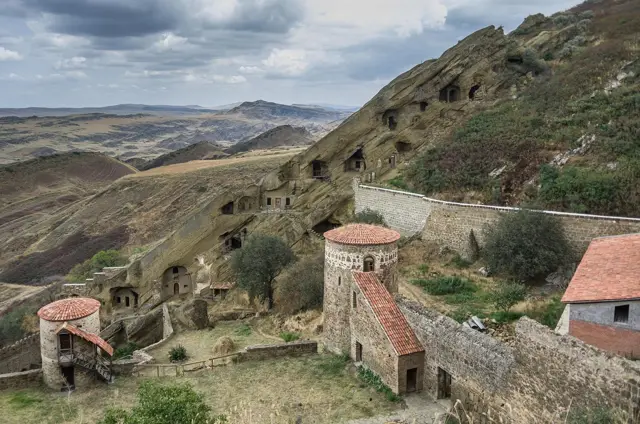
The David Gareja monastic complex is one of the oldest, largest and historically most important monastic centres of Georgia. It lies in the south-east of the country, in the harsh, rocky setting of the Gareja semi-desert. The history of David Gareja begins in the 6th century and is directly linked with Saint David of Gareja, one of the Thirteen Assyrian Fathers, who played an enormous role in strengthening monastic life and spreading the Christian faith in Georgia.
Saint David came to Georgia with his spiritual teacher, Saint John of Zedazeni, and the other Assyrian Fathers. After some time the fathers dispersed to different parts of Georgia to strengthen Christian preaching and monastic life. David first began his work near Tbilisi, and then chose the almost uninhabited wilderness of Gareja for a life of solitude.
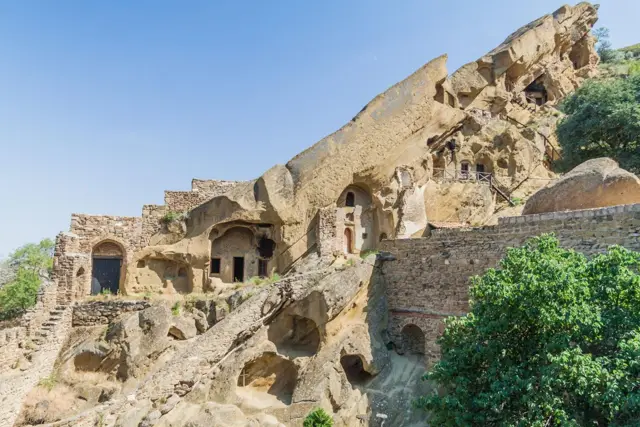
Gareja was an especially harsh place. Water is scarce here, the summer hot and dry, and the winter cold and windy. It was this very setting that Saint David chose for an ascetic life. He made a small cell in the rock and spent his days in prayer, fasting and solitude.
Saint David was soon joined by his faithful disciple Saint Lucian. Church traditions keep many stories about their life in the wilderness, which reflect the extreme simplicity and spiritual devotion in which the first fathers of Gareja lived. Gradually other monks gathered around them, and the small solitary dwelling became a true monastic community.
One of the best-known traditions in the history of David Gareja is connected with Saint David's journey to Jerusalem. The saint wished to go on pilgrimage to the Holy Land and set out for Jerusalem with his disciples. When he approached the city and saw the holy places from afar, out of a sense of his own unworthiness he did not dare to enter Jerusalem.
According to tradition, David took three stones from the hill where he stood as a blessing from the Holy Land and decided to return to Georgia. That same night it was revealed to the Patriarch of Jerusalem that a man of God from Georgia had taken away with him a great part of the city's grace. Saint David was overtaken and made to return two of the three stones, but he was allowed to take one to Georgia. This stone became a special holy relic in the spiritual tradition of David Gareja.
After the end of Saint David's labours, his disciples continued his work. His tomb became one of the monastery's chief holy places, and monastic life in the Gareja wilderness gradually expanded. Over the centuries a monastic system made up not of one but of many monasteries took shape on this vast territory.
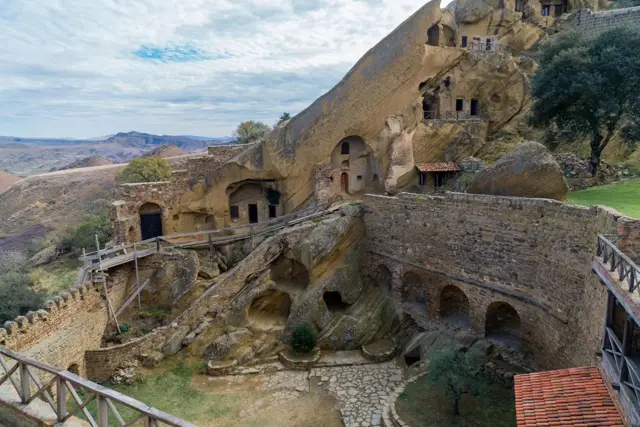
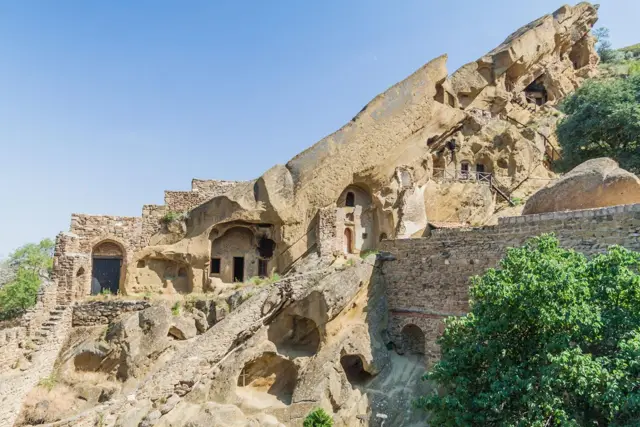
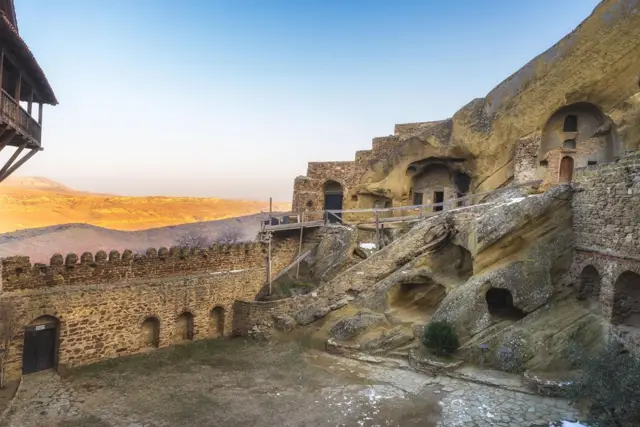
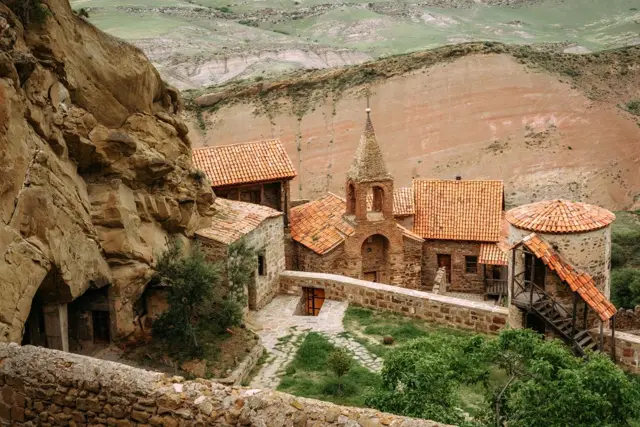
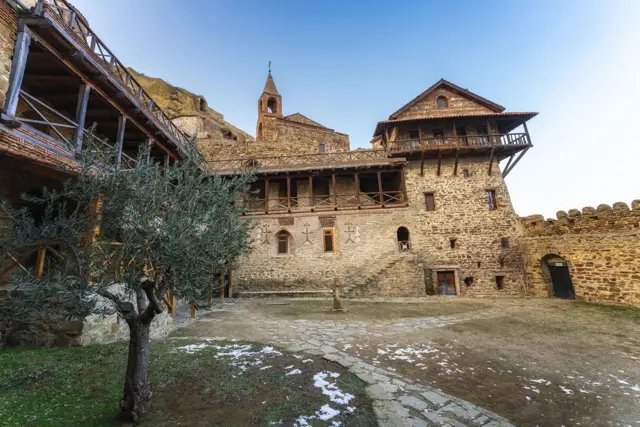
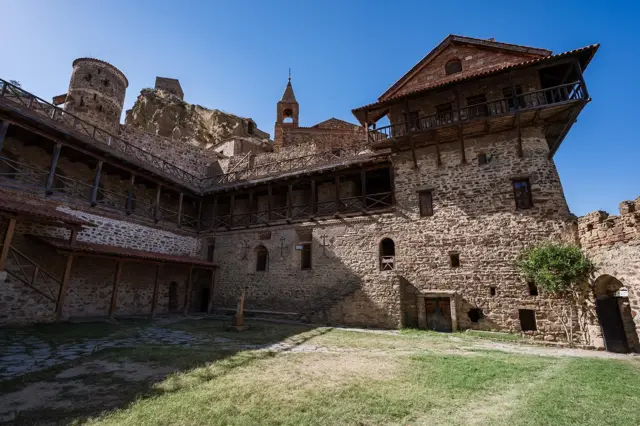
Connected with the David Gareja complex are such famous monasteries as the Lavra of David, Udabno, Bertubani, Natlismtsemeli and others. Hundreds of cells, chapels, churches, refectories and service spaces were carved into the rocky slopes. Thus the natural rock gradually became part of a vast monastic world.
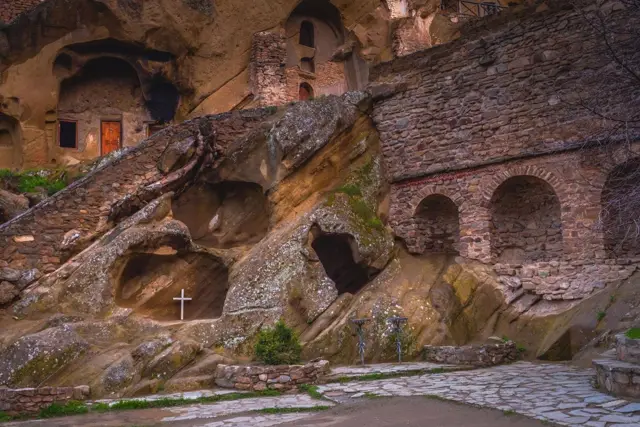
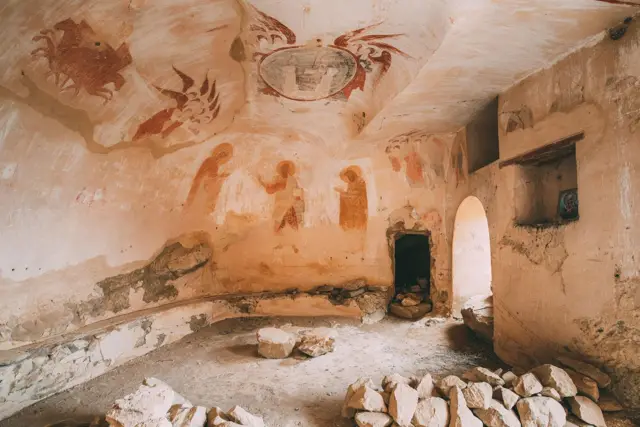
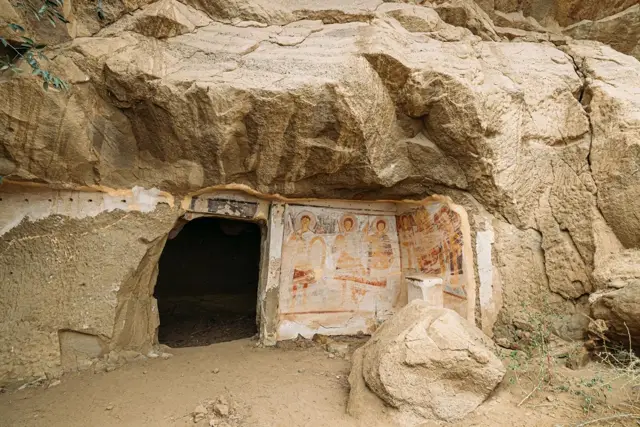
Architecturally, David Gareja has a completely different character from Georgia's other great monasteries. Here architecture is written directly into the natural landscape. Many churches and monks' cells are carved straight into the rock, and natural caves were enlarged as needed and turned into church or living spaces.
In the Gareja wilderness obtaining and storing water was especially important. Because of the dry climate the monks created rock-cut channels and cisterns that collected rainwater. These engineering solutions show clearly how a large monastic community was able to live for centuries in such harsh natural conditions.
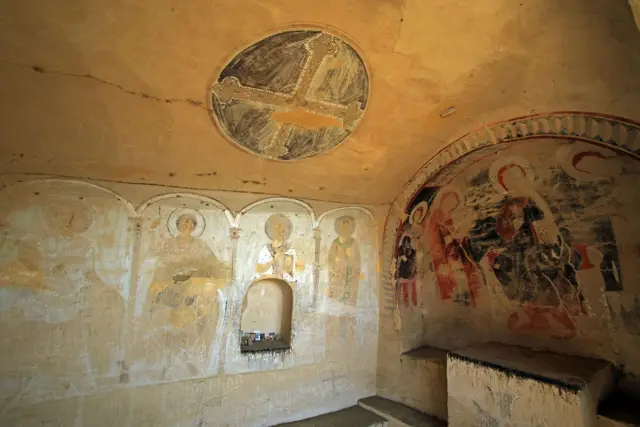
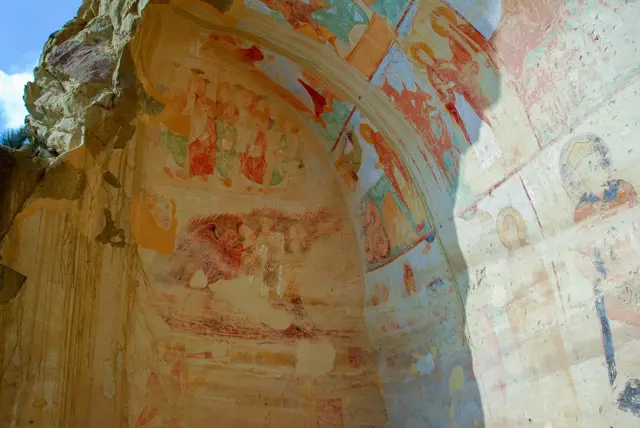
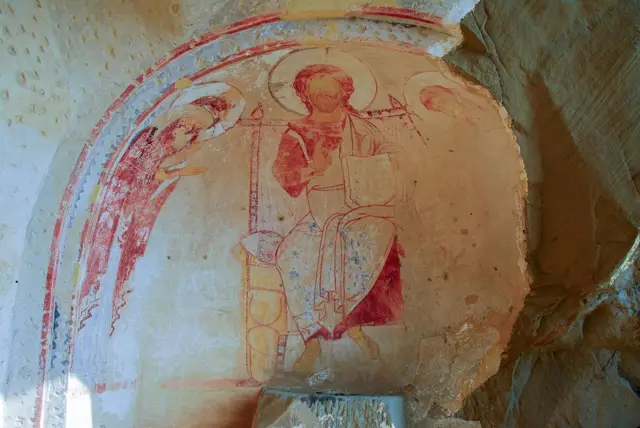
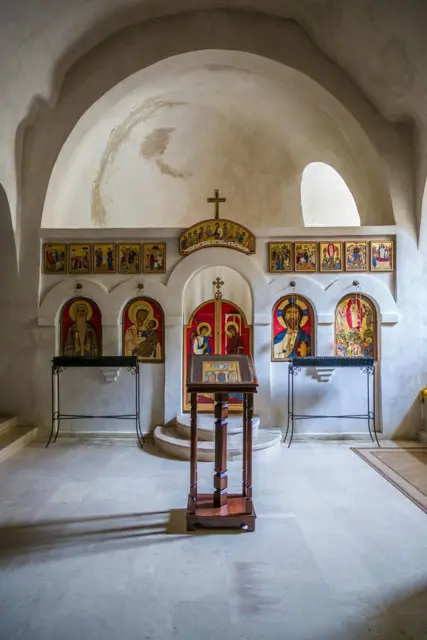
The greatest cultural treasure of David Gareja is its medieval frescoes. Especially important paintings survive at Udabno and in other rock-cut churches. Here are scenes from the life of Christ, images of the Mother of God and the saints, and also portraits of Georgian kings and historical figures.
The Gareja frescoes are a most important source for the study of the development of medieval Georgian painting. Some of them are especially significant because they preserve images of Georgia's historical rulers. Here monastic art brings together Christian themes and the memory of Georgian state and cultural history.
David Gareja was not only a dwelling of hermit monks. Especially in the 11th to 13th centuries, in Georgia's Golden Age, it developed into an important educational and cultural centre. Scribes, copyists of manuscripts, painters and clergy worked here. The monasteries took part in the development of Georgian written culture and Christian learning.
The history of David Gareja, however, is not made up only of periods of growth. Because of Georgia's geographical position and the monastery's frontier setting, the complex was many times the target of attack and plunder by foreign conquerors. The monasteries were damaged and monks died, but monastic life was restored again and again.
An especially tragic place in Gareja's history is held by the events of 1615. According to Georgian Church tradition, the army of Shah Abbas I of Persia plundered the monasteries of David Gareja at Eastertide and killed many monks. The fathers of Gareja who died as martyrs were canonised by the Orthodox Church of Georgia and are known as the Martyred Fathers of Gareja.
According to tradition, the monks knew of the approaching danger, but they did not abandon the monastery or their prayer. Their martyrdom became one of the strongest examples in the history of David Gareja of faithfulness to the Christian faith and spiritual steadfastness.
In the following centuries too the monastery had many difficult periods. Political instability, wars and the country's economic weakening also affected monastic life. Nevertheless, the spiritual tradition of David Gareja did not disappear.
In the Soviet period monastic life ceased and part of the territory was also used for military purposes, which caused additional damage to the historical complex. After Georgia regained its independence, monastic life revived at David Gareja, and special importance was given to protecting its historical and spiritual heritage.
Today part of the David Gareja complex lies near the state border between Georgia and Azerbaijan, and the territorial question of some historical monasteries is still a subject of discussion between the two countries. Despite present-day political questions, David Gareja remains one of the most important centres of Georgian Orthodox and cultural heritage.
Today monastic life continues at the Lavra of David. Here pilgrims especially honour Saint David of Gareja, his tomb and the ascetic tradition that began in this wilderness almost fifteen centuries ago.
David Gareja is the place where Georgia's Christian history is imprinted directly in the rock. From the first cells of Saint David and Lucian to the many monasteries, from the tradition of the holy stone brought from Jerusalem to the unique medieval frescoes, from the cultural flowering of the Golden Age to the martyrdom of the fathers of Gareja, this place brings together many important periods of Georgian history.
David Gareja Monastery remains today one of the greatest symbols of the Georgian Orthodox faith, ascetic life, cultural heritage and spiritual steadfastness: a monastery created in the wilderness where, for almost fifteen centuries, prayer, history and the rocky landscape have become one whole.