Bodbe Monastery
In the valley of the Alazani, in the breath of holiness, rests Saint Nino, she who brought us the faith as light. Her spring still rises from the earth today, like the eternal voice of hope.
- Region
- Kakheti
- UNESCO
- No
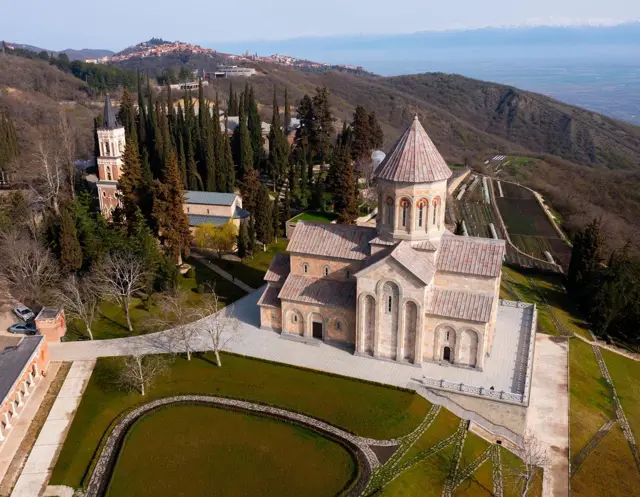
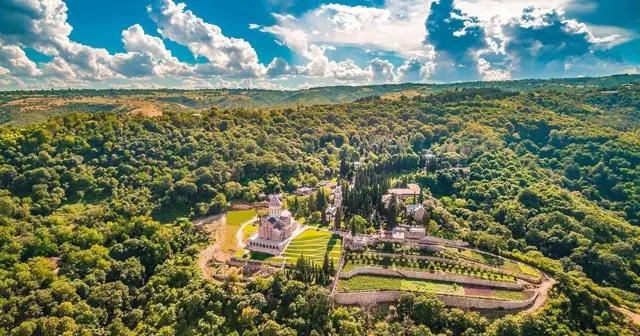
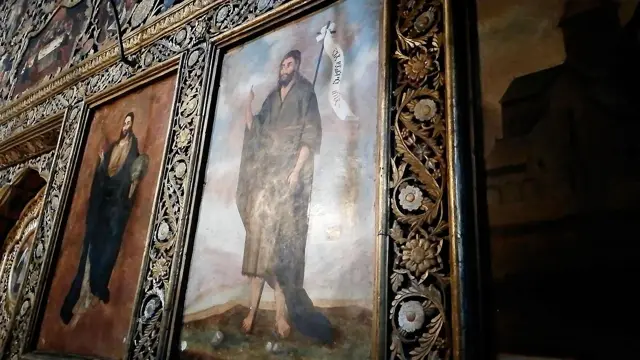
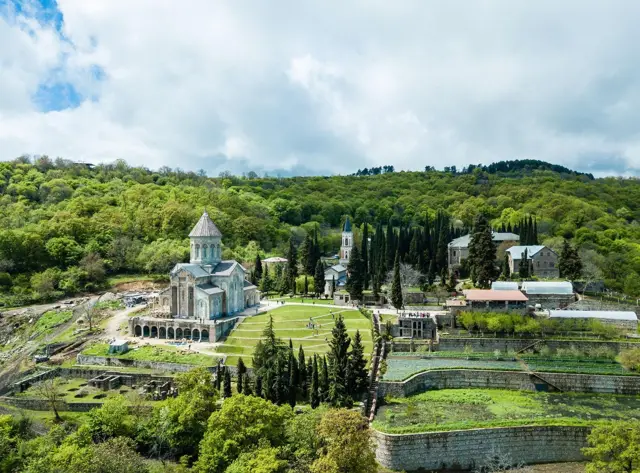
The Bodbe Monastery of Saint Nino is one of the holiest and most important places of pilgrimage in Georgia. It stands in Kakheti, near Sighnaghi, against beautiful views of the Alazani valley and the Caucasus mountains. Yet Bodbe's special significance lies first of all not in its natural setting or its architecture, but in Saint Nino, the Enlightener of Georgia, who preached Christianity in Kartli in the 4th century and whose tomb is located precisely here.
Saint Nino's work is linked with one of the most important turning points in Georgian history. A young Christian woman from Cappadocia, she came to Georgia with the blessing of the Mother of God and the desire to preach the Christian faith. According to Georgian Church tradition, she carried a cross made of grapevine branches, bound with her own hair, which later became one of Georgia's foremost Christian treasures.
Saint Nino finally settled in Mtskheta, where her preaching became the foundation of Georgia's conversion. The healing of Queen Nana and her conversion to Christianity are linked with her name. Later King Mirian III also accepted the Christian faith. According to Georgian Church tradition, after this, in the 4th century, Christianity became the state religion of Kartli.
Saint Nino's work in Mtskheta is linked with the building of the first church of Svetitskhoveli and the raising of the Christian cross on the hill of Jvari. But after the conversion of Georgia the saint's mission did not end. She continued Christian preaching in other parts of the country and finally set out for eastern Kakheti.
It is here that the special history of Bodbe begins. In the last period of her life Saint Nino preached in Kakheti and introduced the local people to the Christian faith. The last days of her life are connected with Bodbe, where the saint died after a serious illness.
When news of her approaching end spread, clergy and faithful gathered around Saint Nino. According to Church tradition, in the last days of her life she told them about her life, her coming to Georgia and her Christian preaching. This account took an important place in the later written tradition of Saint Nino's life.
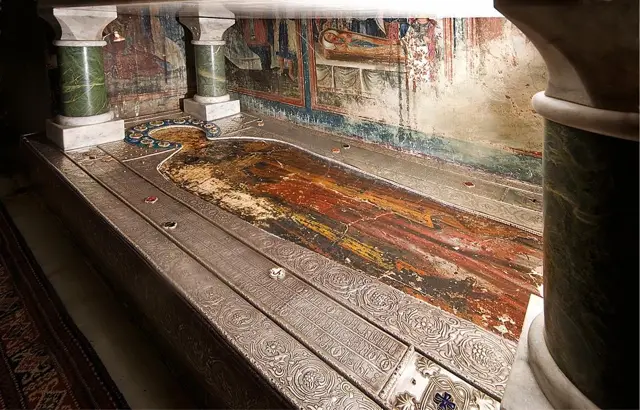
Saint Nino reposed around the year 338. King Mirian III wished to translate her remains to Mtskheta, where Georgia's new Christian centre was taking shape. But according to Georgian Church tradition, the saint's body could not be moved from its place. This was understood as God's will, and Saint Nino was buried precisely at Bodbe.
King Mirian III ordered a church to be built over her grave. Thus Bodbe became a holy place from the very first century of Georgia's conversion. Saint Nino's tomb gradually became one of the chief shrines of the Georgians and for centuries drew countless pilgrims from every corner of the country.
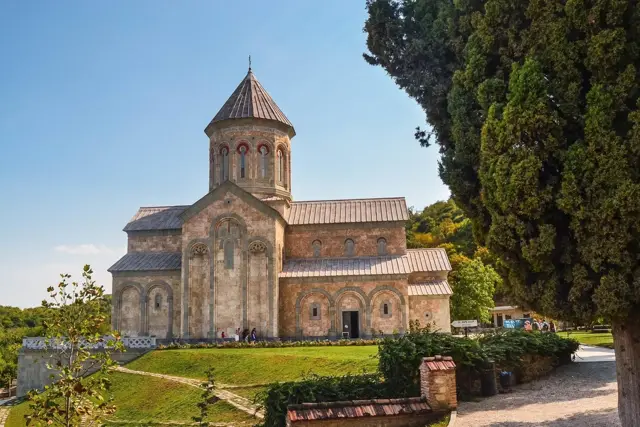
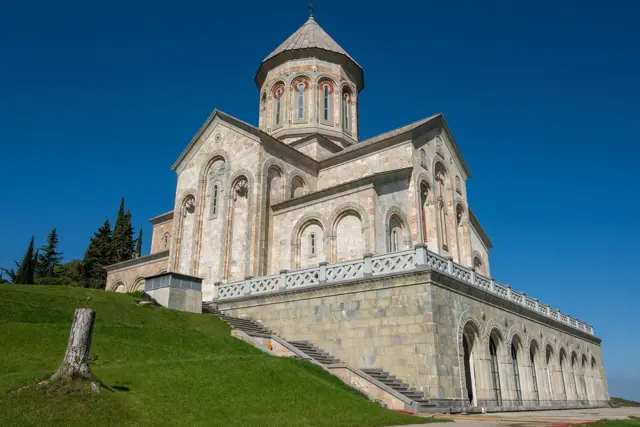
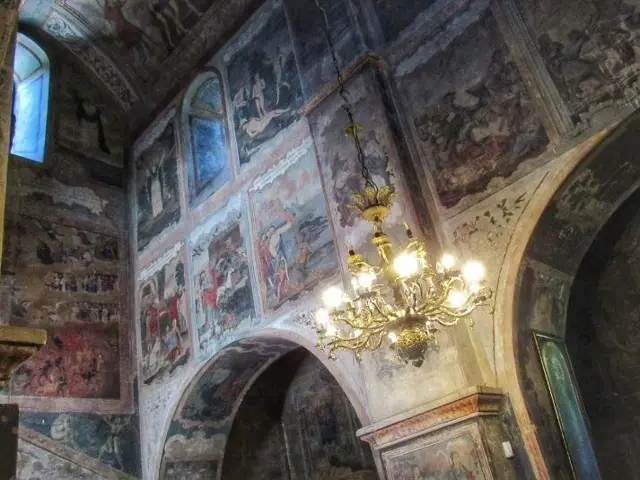
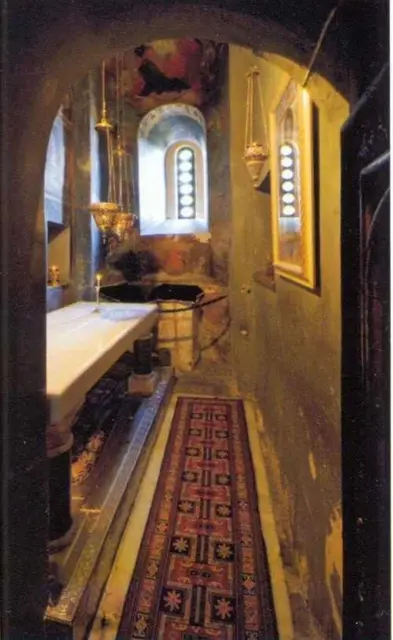
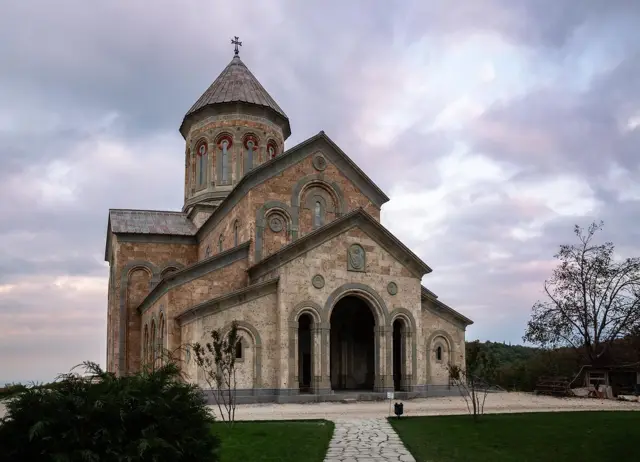
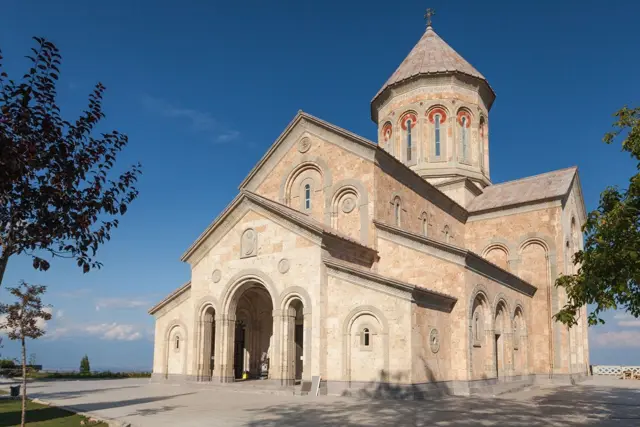
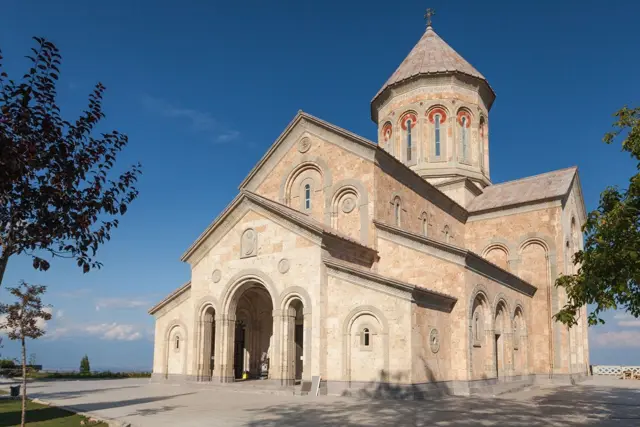
The main church of Bodbe is today consecrated in the name of Saint George. In this church lies the tomb of Saint Nino, the monastery's chief holy place. The architectural appearance of the present church reflects the changes and restorations of different historical periods, since the original 4th-century building has not survived in its present form.
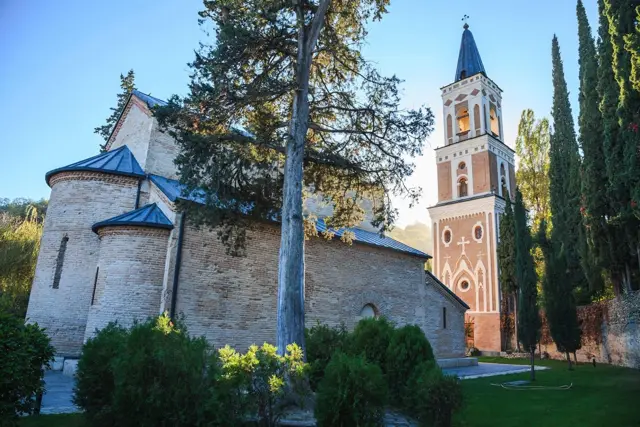
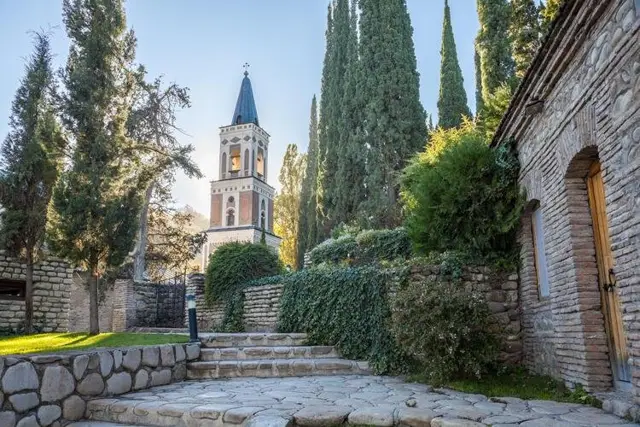
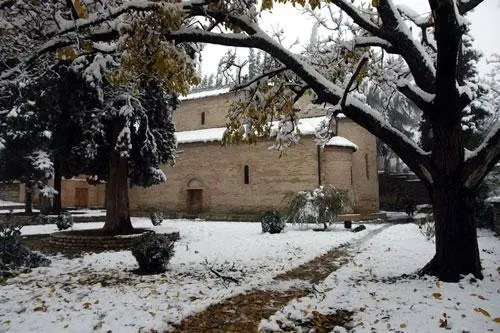
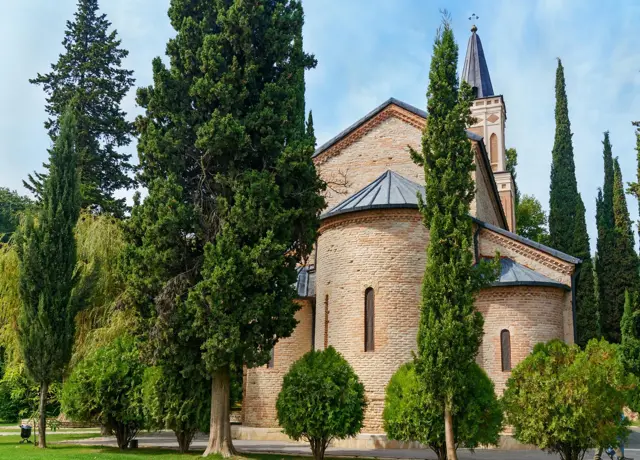
Over the centuries Bodbe Monastery was rebuilt, restored and enlarged many times. Its architecture bears traces of different periods of Georgian history. Besides the main church, the present monastery complex includes other church and monastic buildings that serve the daily life of the functioning convent.
Bodbe's special significance is not limited to Saint Nino's tomb. In the Middle Ages it became one of the important church centres of Kakheti. There was an episcopal see here, and the monastery took an active part in the spiritual and cultural life of the region.
The kings and nobles of Georgia held Bodbe in special honour. Saint Nino was recognised as the Enlightener of Georgia, and protecting her tomb was regarded as a matter of national importance. In different periods the monastery received donations, lands and other help, which ensured its development and the continuation of its spiritual work.
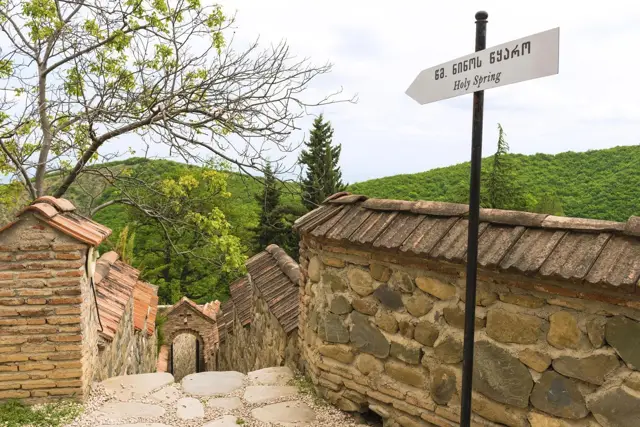
An important place in the history of Bodbe is held by Saint Nino's spring. Below the monastery, towards the gorge, there is a spring that Church and popular tradition connect with Saint Nino. For centuries believers have come here in prayer and taken the water as a blessing. Today a small chapel space dedicated to Saint Nino has also been arranged at the spring.
For pilgrims the spring has acquired special significance. Many people visit it with faith and in hope of healing. Yet Bodbe's chief holy place remains the tomb of Saint Nino, before which Georgians have prayed for centuries.
The monastery's natural surroundings also create a special atmosphere. From Bodbe there is a wide view over the Alazani valley and the Caucasus mountains. Surrounded by gardens and greenery, the monastery gives a sense of peace and solitude that especially suits its monastic purpose.
In the 19th century, after Georgia's incorporation into the Russian Empire, a new stage began in the history of Bodbe. Monastic life changed in different periods, but Saint Nino's tomb remained an important place of pilgrimage. Later a convent developed at Bodbe, and important educational and charitable work was carried on here as well.
The Soviet period proved especially hard. Under the atheist authorities monastic life ceased, and the Bodbe complex lost a large part of its original function. Nevertheless, the people's veneration of Saint Nino's tomb did not disappear, and Bodbe remained a holy place in the spiritual memory of the Georgians.
After Georgia regained its independence, the Bodbe convent revived. Monastic life was restored, various parts of the complex were renewed, and Bodbe once again became one of the most active and best-known Orthodox monasteries in Georgia.
Today a community of nuns lives in the monastery, daily services are held, and believers from many countries of the world come on pilgrimage to Saint Nino's tomb. The feast day of Saint Nino is especially important, when great numbers of pilgrims gather at Bodbe.
Bodbe's special significance lies in the fact that Saint Nino's earthly life ended here, yet it was precisely from here that the centuries-long history of the veneration of her tomb began. The woman who preached Christianity in Georgia, helped bring about the conversion of King Mirian and Queen Nana and shaped the country's Christian future finally rests in this peaceful place in Kakheti.
Bodbe Monastery is the place where the history of Georgia's conversion is linked with special force to the personal story of Saint Nino. Her great mission begun in Mtskheta, the events connected with Svetitskhoveli and Jvari, her preaching in Kakheti, her death at Bodbe and her burial here form one complete spiritual journey.
Bodbe remains today the eternal resting place of Saint Nino and one of the holiest places of the Georgian nation: a monastery where the tomb of the Enlightener of Georgia, almost seventeen centuries later, still unites faith, prayer and the living memory of Georgia's Christian history.