Mamadaviti Church
A monk carved a cell in the rock and gave the city the gift of prayer, before setting out for the desert of Gareja. His memory remained on the mountain and generations preserved it, while below Tbilisi grew, fell into ruin and rose again. Today, where solitude once reigned, the great souls of Georgia rest, and the prayer that began centuries ago has never fallen silent.
- Region
- Tbilisi
- UNESCO
- No
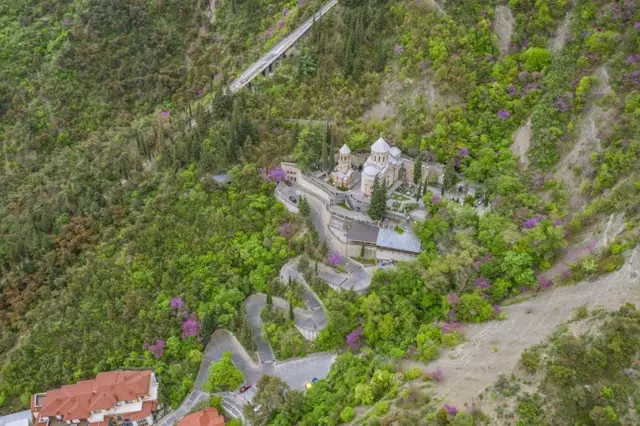
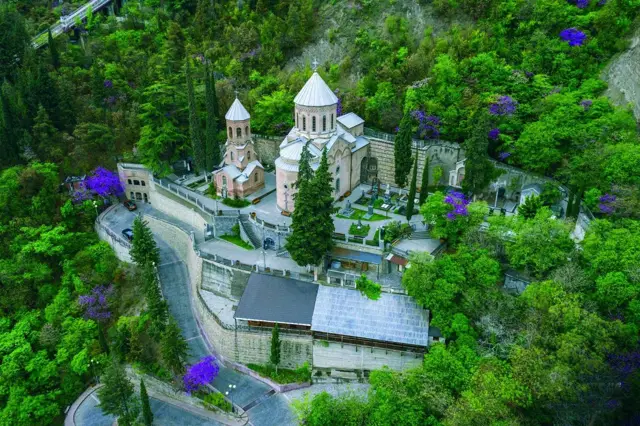
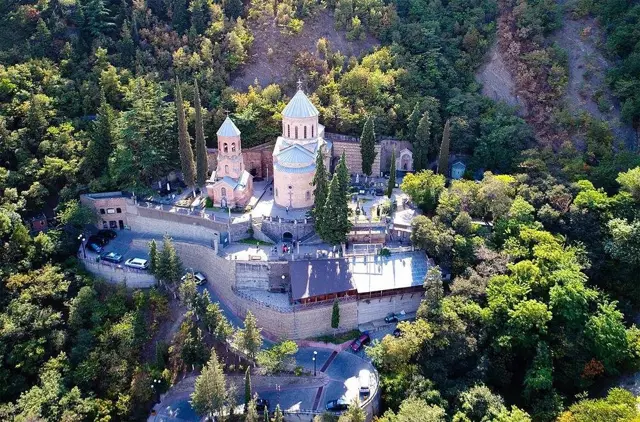
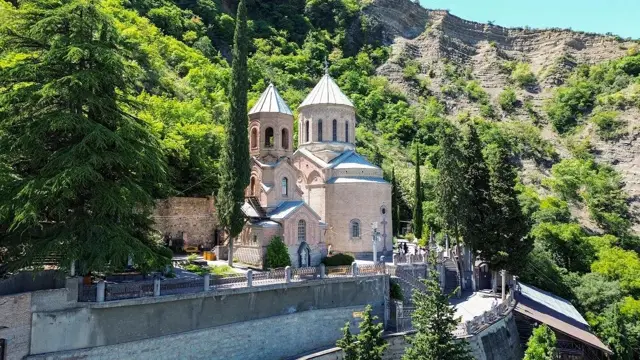
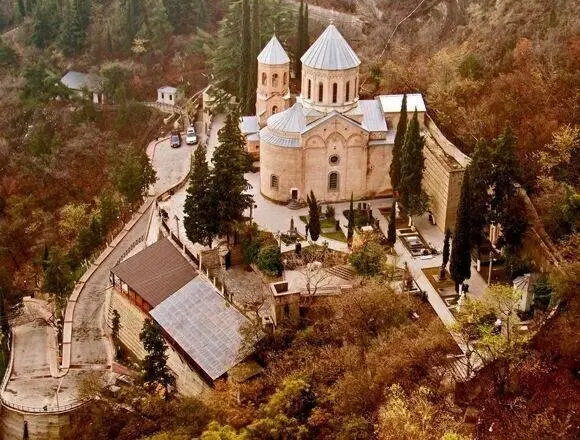
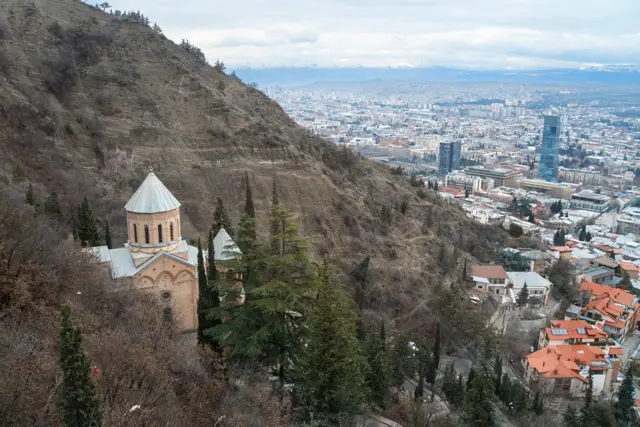
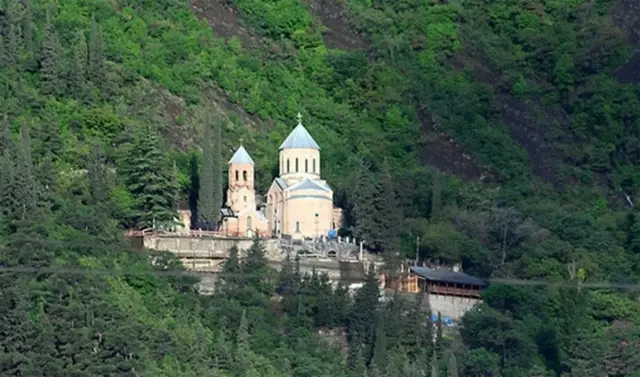
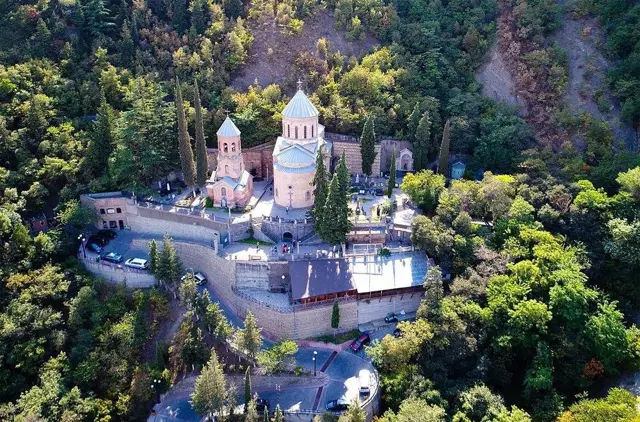
The church of Mamadaviti is a holy place that carries one of the oldest Christian traditions of Tbilisi. It stands on the eastern slope of Mtatsminda, on a rocky hillside above the city, from which a wide panorama of Tbilisi opens out. The present church was built in the 19th century, but the spiritual history of this place begins much earlier, in the 6th century, and is directly linked with one of the outstanding saints of the Church of Georgia: David of Gareja.
According to Georgian Church tradition, David of Gareja was one of the Thirteen Assyrian Fathers who came to Georgia from Antioch. Their work served to strengthen the Christian faith and develop monastic life. Before withdrawing to the Gareja wilderness and laying the foundations of a great monastic tradition there, David settled for a time on the mountain rising to the west of Tbilisi.
According to tradition, Father David carved a cell into the rocky slope and set up a small chapel near it. Here he lived in solitude, prayed and preached the Christian faith to the people of the city. It was from his name that the mountain received one of its oldest names: Mount Mamadaviti, that is, the mountain of Father David.
Another important holy place is connected with the name of Saint David: the Mamadaviti spring. According to Church tradition, the spring is linked with the saint's prayer, and for centuries believers regarded it with special reverence. Going to the spring and taking its water became one of the pilgrimage traditions of Mamadaviti.
Later David left Tbilisi and moved to the rocky wilderness of Gareja, where he settled with his disciple Lucian. His work there laid the foundation of the great monastic centre of David Gareja, but in the memory of the people of Tbilisi the place where the saint had first lived and prayed was not forgotten.
By the 9th century there was already a small church dedicated to the Mother of God of Iveria on the mountain. Around the same time the name Mtatsminda, "holy mountain", spread, connected with Mount Athos. Thus one and the same place became known by two names: Mamadaviti kept the memory of Saint David, while Mtatsminda expressed its special Christian significance.
Over the centuries this holy place above Tbilisi shared the country's hard history. Invasions and political turmoil that struck the city damaged the churches of Mtatsminda more than once. Nevertheless, the memory of the place linked with Saint David did not disappear, and the destroyed shrine was restored again.
In 1542 the brothers Nikoloz and Davit Gabashvili built a monastery here connected with Saint David. This was a new stage of organised monastic life. The monastery existed for centuries, but by the 18th century it had greatly declined and, according to Vakhushti Bagrationi, had finally become empty.
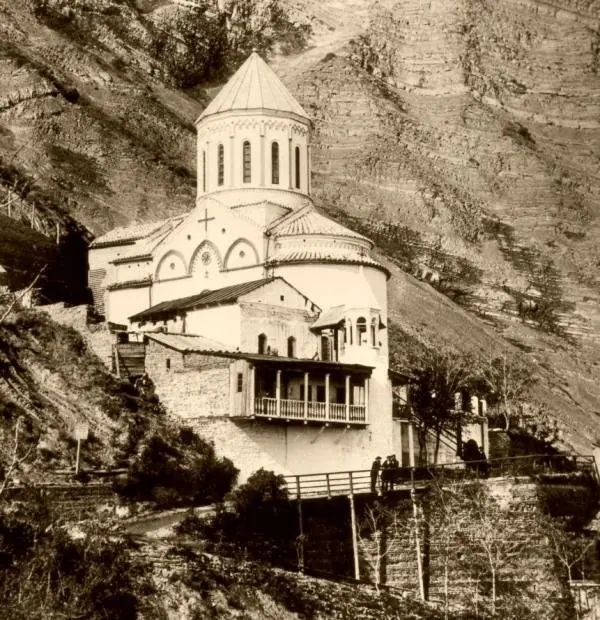
An important stage in the revival of Mamadaviti began at the start of the 19th century. In 1810, in the time of Catholicos Anton II, a small church was built here with donations from the people of Tbilisi. It was built of brick, had a wooden roof without a dome and was consecrated to the Transfiguration. For several decades it was this small church that served the faithful who climbed Mtatsminda.
As Tbilisi grew, the need arose to build a larger church at Mamadaviti too. On 4 October 1859 the foundations of the present church were laid. The people of Tbilisi took a special part in the construction: they not only donated money but also helped to carry building materials up the difficult mountain slope.
Because of a lack of funds the construction took a long time. On 24 September 1871 the still unfinished church was consecrated in the name of Saint David of Gareja. At that time it did not yet have a complete stone dome. Finally the construction, including the dome, was completed in 1879.
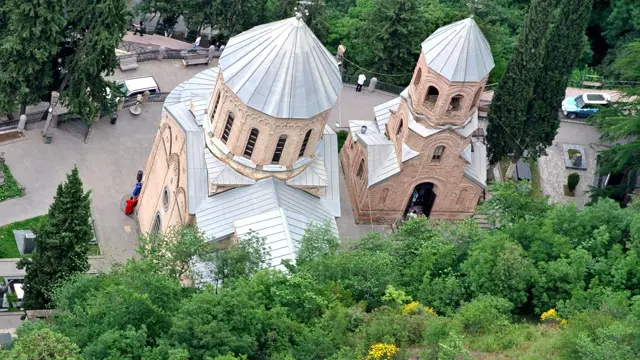
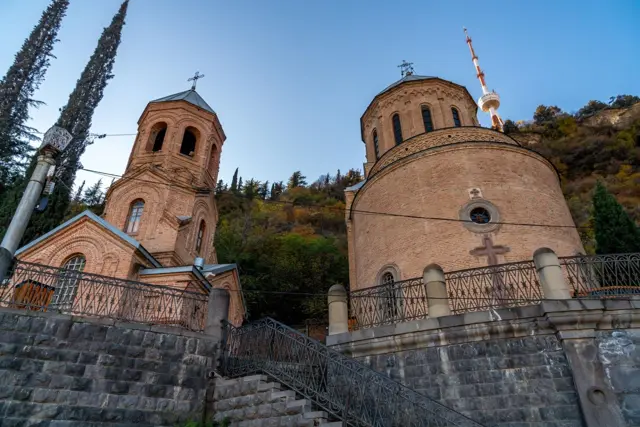
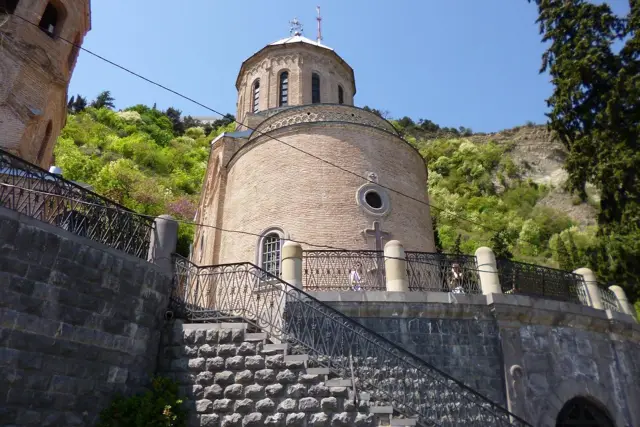
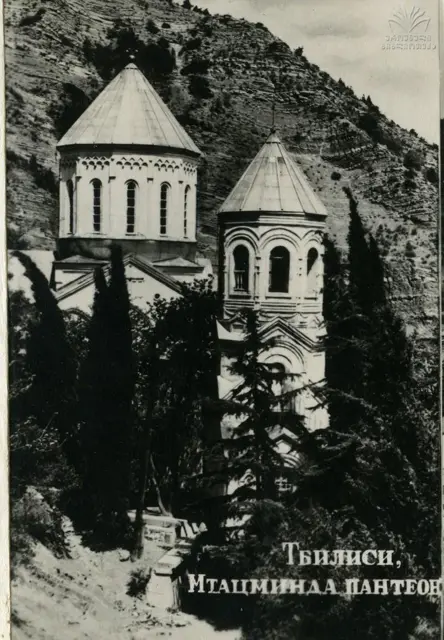
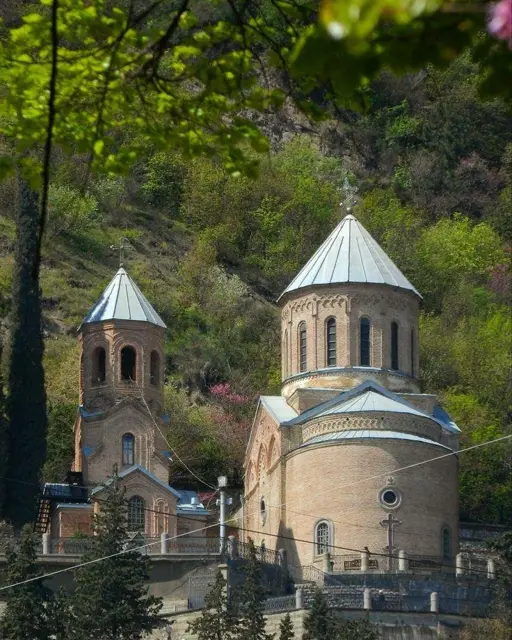
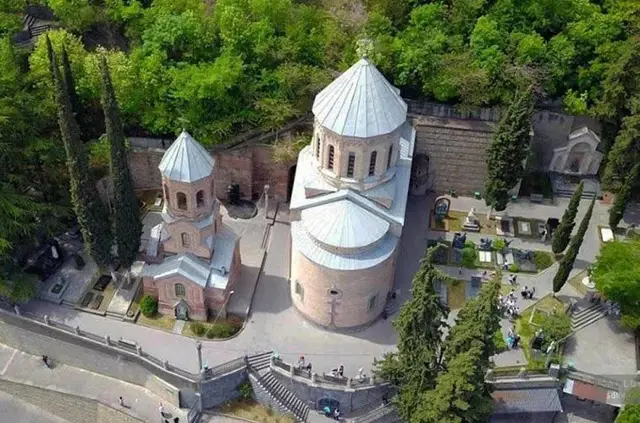
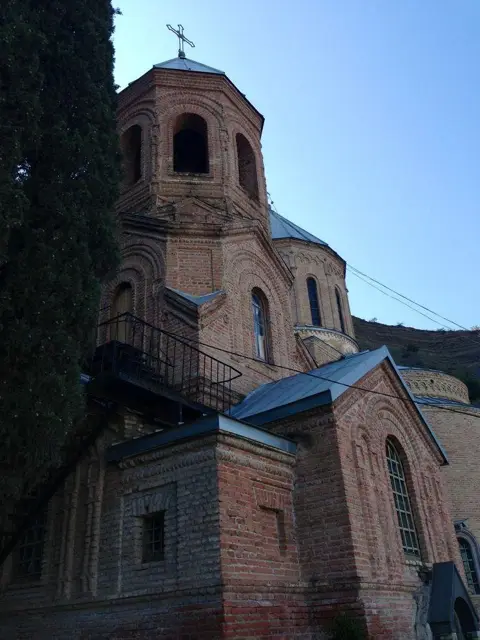
Architecturally, the church of Mamadaviti clearly shows an effort to preserve the traditional forms of Georgian church architecture. The tall drum of the dome, the pyramidal roof and the composition of the façades give the church a silhouette familiar from Georgian churches. Its position on the mountainside gives the building special monumentality: seen from below, the church seems to stand above Tbilisi.
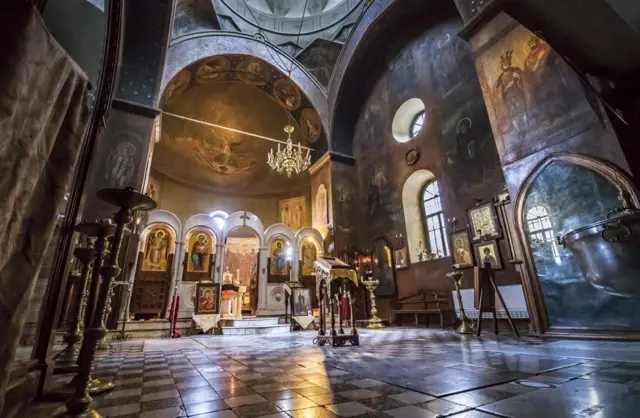
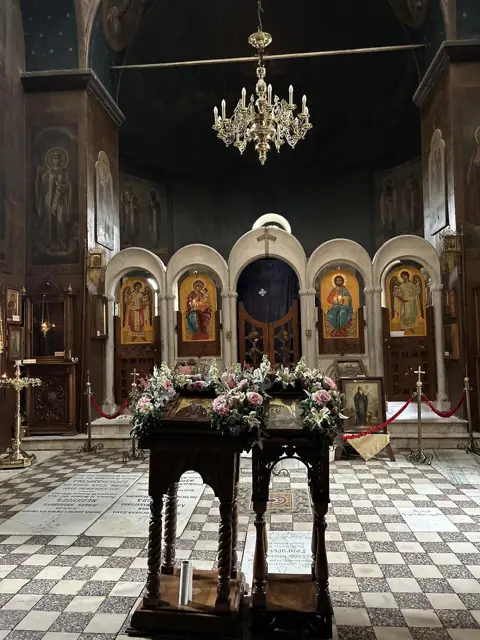
At the end of the 19th century the arrangement of the complex continued. The church walls were painted, and in 1896–1899 work connected with building a new bell tower was also carried out. In time the church of Mamadaviti again became one of the important places of prayer and pilgrimage in Tbilisi.
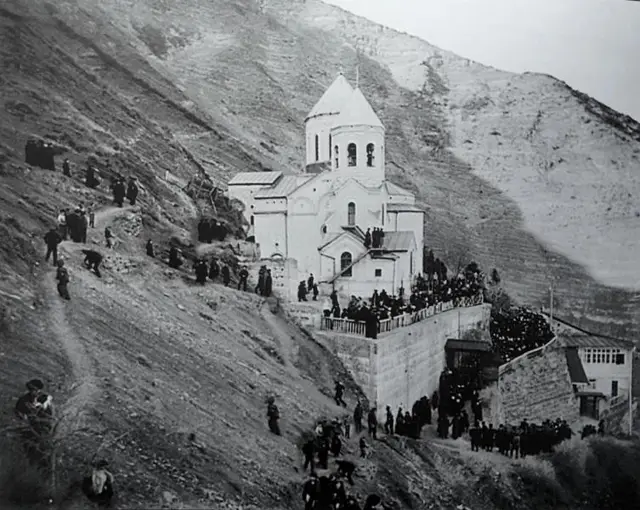
A special tradition connected with Mamadaviti is Mamadavitoba, dedicated to the memory of Saint David of Gareja and celebrated on the Thursday after the Ascension. In old Tbilisi it was one of the most notable church feasts. From the morning worshippers climbed the slope of Mtatsminda towards the church of Mamadaviti. This tradition handed down the relationship between the saint and the city from generation to generation.
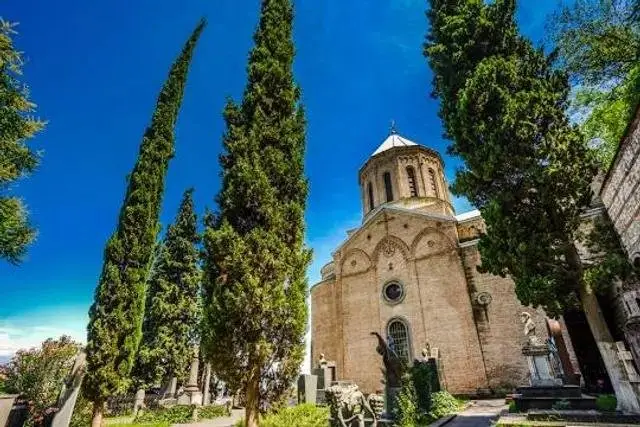
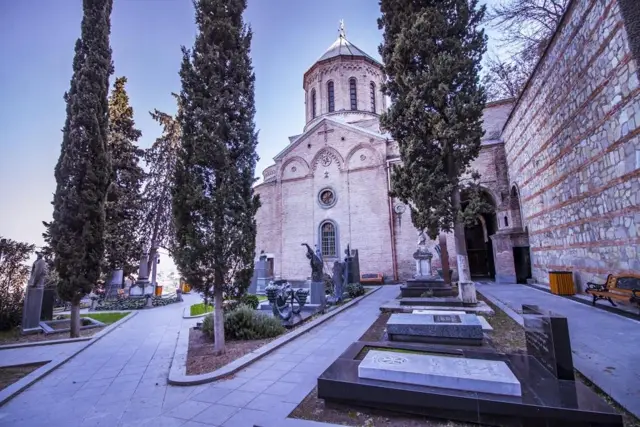
From the 19th century the church courtyard acquired another special significance. Georgian writers and public figures began to be buried here. In 1829 Alexander Griboyedov was buried in the courtyard of the Mamadaviti church. Later Ilia Chavchavadze, Akaki Tsereteli and other outstanding representatives of Georgian culture were laid to rest here.
In 1929 the Mtatsminda Pantheon of Georgian writers and public figures was officially opened in the church courtyard. From then on, the spiritual and national memory of Georgia became especially closely bound together in the space of Mamadaviti. Beside the church rest people who created the country's literature, art, science and public life.
Yet Mamadaviti's main significance does not begin with the pantheon. The history of this mountain is much older. Before the graves of famous people appeared here, there stood on the rocky slope the cell of a monk and a small chapel. It was Saint David's prayer and his memory that made this place one of the most outstanding Christian holy places of Tbilisi.
Today the church of Mamadaviti is a functioning Orthodox church. Believers still climb Mtatsminda to pray, visit the place linked with Saint David and the spring, and from the church courtyard the whole of Tbilisi opens out before them.
Mamadaviti's special strength lies precisely in this continuity. Below, the city grew, fell, was rebuilt and changed over the centuries; on the mountainside, however, the name of Saint David remained. From the solitary cell of the 6th century to the 19th-century church and today's Tbilisi, one invisible thread unites this place: the prayer that began on the mountain centuries ago and has not ceased to this day.
Tbilisi changes constantly below it, yet Mount Mamadaviti still looks down on the city. Where David of Gareja once prayed in solitude, people still climb today with the same hope: to find peace, help and that spiritual silence which not even the noise of the centuries has been able to diminish.