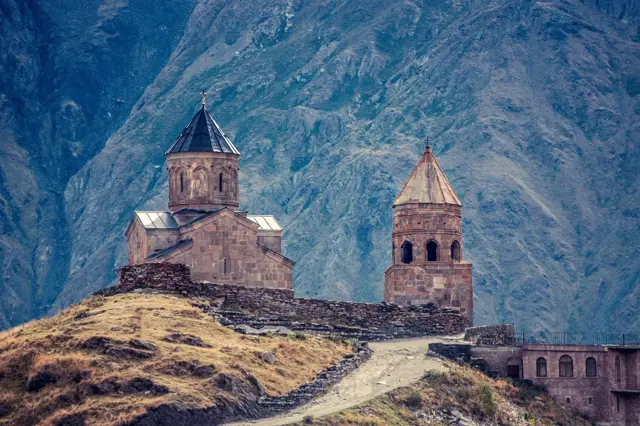
Gergeti Trinity Church
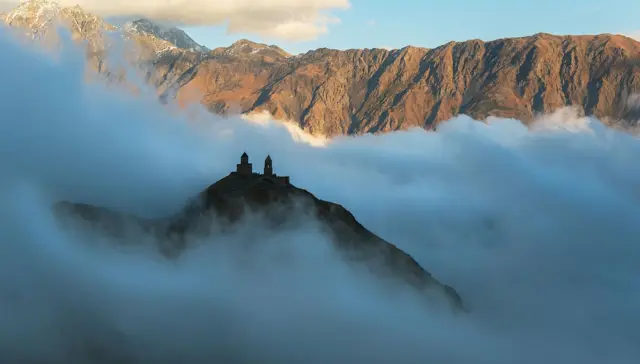
Between heaven and earth, at the foot of Mount Kazbek, Gergeti Trinity has stood unmoved for centuries, where faith has turned to stone and the mountain to prayer. This is the place where a person meets his own soul and God face to face.
- Region
- Mtskheta-Mtianeti
- UNESCO
- No
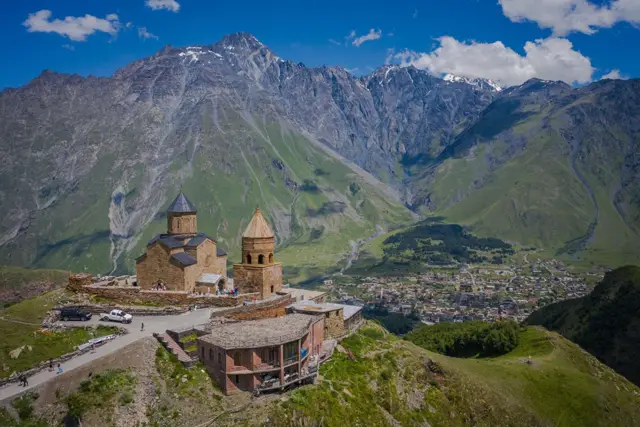
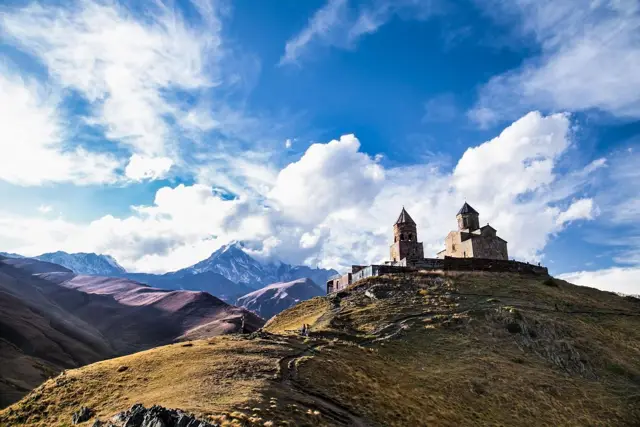
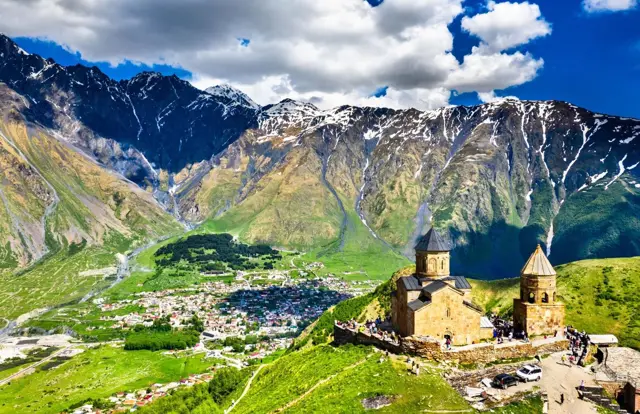
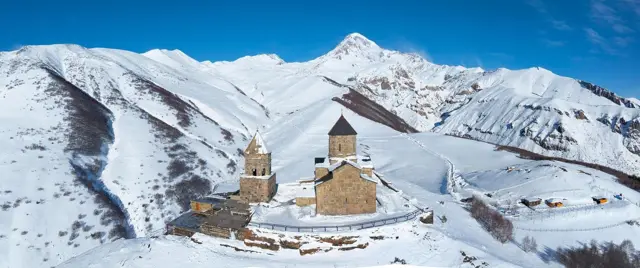
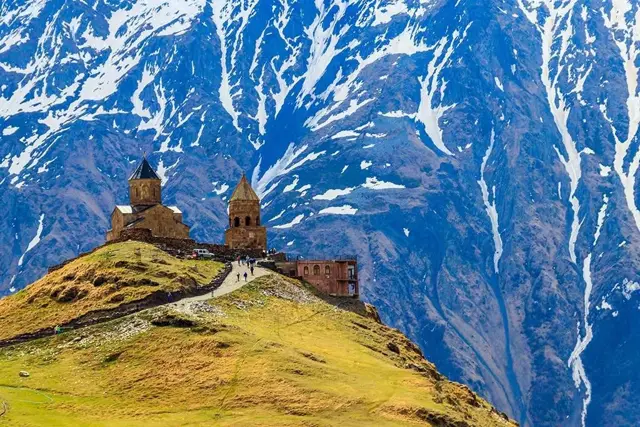
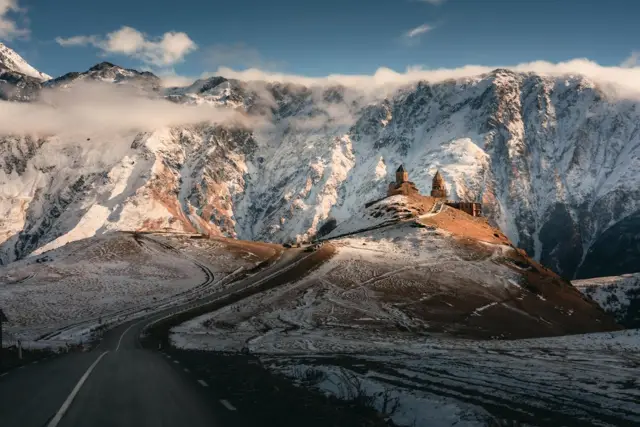
Gergeti Trinity (Holy Trinity) is one of the best-known and most distinctive Orthodox churches in Georgia. It was built in the 14th century and stands in the historical region of Khevi, near the village of Gergeti, above present-day Stepantsminda, at about 2,170 metres above sea level. Surrounded by the huge mountains of the Greater Caucasus, over the centuries the church became one of the most special symbols of Georgia's spiritual steadfastness, faith and historical endurance.
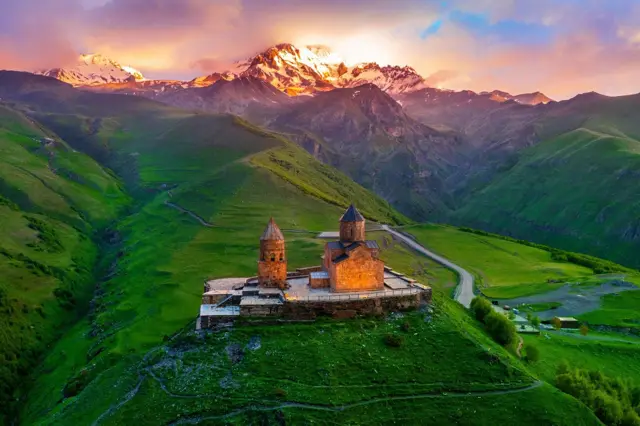
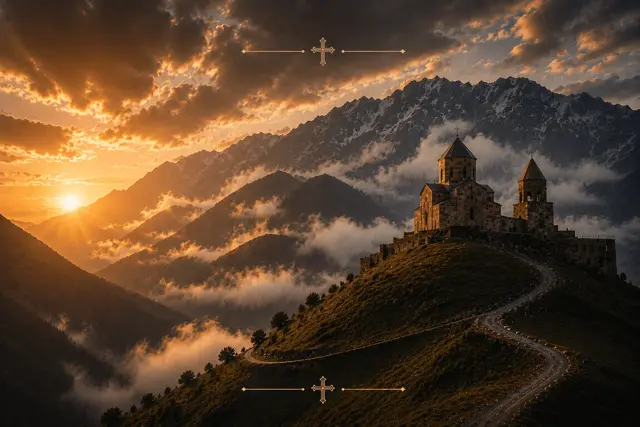
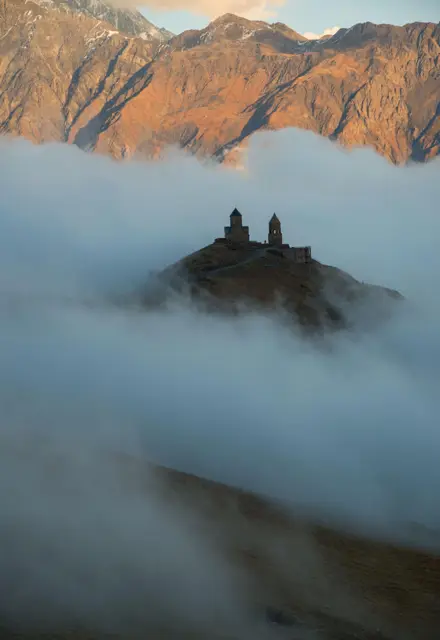
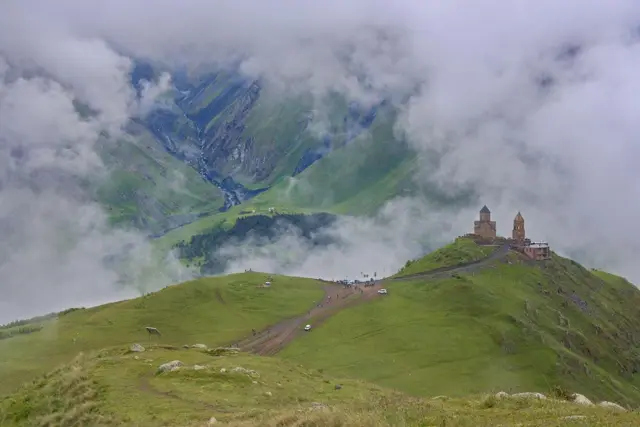
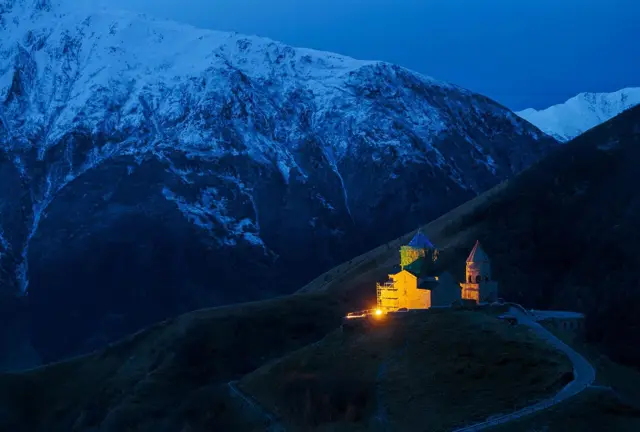
The location of Gergeti Trinity is of special importance. Raised on top of a high mountain, the church seems from afar to stand between heaven and earth. The harsh nature of the Caucasus, the silence of the mountains and the restrained architecture of the church create a setting that disposes one to solitude, calm and prayer. It is precisely this special unity with nature that defines the unique character of Gergeti Trinity.
The church was built in the 14th century, in a difficult period of Georgia's history. After the Mongol invasions and political instability, the country faced great challenges. Nevertheless, Christian life and church building did not cease in Georgia. Raised in this historical setting, Gergeti Trinity became an expression of the continuity of Georgian Orthodox tradition and of the spiritual steadfastness of mountain Georgia.
Historically, Gergeti Trinity played an important role not only in the religious life of the people of Khevi, but also in protecting the holy treasures of the Church of Georgia. Its high and hard-to-reach position created a natural refuge. When other parts of the country were threatened by enemy invasion or other great danger, some important church objects and holy relics were taken to mountain places for safety.
Georgian Church tradition also links Gergeti Trinity with the safekeeping of one of Georgia's greatest holy treasures: the cross of Saint Nino. According to tradition, in times of special danger Saint Nino's grapevine cross was kept here. For Georgians this holy relic has represented, since the 4th century, one of the chief symbols of the conversion of Georgia and the establishment of the Christian faith.
This circumstance gave Gergeti Trinity special significance. It was not merely a local shrine: the church became a place where, when necessary, holy treasures precious to the Georgian Church could be protected. The difficult mountain terrain, the harsh climate and the hard road gave it natural protection and made it a kind of spiritual fortress.
The history of Gergeti Trinity is closely bound up with Khevi and its people. For centuries the local inhabitants held the church in special honour. It was a place of worship, prayer and pilgrimage, where people prayed for the peace of their families and homeland, for health and for protection in times of trial. An important part of this centuries-old tradition survives to this day.
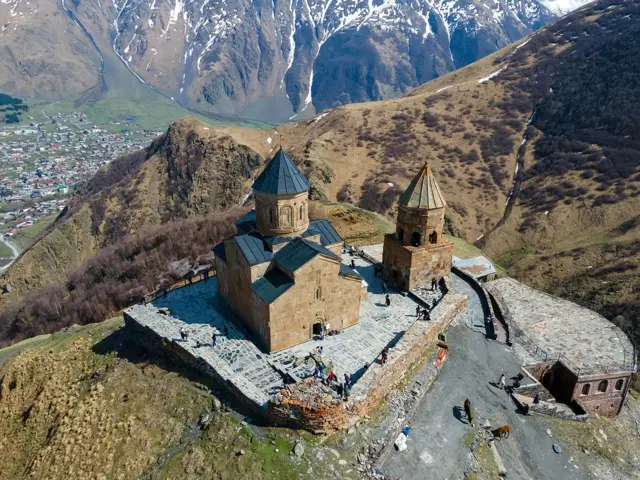
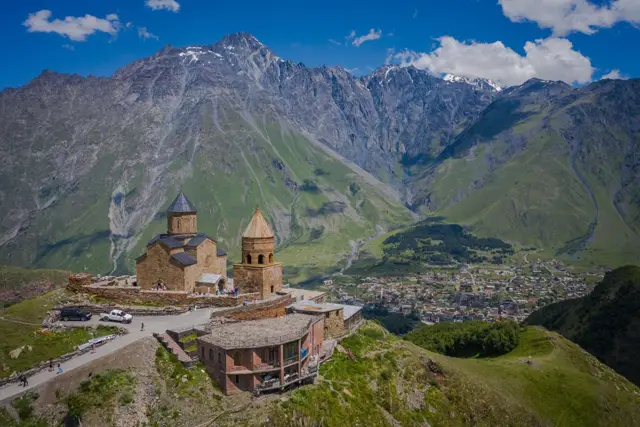
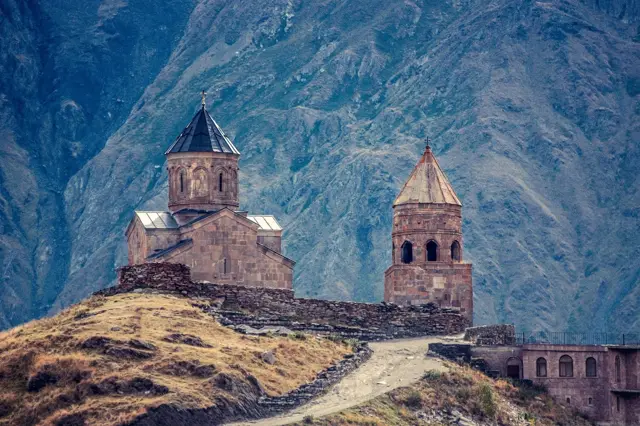
Architecturally, Gergeti Trinity is an outstanding example of Georgian medieval church architecture. The main building of the complex is a domed church built of local stone. Its forms are austere, balanced and monumental, blending especially well with the rocky, harsh environment of the Caucasus.
The façades of the church bear stone ornaments and decorative relief elements typical of Georgian medieval architecture. Even so, the building's overall appearance is restrained. Its beauty lies above all in its proportions, the natural colour of the stone and its harmonious unity with the surroundings.
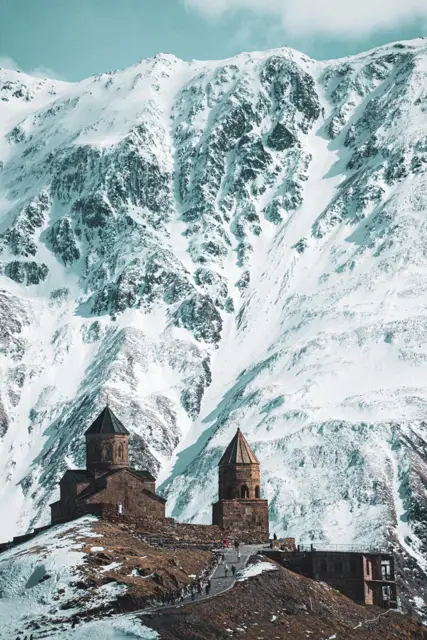
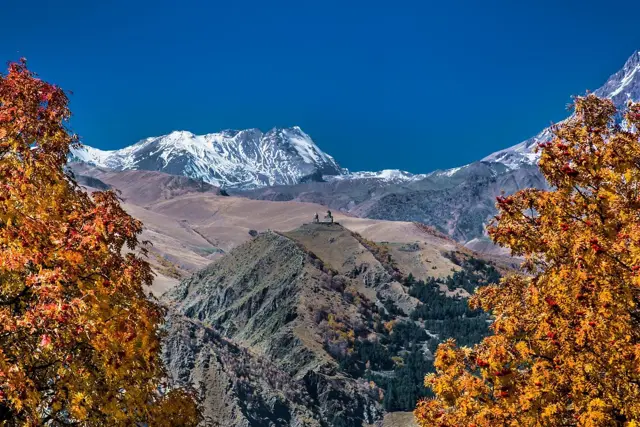
Beside the church stands a bell tower, an important architectural part of the complex. Together the church and the bell tower form the famous silhouette of Gergeti Trinity. Their position on a high plateau further strengthens the monumental character of the complex and makes a special impression from afar.
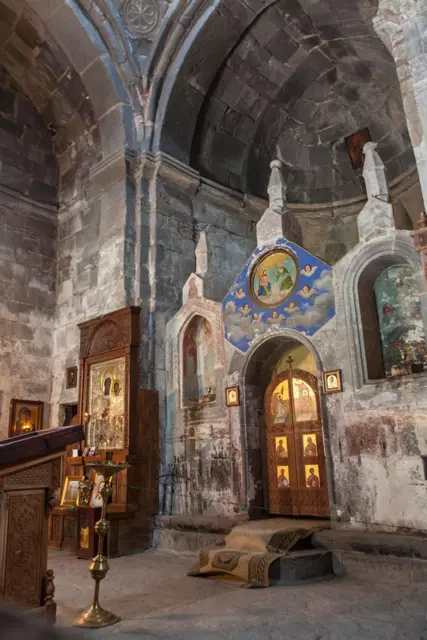
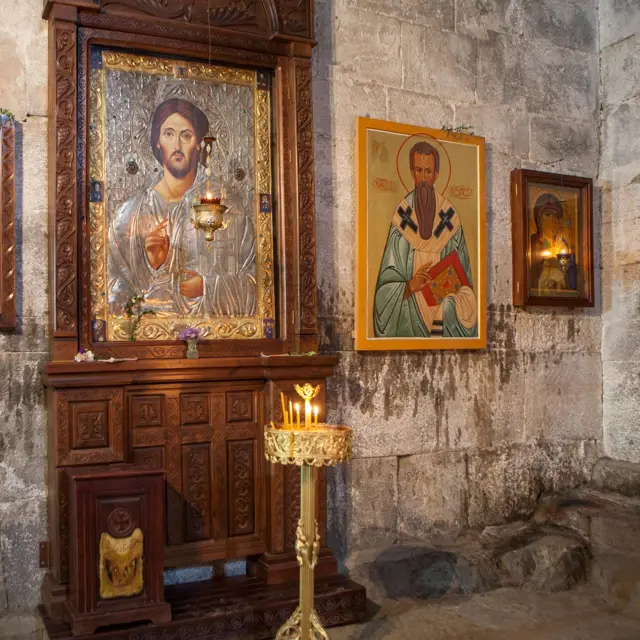
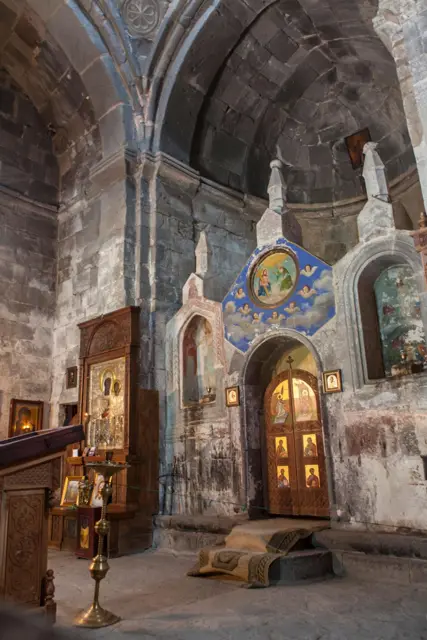
The interior of the church, like its exterior, is modest and austere. The stone walls, small windows and the stillness of the space create a setting where the main attention turns to prayer and spiritual concentration. This very simplicity is one of the main features of Gergeti Trinity: its spiritual power is felt not in decorative splendour, but in calm and in unity with its surroundings.
Over the centuries Gergeti Trinity lived through many difficult periods of Georgian history. Regional conflicts, pressure from foreign powers and political changes in the Caucasus more than once endangered Khevi. Nevertheless, the church on the high mountain survived and remained one of the main centres of local Christian life.
In this respect its geographical position was an important advantage. Many Georgian churches near large cities and main roads were damaged in wars, while reaching Gergeti Trinity was far more difficult. That is why for centuries it was a kind of natural spiritual fortress.
In the 19th century, after Georgia's incorporation into the Russian Empire, important changes began in the church life of the country. Later the Soviet period proved especially hard, when the atheist authorities severely restricted religious life. At Gergeti Trinity too regular church life declined, but the church was not destroyed and remained a holy place in the people's memory.
After Georgia regained its independence, Gergeti Trinity once again became part of active church life. Today services are held here, and the church is the destination of many faithful and pilgrims.
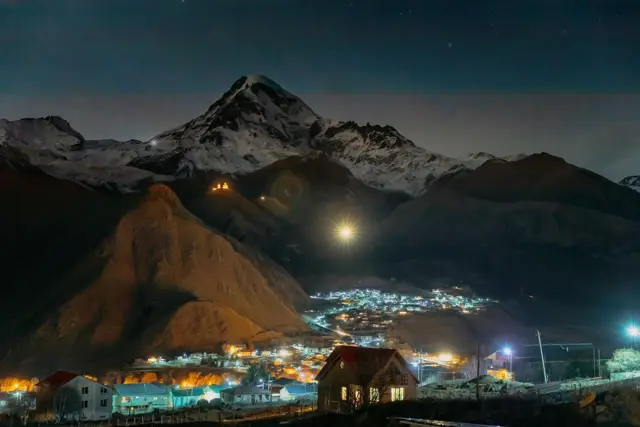
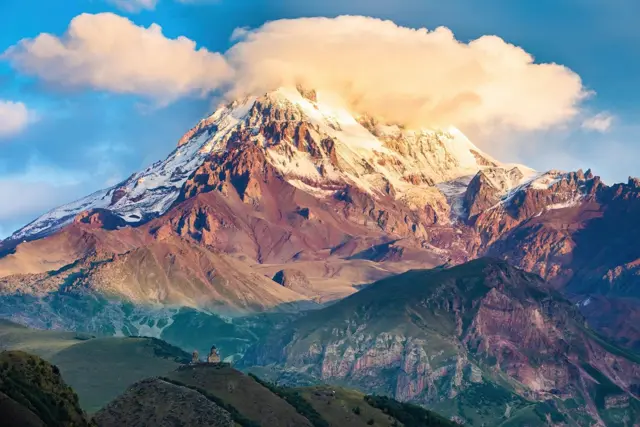
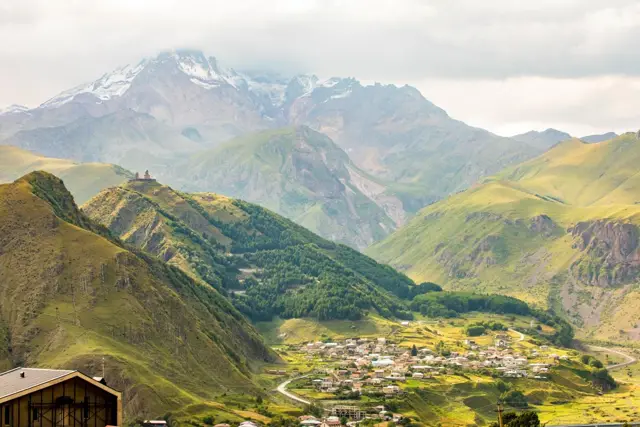
The special significance of Gergeti Trinity is also expressed in its natural setting. From the church there is a view over Stepantsminda, the Tergi valley and the peaks of the Caucasus. Especially impressive is Mount Kazbek, Mkinvartsveri, whose snow-covered summit rises behind the church and creates one of the best-known views in Georgia.
Today Gergeti Trinity is not only one of Georgia's best-known historical monuments, but a functioning Orthodox sanctuary. The modern road has made the church much easier to reach, yet the setting of the church on the high mountain still keeps the sense of solitude and spiritual calm that has characterised this place for centuries.
Gergeti Trinity is the place where Georgian history, the Orthodox faith and the nature of the Caucasus come together with special force. The tradition linked with Saint Nino's cross, the history of the protection of holy treasures, medieval Georgian architecture and the centuries-old Christian life of Khevi make it one of the outstanding places of Georgia's church heritage.
Gergeti Trinity remains today a symbol of Georgia's faith, steadfastness and spiritual height: a church raised in the high Caucasus that has stood for centuries as the silent guardian of the Georgian Christian faith.