Lamaria of Ushguli
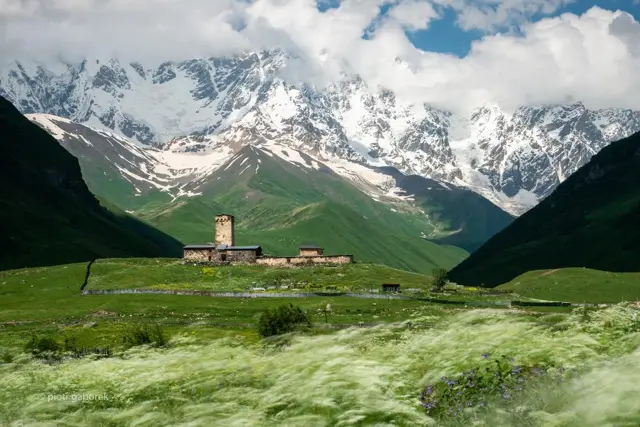
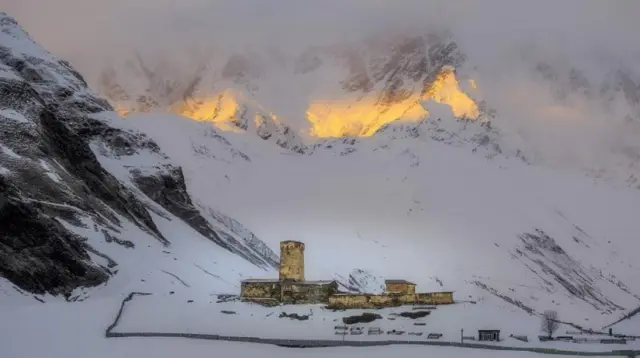
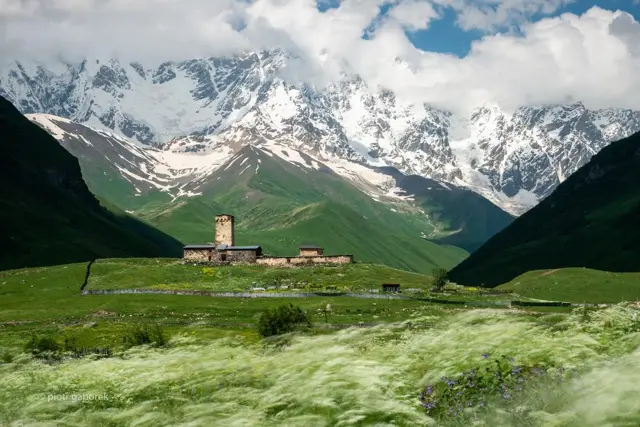
At the foot of Shkhara, where the clouds touch the towers, Lamaria has stood for more than a thousand years, the house of the Mother of God in the heart of the Caucasus. Here the wind is like prayer, and stone like memory. Generations have preserved this holy place as a light that never goes out in the lonely silence of the mountains.
- Region
- Svaneti
- UNESCO
- No
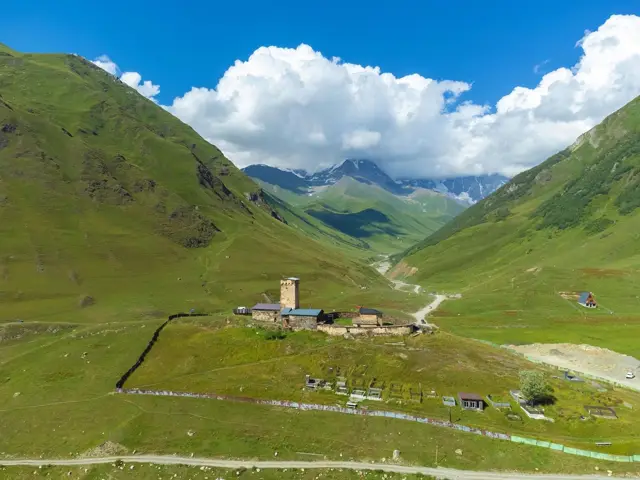
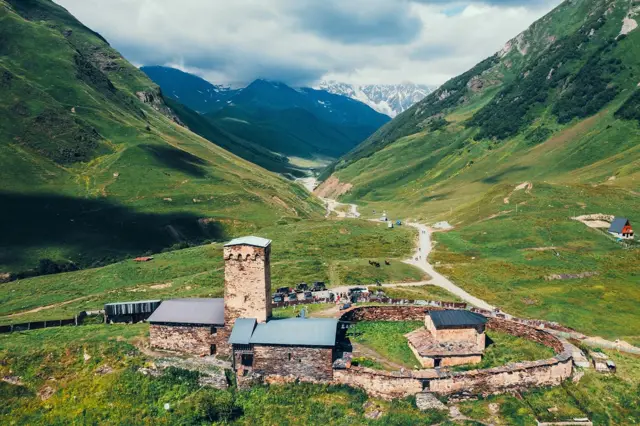
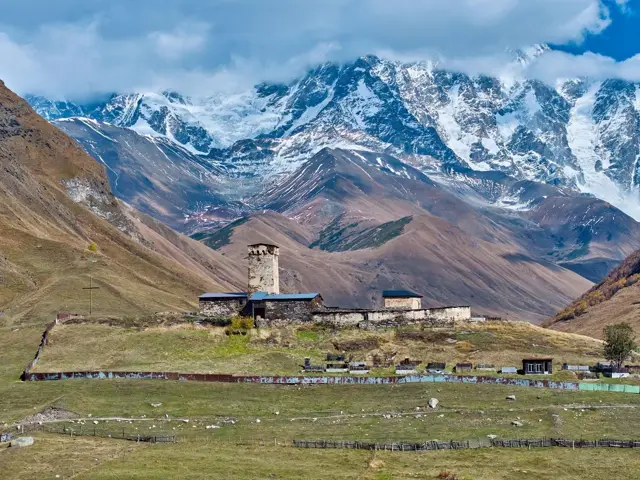
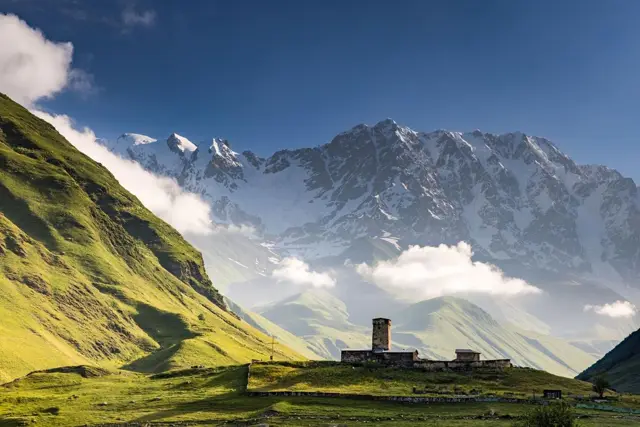
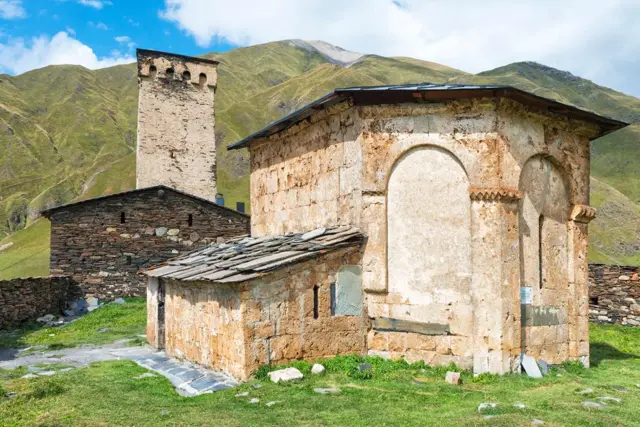
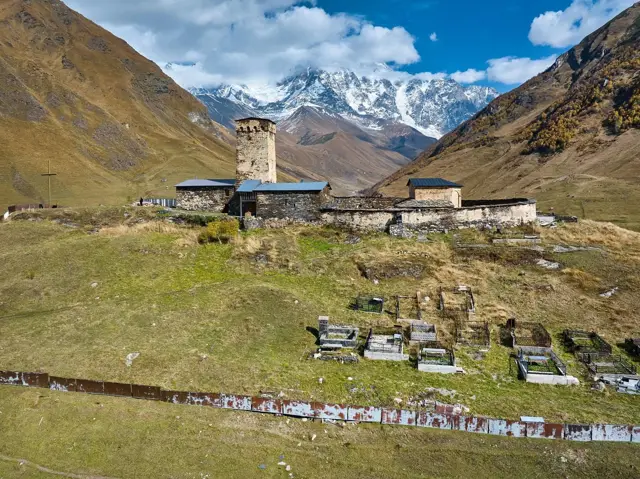
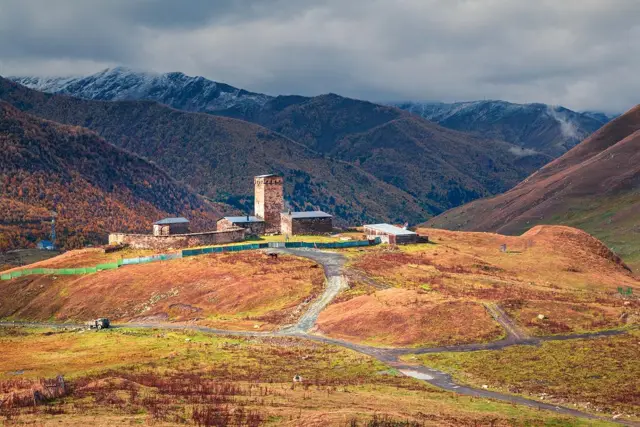
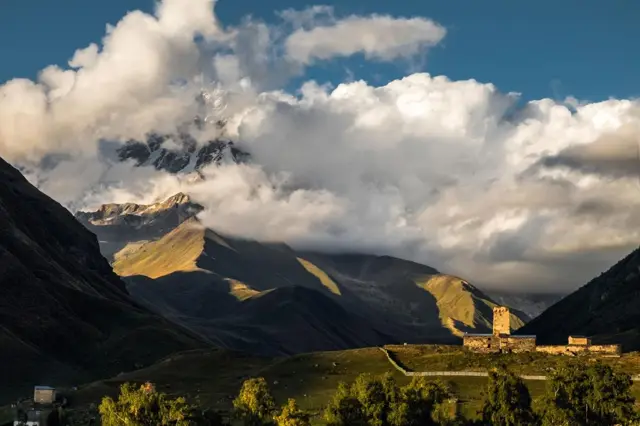
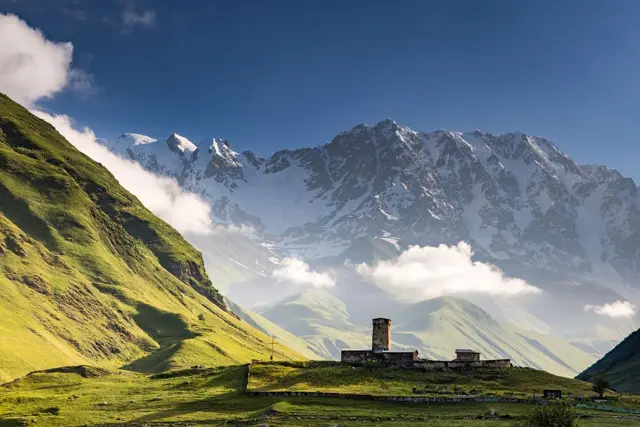
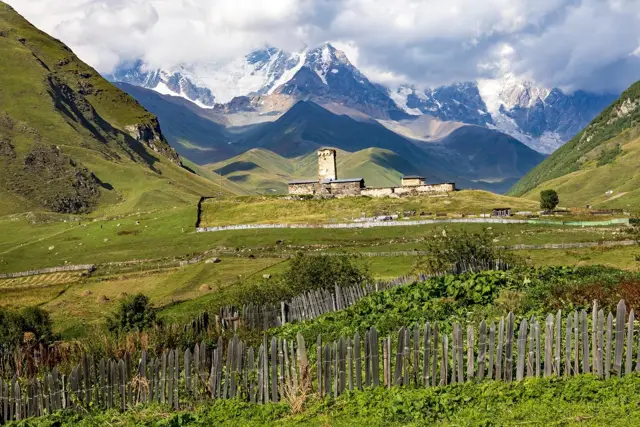
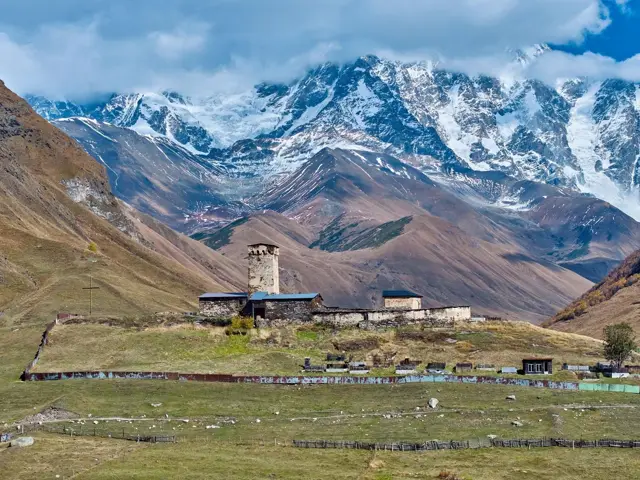
Lamaria of Ushguli is one of the best-known and most revered Christian holy places of Upper Svaneti. It stands above the village of Zhibiani in the Ushguli community, at about 2 100 metres, in one of the most impressive settings of the Caucasus. The church overlooks the villages of Ushguli, the centuries-old Svan towers and the Enguri valley, while behind it rises the Shkhara massif with Georgia's highest summit.
Lamaria's distinctiveness is not defined by its location alone. It is a place where Georgian Orthodoxy, the ancient traditions of Svaneti, medieval art and the history of a mountain society meet. For centuries the church was one of the main centres of the religious life of the people of Ushguli, and it remains a functioning Orthodox holy place today.
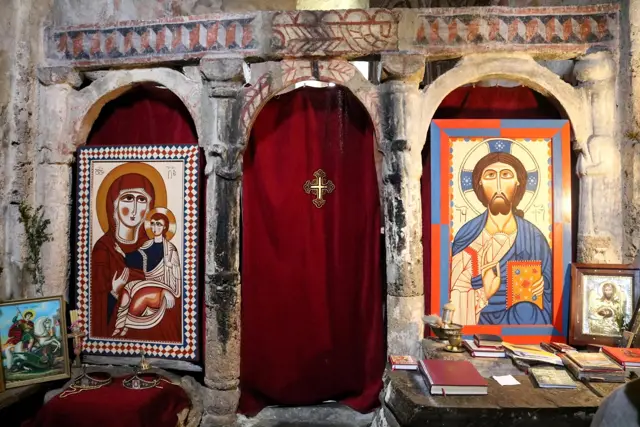
The church is dedicated to the Most Holy Mother of God. The name "Lamaria" is linked in the Svan language and local religious tradition with the Mother of God. In Svaneti the veneration of the Mother of God held a special place, and Lamaria became one of the most visible expressions of this centuries-old devotion.
The exact beginning of Lamaria's history is not fully recorded in written sources. According to the available architectural and artistic evidence, the main buildings of the complex belong to the medieval period. The various building and painting layers of the church show that it is not a structure created all at once but a spiritual space that developed over the centuries.
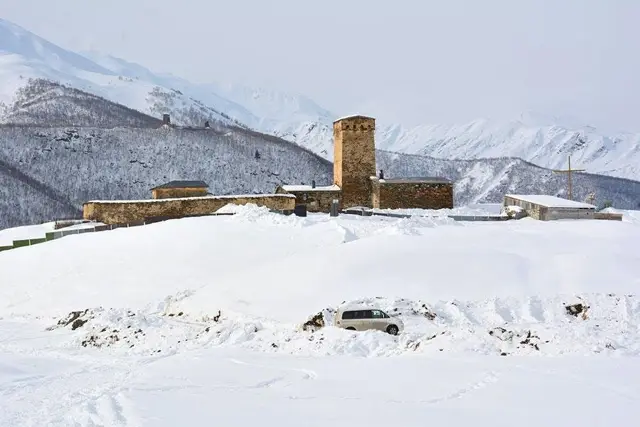
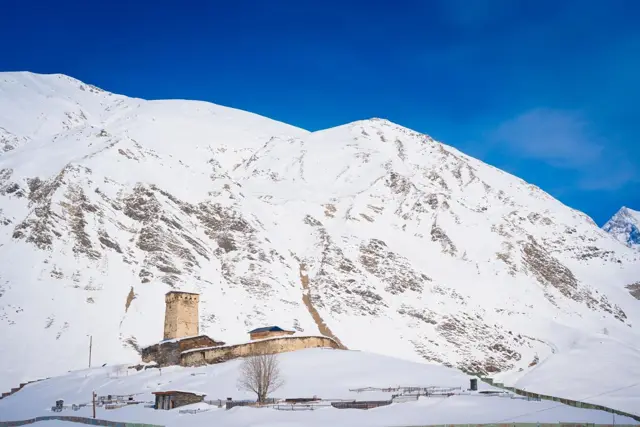
For a high mountain settlement like Ushguli the existence of a church had special importance. In winter heavy snow and difficult roads left the communities of Svaneti almost isolated for long periods. In such conditions the local church was not only a place of worship: it was also the centre of the community's spiritual memory, unity and preservation of traditions.
Svaneti's geographical isolation had one important result: many ancient icons, crosses, manuscripts and liturgical objects survived in the region for centuries. Part of the church treasure that was destroyed or lost in the lowland regions of Georgia during wars and invasions was better protected in highland Svaneti.
Lamaria too is part of this great cultural tradition. The church objects connected with it and with the churches of Ushguli are an important source for studying both Georgian Christian art and the history of Svaneti itself.
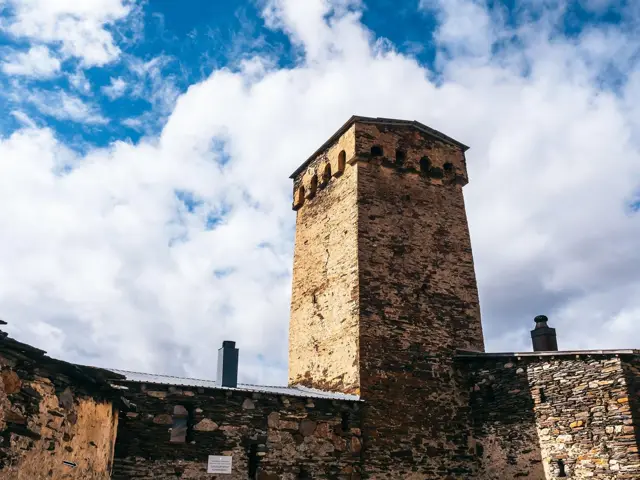
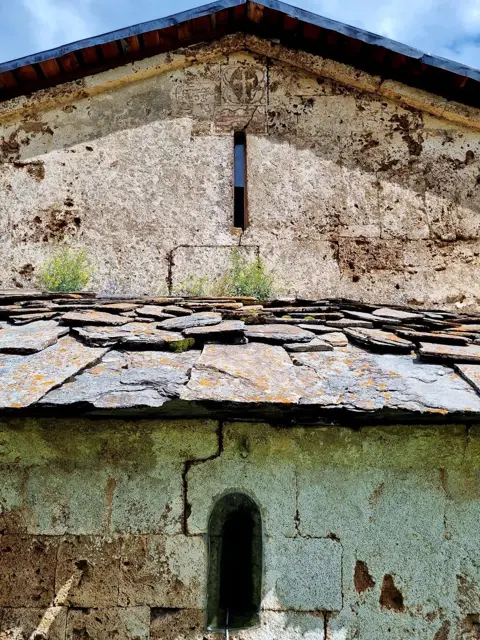
Architecturally, the Lamaria complex is modest in appearance. It is precisely this simplicity that is one of its main features. Built of local stone, the church blends naturally into the harsh mountain setting of Ushguli and expresses the solidity characteristic of medieval Svan architecture.
The scale of the church is not as monumental as that of the great cathedrals of Svetitskhoveli, Alaverdi or Bagrati. But in the conditions of Svaneti an entirely different architectural logic applied. Here a building had to be solid, compact and adapted to a harsh climate.
The special value of Lamaria's architecture emerges precisely in its unity with the surroundings. The stone walls of the church, the old buildings beside it, the Svan towers and the snowy peaks of Shkhara form a single historical landscape.
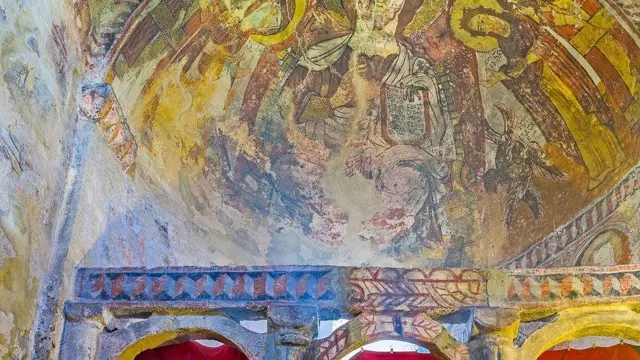
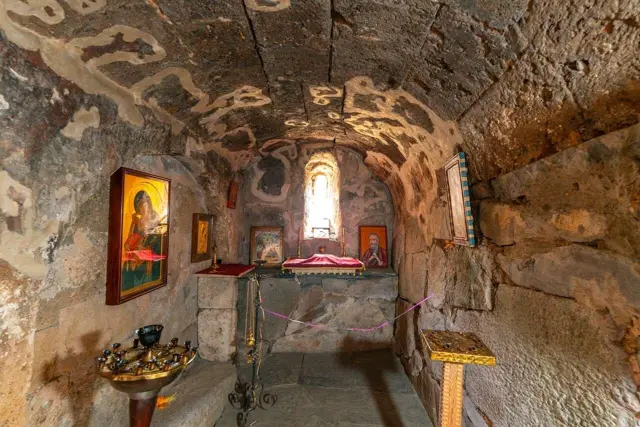
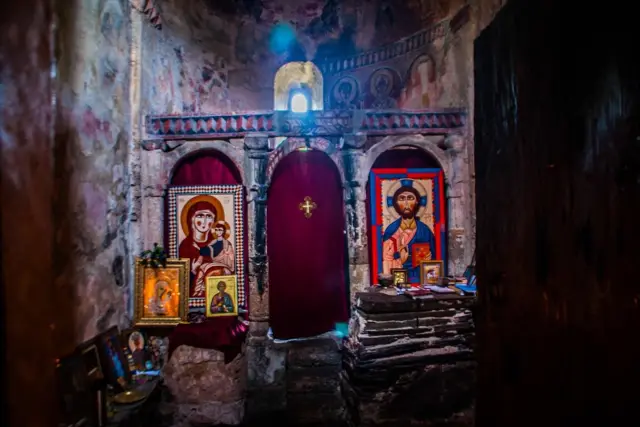
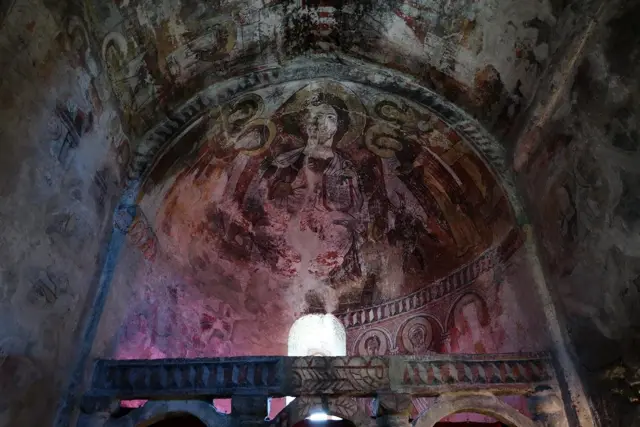
Compared with its outward simplicity, the church interior reveals a much richer historical world. Important examples of medieval wall painting belonging to different periods survive here.
The frescoes show scenes characteristic of Christian iconography and images of saints. Although part of the painting has been damaged over the centuries, the surviving fragments still allow us to see the high level of medieval church art in Svaneti.
It is especially interesting that in the painting of Svaneti's churches the common Georgian Christian tradition meets local artistic features. That is why Lamaria is important not only for the history of Ushguli: it is an important monument for the study of medieval Georgian church art as a whole.
One of the most recognisable elements of the Lamaria complex is the Svan tower beside it. Such defensive towers are an inseparable part of the historical landscape of Upper Svaneti. They were used to defend families and communities and are now regarded as one of the main architectural symbols of Svaneti.
The presence of a church and a defensive tower side by side expresses well the two main realities of life in old Svaneti: faith and defence. The mountain society needed both a spiritual centre and a means of defending its families, community and freedom.
Historically the churches of Svaneti were often also places where local treasures were kept. Icons and crosses did not have only a religious significance: they were seen as the property of the community and part of its historical memory.
At the beginning of the 20th century Ekvtime Takaishvili played an enormous role in the study of Svaneti's church heritage. During his expeditions to Svaneti this Georgian historian, archaeologist and public figure described many churches, inscriptions, icons and other historical objects.
The descriptions made by Ekvtime Takaishvili are of special importance today, because they record objects and historical conditions that later changed. His work became one of the most important stages in the study and protection of the cultural heritage of Svaneti and of Georgia as a whole.
Over the centuries many local legends and traditions grew up around Lamaria. One of the best known is linked with the idea of Ushguli's freedom and the shared responsibility of the community.
Svan oral tradition preserves stories in which members of the community made important decisions together and shared responsibility as well. Such traditions cannot always be directly identified with historical facts, yet they show something very important: how Svan society itself perceived its own past.
Local traditions about Queen Tamar are also linked with Lamaria. In Svaneti Tamar's name is kept with special reverence, and many places are connected with her name or her age. According to local tradition, Tamar was also connected with Ushguli and Lamaria.
It is important, however, to distinguish historical documents from popular memory. There is no reliable written source confirming that Queen Tamar stayed in Ushguli or prayed specifically at Lamaria. Nevertheless, the centuries-long existence of this tradition itself speaks of Tamar's special importance in Svaneti.
The main centre of Lamaria's spiritual life is the veneration of the Most Holy Mother of God. The Georgian Orthodox Church celebrates the Dormition of the Mother of God on 28 August, and during this period churches dedicated to the Mother of God take on special importance.
For the believer who comes to Lamaria this place is not merely a historical monument. Here people still light candles, pray and take part in worship. It is precisely this living spiritual life that distinguishes Lamaria from a mere museum.
The history of the church cannot be understood without Ushguli itself. Ushguli is a high mountain community made up of several historic villages, where an exceptional number of medieval dwellings and defensive towers survive to this day.
Shkhara, rising behind the landscape of Ushguli, makes this setting even more monumental. Its main summit exceeds 5 000 metres and is regarded as the highest point in Georgia. The view that opens from Lamaria towards the Shkhara massif creates one of Georgia's most recognisable high mountain panoramas.
Ushguli is also linked with UNESCO World Heritage status. The historic settlements of Upper Svaneti were inscribed on the World Heritage List in 1996. Special protection covers the unique cultural landscape of Upper Svaneti, its medieval villages, towers and churches.
In this setting Lamaria is one of the main spiritual and visual symbols. The small stone church against the vast Caucasus clearly shows how people managed to preserve their faith and culture for centuries in such harsh natural conditions.
Today Lamaria of Ushguli is still a functioning Orthodox holy place. Local Svans, pilgrims from various regions of Georgia and foreign travellers come here. Yet its main value is not its popularity with tourists but a spiritual tradition almost a thousand years old.
Lamaria of Ushguli is a place where Georgian Christianity and Svan culture are inseparable. The medieval church, the ancient frescoes, the Svan towers, local traditions and centuries-old devotion to the Mother of God form a single historical world.
Lamaria still stands today above Ushguli, before the peaks of the Caucasus, as a living symbol of the faith, freedom and historical memory of Svaneti. Centuries changed and Georgia went through many trials, but in this highland region prayer and veneration of the Mother of God were handed down from generation to generation. That is why Lamaria of Ushguli is not only an old church but one of the most outstanding spiritual legacies of Georgia.