Sioni Cathedral
On the bank of the Mtkvari, where the stones of Tbilisi breathe history, stands Sioni, the spiritual heart of the city. Within its walls is kept the cross of vine, woven by the hand of Nino, the first sign of Georgia's faith.
- Region
- Tbilisi
- UNESCO
- No
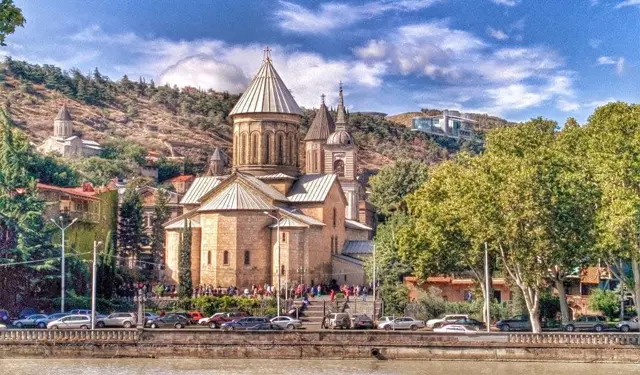
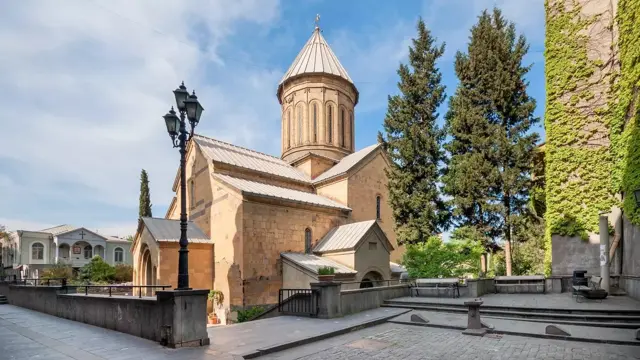
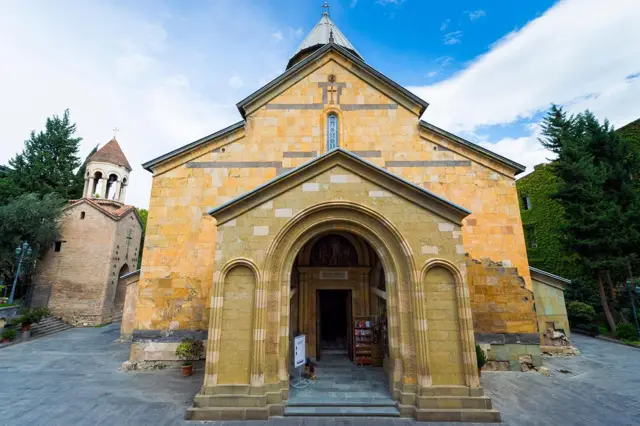
The Sioni Cathedral of the Dormition of the Mother of God in Tbilisi is one of Georgia's most important Orthodox sanctuaries and a living witness to the centuries-old history of Tbilisi. It stands in the heart of Old Tbilisi, near the right bank of the Mtkvari, in the historical part of the city. For centuries Sioni was one of the main centres of the Church of Georgia and kept the traces of almost every major political and spiritual turning point in Tbilisi's history.
The cathedral's name, "Sioni", is linked with Mount Zion in Jerusalem, one of the holiest places of the Christian world. In medieval Georgia, giving important churches names connected with the Holy Land expressed spiritual unity with the Christian world. Over the centuries Tbilisi's Sioni became so important that its name became closely identified with the history of the Church of Georgia itself.
The history of the cathedral's foundation is connected with the 6th and 7th centuries. According to Georgian historical tradition, its construction began in the second half of the 6th century, in the time of Guaram I, ruling prince of Kartli, and was completed at the beginning of the 7th century. Yet the present architectural form of the cathedral is not the unchanged shape of that ancient building: in later centuries Sioni was destroyed, restored and rebuilt many times.
The position of Tbilisi also determined the fate of Sioni. For centuries the city was one of the important political and trading centres of the Caucasus, and so it was repeatedly the target of foreign conquerors. Invasions by Arabs, Khwarazmians, Mongols and Persians often directly affected the Christian sanctuaries of the city as well.
One of the hardest episodes connected with the history of Sioni took place in 1226, when Tbilisi was captured by the Khwarazmian ruler Jalal ad-Din. According to Georgian Church tradition, the Christian population of the city was ordered to desecrate the icons of Christ and the Mother of God and to walk over them.
According to tradition, a great many Christians refused to deny their faith and to desecrate the icons. They were put to death, and their memory is known in the Church of Georgia as that of the One Hundred Thousand Martyrs of Tbilisi. The exact number of martyrs is a matter of historical research, but the massacre of 1226 itself and its place in Georgian Church memory are among the most important episodes in the Christian history of Tbilisi.
Sioni was damaged many times in later centuries as well. The restoration of the cathedral is linked with various Georgian kings and churchmen. That is why its present walls bear the traces of several historical periods at once, and the cathedral is like a chronicle of the difficult history of Tbilisi itself.
Especially hard was the year 1795, when the Persian ruler Agha Mohammad Khan captured Tbilisi and destroyed a large part of the city. Sioni too was damaged. Despite this catastrophe, the cathedral was restored again and church life continued.
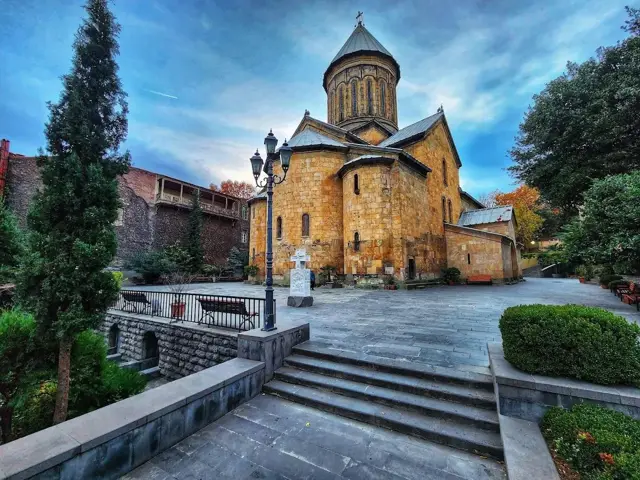
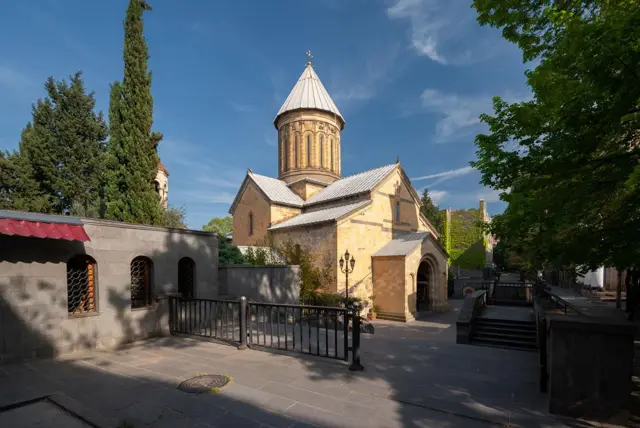
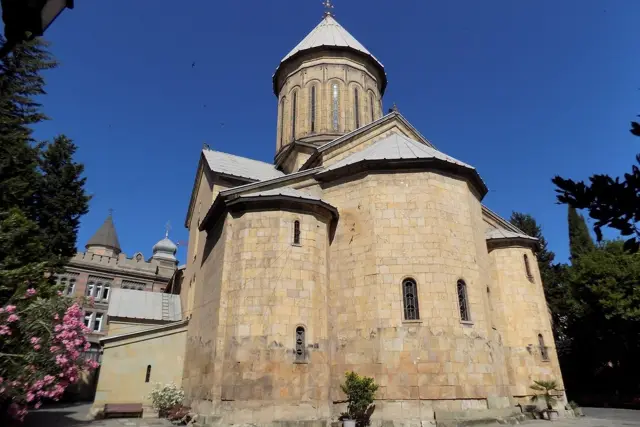
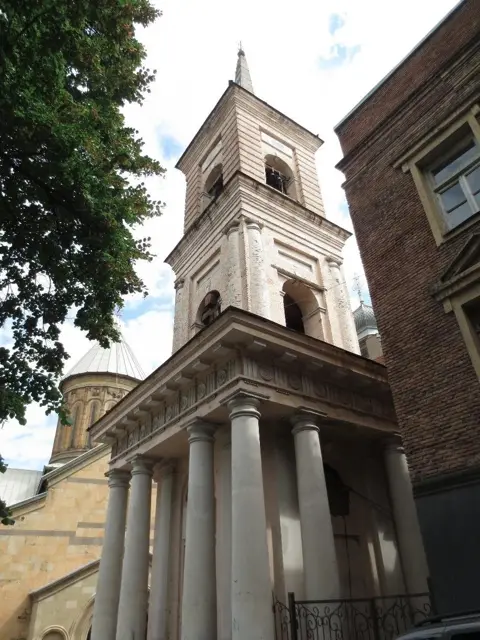
Architecturally, Tbilisi's Sioni belongs to the tradition of the Georgian medieval cross-domed church. Its central dome, stone façades and relatively austere outer forms blend harmoniously with the architectural setting of Old Tbilisi.
Sioni's appearance may seem less monumental beside churches such as Svetitskhoveli, Alaverdi or the modern Sameba, but its significance lies first of all in its historical and spiritual depth. For centuries it was precisely here that the most important life of the Church of Georgia took place.
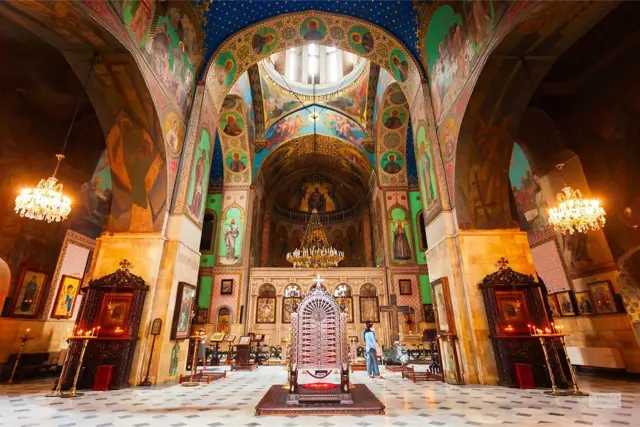
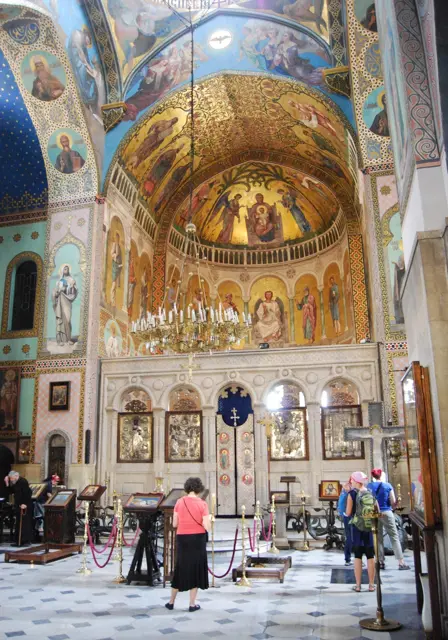
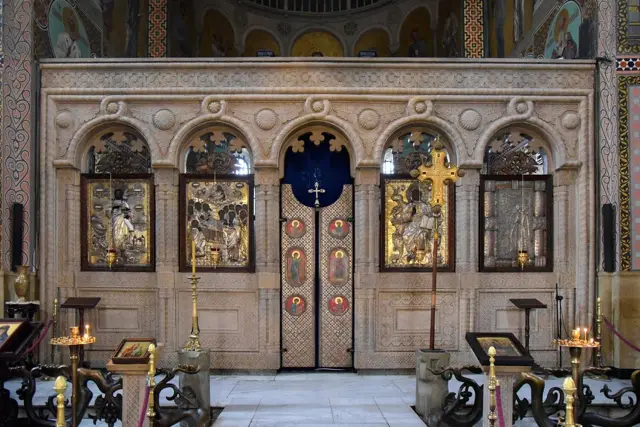
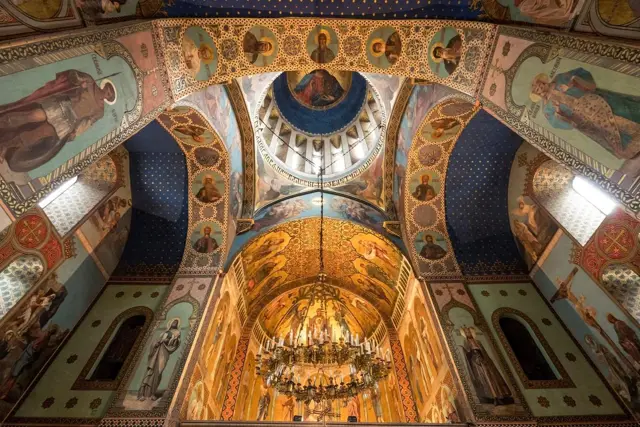
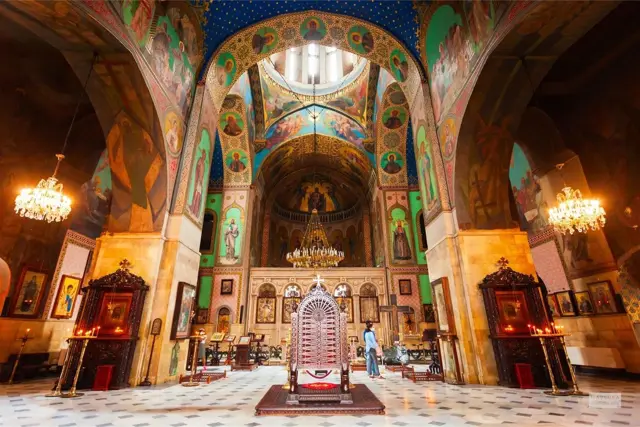
Paintings from different historical periods are found in the cathedral's interior. In the 19th century Grigory Gagarin played an important role in painting Sioni, and his works greatly influenced the present artistic appearance of the interior.
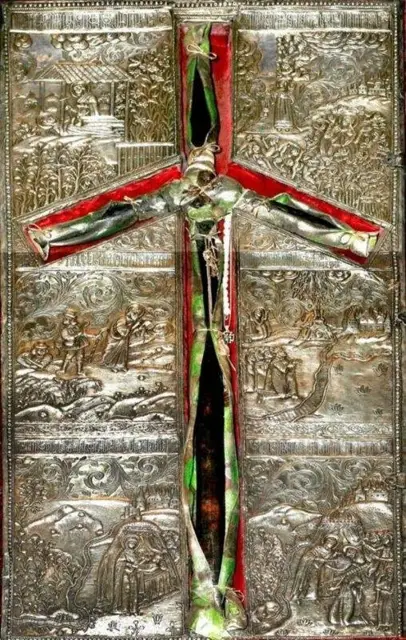
But Sioni's greatest holy treasure is linked with a history far older than its architecture. The cathedral keeps one of the most precious relics of the Georgian Christian world: Saint Nino's grapevine cross.
According to Georgian Church tradition, Saint Nino came to Georgia in the 4th century to preach Christianity. She had a cross made from two grapevine branches, which she bound with her own hair. With this cross she preached in Georgia, and the conversion of King Mirian III and Queen Nana and the Christianisation of Kartli are linked with her work.
Church tradition links Saint Nino's mission with the blessing of the Most Holy Mother of God. That is why for Georgians the grapevine cross is not merely a personal object of the saint: it has become one of the chief symbols of the conversion of Georgia and of the country's centuries-long Christian path.
The special shape of the cross is also easy to recognise: its horizontal arms droop slightly downwards. This image is today one of the best-known symbols of the Church of Georgia and of Saint Nino.
Over the centuries Saint Nino's cross had a difficult history. Because of Georgia's political situation, the relic was moved at different times for safety. Finally it returned to Georgia and today is kept with special honour in Tbilisi's Sioni Cathedral.
It is precisely the presence of Saint Nino's cross that gives Sioni special significance among Georgia's other great churches. Here the believer can venerate a holy object which, according to Georgian Church tradition, is directly linked with the life of the Enlightener of Georgia and the conversion of the country.
For centuries Sioni was the main cathedral of the Catholicos-Patriarchs of Georgia in Tbilisi. Important liturgies, church ceremonies and special prayers for the country were held here. The cathedral was a centre not only of religious but also of national life.
The memory of many important Georgian churchmen is also connected with the walls of Sioni. The tombs and memorial places preserved in the cathedral reflect the centuries-long history of the Church of Georgia.
In the 19th century, after the annexation of Georgia by the Russian Empire and the abolition of the autocephaly of the Georgian Church, a difficult stage began in the history of Sioni. The cathedral remained an important church centre, but the independent governance of the Church of Georgia had been interrupted.
In 1917 the autocephaly of the Orthodox Church of Georgia was restored. Sioni once again took a special place in the church life of the country and, despite the hard events of the 20th century, remained one of the main centres of Georgian Orthodoxy.
In the period of the Soviet atheist regime the activity of the Church was severely restricted, but services were maintained in Tbilisi's Sioni. That is why, even in the Soviet era, the cathedral was for many Georgians a symbol of the continuity of faith and of the survival of the Church.
After Georgia regained its independence, Sioni's role grew stronger again. In 2004, after the consecration of the Holy Trinity Cathedral of Tbilisi, the function of main cathedral of the Patriarchate of Georgia gradually passed to Sameba, but this did not diminish Sioni's historical and spiritual importance.
Today Tbilisi's Sioni Cathedral is a functioning Orthodox church. Services are held here every day, and many faithful come above all to venerate Saint Nino's grapevine cross.
Sioni Cathedral is the place where the history of Tbilisi and the Christian memory of Georgia meet with special force. From the first church of the 6th and 7th centuries to the Khwarazmian and Persian invasions, from the memory of the hundred thousand martyrs to the restoration of the autocephaly of the Church of Georgia, Sioni was for centuries a witness to the country's most important events.
Tbilisi's Sioni remains today the spiritual heart of Georgia: a cathedral where Saint Nino's cross, the memory of Georgia's conversion and the centuries-old Christian history of Tbilisi come together in one holy space.