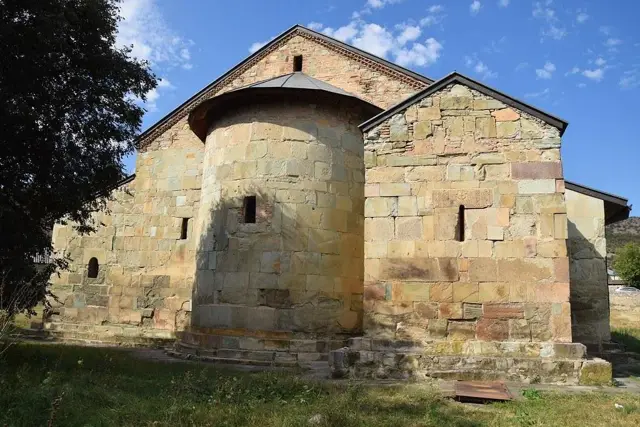
Bolnisi Sioni
In the 5th century, when Georgian letters were first carved in stone, Bolnisi Sioni was already at prayer. Today those inscriptions still speak quietly: the first voice of Georgia's Christianity to have survived in stone.
- Region
- Kvemo Kartli
- UNESCO
- No
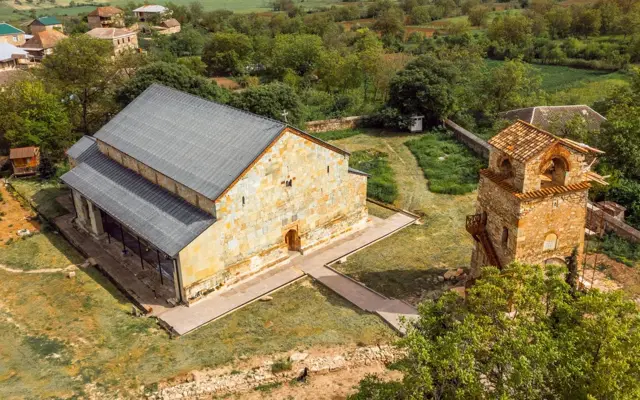
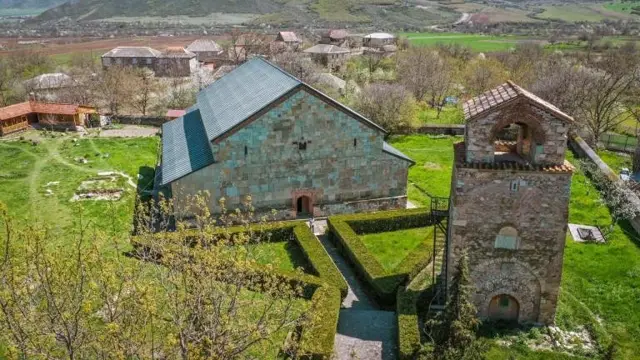
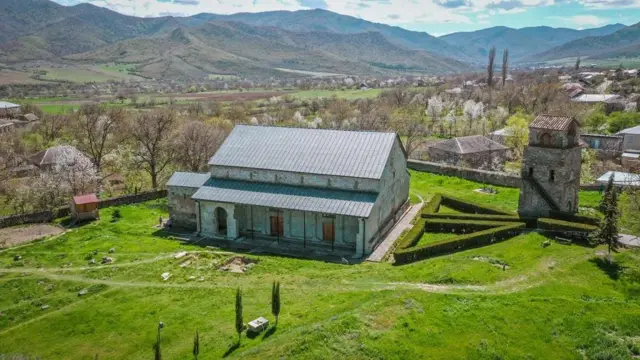
Bolnisi Sioni is one of the oldest and most important surviving Christian churches of Georgia. It stands in Kvemo Kartli, in historic Bolnisi, south of Tbilisi. For almost fifteen centuries the church has preserved not only its religious significance but also a unique trace of Georgia's early Christian architecture, Georgian writing and national culture.
Bolnisi Sioni's distinctiveness lies first of all in its age. The church was built in the second half of the 5th century, around 478–493, in an age when Christianity had already been established in Kartli for more than a century and the Georgian Church was gradually creating its own architectural and cultural tradition.
This was the age of Vakhtang Gorgasali, one of the important periods of Georgian history. The kingdom of Kartli existed in a difficult political environment, and the influence of Sasanian Iran was especially strong. At the same time the Christian Church was growing stronger in the country, episcopal centres were developing and new churches were being built.
Especially important information about the building of Bolnisi Sioni is given by the Georgian inscriptions preserved on the church itself. It is precisely these inscriptions that make Bolnisi Sioni not only an architectural monument but one of the most important written sources of Georgian history.
One of the church's well-known building inscriptions is connected with Bishop David and makes it possible to establish the chronology of the construction. Through these texts researchers can obtain direct written information about Georgian church society of almost fifteen centuries ago.
The Bolnisi inscriptions are executed in the oldest monumental form of Georgian writing, asomtavruli. Their importance is exceptional, because they are among the oldest precisely dated epigraphic monuments of the Georgian language.
This means that not only stone ornaments survive on the walls of Bolnisi Sioni: here we can see directly the trace of 5th-century Georgian written culture. The letters are carved into the stone and show that by then Georgian writing was already used in important church and public inscriptions.
That is why Bolnisi Sioni also holds a special place in the study of the history of the Georgian alphabet. The church is a kind of stone chronicle that has preserved for us to this day the language, written culture and religious self-awareness of early Christian Georgia.
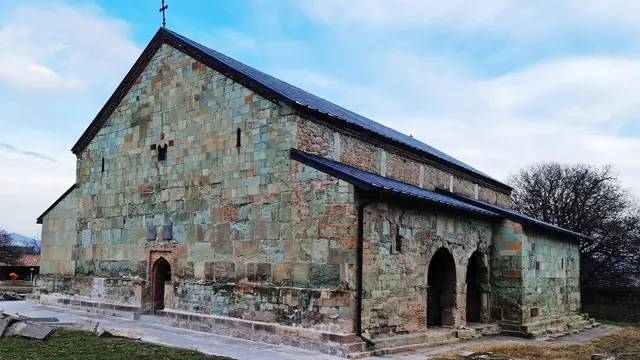
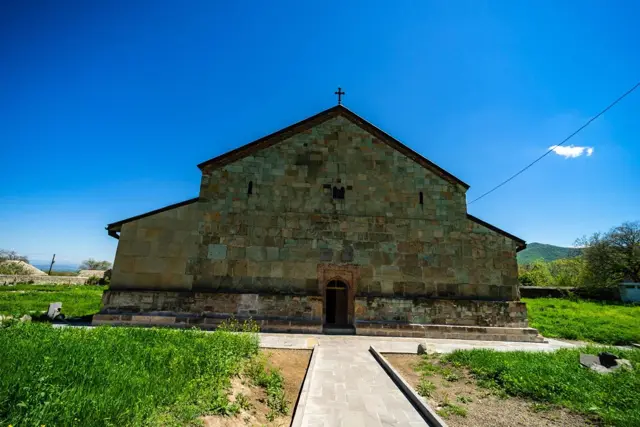
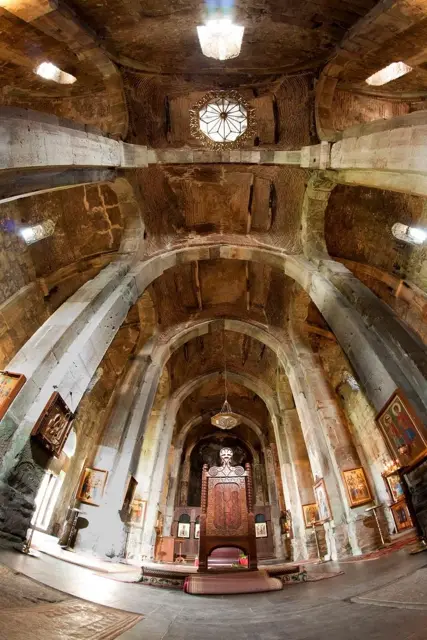
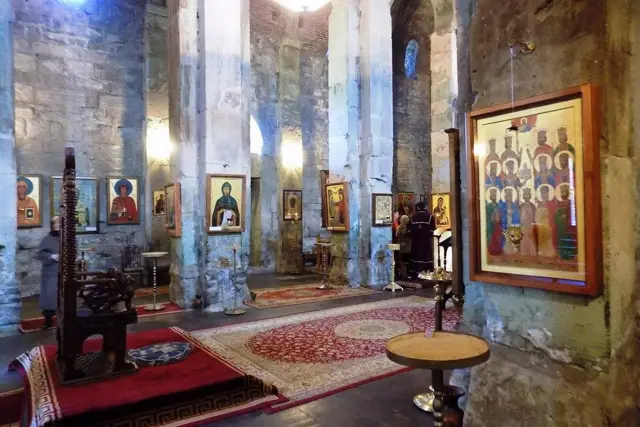
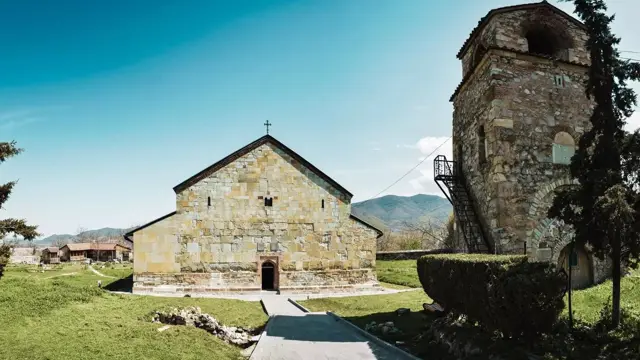
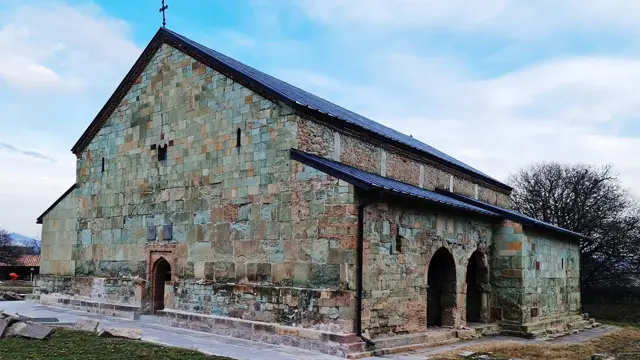
Architecturally, Bolnisi Sioni is a three-nave basilica. This type was one of the important church forms of the early Christian period. The central nave is wider and higher, and relatively narrow side naves are arranged on both sides of it.
The church belongs to a period when the cross-domed architecture later so well known in Georgia did not yet predominate. That is why Bolnisi Sioni is especially important for understanding what Georgian church architecture was like at an early stage of its development.
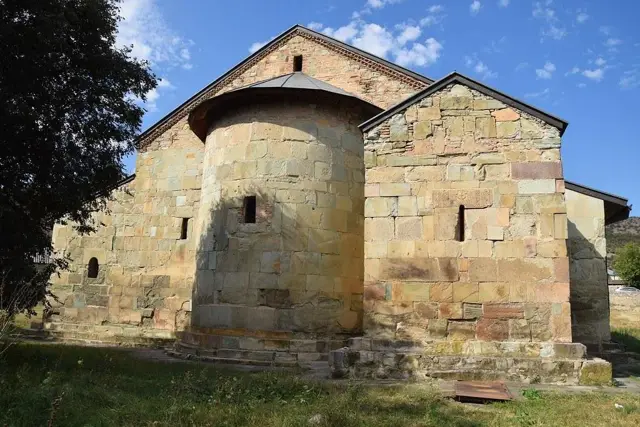
In its architecture the main attention is given to solidity, proportion and harmony of space. The outward forms are relatively severe and restrained, yet the decoration of the façades shows that 5th-century Georgian masters already had a highly developed culture of artistic stone working.
The church's relief decoration is especially interesting. On the stone there are crosses, plant motifs, geometric ornaments and other early Christian symbols. They did not serve only a decorative function: Christian symbolism was an inseparable part of the church's architecture.
One of the most recognisable Georgian Christian symbols is closely linked with Bolnisi Sioni: the Bolnisi cross. Its form widens from the centre in all four directions and is part of the early Christian decorative tradition.
In later centuries the Bolnisi cross became one of the well-known symbols of Georgian Christian art. Crosses of similar form appear on other Georgian churches and stone reliefs too. Today this sign is often used in Georgia's Christian and cultural symbolism, which links Bolnisi's ancient heritage with the modern era as well.
The church's name, "Sioni", is linked with Mount Zion in Jerusalem. In Georgia several important churches were given the name of Zion, which expressed the spiritual bond of the Georgian Christian world with the Holy Land. The well-known Sioni Cathedral of Tbilisi belongs to the same tradition.
The existence of the Bolnisi church clearly shows that already in the 5th century there was an organised and strong Christian church life in Kvemo Kartli. Building a stone basilica on this scale required experienced masters and considerable resources, as well as a strong church community.
The location of Kvemo Kartli also had special importance. The region was connected with important routes of the South Caucasus and for centuries was a space of various cultural and political influences. It was precisely in such an environment that local Georgian Christian culture developed.
Over the centuries Bolnisi Sioni survived many wars, invasions and political changes. Kvemo Kartli often lay on the military route of foreign forces, and in various periods the political situation in the region was difficult.
Changes and restoration work in various centuries also affected the church. Certain architectural parts were later altered or renewed, but the building's main early Christian structure and especially important epigraphic material have survived to this day.
It is precisely this that makes Bolnisi Sioni distinctive: here the visitor does not see merely the restored appearance of a historic church, but comes into contact with the real architectural and written heritage of 5th-century Georgia.
In the 19th century, after Georgia joined the Russian Empire, the political and demographic setting of Kvemo Kartli changed considerably. Nevertheless, Bolnisi Sioni kept its historical significance and gradually became an object of special interest for Georgian historians and archaeologists.
In the 20th century the church's significance was assessed even more clearly as the scholarly study of Georgian architecture and writing developed. The Bolnisi inscriptions took an important place in research on Georgian palaeography and epigraphy.
In the Soviet period, despite the restriction of religious life, researchers actively studied the historical and architectural value of Bolnisi Sioni. Research and conservation work on the monument was also carried out, which helped preserve its oldest parts.
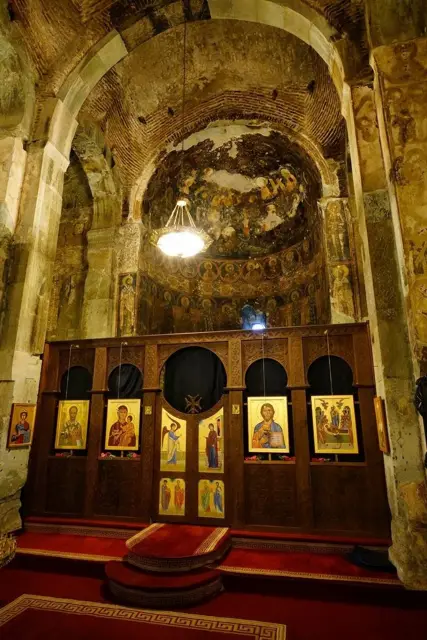
After Georgia regained its independence, the church life of the cathedral revived too. Today Bolnisi Sioni is a functioning Orthodox church and is at once a place of prayer and a historical monument of national importance.
When visiting it, it is especially striking to realise that some of the church's stones and inscriptions belong to an age when only a few generations had passed since Christianity was adopted in Georgia as the state religion.
Bolnisi Sioni vividly shows us the early stage of the development of Georgia's Christian history. Here the basilican architecture of the 5th century, the asomtavruli inscriptions, the oldest forms of the Bolnisi cross and the history of the first centuries of the Georgian Church come together in one space.
That is why Bolnisi's importance does not lie only in its age. It shows that in the early Middle Ages Georgia already had its own architectural, written and artistic Christian culture, which in the following centuries formed one of the main foundations of Georgian civilisation.
Bolnisi Sioni remains today one of the oldest and most precious living witnesses of Georgia's Christian heritage: a church on whose stones Georgian letters carved almost fifteen centuries ago still tell us the oldest story of Georgia's faith, language and culture.