Bagrati Cathedral
In the heart of Kutaisi, on the crest of the hill, Bagrati Cathedral has for centuries guarded the memory of a united Georgia. Raised again from its ruins, it still speaks today of the strength of a faith that time cannot bring down.
- Region
- Imereti
- UNESCO
- No
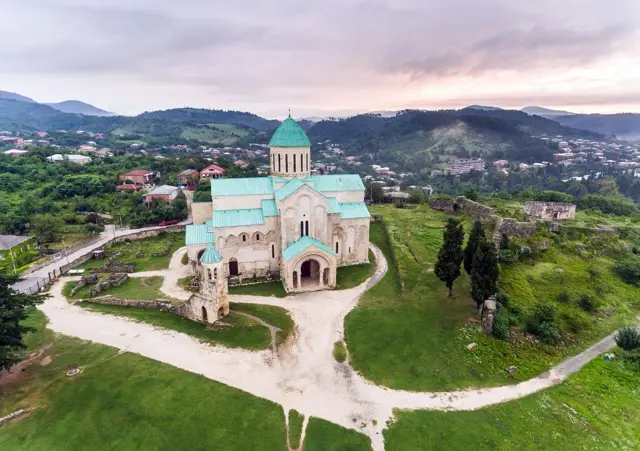
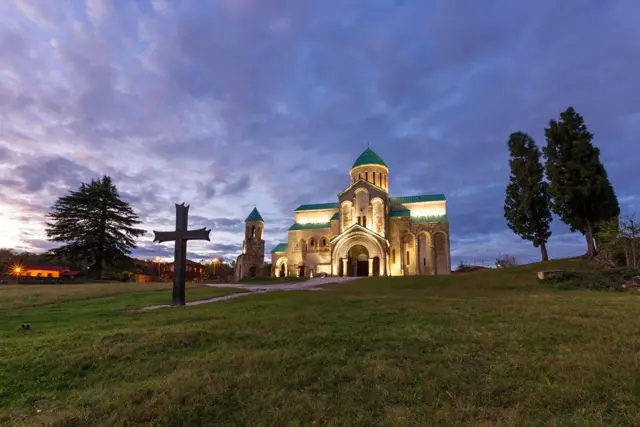
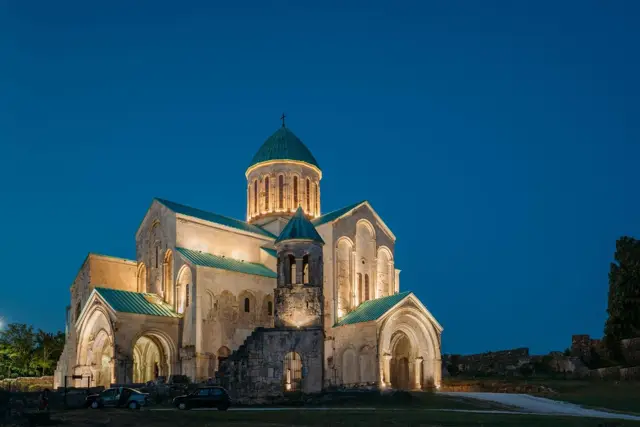
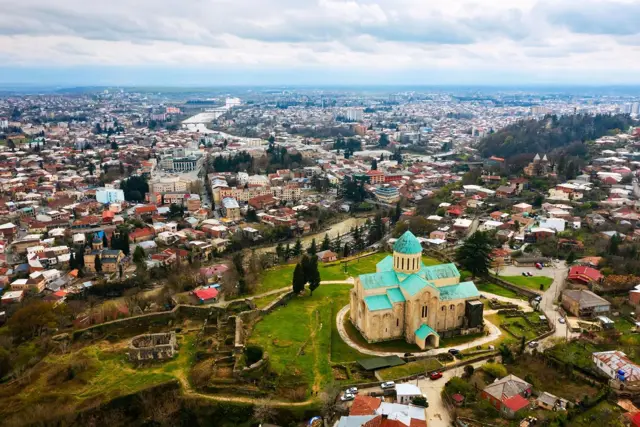
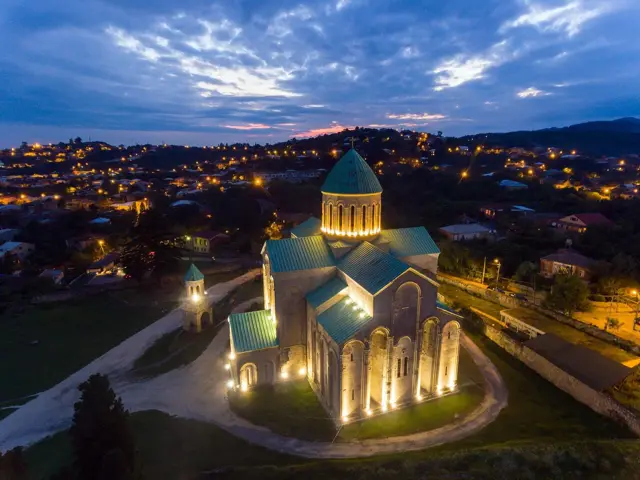
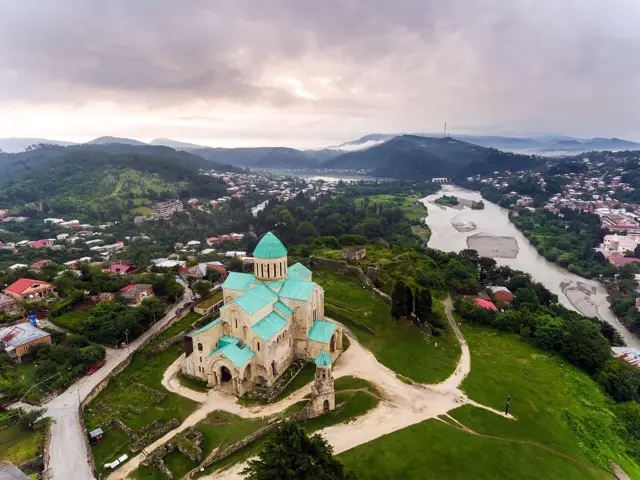
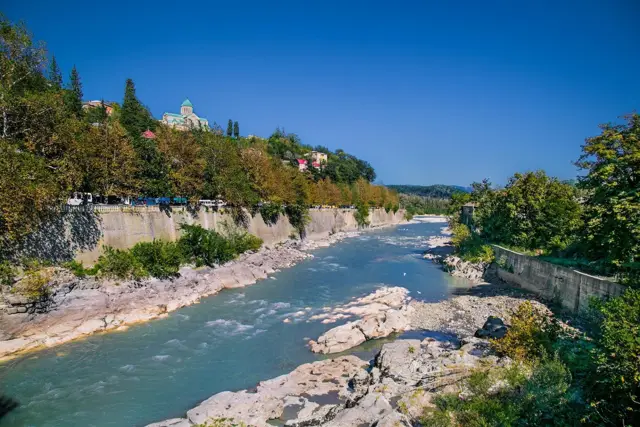
Bagrati Cathedral, standing in the historical part of Kutaisi on Ukimerioni Hill on the right bank of the river Rioni, is one of the most important symbols of Georgia's medieval history, of the Orthodox faith and of national unity. The cathedral was built at the beginning of the 11th century, in the reign of King Bagrat III of Georgia, and was completed in 1003. Its present name, Bagrati Cathedral, comes from the name of this king.
Bagrat III holds a special place in the history of Georgia. During his reign a large part of the Georgian lands was united in one state, and the foundations were laid for a strong Georgian kingdom which in the following centuries reached the peak of its political and cultural rise. Built in this historical setting, Bagrati Cathedral was from the start not only a religious building but also a symbol of the new political unity and of the strengthened Georgian state.
The construction of the cathedral coincided with a period when Kutaisi had special importance in Georgia's political life. One of the main cities of western Georgia was becoming an important centre of the unified Georgian monarchy. In such a setting, raising a large cathedral was an event of both church and state significance.
Bagrati Cathedral is consecrated to the Dormition of the Mother of God. For centuries it was the most important Christian sanctuary of Kutaisi and one of the main church centres of western Georgia. Services were held here, and important church and state ceremonies took place.
One of the most important events in the history of Bagrati Cathedral is linked with the name of David IV the Builder. According to historical tradition, in 1089 the young David IV was anointed king of Georgia in Kutaisi. He later became one of the greatest rulers in Georgian history, and a new age of political, military and cultural strengthening of the country began. Thus the history of Bagrati Cathedral is connected with the eras of two of Georgia's most important kings: Bagrat III and David the Builder.
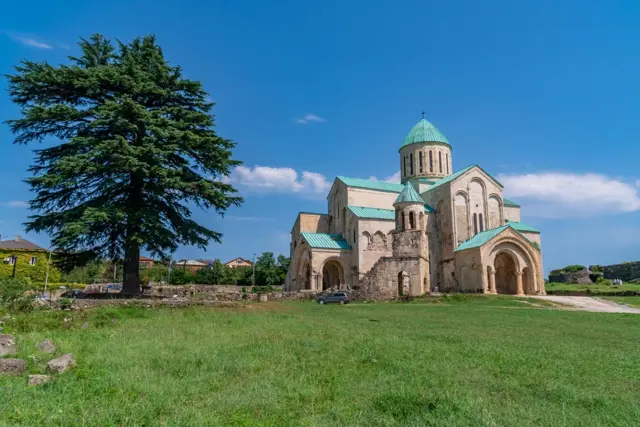
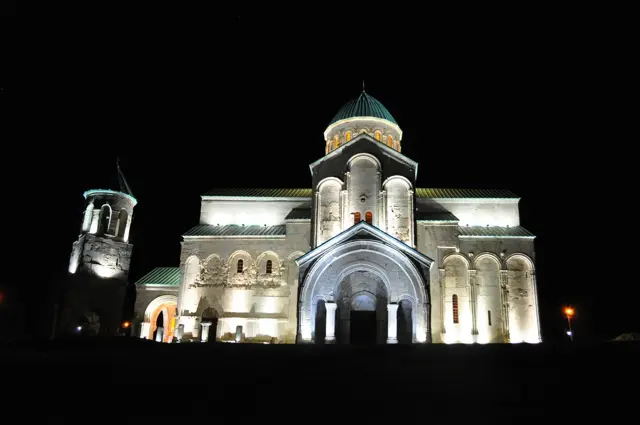
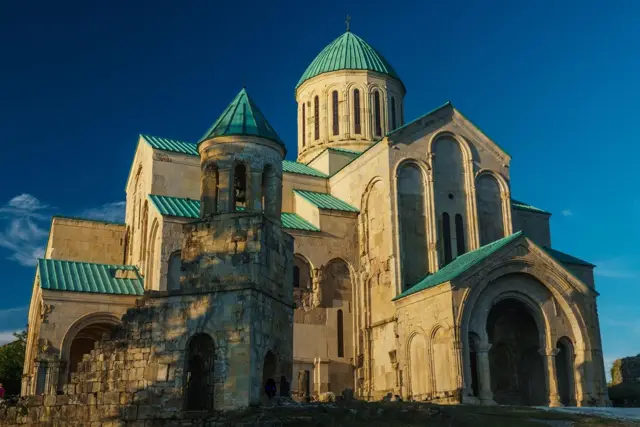
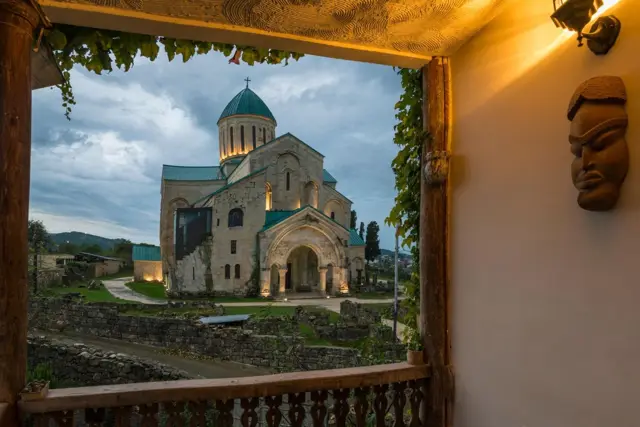
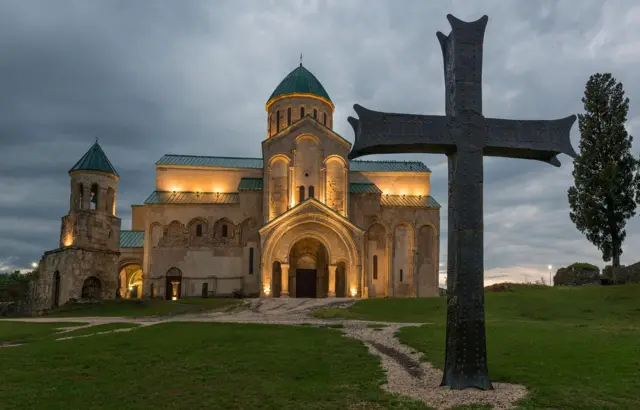
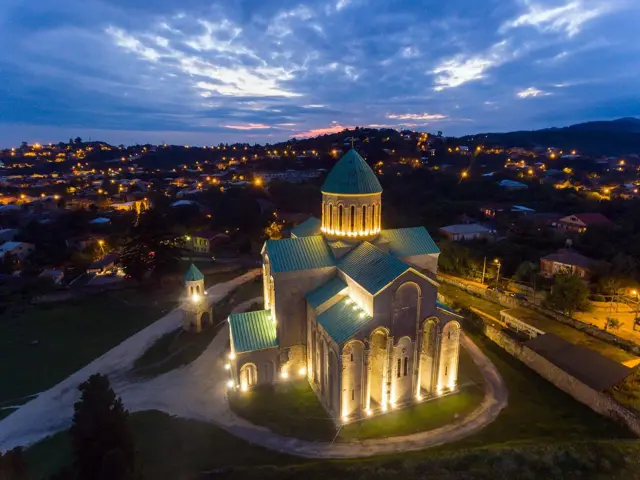
Architecturally, Bagrati Cathedral is one of the most important examples of Georgian medieval church architecture. The original cathedral was a large domed building whose scale, clear forms and balanced proportions showed the high level of Georgian architecture at the beginning of the 11th century.
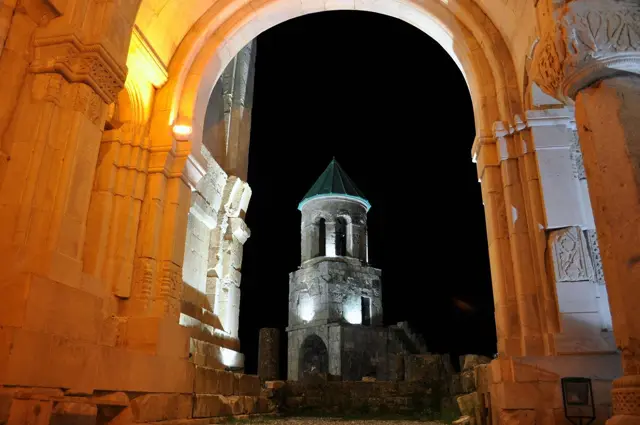
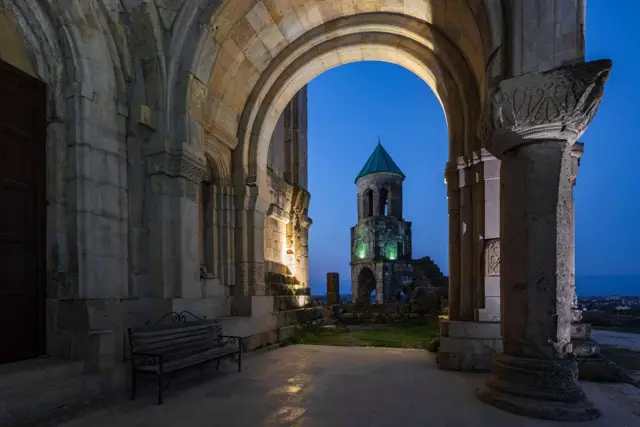
Stone ornamental decoration holds an important place in the design of the façades. The carvings preserved on the walls, the arches, the decorative window frames and other stone details speak of the high artistic and technical skill of the medieval Georgian masters. These decorative elements created a unified artistic composition characteristic of Georgian Christian architecture.
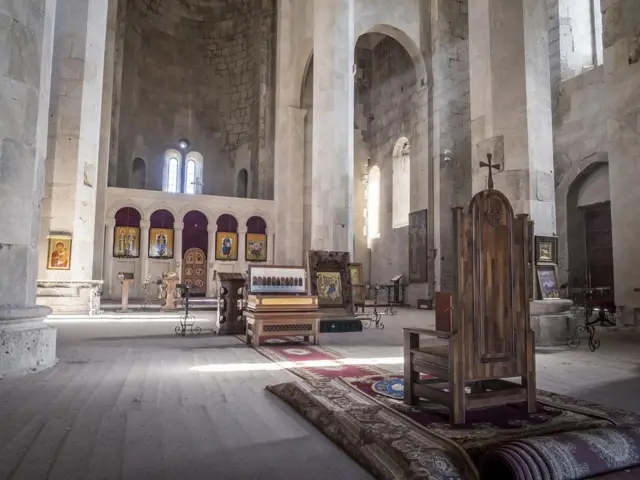
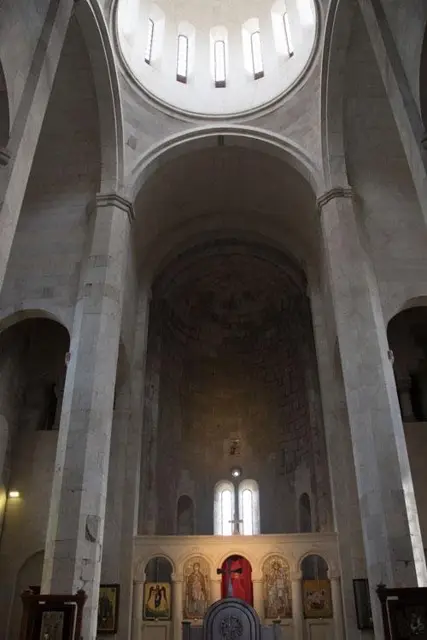
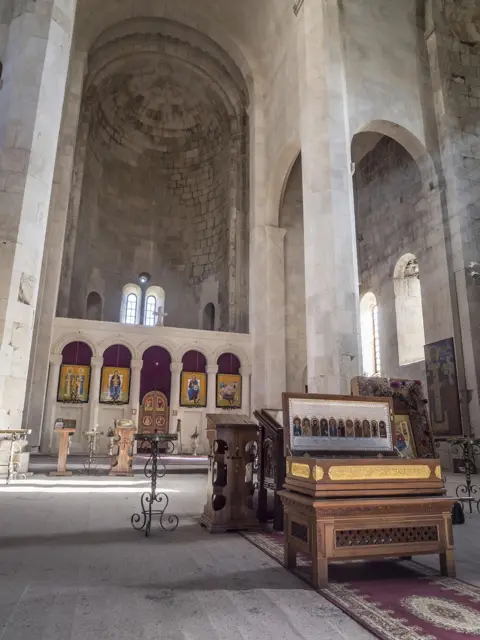
The interior of the cathedral was also especially impressive. The tall central space beneath the dome and the side areas connected with it created a monumental setting intended for great church services. The scale of the cathedral shows clearly the importance given in the age of Bagrat III to Kutaisi and to the Church of unified Georgia.
The historical inscriptions and architectural details preserved on the cathedral's walls are an important source for historians and art historians. Studying them helps us understand better not only the history of the cathedral's construction, but also the cultural, political and church environment of 11th-century Georgia.
Over the centuries Bagrati Cathedral witnessed many difficult periods in Georgia. The political fragmentation of the country, invasions by foreign powers and wars in western Georgia affected Kutaisi and its main cathedral too. Nevertheless, for a long time it kept its church and symbolic significance.
The hardest period in the cathedral's history came in the 17th century. In 1691, during Ottoman military operations in Imereti, Bagrati Cathedral was badly damaged. Its dome and a large part of the vaults collapsed, and the once magnificent cathedral was turned into ruins. Later the damage grew even worse and the building's original architectural unity was lost.
Despite its physical destruction, Bagrati Cathedral never disappeared from the historical memory of the Georgian people. For centuries its ruins above Kutaisi were a symbol both of the country's glorious past and of its hard historical trials. That is why Bagrati was never seen as a mere archaeological ruin: it remained a living part of national history.
In the 19th and 20th centuries the interest of historians, archaeologists and architects in the cathedral grew considerably. The scientific study of its architectural forms, inscriptions and surviving decoration began. Research confirmed once again Bagrati's special significance in the history of Georgian medieval architecture.
In the Soviet period the cathedral could not function as a church, but the study of its historical and architectural importance and conservation work continued. The ruins of Bagrati became one of the best-known monuments of Georgia's cultural heritage and an inseparable part of the historical image of Kutaisi.
In 1994 Bagrati Cathedral and Gelati Monastery were inscribed together on the UNESCO World Heritage List. International recognition once again underlined the special historical, architectural and cultural importance of these monuments.
At the beginning of the 21st century a large-scale restoration and reconstruction of Bagrati Cathedral began. The dome, the roof and important parts of the building were rebuilt, and the centuries-old ruin once again became a functioning Orthodox church.
The reconstruction also provoked significant international debate. UNESCO and some heritage protection specialists considered that the modern interventions had substantially altered the monument's historical authenticity. Finally, in 2017 Bagrati Cathedral was removed from the boundaries of the UNESCO World Heritage property, and Gelati Monastery remained on the World Heritage List on its own.
Today Bagrati Cathedral is once again a functioning Orthodox church and one of the main spiritual, historical and cultural symbols of Kutaisi. Services are held here, and the cathedral is visited both by pilgrims and by people interested in Georgian history and architecture.
Its location is also part of its special character. From Ukimerioni Hill there is a wide view over Kutaisi, the river Rioni and the surrounding area. And from many points in the city the cathedral itself can be clearly seen, forming one of the most recognisable parts of Kutaisi's historical skyline.
Bagrati Cathedral is the place where the political history of Georgia, the Orthodox faith and Georgian architecture come together with special force. From the rise of unified Georgia in the 11th century to the destruction of the 17th, from centuries of ruin to the present restoration, its history has become a kind of reflection of Georgia's own difficult historical path.
Bagrati Cathedral remains today one of the outstanding symbols of Georgia's unity, historical memory and spiritual endurance: a cathedral that for almost a thousand years has kept the memory of the age of Bagrat III and of the formation of the unified Georgian state.