Anchiskhati Basilica
Tbilisi was still a young city when Anchiskhati was already at prayer. Fifteen centuries have passed since the 6th century: the city grew, fell and rose again, while this small church, sunk in stone and prayer, still stands today.
- Region
- Tbilisi
- UNESCO
- No
The Anchiskhati Church of the Nativity of the Mother of God is the oldest surviving church in Tbilisi and one of the most important monuments of early Christian architecture in Georgia. Standing in the heart of Old Tbilisi, near the right bank of the Mtkvari, this small basilica has been part of the city's history for almost fifteen centuries. Its walls have seen the founding and growth of Tbilisi, Arab rule, the Mongol and Persian invasions, the periods of the Russian Empire and the Soviet Union and the formation of modern Georgia.
The history of Anchiskhati is closely bound up with the formation of Tbilisi as the political centre of Georgia. In the 5th century King Vakhtang Gorgasali attached special importance to the development of Tbilisi. After his death this work was continued by his son and heir, Dachi Ujarmeli, whose reign is linked with the final establishment of Tbilisi as the capital of the kingdom of Kartli.
The building of the Anchiskhati church is attributed precisely to the age of Dachi Ujarmeli. The church was built at the beginning of the 6th century, around 522–534, and was originally consecrated to the Nativity of the Most Holy Mother of God. At that time Tbilisi was still a young capital, and raising a Christian church in the city centre had both religious and state significance.
That is why Anchiskhati is not only an ancient church: it is one of the rare architectural witnesses of the first centuries of Tbilisi as a capital. Beneath and around the modern city many old buildings disappeared, were rebuilt or destroyed, while this church survived through the centuries.
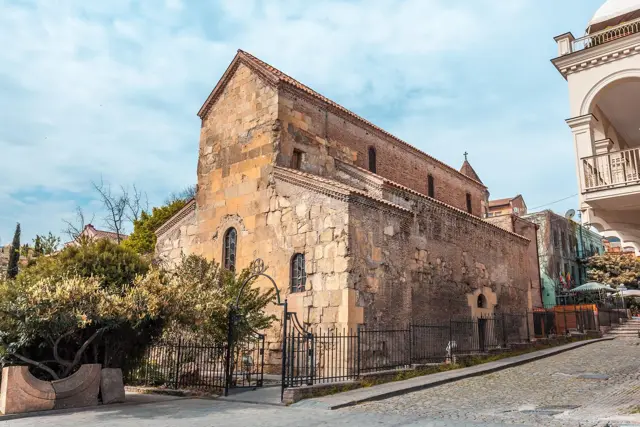
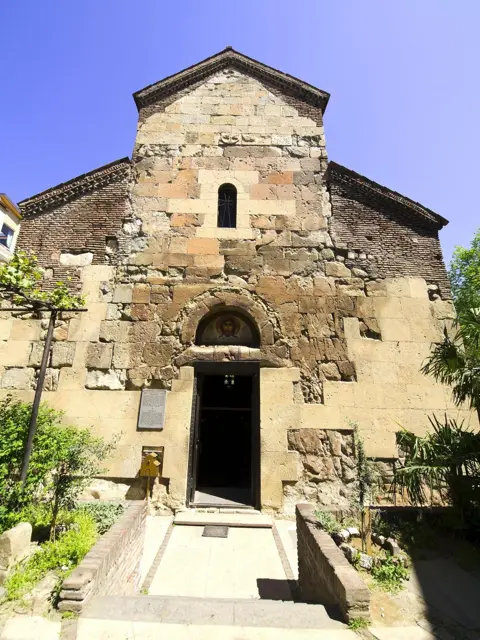
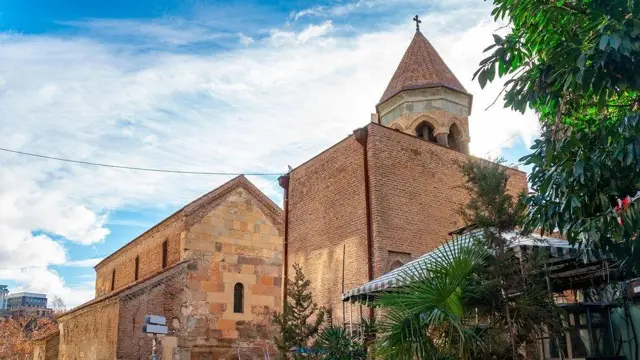
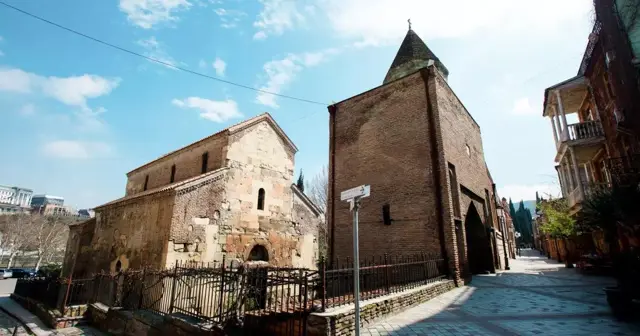
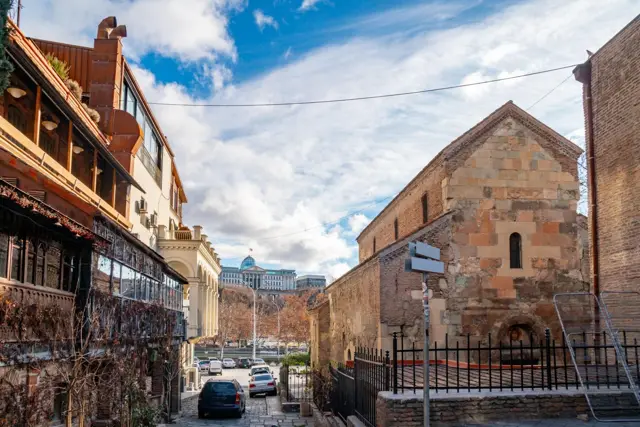
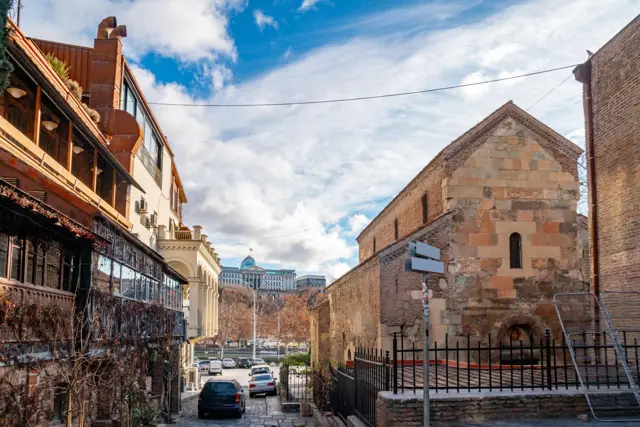
Architecturally, Anchiskhati is a three-nave basilica. This form was characteristic of many Georgian churches of the early Christian period, before cross-domed architecture spread widely. The central nave is higher and wider than the side naves, and the whole building has clear and restrained proportions.
The church's main strength lies precisely in its simplicity. Here there is no monumental dome or rich stone decoration such as in the great cathedrals of late medieval Georgia. Anchiskhati belongs to another age: the period when the main forms of Georgian Christian architecture were still taking shape.
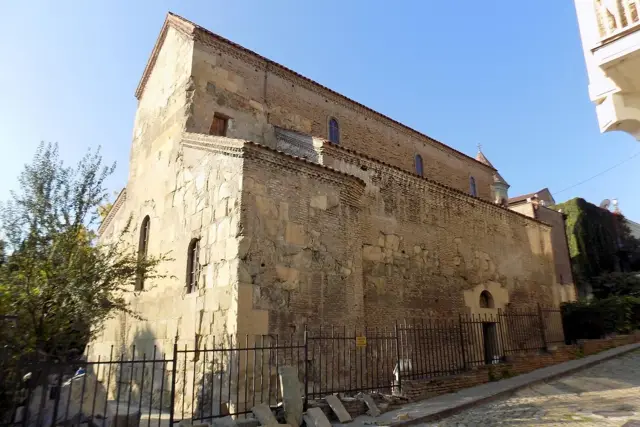
Despite repeated restorations, its stone walls and basilican plan still keep the main character of the early church. Over the centuries various parts were added to the church or rebuilt, so its present appearance bears the traces of several historical periods at once.
The history of Anchiskhati's name, however, begins much later than the church itself and is linked with one of the best-known medieval icons of Georgia.
At first the church was not called "Anchiskhati". This name became established in the 17th century, when the famous icon of the Saviour of Anchi was brought to Tbilisi from a historical Georgian region, Klarjeti.
The icon was originally kept in the monastery of Anchi. In the Middle Ages Anchi was an important centre of Georgian church and cultural life. Later, as the region's political situation worsened and the Ottomans grew stronger, protecting Christian holy objects became more and more difficult.
In this situation the famous icon of Anchi was taken to a safe place and finally, in the 17th century, brought to Tbilisi. The icon was placed in the ancient church of the Nativity of the Mother of God. The importance of the relic was so great that the people linked its name with the church itself: thus the name "Anchiskhati", the icon of Anchi, became established.
The icon of the Saviour of Anchi is one of the most important holy treasures of Georgian Christian art. Its medieval silver cover, created in the 12th century and connected with the famous Georgian goldsmith Beka Opizari, is especially well known. It is considered one of the greatest masterpieces of medieval Georgian metalwork.
Thus two historical worlds of Georgia came together in the name of Anchiskhati: the Tbilisi of the 6th century and the medieval Georgian Christian culture of Klarjeti.
Today the historical icon of the Saviour of Anchi is no longer kept in the church. For its safety and because of its special cultural importance, the relic is preserved in the Georgian National Museum. Nevertheless, its name remained forever linked with the church, and "Anchiskhati" became the universally accepted name of Tbilisi's oldest church.
The church's almost fifteen-century history was not peaceful. Because of its strategic position, Tbilisi was many times the target of foreign conquerors. Arab rule, Mongol invasions, Persian campaigns and the repeated destruction of the city also affected the life of Anchiskhati.
The church was damaged in different periods and then restored again. Especially important restoration work was carried out in the 17th century, when Tbilisi was trying to revive after hard political and military events.
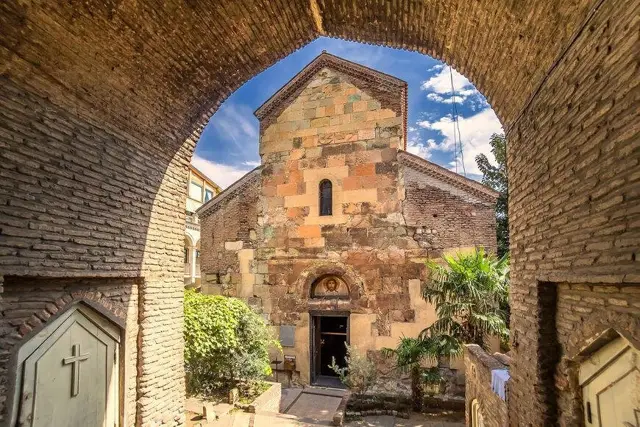
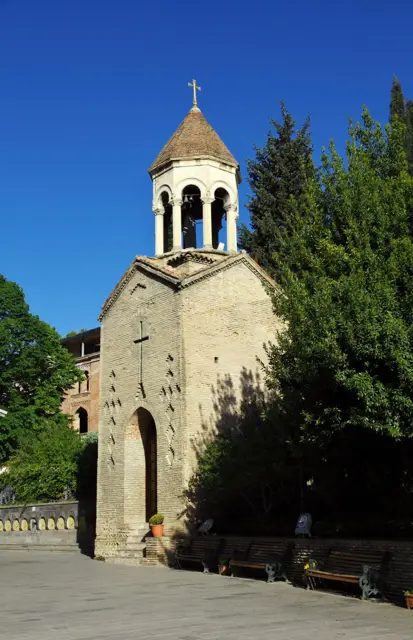
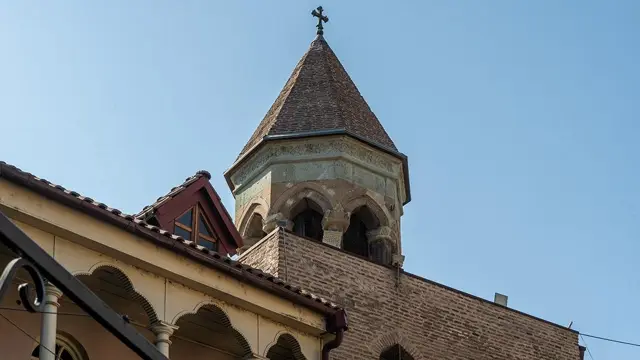
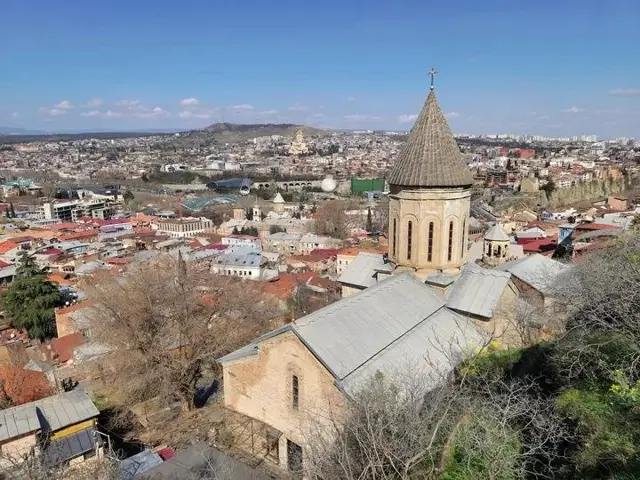
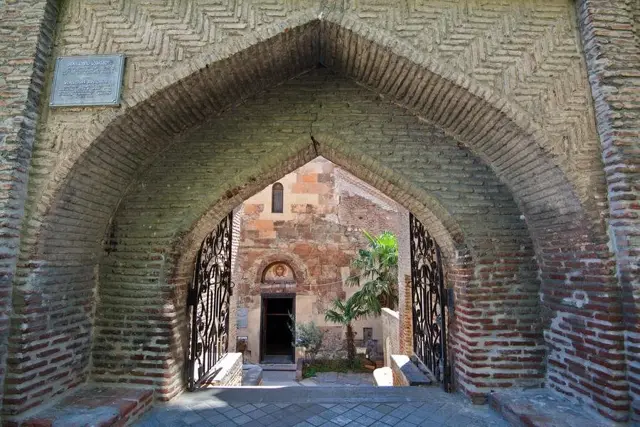
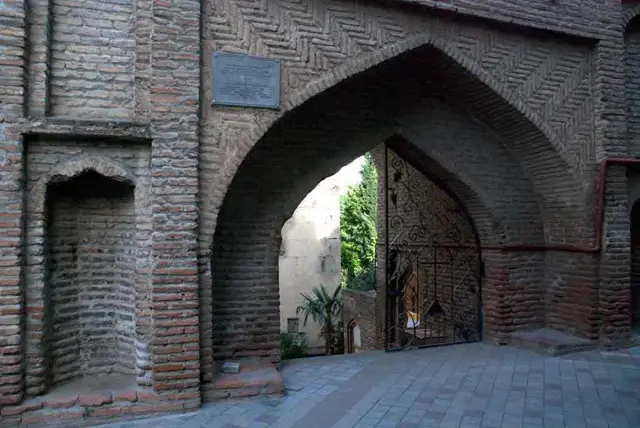
One of the outstanding parts of the Anchiskhati complex is its bell tower, built much later than the 6th-century church itself. It gives a special architectural character to the entrance from the street of Old Tbilisi to the church and clearly shows how new layers from different ages were added to the ancient church.
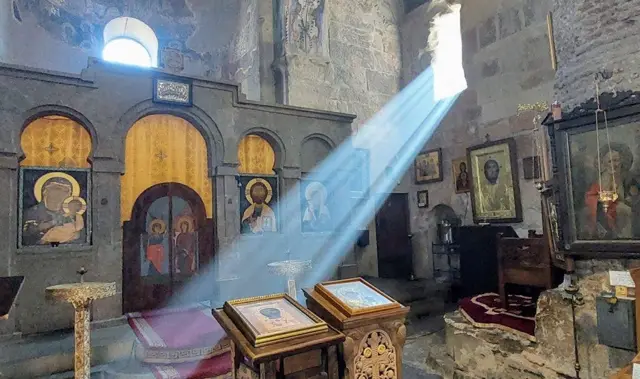
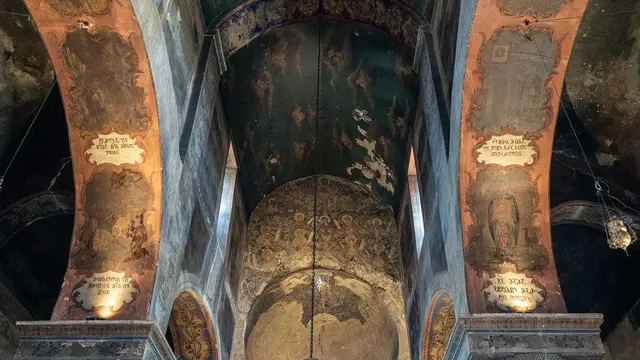
Traces of several periods also survive in the church's interior. The wall painting and church decoration changed in different centuries. Today the interior is relatively modest, and it is precisely this simplicity that creates the special atmosphere characteristic of Anchiskhati.
Anchiskhati played an important role in the church and cultural life of Tbilisi. Because of its location in the centre of Old Tbilisi, for centuries it was part of the daily life of the local Christian community. The liturgy, baptisms, weddings and other services were celebrated here.
In the 19th century, in the period of the Russian Empire, the church underwent changes again. Part of its architecture and interior was altered to meet the church requirements of the time, but the main structure of the ancient basilica was preserved.
The Soviet period proved especially difficult. Under the atheist regime services at Anchiskhati ceased and the church was used for some time for secular purposes. Nevertheless, the building was not destroyed and its historical significance was preserved.
At the end of the 20th century, with the revival of religious life in Georgia, Anchiskhati became a functioning church again. Orthodox services began once more within the ancient walls, restoring the original purpose of a church almost fifteen centuries old.
Today Anchiskhati is also especially known for the tradition of Georgian church chant. Its small, historic interior gives Georgian polyphonic chant a special resonance and makes the church's spiritual atmosphere even more distinctive.
Despite the rapid development of modern Tbilisi, Anchiskhati remains one of the most peaceful and historic spaces of the old city. A few steps away are the noisy streets of today's Tbilisi, while on entering the church the visitor finds himself in an entirely different setting, linked with the history of early Christian Georgia.
Anchiskhati Church is the place where almost fifteen centuries of Tbilisi's history are gathered in one small church. From Dachi Ujarmeli and the first years of the new capital to the arrival of the icon of the Saviour of Anchi, from the medieval invasions to the Soviet period and the restoration of modern Orthodox life, the church has survived almost every great historical age of the city.
Anchiskhati remains today Tbilisi's oldest surviving church and one of the most precious symbols of Georgia's Christian heritage: a small church within whose walls almost fifteen centuries of Tbilisi's history still live.